Beyond the Algorithm: The Vital Role of TED-Ed Student Talks in Cultivating Human-Centric Skills for the 2025 Global Workforce

In an era defined by the rapid integration of artificial intelligence into every facet of the global economy, the definition of professional competence is undergoing a seismic shift. As automation and generative models take over technical tasks, data analysis, and routine cognitive functions, the spotlight has turned toward the qualities that remain uniquely human. The World Economic Forum’s Future of Jobs Report (2025) underscores this transition, identifying empathy, communication, and leadership as the most critical assets for the future workforce. However, these "soft skills" often present the greatest challenge for traditional educational systems, which are historically designed around rote memorization and standardized testing. To address this gap, the TED-Ed Student Talks program has emerged as a critical pedagogical framework, providing students aged 6 to 18 with a structured environment to develop the interpersonal and rhetorical abilities necessary for the 21st-century landscape.
The Shift Toward Human-Centric Competencies
The World Economic Forum’s recent findings suggest that by 2025, the demand for social-emotional skills will grow significantly across all industries. While technical literacy remains important, the ability to collaborate across diverse teams and connect on a human level is becoming the primary differentiator in the labor market. LinkedIn’s talent data mirrors this sentiment, consistently ranking communication as one of the most in-demand skills globally. Despite this, many students graduate without the confidence to articulate complex ideas or the emotional intelligence to navigate difficult interpersonal dynamics.
TED-Ed Student Talks addresses this deficit through a methodology that moves beyond public speaking. The program utilizes a curriculum of guided activities where students discover meaningful ideas, refine them through collaborative feedback loops, and ultimately share them with a global audience. This process mimics the high-stakes communication environments of modern professional life, requiring students to synthesize personal experience with rigorous research.
Fostering Empathy through Narrative Exchange
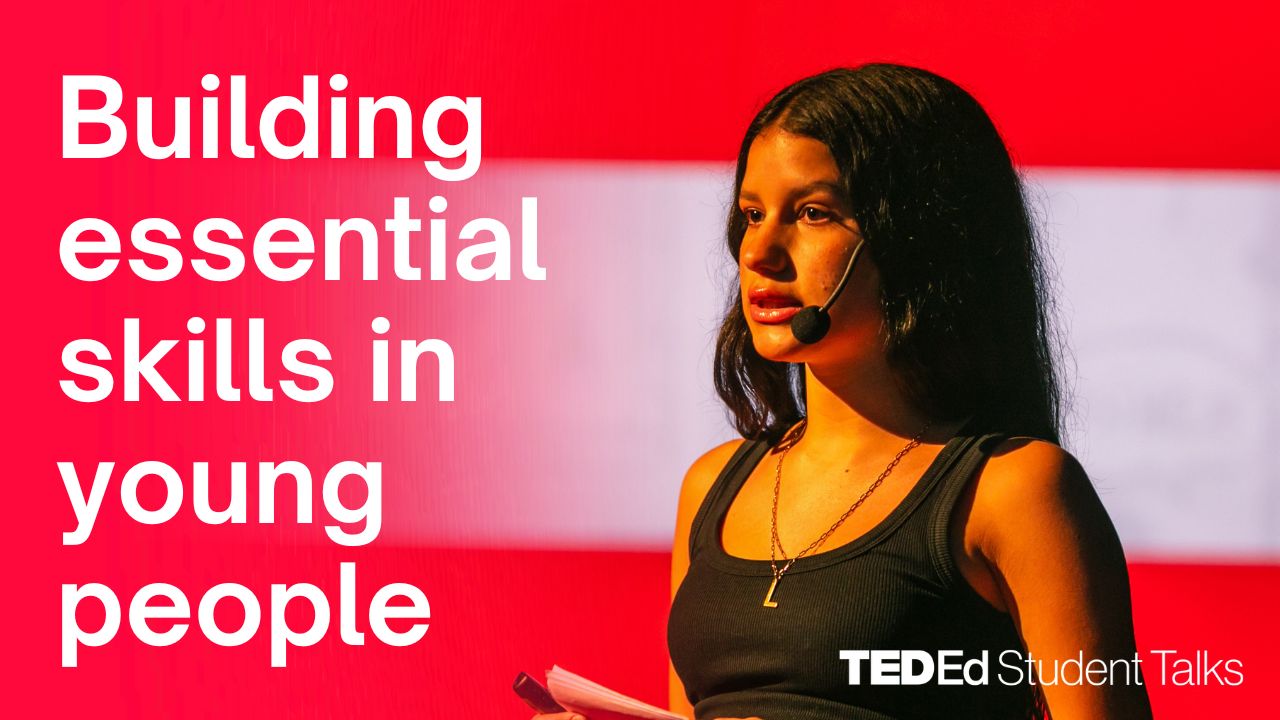
Empathy is no longer viewed merely as a personality trait but as a cognitive skill that can be strengthened through practice. Research published in educational journals suggests that the act of sharing personal narratives and actively listening to the stories of others is one of the most effective ways to build perspective-taking abilities. In the TED-Ed Student Talks program, students are encouraged to delve into their own lives to find universal truths, a process that creates a ripple effect of understanding within their peer groups.
For student speaker Shrutarjo Ray, the program served as a catalyst for understanding the social power of shared ideas. Ray noted that the experience taught him how a singular, meaningful story could bridge the gap between speaker and listener, effectively changing the audience’s perspective through connection rather than just data. Similarly, Wong Kean Jee observed that the program’s listening component was as valuable as the speaking itself. He reflected on the realization that every individual possesses a unique experience that can offer a new perspective, fostering a culture of mutual respect and curiosity.
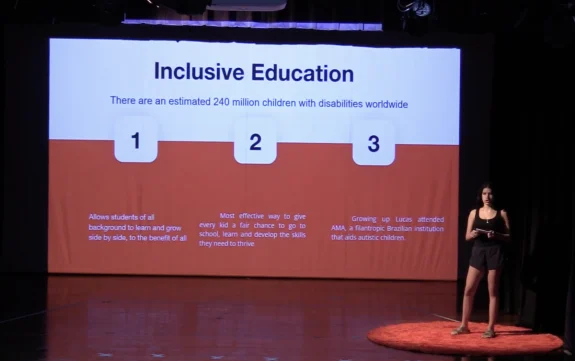
The practical application of this empathy was demonstrated by Lia Costa, who used the platform to share the story of her cousin’s life with Autism Spectrum Disorder. By incorporating his drawings and personal history into her talk, Costa aimed to move her audience toward compassionate action. She noted that while many people are aware of such disabilities, the personal narrative forced them to "rethink the way they treat these individuals." This shift from awareness to advocacy is a hallmark of the program’s impact on emotional development.
Translating Complexity: The New Communication Standard
Effective communication in the modern world requires the ability to translate specialized knowledge into accessible, persuasive narratives. This "knowledge translation" is a high-level cognitive task that AI often struggles to execute with nuance. Through the TED-Ed framework, students tackle complex subjects—ranging from advanced biotechnology to deep-seated emotional psychological states—and learn to make them resonate with a general audience.
Owen Hawthorne, a participant in the program, chose to discuss the potential of CRISPR and genetic editing as a hopeful alternative to chemotherapy. His challenge was twofold: he had to master the scientific complexity of gene editing while simultaneously crafting a message that would inspire hope rather than fear. This ability to frame technical innovation within a human context is a skill highly sought after in the STEM fields.
For other students, the complexity was internal. Lareen Abdelwahed used the program to navigate "tangled emotions," transforming private reflections into a structured discourse. She described the process as difficult, requiring her to confront experiences she had previously ignored. This exercise in emotional clarity—turning internal chaos into external coherence—is a foundational element of leadership and mental resilience.
Kira Aryslanova also experienced a shift in her communicative approach. Moving away from a pure focus on facts, she learned to integrate storytelling and data to influence and inspire. "This skill will help me not only in public speaking, but in any situation where I need to influence or inspire others," she stated, highlighting the cross-functional utility of the program’s training.
Youth Advocacy and Civic Agency
A critical component of the TED-Ed Student Talks program is its focus on advocacy. Studies on youth civic engagement, such as those archived by the National Institutes of Health, indicate that when young people are given a platform to speak on issues they care about, they develop a lasting sense of agency. This commitment to making a difference is essential for a healthy democratic society and a proactive workforce.
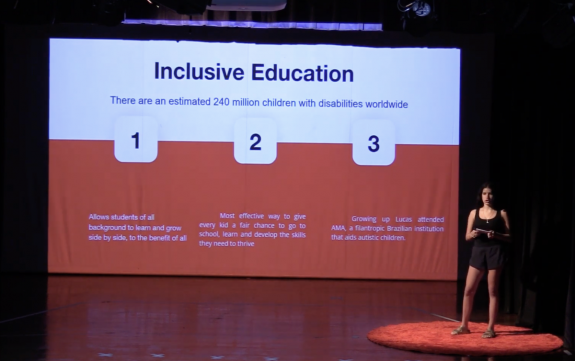
Kira Aryslanova’s talk on "language monopoly" challenged the global dominance of the English language, urging her audience to consider the cultural worldviews lost when linguistic diversity is ignored. By intentionally creating "a little discomfort," Aryslanova demonstrated the power of the platform to challenge the status quo.
Arush P, who has been an environmental advocate since the fifth grade, found that the program transformed his private concerns into a "catalyst for collective resilience." He described his transition from being a student to being a "speaker for our planet’s survival," illustrating how the program empowers students to see themselves as active participants in global problem-solving.
Furthermore, Malak Youssef’s talk on inner self-talk addressed the psychological barriers that often prevent young people from using their voices. Her insight—that a voice does not have to be loud to be powerful, only honest—resonates with a generation that values authenticity over performance.
Analytical Implications: The "Human Premium"
The broader implications of programs like TED-Ed Student Talks are significant for the future of education and labor. Economists often refer to the "human premium"—the increasing value of tasks that require high levels of social interaction and emotional intelligence. As AI continues to commoditize information, the value of a person’s ability to interpret, synthesize, and advocate for that information increases.
The chronology of the program—from discovery to delivery—functions as a micro-cycle of the modern professional project. By participating, students are not just learning to speak; they are learning to manage a project, receive and implement feedback, and engage in high-level critical thinking. This is a departure from the traditional classroom model, which often penalizes failure and prioritizes the "correct" answer over the "meaningful" idea.
Looking Forward: The Future of the Program
As the 2025 job market approaches, the necessity for programs that bridge the gap between academic knowledge and social application is undeniable. TED-Ed Student Talks currently offers free, customizable activities for educators in various settings, from traditional classrooms to youth organizations. By providing these resources at no cost, the program aims to democratize access to high-level communication training, ensuring that the "human premium" is not reserved only for those in elite educational environments.
The conviction that a unique perspective matters is perhaps the most enduring lesson of the program. Whether students are translating complex science, advocating for the environment, or sharing personal struggles, they are building the "AI-proof" skills that will define their success. In a world of algorithms, the ability to be authentically human remains the ultimate competitive advantage.
Related posts: