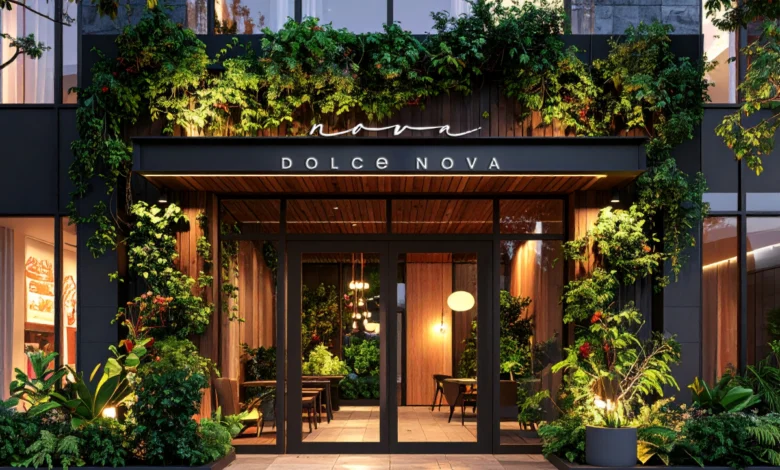
Wyndham Hotels & Resorts has officially announced the global launch of Dolce Nova, a boutique upper-upscale brand extension designed to bridge the gap between traditional conference-centric hospitality and contemporary lifestyle travel. Unveiled at the Annual Hospitality Conference in Manchester, the brand represents a significant strategic pivot for the world’s largest hotel franchising company by room count. Historically recognized for dominating the economy and midscale lodging sectors through powerhouse brands like Super 8, Ramada, and Days Inn, Wyndham is now making a calculated push into the design-forward, boutique upper-upscale segment.
The introduction of Dolce Nova marks a historic milestone for Wyndham as the very first brand concept to be entirely conceived, developed, and launched by the company’s Europe, Middle East, Eurasia, and Africa (EMEA) division. For an organization that has built much of its extensive 25-brand portfolio through aggressive mergers and acquisitions—accounting for 20 of its current brands—this organic creation signals a maturation of in-house development capabilities and a targeted response to evolving consumer preferences across international markets.
A Strategic Pivot From Mass Scale to Curated Boutique Spaces
Dolce Nova is born out of Dolce Hotels & Resorts, a premier meetings and events-focused brand that Wyndham originally acquired in 2015. Traditional Dolce properties are typically large-scale establishments featuring anywhere from 200 to 400 rooms, engineered specifically to host corporate retreats, large-scale conferences, and intensive business gatherings. While the core Dolce brand has proven exceptionally lucrative within the MICE (Meetings, Incentives, Conferences, and Exhibitions) sector, its heavy corporate identity left a distinct gap in servicing travelers seeking intimate, design-centric leisure experiences.
Enter Dolce Nova. The new extension is engineered to require a fundamentally different operational and creative instinct—one rooted heavily in architectural restraint, hyper-curated local design, and an affluent consumer demographic that Wyndham has not traditionally targeted. Rather than focusing on massive plenary rooms and cavernous exhibition halls, Dolce Nova properties will emphasize intimate public spaces, locally inspired gastronomy, and high-design guest rooms tailored to independent-minded travelers who prioritize aesthetic value and cultural immersion.
Dimitris Manikis, President for EMEA at Wyndham Hotels & Resorts, illuminated the financial and strategic rationale behind the new brand during an interview at the Manchester conference. Addressing the industry shift toward organic brand incubation rather than costly corporate acquisitions, Manikis posed a rhetorical question that outlines Wyndham’s modern growth philosophy: "Why would we spend a lot of money to buy something when we actually can create an extension of the Dolce brand and introduce it to a new consumer base?"
This philosophy reflects a broader trend across the global hospitality landscape. Major hotel conglomerates are increasingly realizing that acquiring independent boutique brands often comes with bloated corporate overhead, legacy technology integration challenges, and steep acquisition multiples. By developing Dolce Nova from the ground up, Wyndham retains total control over the brand DNA while leveraging its massive global distribution engine, loyalty program, and procurement power to scale the concept efficiently.
The Evolution of Wyndham’s Portfolio Strategy
To understand the weight of the Dolce Nova launch, one must examine Wyndham’s corporate trajectory over the past decade. Following its spin-off from Wyndham Worldwide in 2018 as a pure-play hotel franchising and management company, Wyndham aggressively expanded its footprint, crossing the threshold into the upscale and upper-upscale segments through targeted acquisitions and the organic introduction of brands like Wyndham Grand and Registry Collection Hotels.
However, scaling budget and midscale brands relies on standardization, volume, and predictable operational efficiencies. Dolce Nova requires the exact inverse approach. It demands a delicate balance between global brand standards and localized authenticity. Industry analysts note that upper-upscale boutique properties succeed only when they manage to disassociate themselves from the cookie-cutter feel of traditional chain hotels. For Wyndham, ensuring that Dolce Nova maintains its boutique soul while expanding across multiple international territories will be the ultimate operational test.
The EMEA team’s leadership in this endeavor is particularly strategic. European and Middle Eastern markets have historically been hotbeds for independent boutique hotels and design-led lifestyle concepts. By incubating the brand in Europe, Wyndham is positioning Dolce Nova in a hyper-competitive laboratory where discerning travelers immediately reward superior interior architecture and narrative-driven guest experiences. Once the operational model is perfected in the EMEA region, industry insiders anticipate a swift expansion into the Americas and Asia-Pacific markets.
Market Positioning and Target Demographics
Dolce Nova enters a crowded and lucrative segment of the global lodging market. Upper-upscale boutique hotels currently capture the attention of modern affluent travelers, digital nomads, and corporate bleed travelers—those blending business trips with leisure stays, often referred to as "bleisure."
Unlike its parent brand Dolce, which caters primarily to corporate expense accounts and structured event planners, Dolce Nova is designed to attract a younger, highly design-conscious demographic. These consumers are typically willing to pay a premium for localized storytelling, sustainable operations, and distinctive aesthetic touchpoints, yet they expect the seamless booking capabilities and loyalty rewards of a major global hospitality network.
By tying Dolce Nova to the broader Dolce ecosystem, Wyndham offers property owners and developers a unique dual advantage. Developers can build or convert properties that capture high-yielding leisure travelers on weekends while leveraging the trusted corporate reputation of the Dolce name to capture high-value midweek business meetings, executive board retreats, and boutique corporate gatherings. This dual-demand engine mitigates seasonality risks—a common vulnerability for pure leisure boutique hotels.
Industry Reactions and Economic Implications
The hospitality investment community has responded with cautious optimism to the Dolce Nova announcement. Hotel owners and real estate developers attending the Annual Hospitality Conference praised Wyndham for providing a scalable alternative to independent boutique conversions, which often struggle with high customer acquisition costs and lack access to a powerhouse loyalty program like Wyndham Rewards, which boasts over 100 million enrolled members globally.
From a franchising perspective, Dolce Nova represents an attractive proposition for independent hoteliers looking to elevate their properties into the upper-upscale tier without losing their unique architectural identities. Wyndham’s robust franchising infrastructure provides owners with centralized revenue management, global sales force backing, and cutting-edge distribution technology—resources that independent boutique operators often struggle to fund independently.
However, challenges remain. Scaling a design-focused brand requires rigorous quality control. If a Dolce Nova property deviates too far into generic corporate hospitality, it risks losing the boutique credibility that attracts its target audience. Conversely, if design standards are too rigidly enforced, development costs for franchise partners can skyrocket, dampening owner appetite for conversions and new builds.
Broader Industry Trends and Future Outlook
The launch of Dolce Nova mirrors a wider industry movement among major hotel groups—including Marriott International, Hilton, and IHG Hotels & Resorts—all of which have aggressively developed or acquired soft brands and boutique collections to capture the booming lifestyle segment. As travelers increasingly seek accommodation options that reflect the distinct culture of their destinations, traditional cookie-cutter hotels are losing market share to narrative-driven properties.
Wyndham’s ability to successfully execute Dolce Nova will serve as a bellwether for the company’s upper-upscale ambitions. If the EMEA team’s organic incubation model proves successful, it could pave the way for additional in-house brand creation across other segments, reducing reliance on expensive mergers and acquisitions.
As the first Dolce Nova properties move from the drawing board to pipeline development, industry observers will closely monitor site selections, architectural partnerships, and early guest satisfaction metrics. For Wyndham, Dolce Nova is more than just a new name on a corporate roster; it is a declaration that the world’s largest hotel franchisor can master the art of restraint, design, and bespoke hospitality on a global scale.