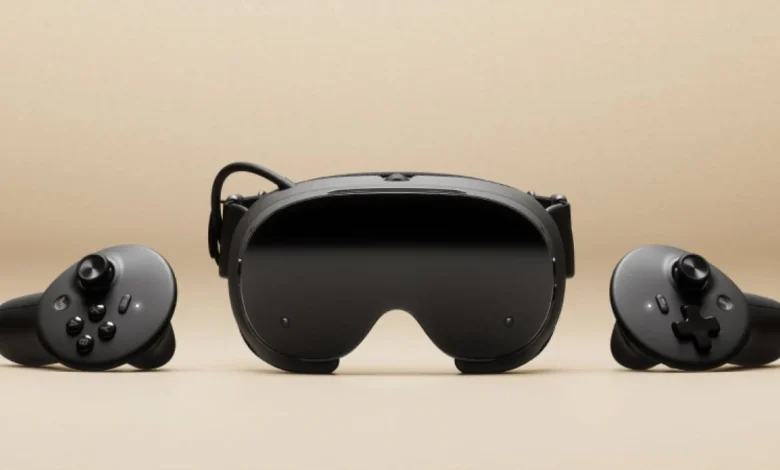
Years of speculative industry murmurs, leaked developer hints, and patient anticipation have culminated in a major hardware release as Valve officially rolls out its latest flagship product: the Steam Frame. Following its initial announcement in November 2025, the standalone virtual reality and mixed-reality device officially hit the global market on September 18, inviting consumers to test a hardware ecosystem that bridges the gap between traditional PC gaming and fully immersive virtual environments. Developed by the parent company behind the dominant Steam digital distribution platform, the Steam Frame enters a recovering virtual reality market with high technical ambitions, though it faces considerable economic and industry-wide headwinds.
Main Facts of the Release and Initial Hardware Capabilities
The Steam Frame is designed from the ground up to streamline the often-frictionatic user experience historically associated with virtual reality gaming. Priced at $1,059 for the base 256GB storage configuration and scaling up to $1,299 for the 1TB model, the headset functions as both a standalone computing unit and a tetherless peripheral capable of streaming content directly from a local personal computer.
Unlike many competing devices that require complex room-scale sensor setups or cumbersome wired connections, the Steam Frame emphasizes immediate accessibility. Reviewers across major technology and gaming publications have universally highlighted the hardware’s ergonomic design, which prioritizes comfort and straightforward initialization. By minimizing the setup process, Valve has engineered a device that allows users to transition effortlessly from putting on the headset to launching an interactive title.
Beyond standard virtual reality applications, the Steam Frame introduces a versatile virtual monitor mode. This functionality enables players to access their entire traditional Steam game library, projecting standard non-virtual reality titles onto a massive, adjustable virtual screen within the headset’s interface. For many users, this feature effectively transforms the device into a portable, private gaming monitor that can be utilized throughout a home without the physical constraints of a fixed desktop setup.
Chronology and Development Timeline
The journey toward the Steam Frame began long before its formal market release in September 2026. For the better part of a decade, industry observers tracked Valve’s hardware division following the successful commercial deployment of the Valve Index in 2019 and the portable Steam Deck handheld in 2022.
- Pre-2025: Persistent rumors circulated within developer communities regarding an advanced, standalone headset codenamed internally, building upon Valve’s proprietary SteamOS architecture and wireless streaming protocols.
- November 2025: Valve officially unveiled the Steam Frame, detailing its core specifications, hybrid standalone-streaming capabilities, and dual storage tiers, generating substantial enthusiasm among PC gaming loyalists.
- September 18, 2026: Following months of closed developer beta testing and firmware refinements, the Steam Frame officially launched worldwide, arriving on doorsteps and retail channels concurrently with the publication of early hardware reviews.
Critical Reception: Praises for Design and Wireless Performance
Early critical evaluations of the Steam Frame praise its execution of wireless streaming and overall hardware polish. Jacob Ridley of PC Gamer commended the device for getting "a whole lot right," emphasizing that the elimination of traditional hardware friction makes virtual reality far more approachable than previous iterations.
This sentiment was reinforced by Zack Zwiezen of Kotaku, who focused heavily on the device’s wireless fidelity when streaming high-end games from a host personal computer. Zwiezen noted that the streaming latency was virtually imperceptible, delivering a seamless experience that effectively replicated a wired connection without the physical tether, calling it Valve’s most significant technical achievement with the hardware.
Furthermore, Jacqueline Thomas of IGN pointed out the utility of the virtual monitor mode, reporting that a significant portion of testing time was dedicated to playing traditional, flat-screen titles on the expansive virtual display. Chris Person of Aftermath described the device as one of the most exciting hardware developments in the sector in recent years, praising Valve’s effort to unify multiple distinct gaming use cases—standalone virtual reality, tethered personal computer streaming, and traditional desktop gaming—into a single open platform.
Industry Challenges: Pricing, Timing, and Software Ecosystem
Despite widespread acclaim for its engineering, the Steam Frame has encountered rigorous scrutiny regarding its commercial viability, pricing structure, and the current state of the virtual reality software market.
Scott Stein of CNET outlined several early pain points, noting occasional performance bugs, limited battery endurance under heavy computational loads, and a relative scarcity of exclusive software optimized specifically for the platform at launch. These operational concerns are compounded by the device’s steep financial barrier to entry. Starting at over $1,000, the Steam Frame occupies a luxury price bracket that places it out of reach for casual consumers.
Moreover, industry analysts and reviewers have questioned the broader market timing. James Archer of Rock Paper Shotgun highlighted that the commercial momentum behind virtual reality hardware has cooled significantly since the peak enthusiasm of the early 2020s. With the pipeline of original, AAA-tier virtual reality titles reduced to a relative trickle, critics question the immediate demographic target for the device.
Devindra Hardawar of Engadget echoed these concerns, arguing that while the Steam Frame represents a technically proficient standalone platform, its elevated cost and late arrival to a plateauing market make it a difficult investment for average players.
Broader Impact and Market Implications
The launch of the Steam Frame marks a pivotal moment for Valve and the wider personal computer gaming ecosystem. By utilizing an open platform philosophy, Valve is attempting to prevent the walled-garden fragmentation that has historically plagued standalone virtual reality hardware.
However, the device’s reception underscores a fundamental tension in modern gaming hardware: advanced technical integration versus prevailing market demand. As the industry digests the Steam Frame, its long-term success will likely depend not only on Valve’s ongoing software updates and firmware optimization to address launch-day bugs, but also on whether independent and major developers are willing to invest capital into creating new software experiences for a niche, premium audience. For now, the Steam Frame stands as a remarkable engineering achievement that challenges the boundaries of display technology, even as it navigates an uncertain economic and cultural landscape for virtual reality.
Related posts: