Navigating Etihad Airways New U.S. Credit Cards: A Comprehensive Analysis for Travelers and Status Chasers

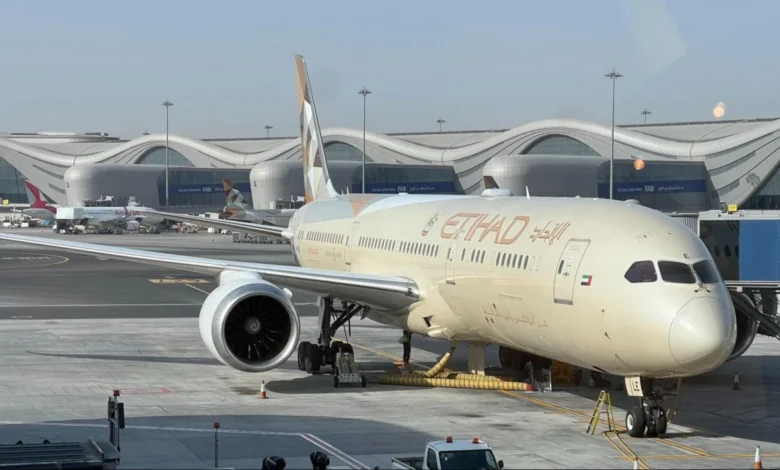
Etihad Guest, the prominent loyalty program of Abu Dhabi-based carrier Etihad Airways, has officially expanded its footprint within the United States market through the launch of two co-branded credit cards. Developed in partnership with the First National Bank of Omaha (FNBO), the introduction of the Etihad Guest Visa Signature® Card and the Etihad Guest Premier Visa Signature® Card marks a strategic move by the airline to deepen engagement with North American consumers. However, an analysis of the fee structures, earning potentials, and specific perks reveals that these financial products occupy a very specific niche. For the casual traveler, the value proposition remains limited, but for dedicated frequent flyers of Etihad and its partner network, the cards offer a streamlined, accelerated pathway to airline elite status.
The strategic debut of these two cards comes at a time when co-branded airline credit cards are facing heightened scrutiny from consumers seeking maximum flexibility. Issued by FNBO, the standard Etihad Guest Visa Signature® Card carries a $99 annual fee, while the premier iteration, the Etihad Guest Premier Visa Signature® Card, commands a $499 annual fee. Both financial instruments are engineered to reward international spending by omitting foreign transaction fees entirely, while simultaneously providing targeted multipliers on purchases made directly with Etihad Airways and its select global partner airlines.
To understand the practical implications of these cards, travelers must weigh the initial welcome offers, ongoing elite status perks, and the fundamental limitations inherent to the Etihad Guest ecosystem. While the cards introduce innovative features such as reward multipliers on partner airline spending—a rarity in the co-branded credit card landscape—they also demand careful calculation regarding annual costs, spending thresholds, and alternative points-earning strategies available through flexible bank currencies.
A Detailed Breakdown of the Etihad Guest Visa Signature Card
The standard offering in this new card lineup is the Etihad Guest Visa Signature® Card, designed primarily for travelers who want a modest entry point into the airline’s elite status tiers without committing to a high annual fee. Priced at $99 per year, the card focuses heavily on status acceleration and targeted travel spending rather than everyday domestic rewards.
For new applicants applying through the promotional window extending to Feb. 3, 2027, the card features a welcome bonus structure: up to 40,000 Etihad Guest Miles can be earned. This promotion is split into two milestones, requiring a first purchase to trigger an initial 10,000 miles, followed by an additional 30,000 miles upon meeting a $3,000 spending threshold within the first three billing cycles following account opening.
The most compelling argument for the standard card lies in its elite status mechanics. Cardholders who make their first Etihad purchase within 90 days of account opening are automatically granted Etihad Silver status. Within the aviation industry, entry-level status rarely unlocks significant lounge access, but Etihad’s program stands out as an exception. Silver status is sufficient to grant entry into the business class lounge when traveling through the airline’s primary hub at Abu Dhabi’s Zayed International Airport.
Maintaining this status requires meeting specific annual criteria: cardholders must either charge $20,000 annually to the card or complete $3,000 in direct Etihad purchases each year. Additionally, cardholders earn 1 tier mile for every $1 spent on the card, though this particular benefit is capped at a maximum of 25,000 tier miles per year for the standard version.
Examining the Etihad Guest Premier Visa Signature Card
Position
ed for high-volume travelers and dedicated status chasers, the Etihad Guest Premier Visa Signature® Card elevates the financial commitment to a $499 annual fee. This tier introduces enhanced welcome offers, accelerated status progression, and a suite of premium travel benefits, though certain elements of the card warrant close examination by savvy consumers.
The welcome offer for the premier card, available through the same Feb. 3, 2027 expiration date, provides up to 60,000 Etihad Guest Miles. This reward is structured around 20,000 miles earned after the first purchase, alongside an additional 40,000 miles awarded after meeting a $7,000 spending requirement within the first three billing cycles.
In terms of status acquisition, the premier card offers an aggressive fast track. Upon account approval, cardholders receive automatic Silver status, which is immediately upgraded to Gold status upon completing their first Etihad purchase within 90 days of opening the account. To sustain Gold status moving forward, members must charge $40,000 annually to the card or spend $8,000 directly with Etihad. Failure to meet these specific thresholds results in a downgrade to Silver status.
Beyond status mechanics, the premier card attempts to justify its $499 price tag through supplementary travel perks. Cardholders receive a statement credit covering the application fee for Global Entry or TSA PreCheck, alongside standard travel protections. However, frequent travelers who already hold premium travel credit cards will likely find these protections and enrollment credits redundant.
The card also includes a Priority Pass lounge access membership. Clarification from an Etihad spokesperson to industry analysts revealed that this is an entry-level Priority Pass tier, meaning cardholders must pay an out-of-pocket fee for themselves and any accompanying guests during every lounge visit. This stands in contrast to many other U.S. premium travel credit cards, which typically offer complimentary lounge visits for the cardholder as a standard benefit. Furthermore, the premier card provides an annual Wi-Fi benefit: after the first Etihad purchase and upon each cardholder anniversary, members receive 3,000 Etihad Guest miles, an amount specifically calculated to cover the cost of inflight Wi-Fi on long-haul Etihad journeys.
Evaluating the Value Proposition for Frequent Flyers and Status Chasers
The ultimate utility of these cards depends heavily on an individual’s travel patterns, specifically how often they fly through or connect in Abu Dhabi. Because Etihad is not a member of any major global airline alliance—such as Oneworld, SkyTeam, or Star Alliance—its partnerships are bilateral and isolated. Consequently, elite status benefits like lounge access are restricted to flights operated directly by Etihad Airways. Travelers flying on partner airlines will not automatically receive lounge access based on their Etihad elite tier.
For those who frequently transit through Zayed International Airport multiple times a year, the standard card’s ability to unlock business class lounge access via Silver status represents a tangible asset. Meanwhile, the premier card’s fast track to Gold status expands these privileges to Etihad’s broader proprietary lounge network—including dedicated facilities in locations like New York and Washington, D.C.—while also allowing members to bring a guest traveling on the same flight into the lounge.
Conversely, for travelers whose itineraries rarely involve Etihad-operated aircraft, the elite status tiers offer minimal practical application. While the Priority Pass membership included with the premier card can be utilized regardless of the airline flown, the requirement to pay per-visit fees diminishes its competitiveness against alternative premium cards on the market.
Why Everyday Spending on Etihad Cards Falls Short
From a pure rewards-earning perspective, neither the standard nor the premier Etihad credit card is optimized for everyday consumer spending. Day-to-day categories such as dining, groceries, and gas yield a baseline return of just 1 Etihad Guest mile per $1 spent. The enhanced earning structures are strictly confined to international transactions, direct purchases with Etihad Airways, and transactions with partner airlines.
The inclusion of partner airlines in the bonus earning structure is a notable structural feature. The standard card awards 2 miles per $1 spent on eligible partner airlines, while the premier version increases this rate to 3 miles per $1. This contrasts with traditional co-branded airline cards, which typically restrict bonus categories to the issuing carrier’s own ticket sales. Partner airlines within the Etihad ecosystem include prominent U.S. carriers such as American Airlines and JetBlue Airways.
Despite this unique partner-spending multiplier, financial experts argue that these cards are rarely the optimal vehicle for accumulating Etihad miles. A major alternative involves utilizing flexible transferable point currencies. Travelers can seamlessly transfer points earned from major credit card ecosystems—such as Bilt Rewards, Capital One, and Citi ThankYou—directly into the Etihad Guest program at favorable ratios. These flexible cards frequently feature superior everyday spending multipliers, broader redemption options, and fewer restrictions than a single airline-specific card.
Furthermore, members must remain mindful of Etihad Guest’s strict expiration policy. Miles expire after 18 months of inactivity if no qualifying flight activity is recorded on the account. Individuals who do not fly with Etihad or its partners at least once every year and a half risk losing their accumulated balance entirely, making these credit cards a poor choice for occasional or sporadic travelers.
Strategic Considerations Before Submitting an Application
Deciding whether to apply for either the Etihad Guest Visa Signature® Card or the Etihad Guest Premier Visa Signature® Card requires a realistic assessment of personal travel habits and reward priorities.
For the general consumer whose primary goal is accumulating points for free flights or maximizing everyday spending categories, the answer is a decisive no. The annual fees and restrictive earning rates cannot compete with broader travel reward cards, especially when transfer partnerships from major issuers provide direct access to Etihad miles with greater versatility.
However, for dedicated frequent flyers of Etihad Airways who value elite status and transit through Abu Dhabi regularly, the calculus changes. The ability to fast-track into Silver or Gold status without completing thousands of miles of actual flying can significantly enhance the airport and in-flight experience. By weighing the cost of the annual fee against the monetary value of lounge access, status perks, and welcome bonuses, status-driven travelers can determine whether FNBO’s new offerings deserve a spot in their wallet.