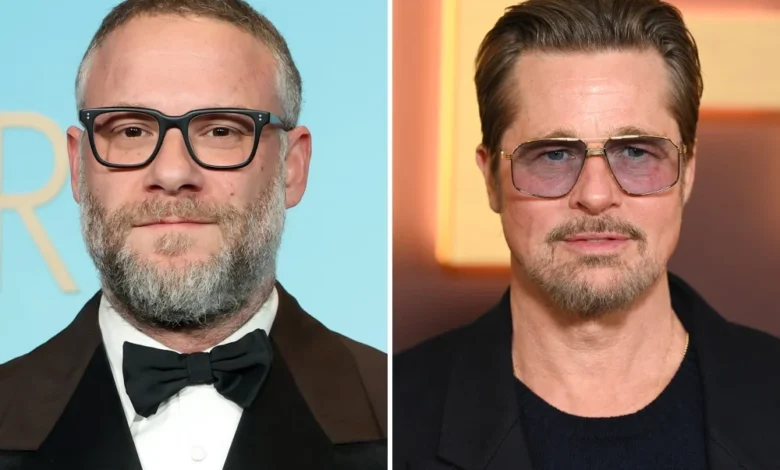
Seth Rogen and Brad Pitt formed an unlikely social bond while filming contrasting cinematic projects in New Orleans in 2013

The intersection of two vastly different film productions in New Orleans during the spring of 2013 serves as a fascinating case study in the juxtaposition of Hollywood creative processes. While the city’s historic landscape hosted both the chaotic, absurdist apocalyptic comedy This Is the End and the grueling, historical gravity of the Best Picture-winning 12 Years a Slave, the members of these two casts found themselves seeking respite in one another’s company. This intersection of talent—ranging from the improvisational comedy troupe led by Seth Rogen to the prestige-drama ensemble directed by Steve McQueen—highlights the unique social ecosystem that forms when multiple high-profile productions descend upon a single location.
A Tale of Two Sets: The Production Landscape of 2013
In early 2013, New Orleans was a hub for international film production, benefitting from generous state tax incentives that had solidified the region as "Hollywood South." Within this concentrated professional environment, two productions stood in stark thematic opposition.
This Is the End, directed by Seth Rogen and Evan Goldberg, was a meta-fictional comedy that required its cast—including James Franco, Jonah Hill, Jay Baruchel, Danny McBride, and Craig Robinson—to play heightened, often unlikable versions of themselves. The film’s atmosphere was one of high-energy improvisation, slapstick humor, and creative spontaneity, designed to capture a sense of irreverent camaraderie.
Conversely, 12 Years a Slave, directed by Steve McQueen, was a harrowing adaptation of Solomon Northup’s 1853 memoir. The production was marked by its emotional intensity and the weight of its subject matter, which chronicled the kidnapping and enslavement of a free Black man. The cast, including Chiwetel Ejiofor, Michael Fassbender, Lupita Nyong’o, and producer-actor Brad Pitt, spent months immersed in the brutal realities of the antebellum South. The emotional toll of portraying such historical trauma created a somber, focused, and often drained atmosphere on the set.
The Intersection: Social Dynamics in the Big Easy
As Seth Rogen recently recounted during an appearance on Josh Horowitz’s Happy Sad Confused podcast, the proximity of these two sets led to a natural social overlap. Rogen described a dynamic where the cast of the comedy would frequent local bars and social hubs, often finding themselves joined by the stars of the historical drama.
Rogen noted that the contrast in the actors’ "headspaces" was palpable. The performers from 12 Years a Slave were reportedly in a "bummed-out" state, understandably affected by the gravity of the scenes they were filming. Rogen’s group, fueled by the manic energy of their comedic project, provided an unintended outlet for the prestige drama cast to decompress. "We were having the time of our lives," Rogen reflected, noting that the presence of industry titans like Steve McQueen, Brad Pitt, and Chiwetel Ejiofor would initially manifest as a somber intrusion, which would then be lightened by the social environment the comedy cast cultivated.
This anecdotal evidence provides a rare look at how actors manage the psychological transition between intensive roles and their personal lives. For the cast of 12 Years a Slave, the ability to step away from the plantation set and engage in the lighthearted banter of the This Is the End crew served as a form of emotional relief, allowing them to recalibrate before returning to the demanding requirements of their performances.
Chronology and Cinematic Context
The 2013 filming schedule serves as the primary timeline for this intersection. By the time 12 Years a Slave hit theaters in the fall of 2013, it was already being heralded as a masterpiece of modern cinema. Its subsequent sweep of the awards season, culminating in three Academy Awards—including Best Picture—cemented its place in history.
- Spring 2013: Concurrent filming of This Is the End and 12 Years a Slave takes place in Louisiana.
- Summer 2013: This Is the End is released in theaters on June 12, 2013, eventually grossing over $126 million worldwide.
- Autumn 2013: 12 Years a Slave debuts at the Telluride Film Festival, followed by a wide release in October, garnering immense critical acclaim.
- March 2014: 12 Years a Slave wins Best Picture at the 86th Academy Awards.
- 2015: Seth Rogen and Michael Fassbender reunite professionally, starring in Danny Boyle’s Steve Jobs, a connection that originated during their time in New Orleans.
The Professional and Personal Legacy
The relationship forged during this period extended beyond casual bar visits. Seth Rogen and Michael Fassbender’s subsequent collaboration in the 2015 biographical film Steve Jobs—in which Fassbender played the titular Apple founder and Rogen played Steve Wozniak—is often cited by the actors as a byproduct of the rapport they developed in New Orleans.
The friendship between the two groups also underscores a broader professional reality: the "small world" nature of the film industry. Despite the vast differences in tone, budget, and artistic intent, the actors share a common experience of isolation and immersion while on location. When productions overlap, these temporary communities often bridge the gap between genres.
Broader Implications: The "Hollywood South" Effect
The New Orleans experience serves as a microcosm of the impact of regional production hubs. By concentrating talent in one city, the industry fosters cross-pollination. In this instance, the proximity of the two films allowed for a unique social exchange that might not have occurred if the productions had been isolated in traditional studios.
From an industry standpoint, the narrative also highlights the importance of morale in high-stakes filmmaking. 12 Years a Slave was a high-pressure production where emotional authenticity was paramount. The ability for actors to find "light" in the middle of such a "dark" project is a testament to the essential nature of social support systems within the acting community.
Furthermore, the public interest in these behind-the-scenes interactions reveals a shift in how audiences consume media. Fans are no longer satisfied with just the final product; they are increasingly interested in the "making-of" narratives and the human elements that define the filmmaking process. Rogen’s recount serves to humanize the figures involved in 12 Years a Slave, moving them from the pedestal of "acclaimed performers" to individuals dealing with the psychological weight of their craft.
Analysis of the Cultural Impact
The critical and commercial success of 12 Years a Slave significantly influenced the discourse surrounding historical representation in cinema. Brad Pitt, who served as a producer, was instrumental in bringing the project to fruition. His role as Samuel Bass—an abolitionist who ultimately aids Northup—was a pivot point for the character of the film, providing a necessary, albeit complex, moral anchor.
Conversely, This Is the End is often studied for its innovation in the meta-comedy genre. By blurring the lines between the actors’ real-life personas and their fictionalized versions, Rogen and his team challenged the audience’s perception of celebrity.
The fact that these two distinct explorations of the human condition were happening simultaneously, just miles apart, adds a layer of depth to the 2013 cinematic landscape. It reminds observers that while audiences see the final, polished result on the screen, the reality behind the lens is a complex tapestry of relationships, emotional shifts, and collaborative efforts. The friendship between Rogen, Fassbender, and their peers remains a footnote in the history of these films, yet it provides a compelling glimpse into the camaraderie required to sustain artistic excellence in the face of demanding creative challenges.