The Silicon Siege: Nvidia Faces Existential Crisis Amidst Allegations of Chip Smuggling and Espionage

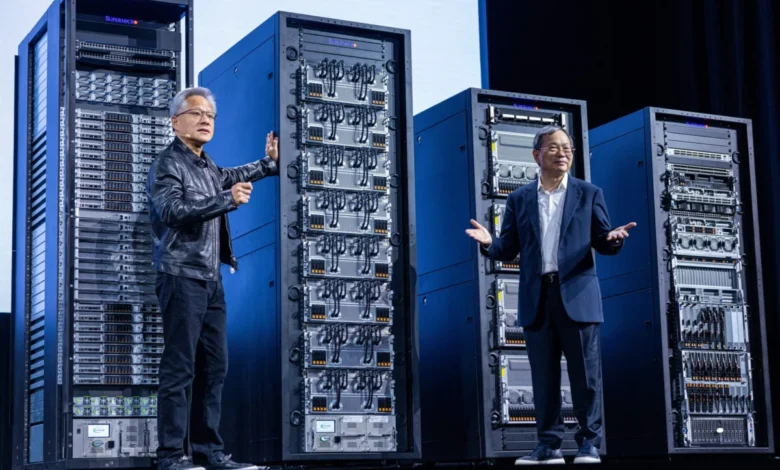
For more than a year, Nvidia CEO Jensen Huang has maintained a steadfast position regarding the global distribution of his company’s high-performance AI chips: there is no credible evidence that premium hardware is being surreptitiously diverted to China in violation of U.S. export controls. However, that narrative has collapsed under the weight of two high-profile scandals involving Southeast Asian supply chains, now compounded by a sensational espionage investigation that has entangled the CEO’s personal life with national security concerns.
The crisis, which threatens to destabilize one of the world’s most valuable technology companies, centers on the clandestine movement of advanced GPUs—the primary engine behind the current artificial intelligence revolution. As federal investigators and congressional leaders intensify their scrutiny, Nvidia finds itself at the intersection of corporate governance failure, geopolitical tension, and a potential intelligence breach that could redefine the company’s relationship with the U.S. government.
A Chronology of Escalating Risk
The unraveling of Nvidia’s internal controls did not happen overnight. The timeline of the current crisis spans several months of intensifying red flags:
- June 2026: Senator Elizabeth Warren (D-Mass.) sends a pointed letter to Nvidia leadership, including general counsel Tim Teter and audit committee chair Brooke Seawell, demanding transparency regarding the company’s export compliance program and its ongoing partnership with Super Micro Computer (Supermicro).
- August 2026: Reports emerge linking Nvidia’s largest Southeast Asian customer, Megaspeed International, to alleged chip diversion schemes.
- October 2026: A co-founder of Supermicro enters a guilty plea in a federal case involving the smuggling of billions in server hardware to China.
- November 2026: CEO Jensen Huang issues a public admission of an extramarital affair with Alice Huang, a former executive at Megaspeed, amid allegations that she served as a conduit for Chinese intelligence.
The Supermicro Nexus and the Smuggling Playbook
The scrutiny surrounding Supermicro has become the primary test case for Nvidia’s compliance efficacy. In March 2026, federal prosecutors unsealed an indictment against Yih-Shyan “Wally” Liaw, a co-founder of Supermicro, alleging that he and two others orchestrated a $2.5 billion scheme to route servers equipped with Nvidia H200 and B200 GPUs to China via a Southeast Asian front company.
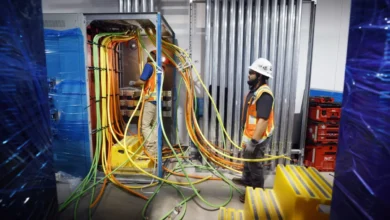
The indictment paints a picture of a sophisticated, low-tech bypass of high-tech controls. According to court filings, the conspirators utilized thousands of non-functional "dummy" servers to deceive auditors. In a move that highlights the precarious nature of supply chain verification, contractors reportedly used hair dryers to carefully remove and reapply serial numbers to circumvent tracking protocols. While Supermicro has not been formally charged as an entity and has maintained it is a victim of the scheme, the incident has cast a long shadow over its partnership with Nvidia—a bond forged by the decades-long friendship between Jensen Huang and Supermicro CEO Charles Liang.
The Megaspeed Scandal: A Customer or a Cover?
If Supermicro represents the logistical failure of Nvidia’s distribution, the Megaspeed investigation represents a potential intelligence disaster. Megaspeed, based in Singapore, emerged as Nvidia’s largest buyer in the region, purchasing over $4.8 billion in hardware over two years.
Federal investigators are currently examining whether approximately $2 billion of that hardware, housed in data centers across Malaysia and Indonesia, was used to provide remote access to banned Chinese firms. The situation turned from a regulatory matter to a national security crisis when reports surfaced that Alice Huang, an executive at Megaspeed, had allegedly been recruited by the Chinese Ministry of State Security. Intelligence officials suspect the relationship between Jensen Huang and Alice Huang may have been utilized to gather internal information on Nvidia’s compliance strategies and chip allocation priorities.
Institutional Response and Board Action
In response to the mounting pressure, Nvidia’s board of directors has taken the rare step of launching an independent investigation into whether the company’s co-founder was the target of a foreign intelligence operation. To lead this inquiry, the board has retained Joon H. Kim, the acting U.S. Attorney for the Southern District of New York, and the legal powerhouse Wachtell, Lipton, Rosen & Katz.
Despite the gravity of the allegations, the board has expressed "confidence" in Jensen Huang, stating they currently have no evidence that national security or proprietary secrets were compromised. Nevertheless, the optics remain fraught. The juxtaposition of Huang’s personal apology to employees with the unfolding geopolitical investigation has created a leadership vacuum at a time when the company faces critical upcoming earnings reports and legislative hearings.
Regulatory and Legislative Pressure
The political landscape in Washington is shifting in a way that poses an existential threat to Nvidia’s current operational model. With Democrats regaining control of the Senate, Senator Elizabeth Warren is poised to assume the chairmanship of the Senate Banking Committee in January. Her prior interest in Nvidia’s compliance failures is expected to escalate into formal subpoena power.
Furthermore, three House committee chairs have requested a closed-door briefing with Huang on November 18, one day after the company is scheduled to report its third-quarter financial results. The legislative branch is increasingly concerned that Nvidia’s "dual-use" technology—chips essential for everything from cancer research to military simulation—is being leaked to adversaries under the guise of legitimate international trade.
Industry Implications and the "Honey Trap" Risk
Industry experts argue that the scandal reveals a vulnerability common in high-stakes technology sectors: the reliance on individual trust over systemic verification. Export-control veterans suggest that the "honey trap" phenomenon is a recurring, if often overlooked, element of industrial espionage.
"When you have executives who are tasked with inspecting global data centers, they become prime targets for seduction or bribery," noted one consultant who works with high-tech firms on compliance. "The issue for Nvidia is whether the culture of the company allowed for a blind spot where personal relationships superseded the rigor required by international export laws."
The evidence suggests that the current crisis is far from a temporary PR setback. The connection between the Supermicro dummy-server scheme, the alleged front-company activities of Megaspeed, and the personal involvement of the CEO has created a web of complexity that will likely take years to untangle.
Economic and Strategic Outlook
Nvidia remains the bedrock of the AI industry. Its H200 and B200 chips are not merely components; they are the strategic assets of the digital age. Because these chips are governed by stringent export licenses—designed to prevent the Chinese military from accelerating its own AI development—any failure in the chain of custody has immediate global consequences.
For shareholders, the uncertainty is compounded by the volatility of the company’s partnerships. The removal of Supermicro as a trusted partner or the potential blacklisting of other key distributors could disrupt Nvidia’s ability to move product. Furthermore, the threat of increased government oversight could lead to more restrictive licensing requirements, potentially trimming margins and delaying product rollouts.
As the company prepares for its mid-November earnings call, the focus will likely shift from the raw performance of its silicon to the performance of its compliance department. The narrative of a high-flying tech titan that outpaced its own security measures is now firmly established. Whether Nvidia can restore its reputation depends on the findings of the independent investigation and the ability of its board to insulate the company’s future from the personal and professional entanglements of its leadership.
Ultimately, the events of the past year serve as a stark reminder that in the world of advanced AI, the most dangerous vulnerability is not in the software, but in the human relationships that govern the movement of the hardware. The "Silicon Siege" currently facing Nvidia is not just a test of market dominance, but a test of whether the company can survive the transition from an era of unchecked expansion to one of rigorous, state-mandated accountability.