Netflix Acquisition of Radford Studio Center Stalls as Streaming Giant Evaluates Real Estate Strategy Amid Hollywood Production Slump

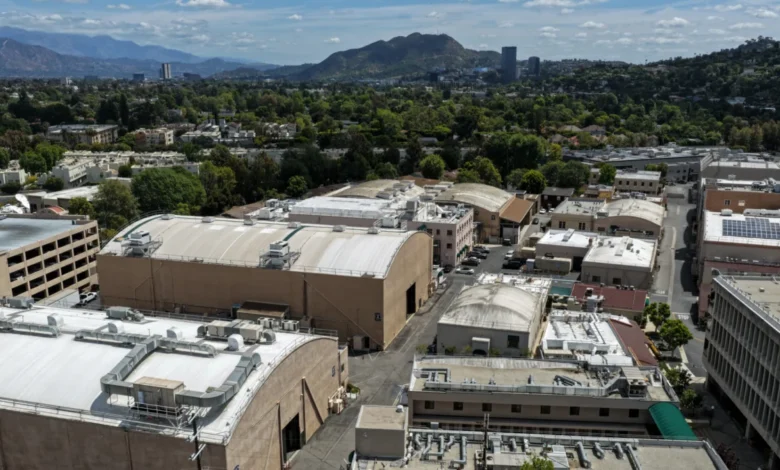
The multi-million-dollar acquisition of the historic Radford Studio Center by streaming titan Netflix has officially hit a roadblock, casting a shadow of uncertainty over the company’s long-term production real estate strategy in Los Angeles. What was initially anticipated to be a straightforward transition into property ownership has evolved into a prolonged evaluation period. This delay raises critical questions regarding how much physical production footprint the streaming giant actually requires in Southern California, especially as industry-wide filming metrics hover near historic lows.
The transaction, which has been under intense scrutiny within entertainment real estate circles, was initially estimated to carry a price tag ranging between $330 million and $400 million. However, according to recent disclosures and commentary from key stakeholders, the definitive agreement has not yet crossed the finish line. The stalling of the deal underscores a broader, industry-wide recalibration as major studios and streaming platforms alike grapple with the economic realities of maintaining massive physical infrastructure in an era defined by cost-cutting, labor disruptions, and a strategic pivot toward out-of-state and international jurisdictions offering more favorable tax incentives.
A Stalled Timeline and Due Diligence Extensions
Chatter surrounding the potential blockbuster real estate deal first emerged in April, immediately generating significant buzz across the Los Angeles commercial real estate and entertainment sectors. At the time, industry analysts viewed the prospective acquisition as a logical evolution for Netflix, moving the company from a traditional tenant model to a permanent landlord position on a sprawling, multi-acre production lot.
Yet, as the calendar progressed, the initial 90-day due diligence window—designed for Netflix to thoroughly inspect the Radford property and vet its operational viability—quietly lapsed without a final contract execution. Insiders familiar with the transaction confirmed that an extension was quietly granted, allowing the streaming company additional time to weigh its options. Despite the delay, real estate sources maintain that an extension does not automatically spell doom for the negotiation. Many market observers continue to operate under the assumption that the deal will ultimately close, though the exact timeline has been pushed back significantly.
During a recent financial earnings call, Hudson Pacific Properties CEO Victor Coleman provided a blunt assessment of the situation. Addressing investors, Coleman revealed that the transaction remains unfinalized, stating that Netflix has yet to decide whether to close the deal, a decision that may not materialize until late in the year—or potentially not at all.
This hesitation coincides with a notable shift in macroeconomic conditions, most notably the trajectory of borrowing rates. With interest rates remaining elevated compared to previous years, financing a nine-figure acquisition has become a substantially more expensive endeavor. If Netflix intended to leverage debt to fund a portion of the Radford purchase, the higher cost of capital introduces a financial hurdle that wasn’t present when talks first commenced in the spring.
The Hudson Pacific Nexus and Office Footprint Dilemma
The fate of the Radford Studio Center transaction is intricately linked to Netflix’s broader commercial real estate footprint in Los Angeles, specifically its sprawling relationship with Hudson Pacific Properties. Currently, Netflix holds the position of third-biggest tenant across Hudson Pacific’s robust portfolio, anchoring several premier properties in the heart of Hollywood. Most notably, the company leases the ICON, EPIC, and CUE office and studio buildings situated at Sunset Studios.
The interplay between Netflix’s existing leases and its potential acquisition of Radford has created a complex web of negotiations. Netflix currently leases over 700,000 square feet of office and studio space across three major buildings, a massive commitment underscored by the 13-story EPIC office tower located on Sunset Boulevard. Crucially, these existing lease agreements are not scheduled to expire until 2031, binding the streaming company to its current landlord for the remainder of the decade.
However, signals from recent financial disclosures suggest that Netflix is actively pruning its portfolio commitments. In an August financial filing, Hudson Pacific disclosed that three distinct soundstage leases within its portfolio were terminated during the first half of the year. While the filing did not explicitly identify the tenant responsible for the cancellations, industry observers have noted the correlation with Netflix’s ongoing evaluation of its physical infrastructure needs.
Despite speculation that Radford Studio Center could serve as an all-encompassing replacement for its current administrative and creative workspaces, Hudson Pacific executives have pushed back against that narrative. During the earnings call, CEO Victor Coleman explicitly clarified that the Radford lot cannot adequately fulfill Netflix’s specific office space requirements. Coleman noted that the physical layout and structural footprint of Radford do not neatly align with the administrative needs currently met by properties like EPIC, meaning an outright swap of locations is functionally impractical.
Broader Financial Implications for Hudson Pacific
The uncertainty surrounding Netflix’s real estate moves reverberates far beyond a single property transaction, directly impacting Hudson Pacific’s overarching financial strategies. Hudson Pacific manages a massive 2.2-million-square-foot media portfolio in Los Angeles, encompassing a collection of iconic studio lots—including Sunset Gower Studios, Sunset Las Palmas Studios, and Sunset Bronson Studios—alongside its administrative buildings.
The health of this portfolio, and the company’s ability to navigate current capital markets, is heavily reliant on the stability of its anchor tenants. Recently, Hudson Pacific successfully secured a critical one-year extension on a roughly $1.1 billion loan tied to its Hollywood media portfolio, pushing the debt’s maturity date out to next year without mandating a principal paydown. Nonetheless, company executives have acknowledged that a comprehensive, long-term refinancing strategy cannot be finalized in a vacuum. Achieving clarity on Netflix’s intentions is a strict prerequisite.
Hudson Pacific President Mark Lammas emphasized during the earnings call that the company’s absolute first priority is maintaining an open, constructive dialogue with Netflix. Lammas indicated that only after both parties achieve complete clarity regarding future space requirements and lease extensions will Hudson Pacific re-engage meaningfully with lenders for long-term capital restructuring.
Despite the current ambiguities, Hudson Pacific leadership remains publicly optimistic about the trajectory of their relationship with the streaming giant. Coleman characterized ongoing discussions as fruitful and productive, expressing confidence that a resolution regarding lease extensions beyond the 2031 expiration date could be reached by the close of the year.
A Changing Landscape for Hollywood Real Estate
The hesitance exhibited by Netflix regarding the Radford purchase highlights a broader, systemic contraction within the entertainment real estate market. Following years of an aggressive, pandemic-era "streaming wars" building boom—during which content creators scrambled to lock down every available soundstage and office building in Los Angeles—the industry has undergone a sharp and pragmatic correction.
Local production levels in the greater Los Angeles area have struggled to regain momentum, lingering near historic lows as media companies prioritize profitability, subscriber growth, and efficient capital allocation over sheer volume. Furthermore, the economic calculus of physical production has shifted dramatically. With generous tax incentives, lower labor costs, and competitive infrastructure available in alternative domestic hubs and international territories, studios are increasingly voting with their feet, bypassing traditional Southern California soundstages in favor of more cost-effective shooting locations.
Compounding this local contraction is the emergence of state-of-the-art competing developments. Even as Netflix weighs its options regarding Radford, alternative high-end studio projects continue to enter the market. Notably, Echelon—a luxury $450 million studio and creative office offering located roughly a little more than a mile west of the EPIC building on Santa Monica Boulevard—is slated to open its doors later this year. Sources familiar with the local real estate scene indicate that Netflix has already expressed preliminary interest in becoming a tenant at the new facility, further demonstrating that the company is actively shopping the market for state-of-the-art spaces rather than instinctively committing to legacy property ownership.
Looking Ahead
As the year progresses, all eyes in Hollywood will remain fixed on the negotiations between Netflix, Hudson Pacific, and the ownership of Radford Studio Center. Whether Netflix ultimately decides to cement its footprint through a major property acquisition or pivot toward a more flexible, hybrid leasing model will send powerful signals to the rest of the entertainment industry. For now, the streaming pioneer is taking a measured, cautious approach, signaling that the era of unbridled real estate expansion in Hollywood has firmly given way to an era of intense financial discipline.
Related posts: