‘He basically gets to steer a political party’: Elon Musk is $474 million poorer post-election, but it may not have deterred his influence on 2028 | Fortune

The election results were particularly stinging in Texas, a state that serves as the corporate headquarters for both Tesla and SpaceX. Republican gubernatorial candidate Greg Abbott and Senate hopeful Ken Paxton both suffered decisive losses to their Democratic challengers. The immediate market response underscored the volatility of tying corporate interests to specific political outcomes; shares for both Tesla and SpaceX faced downward pressure on the Wednesday following the election. This market reaction reflects a broader investor concern: when a CEO becomes synonymous with a losing political movement, the perceived regulatory and public relations risks to their companies can escalate rapidly.
A Chronology of Financial Intervention
To understand the scale of Musk’s involvement, one must look at the timeline of his political transformation. Over the last twenty-four months, Musk has evolved from a tech visionary into a central power broker within the Republican Party. Following his 2025 departure from the Department of Government Efficiency (DOGE), where his influence drew both praise for cost-cutting initiatives and intense scrutiny for access to sensitive data, Musk began to deploy his personal wealth with unprecedented intensity.
In early 2026, as the midterms approached, Musk signaled a departure from his previous pledge to scale back political activity. By mid-summer, he had committed $30 million to the Congressional Leadership Fund, the primary super PAC tasked with maintaining the Republican majority in the House of Representatives. An additional $44 million was funneled into various federal committees. By the time the polls closed, Musk had solidified his position as one of the party’s most prolific donors, standing alongside heavyweights like Marc Andreessen and Ben Horowitz of Andreessen Horowitz, who contributed $116.4 million, and OpenAI co-founder Greg Brockman, who donated $50 million.
The Limits of Financial Dominance
The 2026 midterms serve as a poignant case study in the diminishing returns of "big money" in American elections. Political science experts note that while capital can flood the airwaves with advertisements and saturate digital platforms with messaging, it cannot manufacture voter enthusiasm or overcome unfavorable political climates.
Logan Phillips, founder of the election forecasting site Race to the White House, characterized the outcome as a potential watershed moment for campaign finance. "I think this might just be the biggest defeat for big money in politics in American history," Phillips noted. The narrative that billionaire capital is an unstoppable force in American democracy was severely challenged by the reality of the ballot box. Voters in key districts appeared to reject the heavy-handed influence of external donors, preferring candidates whose platforms were viewed as more localized or grounded in traditional constituent concerns.
Strategic Influence: Setting the Political Agenda
Despite the electoral losses, some political scientists argue that measuring the success of a donation solely by the candidate’s win-loss record is a fundamental misunderstanding of how political capital functions at the highest levels. Alex Keena, a professor at Virginia Commonwealth University, suggests that for donors at Musk’s level, the goal is often the construction of an ideological framework rather than the mere installation of a specific official.
"It’s not about helping someone win," Keena explained. "It’s about setting the agenda and determining what types of issues we talk about." By injecting hundreds of millions into the political bloodstream, Musk effectively forces the conversation toward issues that favor his business interests, such as data center regulation, energy policy, and economic deregulation. Even in defeat, the sheer volume of his spending ensures that the Republican Party remains attentive to the policy goals that underpin the Musk empire.
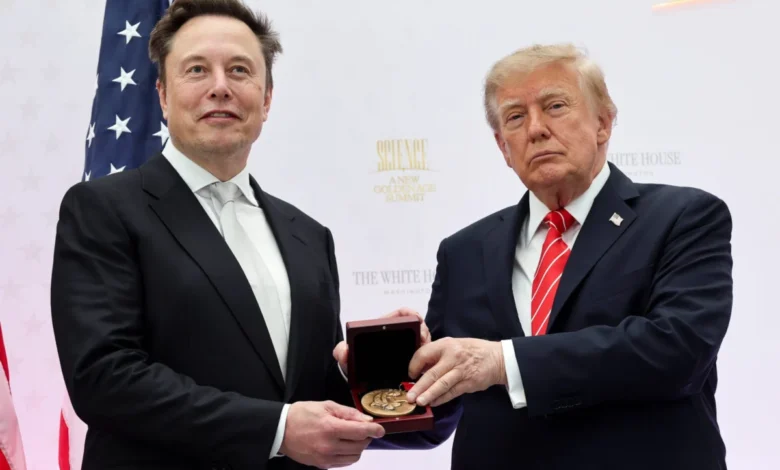
Furthermore, this financial commitment serves as a signal of loyalty to President Donald Trump. As Musk continues to navigate the complexities of a proposed SpaceX-Tesla merger—a transaction that would undoubtedly face rigorous anti-trust and regulatory scrutiny under a Democratic-led government—his alignment with the Trumpian wing of the party remains a strategic asset. If the Republican Party remains the vehicle for the policies Musk desires, his donations act as a form of long-term lobbying rather than short-term campaign support.
The Liability of Political Visibility
While financial influence can shape agendas, it can also create significant political liabilities. The public nature of Musk’s involvement has invited a level of scrutiny that may prove detrimental to his companies in the long term. With Democrats poised to leverage subpoena powers in the coming legislative session, the focus will likely turn toward the internal workings of his companies and his previous government affiliations.
Sara Guerrero, a spokesperson for Representative Robert Garcia, a leading Democrat on the House Oversight Committee, confirmed that the legislative body intends to pursue answers regarding Musk’s role in the now-defunct DOGE initiative. "We definitely have a lot of questions about Elon Musk’s role in DOGE and it is something we plan to investigate," she stated.
The scrutiny is compounded by the findings of a Washington Post analysis, which indicated that two dozen former DOGE staffers migrated into the private sector, leveraging government ties to secure over $500 million in venture capital. This pattern of the "revolving door" has become a central point of contention for critics who argue that Musk’s political activities are a mechanism for private-sector enrichment. Casey Michel, author of United States of Oligarchy, suggests that the "brand" of the oligarch has become toxic for many mainstream voters.
"I’m struggling to think of a clearer example of what happens to an oligarch when they place themselves front and center in a political system," Michel remarked. "This makes clear at the end of the day that Musk’s financing is no longer the asset that it once was in 2024, but is now a very clear liability."
The Road to 2028: Will the Spending Persist?
The question remains whether the 2026 cycle will cause Musk to retreat from the political stage or if he will double down in 2028. Historically, billionaire donors have demonstrated high levels of resilience following electoral losses. Jennifer Heerwig, a political sociology professor at SUNY Stony Brook, argues that for someone of Musk’s net worth, the financial cost of these donations is comparable to personal discretionary spending.
"Assuming that he remains the world’s richest man, I wouldn’t find it shocking to see him again entering politics and making huge donations to super PACs," Heerwig stated. However, the political environment Musk faces in 2028 may be significantly different. If the backlash from the 2026 midterms results in a sustained legislative probe into his business affairs, the cost of political participation may move beyond mere dollars and cents, potentially involving legal and regulatory complications that money cannot easily resolve.
Musk’s own history of shifting stances on political spending adds another layer of uncertainty. In May 2025, he explicitly stated his intention to scale back, telling an audience at the Qatar Economic Forum, "I’m going to do a lot less in the future. I think I’ve done enough." His subsequent $474 million outlay proves that his public declarations of political fatigue should be viewed with skepticism.
Ultimately, the 2026 midterms demonstrate that while capital is a potent tool for influence, it is not an absolute. As the American electorate continues to navigate the influence of the ultra-wealthy, Musk’s path forward will likely be defined by a delicate balance between leveraging his immense resources to shape national discourse and managing the increasing political and regulatory risks that accompany such a public role. Whether he views this cycle as a temporary stumble or a sign that his political capital has reached its limit will be revealed in the coming years of federal investigation and future electoral cycles.