The Rise of the A-Team
To understand the rise of the Alexander brothers, one must look back at their roots in the affluent enclave of Bal Harbour, Florida. Born to Shlomy and Orly Alexander, who built their fortune through Kent Security, the brothers were raised with an aggressive, winner-take-all ethos. Kent Security, a major contractor in South Florida, was frequently embroiled in labor disputes and legal challenges, fostering an environment where the family motto appeared to be: "Success is all that matters."

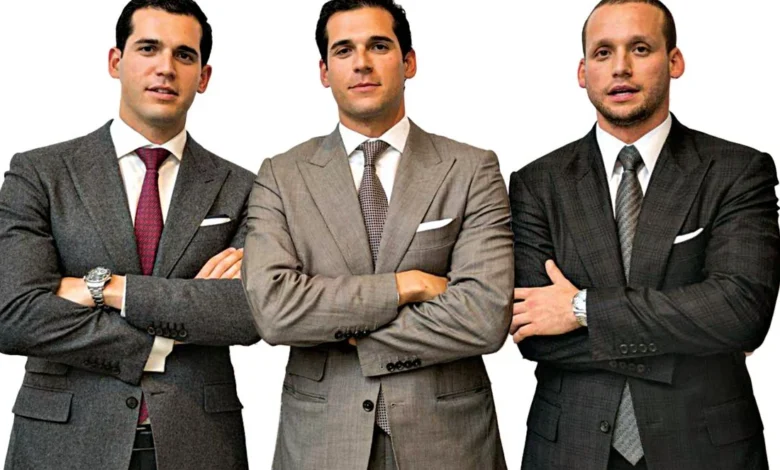
By the early 2010s, the brothers had migrated to New York City, leveraging their father’s high-level connections—most notably with Douglas Elliman chairman Howard Lorber—to secure a foothold in the competitive Manhattan brokerage world. Their branding was meticulous. They positioned themselves as the "A-Team," utilizing their status as young, handsome, and hyper-connected socialites to cultivate relationships with billionaires and celebrities. Their strategy was rooted in "peacocking"—throwing lavish parties, frequenting exclusive global locales from Aspen to St. Tropez, and maintaining an unrelenting presence on social media.
A Chronology of Allegations
The allegations against the Alexanders do not exist in a vacuum; they span over two decades, beginning as early as their high school years at Michael M. Krop Senior High in North Miami. While the brothers were building their real estate empire, a parallel history of reports was emerging.

- 2003–2004: Early reports of sexual assault surfaced during their high school years, with multiple classmates and acquaintances alleging that the brothers used drugs to incapacitate young women, often bragging about "running a train" on victims.
- 2010: Following an audition for the reality show Million Dollar Listing, broker Jessica Cohen alleged she was drugged by the brothers at a party, waking up in a hospital after blacking out in their company.
- 2011–2015: As the A-Team launched, reports continued to escalate. Allegations include a 2012 incident at "Sir Ivan’s Castle" in Southampton and a 2015 assault of a woman in Oren’s apartment.
- 2024: The dam finally broke when civil lawsuits were filed by Rebecca Mandel and Kate Whiteman. These filings, coupled with a surge of public testimony in online forums, shifted the brothers from being "untouchable" to the subjects of a federal investigation.
- 2026: A federal jury delivered a guilty verdict on all ten counts of sex trafficking and sexual assault, confirming the patterns described by over 40 women who have since come forward.
Institutional Complicity and the "Teflon" Reputation
The most damning aspect of the Alexander case is the widespread knowledge of their behavior within the real estate industry. For years, whisper networks existed among brokers, high-net-worth clients, and even executives at major firms like Douglas Elliman. Despite being warned by colleagues and peers, the industry continued to facilitate the brothers’ success.
The "Teflon" reputation the brothers enjoyed can be attributed to their astronomical revenue generation. As the A-Team became one of the highest-grossing brokerage groups in the country—culminating in their involvement in record-breaking deals, such as the $240 million sale at 220 Central Park South—their financial output effectively silenced internal scrutiny. Even when evidence of their behavior reached the executive suites of firms like Douglas Elliman, the common response was often to distance the firm from the allegations rather than initiate a comprehensive investigation.

Legal and Social Implications
The federal verdict in 2026 represents a landmark moment for accountability in luxury industries. The prosecution of the Alexander brothers highlights the dangers of "celebrity brokerage," where personal brands are prioritized over professional ethics and safety. Legal experts note that the case is likely to force a reckoning in how real estate firms conduct background checks and handle internal complaints of sexual misconduct.
"The case of the Alexander brothers is a wake-up call for the entire luxury sector," says legal analyst Sarah Jenkins. "When you cultivate a culture that prioritizes profit above all else, you create a vacuum of accountability. The fact that these men operated for so long in plain sight is not just a failure of the brothers, but a failure of the systems that enabled them."

The Human Cost
Behind the statistics and the high-profile court proceedings are the lives of the survivors. Over 40 women have now detailed experiences of sexual violence, drugging, and psychological abuse at the hands of the brothers. The collective testimony reveals a systematic approach to assault, often involving the brothers working in tandem to isolate and incapacitate their victims.
The upcoming sentencing in October 2026 will serve as the final chapter in the legal proceedings, but the social fallout will likely continue for years. The upcoming three-part docuseries The Wolves of Real Estate, set for a late-October release on Peacock, promises to further document the extent of the brothers’ operations and the culture that protected them.

Analysis of the Industry Landscape
The real estate industry is notoriously insular, characterized by high-stakes deals and a "don’t ask, don’t tell" culture regarding the personal lives of top-tier brokers. The fall of the Alexander brothers signals a potential shift in this paradigm. As firms face increasing pressure to adhere to Environmental, Social, and Governance (ESG) standards, the tolerance for "unethical but profitable" actors is rapidly diminishing.
Furthermore, the role of social media in this case cannot be understated. While the brothers used Instagram and public PR to project a life of luxury and perfection, the same platforms became the tools for their downfall. Once the first civil lawsuits were made public, the digital trail of comments and the collective voice of the survivors created an unstoppable momentum that no amount of PR lobbying could contain.

Looking Toward Sentencing
As the date for sentencing approaches, the mood in Manhattan’s real estate circles is one of somber reflection. The brothers, who once commanded the attention of the city’s elite, now face the prospect of life behind bars. Their downfall serves as a stark reminder that even in the most exclusive circles, the accumulation of wealth does not provide immunity from the law, nor does it erase the impact of one’s actions.
The Alexander case will undoubtedly be studied for years to come—not just for the severity of the crimes committed, but for the profound silence maintained by those who stood by and watched as the A-Team built their empire on a foundation of exploitation. For the survivors, the verdict provides a measure of justice, but it also leaves a lasting question for the industry at large: how many other "A-Teams" are currently operating in the shadows of the luxury market, protected by the same culture of silence that allowed the Alexanders to thrive?