Paramount Global Clears Major Antitrust Hurdle to Finalize Massive Eighty-One Billion Dollar Merger with Warner Bros Discovery

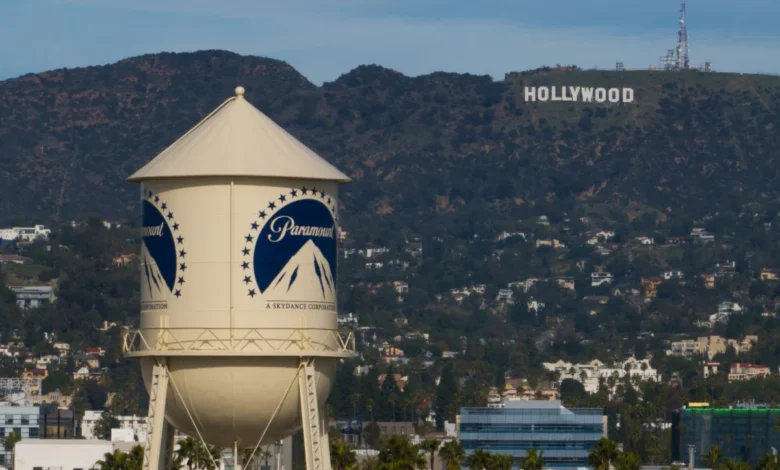
In a landmark development for the global entertainment industry, Paramount Global reached a critical settlement on Monday with a coalition of 12 state attorneys general, effectively clearing the final significant regulatory obstacle in its proposed $81 billion acquisition of Warner Bros. Discovery. This merger, which promises to reshape the landscape of Hollywood and streaming media, now moves toward judicial approval, signaling a consolidation of power that has drawn both cautious optimism from labor representatives and sharp scrutiny from market analysts.
The resolution of the antitrust lawsuit, which had previously threatened to derail the transaction, mandates stringent conditions that prioritize domestic production and worker protections. While the legal pathway is now clearer, the broader implications of this mega-merger continue to spark intense debate regarding market competition, the future of cable television, and the ultimate cost to the end consumer.
A Chronology of the Mega-Merger
The path to this multibillion-dollar consolidation has been marked by complex negotiations and intense regulatory pushback. The initial discussions regarding a potential combination of Paramount Global and Warner Bros. Discovery surfaced in late 2023, as both entities faced the mounting pressures of a declining linear television market and the high-stakes, capital-intensive nature of the streaming wars.
By early 2024, the companies formally entered talks, aiming to create a media titan capable of competing with giants like Netflix, Disney, and Amazon. However, the proposal immediately triggered antitrust concerns. In mid-2024, a coalition of 12 state attorneys general filed a lawsuit challenging the merger, arguing that the concentration of such vast intellectual property and distribution channels would stifle competition and harm labor interests within the creative sector.
The ensuing months were characterized by closed-door mediation between Paramount executives and state regulators. The settlement reached this week represents a strategic compromise: Paramount agreed to enforceable commitments to ensure that the merged entity does not exercise its market power to the detriment of domestic production capacity or unionized labor.
The Financial and Operational Mandates
Under the terms of the agreement, which remains subject to final judicial approval, Paramount has committed to a robust multi-year investment strategy designed to sustain the U.S. film industry. The company has pledged to invest $1.5 billion in domestic movie production over the next five years, averaging $300 million annually on top of its 2025 expenditure levels. This commitment is particularly significant given that, according to data provided by the state attorneys general, domestic production currently accounts for only approximately 5% of Paramount’s overall output.
Furthermore, the settlement establishes a $25 million fund dedicated to the acquisition and support of independent films over the next five years. This requirement is paired with a specific production quota: Paramount must produce at least 30 films annually for the first two years, increasing to 32 films annually for the subsequent three-year period. At least four of these films per year must be independent productions.
The agreement includes "poison pill" provisions to ensure compliance. Should Paramount fail to meet these production targets, the company faces severe penalties, including the forced divestiture of its prestigious Miramax Studios and a $30 million payment to health care and retirement trust funds supporting industry labor unions.
Workforce Protections and Structural Changes
A central point of contention in the merger talks was the potential for massive layoffs. Paramount has previously disclosed plans to achieve approximately $6 billion in cost synergies, primarily through the elimination of redundant operational departments. To mitigate the impact of these cuts, the settlement mandates the creation of a $47.5 million workforce transition fund. These funds are earmarked for training and career development programs for employees displaced by the merger.
Moreover, the company has committed to honoring all pre-existing collective bargaining agreements, ensuring that the merger does not serve as a mechanism to erode union protections or bypass established labor protocols. The agreement requires the company to engage in good-faith negotiations with unions as it integrates its operations.
Regarding the management of media assets, the settlement allows Paramount to retain its portfolio of cable channels, a significant victory for the company’s long-term strategy. However, the agreement imposes a separation of interests for at least five years: Paramount must negotiate terms for basic cable channels under the Paramount and Warner Bros. brands separately. Failure to maintain this arm’s-length negotiation process could trigger a requirement to divest specific channels. Additionally, the settlement dictates the formation of an independent board to oversee editorial operations, specifically ensuring that CNN (under Warner Bros.) and CBS (under Paramount) remain insulated from corporate influence, maintaining journalistic integrity across the news divisions.
Market Analysis and Consumer Implications
Despite the guarantees provided to workers and domestic producers, industry analysts remain wary of the deal’s long-term impact on the average consumer. The primary concern is the reduction of competitive pressure, which market observers argue almost invariably leads to price increases.
"Where I’m looking at this is through the consumer’s point of view, and resoundingly, consumers are concerned about price hikes and they are preparing for price hikes," noted Mike Proulx, research director at Forrester. "They care less about the theatrical releases and some of the other industry terms. What they care about is how this is going to hit their wallets."
The consolidation of such vast content libraries—spanning everything from legacy broadcast networks to premium streaming services—creates a formidable market entity. While the settlement mandates production volume, it does not explicitly cap subscription prices or advertising rates, leaving the door open for the company to pass the costs of the merger and its subsequent investments onto the consumer base.
From a structural perspective, the merger creates a company with unprecedented reach. By combining the cinematic history of Paramount with the expansive reach of Warner Bros. Discovery, the new entity will hold a library of intellectual property that dominates the global box office and television syndication markets. While this scale provides the efficiency needed to navigate a digital-first economy, the antitrust settlement serves as a tacit acknowledgment that such dominance requires a regulatory leash to prevent the total marginalization of independent voices and domestic production pipelines.
Future Outlook and Next Steps
The focus now shifts to the judicial review process. The presiding judge will evaluate whether the settlement effectively addresses the antitrust concerns raised by the states. Industry observers anticipate that the court will look closely at whether the penalties—such as the potential divestiture of Miramax—are sufficiently punitive to deter non-compliance.
For the entertainment industry, the conclusion of this litigation marks the end of an era of independent operations for these legacy studios. As the industry continues to pivot toward streaming-dominant models, the success of this merger will serve as a bellwether for future consolidation efforts. Whether the promised investments in domestic film and worker protections translate into long-term industry stability, or whether the resulting market concentration leads to the price hikes feared by consumers, remains to be seen.
For now, Paramount Global and Warner Bros. Discovery are moving closer to a unified future, with the regulatory roadmap finally defined. The transition will be monitored closely by labor groups, content creators, and government regulators alike, all of whom have a vested interest in ensuring that the largest media merger in recent history does not sacrifice the health of the creative ecosystem for the sake of corporate synergy.