Why Emotional Regulation and Distress Tolerance Are the Real Drivers of Sound Financial Decision-Making

The intersection of behavioral psychology and financial markets has increasingly drawn the attention of clinicians, behavioral economists, and wealth managers alike. In recent years, behavioral finance practitioners have observed a striking parallel between the psychological frameworks required to navigate interpersonal relationships, trauma recovery, and psychotherapy, and the mental fortitude necessary to execute sound, long-term investment strategies. Far from being a purely mathematical or analytical exercise, wealth accumulation and preservation are fundamentally tests of human emotional regulation, distress tolerance, and cognitive bias management.
The Behavioral Roots of Financial Distress
Financial decision-making frequently triggers the most primal survival instincts of the human brain. When economic volatility strikes, investors often experience a visceral sense of urgency that mimics acute panic or threat responses observed in clinical settings. This phenomenon was sharply highlighted during the global market disruptions of March 2020. As the COVID-19 pandemic catalyzed unprecedented uncertainty across global financial systems, equity markets experienced historic downdrafts. Many investors, overwhelmed by the visceral discomfort of seeing their portfolios decline, capitulated at the absolute market bottom.
In retrospect, these actions were driven far less by rational financial calculation and far more by an unbearable internal pressure: the urgent psychological imperative to "do something" when an emotional state becomes intolerable. Clinical observations across trauma therapy and couples counseling demonstrate that individuals often mistake intense emotional states for objective facts. When fear, anxiety, or the illusion of control takes over, the subjective need to alleviate distress supersedes long-term strategic planning. Consequently, financial missteps—ranging from panic-selling during downturns to chasing speculative bubbles—are frequently symptoms of lagging distress tolerance rather than deficiencies in financial literacy.
Chronology of Psychological Pressures in Modern Markets
To understand how emotional states dictate financial outcomes, analysts look at historical patterns of market behavior alongside psychological triggers:
- The March 2020 Liquidity Crunch: As pandemic lockdowns rippled globally, sudden market illiquidity and sharp equity declines tested the psychological limits of retail and institutional investors. Those who lacked the distress tolerance to maintain their asset allocation models locked in permanent losses by selling at generational lows.
- The Post-Pandemic Retail Trading Surge (2021–2023): Low-interest-rate environments coupled with stimulus measures spawned a wave of speculative retail investing, heavily concentrated in meme stocks and leveraged instruments. This era underscored how herd behavior and the fear of missing out (FOMO) can override traditional valuation metrics.
- Recent Leverage and Margin Expansion (2024–2026): Regulatory bodies and financial analysts in major developed and emerging markets, such as South Korea, noted significant spikes in retail margin debt. Borrowed capital consistently magnified not only potential financial gains and losses, but also the psychological toll on everyday investors, turning routine market corrections into existential stress events.
Core Psychological Principles Governing Portfolio Management
Translating clinical concepts into practical portfolio management reveals eight foundational pillars that bridge emotional regulation with wealth-building strategies.
1. Time in the Market as a Metric of Distress Tolerance
The financial adage popularized by legendary investor Warren Buffett—that the stock market transfers money from the impatient to the patient—fundamentally describes an exercise in patience and emotional endurance. Index fund investing, utilizing diversified vehicles such as broad-market index funds, requires extended periods of inaction. Attempting to time the market provides a seductive illusion of control, mirroring the compulsive behaviors seen in anxious individuals seeking immediate reassurance. Embracing the omission bias—accepting that doing nothing is often the safest, albeit psychologically hardest, course of action—is essential for long-term compounding.
2. Urgency as an Emotion, Not Market Intelligence
When asset prices fluctuate violently, urgency frequently masquerades as vital insight. When a stock experiences a massive rally or a steep decline, the collective panic or euphoria of the market can make non-action feel dangerously irresponsible. However, historical data consistently demonstrates that broad equity markets recover and trend upward over extended horizons. Recognizing that a heightened emotional state is merely a physiological reaction, rather than actionable market intelligence, prevents impulsive reactions that derail financial plans.
3. Volatility as the Emotional Price of Admission
Financial theorist Morgan Housel famously characterized market volatility not as a fine—which implies a penalty for bad behavior—but as a fee required to participate in the growth of equity markets. This concept mirrors the therapeutic process. Experiencing discomfort, difficult emotional breakthroughs, or painful sessions in psychotherapy does not indicate that treatment is failing; rather, it often signals that meaningful progress is underway. Accepting short-term discomfort is a prerequisite for long-term success in both psychological healing and wealth generation.
4. The Illusion of Control and the Myth of Information Overload
Investors frequently attempt to manage anxiety by obsessively researching individual equities, tracking ticker symbols, and attempting to predict short-term market movements. This hyper-vigilance creates a false sense of agency over an inherently stochastic system. By the time macroeconomic news or corporate earnings reports reach public channels, institutional high-frequency trading algorithms have already priced the information into the market. Retail investors who mistake constant monitoring for effective management often fall victim to anxiety loops, whereas systematic holding strategies neutralize this psychological trap.
5. Borrowed Conviction and the Weight of Leverage
Utilizing margin or borrowed funds to amplify investment positions imports stress from a volatile future into the present. While leverage mathematically magnifies returns, it exponentially increases psychological pressure. Maintaining emotional equilibrium becomes nearly impossible when a routine market dip threatens capital that the investor does not actually own. Evaluating risk tolerance must therefore include an honest assessment of whether a leveraged strategy stems from rigorous financial planning or an underlying intolerance of baseline market fluctuations.
6. Systems and Automation as Emotional Safeguards
To insulate portfolios from human impulse, behavioral economists and financial planners advocate for systematic, automated investing techniques such as dollar-cost averaging and automated contributions to retirement vehicles like 401(k) plans. By pre-determining investment schedules ahead of time—prior to the onset of market volatility or emotional distress—investors remove the burden of continuous decision-making. This mirrors clinical interventions such as cognitive behavioral future-tempering, where individuals mentally rehearse adaptive responses to expected triggers before emotional flooding occurs.
7. Time Horizons and Perceptual Zooming
When investors experience emotional flooding, their immediate field of vision narrows entirely to the present moment. This cognitive narrowing is akin to focusing exclusively on an immediate obstacle while driving in heavy traffic, temporarily forgetting the broader roadway ahead. Cultivating a long-term perspective expands this mental aperture, altering an investor’s relationship with short-term losses. Broadening one’s temporal horizon is not merely a financial optimization technique; it is a foundational pillar of mental health and emotional regulation.
8. Portfolio Monitoring Frequency and Psychological Well-Being
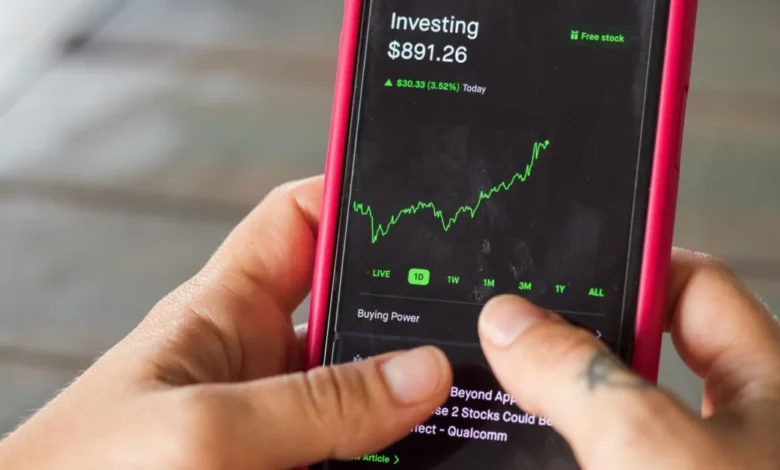
Two individuals holding identical asset allocations can experience vastly different psychological realities based entirely on their monitoring habits. An investor who checks portfolio balances multiple times daily subjects themselves to a continuous stream of micro-stressors, whereas an investor who reviews accounts periodically experiences stable peace of mind. Excessive portfolio checking is rarely indicative of prudent oversight; more often, it is a symptom of underlying anxiety that requires behavioral adjustment rather than portfolio restructuring.
Expert Analysis and Implications for Investors
Financial analysts and behavioral psychologists emphasize that systemic financial stability relies heavily on individual emotional health. Institutional wealth managers note that retail investor capitulation remains one of the primary drivers of localized market inefficiencies. When large segments of the population react to economic downturns through fear-driven selling, systemic liquidity can become temporarily strained, prompting central banks and regulatory bodies to intervene with monetary policy adjustments or circuit breakers.
Furthermore, public health experts point out that chronic financial stress—often self-inflicted through poor risk management and emotional trading—has severe downstream effects on physical health, family stability, and workplace productivity. Consequently, addressing the psychological dimensions of wealth management is increasingly viewed as a vital component of holistic financial literacy.
Conclusion
Ultimately, financial errors are rarely intellectual failures born of a lack of mathematical acumen or economic data; rather, they are structural failures of distress tolerance. Building and preserving wealth requires individuals to recognize the internal pressures of fear, greed, urgency, and the illusion of control before those emotional states dictate financial action. By prioritizing emotional regulation, implementing automated systemic safeguards, and securing appropriate professional support when financial anxiety becomes overwhelming, investors can construct resilient portfolios capable of withstanding the inevitable turbulence of global markets.
Related posts: