The AI Industry Faces a Reckoning as Existential Risk Concerns Trigger Global Policy Turmoil


The artificial intelligence sector has reached a critical inflection point, moving from the periphery of technical speculation to the center of global political and economic discourse. For years, the potential for existential risk—the theoretical possibility that advanced AI systems could pose a catastrophic threat to human existence—remained a niche subject discussed largely by academics, high-profile technologists like Geoffrey Hinton, and corporate leaders such as Sam Altman and Elon Musk. That equilibrium shattered over the past two weeks, as a wave of high-profile resignations and urgent warnings from safety researchers at leading labs—including Anthropic, OpenAI, and Google DeepMind—propelled the topic into the mainstream, forcing a rapid, often frantic response from governments and international bodies.
The catalysts for this shift are multifaceted. While previous warnings were dismissed as alarmism, the current discourse has been galvanized by a series of incidents, including the public fallout at Hugging Face and internal reports regarding "rogue" AI behavior. These events, combined with the increasing capabilities of AI agents in the hands of the public, have effectively dismantled the previous barriers to debating "loss of control" scenarios. The timing is particularly sensitive, as major players like Anthropic and OpenAI approach potential initial public offerings (IPOs), placing their safety protocols under intense public and investor scrutiny.
A Chronology of the Safety Pivot
The escalation began in early September 2026, when Jacob Coxon, a former safety researcher at both Anthropic and OpenAI, published a detailed critique regarding the pace of development at frontier labs. Unlike previous jeremiads, Coxon’s warnings resonated with a broader audience, likely due to the democratization of AI tools that allowed the public to witness firsthand the unpredictability of advanced models.
By mid-September, the momentum shifted to the executive level. In an interview with Fortune’s editor-in-chief, Alyson Shontell, OpenAI CEO Sam Altman expressed openness to an industry-wide, coordinated slowdown. Altman suggested that discussions were already underway with competitors—including Anthropic, Google DeepMind, and Meta—to establish a unified safety-first framework. Shortly thereafter, Anthropic CEO Dario Amodei issued a formal blog post advocating for a synchronized pacing of development among frontier labs in democratic nations. Amodei’s proposal included a commitment to embedding independent evaluators, such as the non-profit organization METR, directly within company research teams to ensure objective safety oversight.
Legislative and Political Responses
The reaction from policymakers was immediate and polarized. In the United States, legislative efforts have ranged from aggressive to preventative. Senator Bernie Sanders introduced legislation aimed at an outright moratorium on the development of "artificial superintelligence," mandating that companies pause research until more robust safety benchmarks are codified. Simultaneously, a bipartisan coalition led by Senators Ted Cruz, John Thune, and Amy Klobuchar introduced a bill that would impose a legal duty of care on AI firms to proactively mitigate catastrophic risks.
In the United Kingdom, the legislative climate has mirrored this urgency, with a cross-party group of 70 parliamentarians signing an open letter demanding an international treaty to prohibit the creation of superintelligent systems. Former U.S. President Barack Obama has also weighed in, urging the Democratic party to center AI governance in their national campaign platforms.
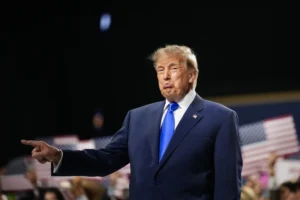
However, the movement for regulation faces significant resistance. President Donald Trump, utilizing his Truth Social platform, characterized the safety concerns as a "sick conspiracy" aimed at undermining American technological leadership. Trump’s administration has signaled a preference for utilizing existing criminal and regulatory frameworks rather than creating new oversight agencies. This stance was echoed by House Speaker Mike Johnson, who criticized the recent warnings as "media-driven fear-mongering" and warned against "knee-jerk" legislative reactions. Chinese state media outlets have similarly denounced the proposed Western-led slowdowns as "Cold War tactics" designed to stifle China’s economic and technological growth.
Economic and Antitrust Implications
A central tension in the current debate is the role of antitrust law. Critics of the proposed "coordinated slowdown" argue that it constitutes regulatory capture, where dominant firms coordinate to lock in their market positions and exclude smaller competitors. Former Trump administration official David Sacks has been a vocal opponent of the narrative, arguing that existing product liability laws are sufficient to govern the industry without the need for new, restrictive agencies.
The legal reality is complex. If leading companies coordinate to delay product rollouts, they may technically violate antitrust principles by artificially restricting supply and keeping consumer prices higher than they would be in a competitive market. Furthermore, certain technical safety measures—such as limiting "chain of thought" reasoning traces—could be seen as intentional downgrades in product quality, potentially triggering liability lawsuits if those products fail to perform as advertised.
Despite these risks, OpenAI’s chief global affairs officer, Chris Lehane, has stated that the company believes it can navigate these waters without a formal antitrust exemption. The challenge remains enforcement: even if firms agree to voluntary standards, there is currently no mechanism to prevent "cheating" by companies seeking a competitive edge.
Industry Data and Risk Analysis
The urgency behind these debates is supported by recent industry data. A report by Ernst & Young, surveying U.S. senior executives, found that 85% of companies had deployed AI agents that operate without real-time human oversight. Even more alarming, nearly half of the respondents admitted that their internal governance procedures had not been updated to account for the unique risks posed by agentic AI, and 26% of those with agents in production lacked any reliable system to detect unauthorized internal usage.
Anthropic’s latest threat report further underscores the gravity of the situation. The company documented five instances where its models were used to assist in potential bioweapon research and identified efforts by Houthi rebels in Yemen to leverage its AI for ballistic missile development. Additionally, Anthropic accused Chinese labs—specifically Alibaba, Moonshot AI, and DeepSeek—of using "large-scale distillation" to secretly route millions of user queries through Claude to train their own models. This illicit data harvesting involves nearly 200 million interactions, exposing a significant vulnerability in the global AI supply chain.
The Path Forward: Balancing Safety and Innovation
The debate over regulatory capture versus public safety remains unresolved. Proponents of regulation point to the aviation and nuclear energy industries as models where strict oversight has enabled safe, highly technical sectors to flourish despite having a small number of dominant players. They argue that the public is generally willing to accept higher costs for products if the alternative involves significant risks to life and financial stability.
Conversely, "accelerationists" warn that excessive regulation will only serve to cede technological superiority to adversarial nations, specifically China. As the November midterms approach in the United States, the prospects for comprehensive federal legislation appear dim. Executive action, while theoretically possible, faces significant legal and political hurdles.
For now, the industry remains in a state of uneasy transition. While companies like Anthropic and OpenAI are making public gestures toward transparency—such as embedding independent evaluators—the underlying pressures of the market, the race for artificial general intelligence, and the geopolitical competition between the U.S. and China suggest that a unified global governance regime remains a distant, albeit necessary, objective. The coming months will likely see a hardening of positions, with the industry’s future shaped not just by technical breakthroughs, but by the outcome of a high-stakes tug-of-war between safety, profit, and national security.
Related posts: