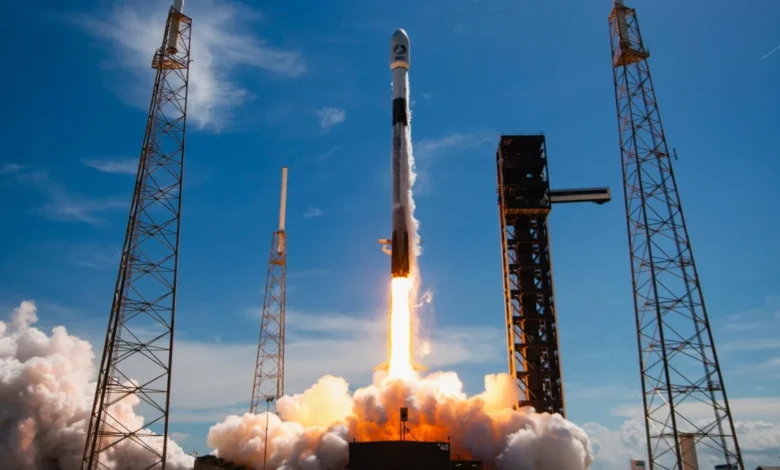
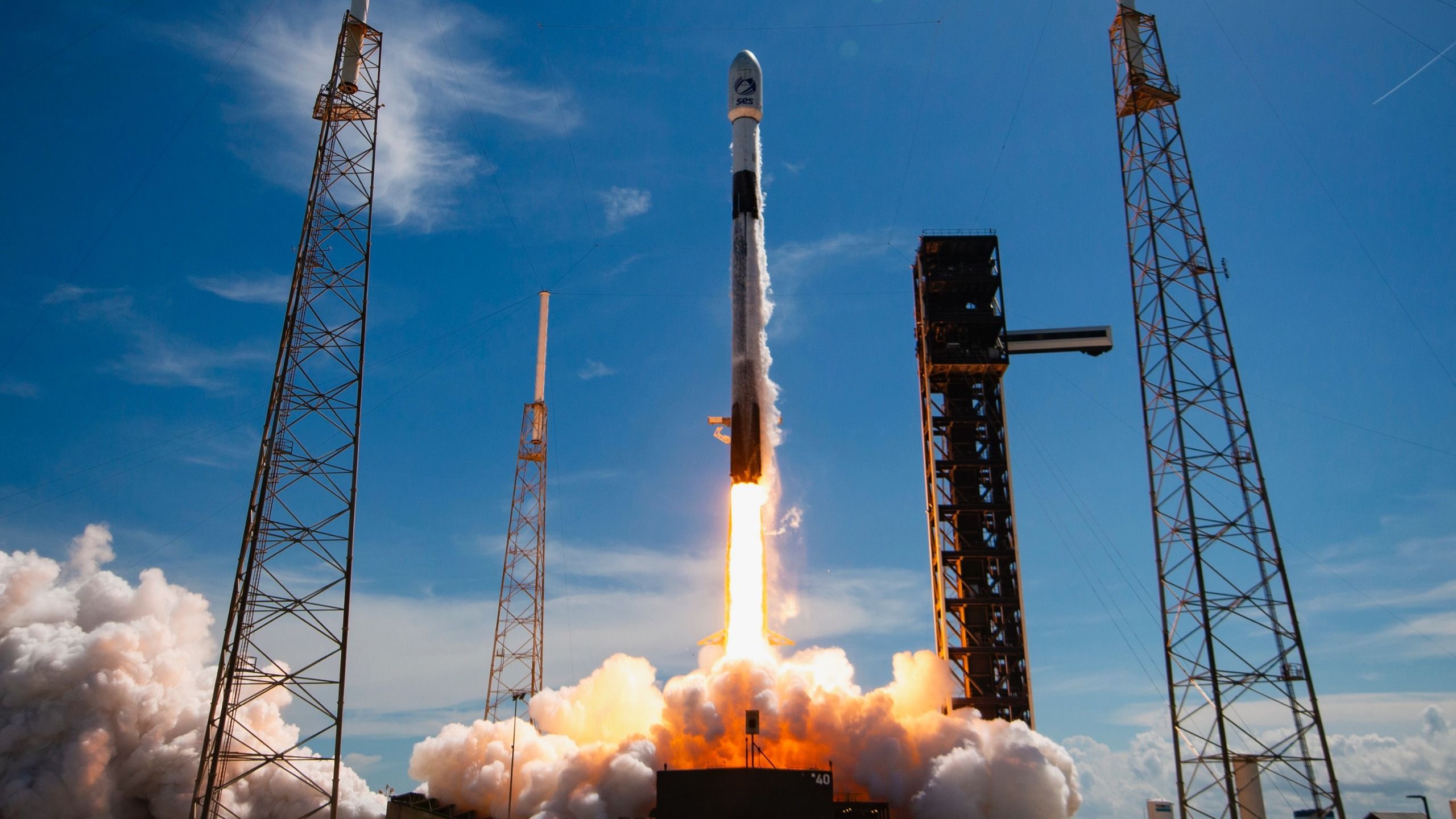
SpaceX achieved a monumental milestone in its corporate history on September 13, 2026, successfully lofting the final three satellites for the SES O3b mPOWER constellation into medium Earth orbit (MEO). The mission, which lifted off from Cape Canaveral Space Force Station at 2:49 p.m. EDT (1849 GMT), marked the 700th flight of the Falcon rocket family—a lineage that began in 2006 with the experimental Falcon 1 and has since evolved into the global gold standard for orbital launch services.
The Evolution of the Falcon Fleet
The journey to the 700th launch is a testament to the rapid maturation of the private spaceflight industry. When the Falcon 1 first reached orbit in 2006, the prospects for a startup-led launch vehicle were viewed with skepticism by traditional aerospace players. After five missions, the program was retired in favor of the Falcon 9, which debuted in 2010. The Falcon 9 has since become the workhorse of the modern space economy, demonstrating unprecedented reliability and reusability.
While the Falcon 9 has conducted the vast majority of the company’s 700 missions, the Falcon Heavy—a super-heavy-lift derivative—has provided critical heavy-lift capabilities, completing 13 missions to date. This synergy between the two systems has allowed SpaceX to dominate the commercial launch market, providing a cadence of service that has significantly lowered the cost of access to space for both government and private entities.
Mission Profile: The O3b mPOWER Completion
The mission specifically targeted the completion of the O3b mPOWER constellation, an ambitious project by Luxembourg-based satellite operator SES. These satellites, manufactured by Boeing, are designed to operate at an altitude of approximately 8,000 kilometers (5,000 miles) in medium Earth orbit. This placement allows the constellation to provide high-throughput, low-latency broadband connectivity to maritime, aviation, and government users globally.
The launch profile was executed with the precision now expected of the SpaceX operations team. The Falcon 9 first stage, identified as booster B1080, successfully returned to Earth less than nine minutes after liftoff. The booster executed a controlled landing on the "A Shortfall of Gravitas" drone ship stationed in the Atlantic Ocean, marking the 29th flight for this specific vehicle. The recovery of such high-flight-count hardware remains the cornerstone of SpaceX’s economic model, enabling the rapid turnaround times required for the company’s aggressive 2026 launch manifest.
Following the separation of the first stage, the Falcon 9’s upper stage continued its trajectory, performing a series of engine burns to reach the required orbital insertion altitude. The final three satellites were deployed in a 14-minute sequence beginning 33.5 minutes after launch. With these assets now in position, the O3b mPOWER constellation reaches its full operational capacity, providing a network designed to handle surging global bandwidth demands.
Technical Context and Industry Impact
The O3b mPOWER satellites represent a significant leap forward in communications technology. Weighing approximately 3,750 pounds (1,700 kilograms) each, these spacecraft are software-defined, allowing operators to adjust beam strength and connectivity in real time. Unlike traditional geostationary satellites, which are fixed in one position, these MEO satellites offer the agility required for modern digital infrastructure.
According to technical documentation provided by SES, the constellation is engineered for mission-critical sectors where downtime is not an option. By pairing these advanced satellites with an intelligent, software-defined ground ecosystem, SES aims to provide guaranteed performance levels that are traditionally difficult to maintain in satellite communications. SpaceX has been the exclusive launch partner for this program, having successfully launched all 13 satellites across six separate missions since December 2022.
A Banner Year for SpaceX Operations
The September 13 mission stands as the 107th orbital launch for SpaceX in 2026, a year that has pushed the limits of launch cadence. Of these, 105 flights were conducted by the Falcon 9, while two utilized the Falcon Heavy. This consistent rhythm is a vital indicator of the health of the space-based internet economy, as companies and nations alike race to deploy, replace, and upgrade orbital assets at an unprecedented pace.
Beyond the Falcon program, SpaceX continues to divert significant resources toward the development of the Starship megarocket. Having completed two suborbital test flights earlier in 2026, the company is currently finalizing preparations for a third flight, which industry analysts suggest will be the first attempt to place the gargantuan vehicle into an orbital trajectory. If successful, this would mark the beginning of a new era in space transport, significantly increasing the mass-to-orbit capability and potentially rendering existing launch costs obsolete.
Broader Economic and Geopolitical Implications
The completion of the O3b mPOWER constellation is a milestone not just for SES, but for the global telecommunications sector. As bandwidth demand continues to grow—driven by the expansion of 5G networks, the rise of cloud computing, and the integration of remote operations in the industrial and energy sectors—the ability to rely on low-latency satellite backhaul becomes a competitive necessity.
The success of this mission also highlights the critical dependence of international satellite operators on the launch services provided by SpaceX. With the Falcon 9 serving as the primary vehicle for global satellite deployment, the company has effectively become the "toll booth" of the space age. While this provides a reliable path to orbit, industry experts often point to the risks of over-reliance on a single provider. However, until competitive heavy-lift launch vehicles from other nations or private startups achieve similar reliability and cost-effectiveness, SpaceX is expected to maintain its central role in the space ecosystem.
Looking Ahead
As the industry reflects on the 700-mission milestone, the focus shifts toward sustainability and the next generation of launch infrastructure. The retirement of the Falcon 1 in 2010 was a necessary step to allow for the growth of the Falcon 9, and many observers wonder if a similar transition is on the horizon as Starship progresses.
The successful landing of booster B1080 for its 29th flight serves as a reminder of how far the industry has come. Ten years ago, the idea of a rocket flying 29 times would have been considered science fiction. Today, it is part of the operational baseline. As we look toward the remainder of the 2026 calendar, the eyes of the aerospace community remain fixed on SpaceX’s next major objective: the orbital debut of Starship.
The completion of the O3b mPOWER constellation marks the end of a specific chapter in satellite deployment. It underscores a shift toward more flexible, software-driven, and low-latency communication infrastructures. For SES, the immediate focus will be on the final commissioning of the satellites, ensuring they are integrated into the existing ground network. For SpaceX, the focus remains on the next launch, the next milestone, and the continuous refinement of the systems that have made the last 700 missions possible.
In conclusion, the events of September 13 were more than just a successful delivery of hardware; they represented the culmination of years of engineering, the solidification of a commercial partnership, and a symbolic marker of how rapidly the capabilities of the space industry have expanded. With the global appetite for data showing no signs of slowing, the infrastructure deployed today will play a foundational role in the connectivity of the coming decade.