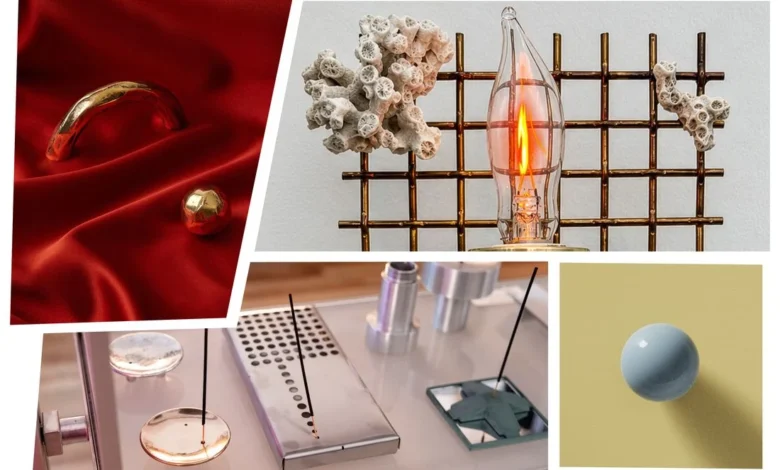
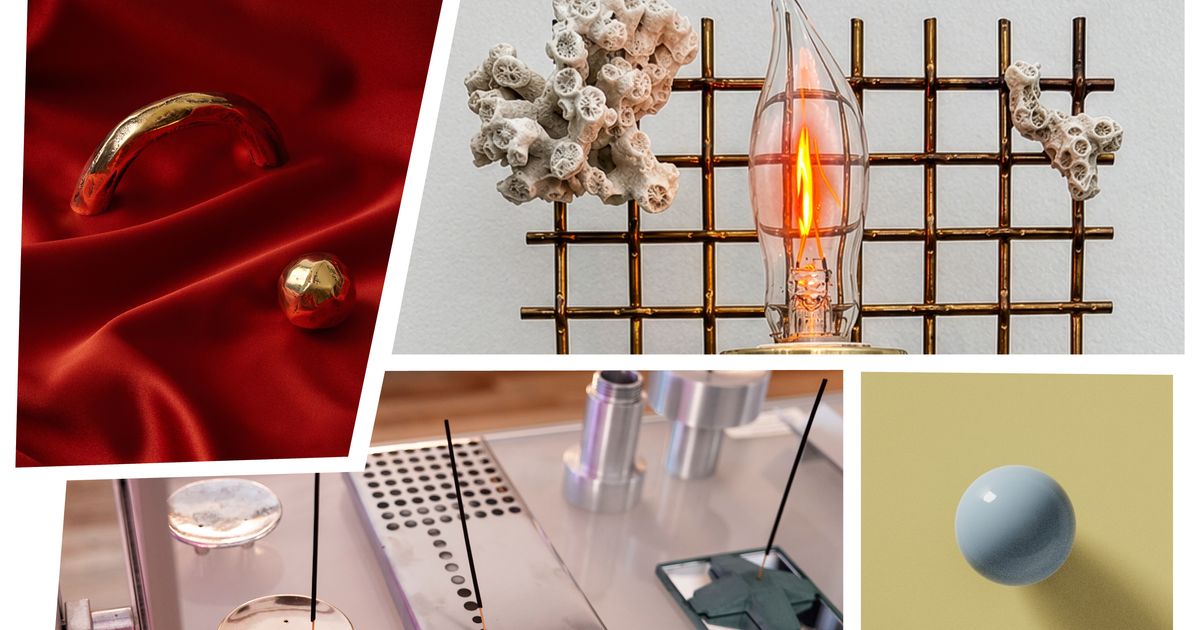
New York Design Month, the city’s annual celebration of innovation, craftsmanship, and aesthetic exploration, has long been associated with the grand—the sprawling furniture installations at the Jacob K. Javits Convention Center, the towering architectural pavilions in the Meatpacking District, and the immersive showroom takeovers in SoHo. However, the most recent iteration of the festival highlighted a burgeoning shift in the industry: a pivot toward the miniature. While furniture that commands a room’s square footage remains a staple, a new wave of designers is finding creative liberation in objects that fit in a pocket or rest on a palm. From high-concept light dimmers to sculptural hardware and avant-garde nightlights, the festival proved that some of the most significant design statements are currently being made on the smallest scales.
The movement toward "micro-design" addresses a long-standing gap in the market. Historically, the discerning homeowner looking for functional objects smaller than a side table often faced a binary choice: the luxury antiquity of Lalique or Fabergé, or the utilitarian anonymity of big-box retailers. This year’s participants sought to bridge that gap, elevating the "unthought-of" objects—the light switch, the incense holder, the cabinet pull—into pieces of art that are both accessible and deeply personal.
The Evolution and Context of NYCxDESIGN
New York Design Month, anchored by the NYCxDESIGN festival, has evolved significantly since its official inception in 2013. What began as a way to unify the city’s various design disciplines—including architecture, interior design, fashion, and technology—has become a global destination that attracts hundreds of thousands of visitors. The festival serves as a critical economic engine for New York City, where the design sector employs over 150,000 people and generates billions in annual wages.
Traditionally, the festival’s timeline follows the International Contemporary Furniture Fair (ICFF) and WantedDesign, but the "fringe" events in boroughs like Brooklyn and Queens have increasingly become the breeding ground for new trends. The focus on small-scale objects in the latest season reflects a broader cultural trend toward "tactile domesticity." As digital interfaces become more pervasive, consumers are seeking physical interactions with their environment that feel intentional and grounded. This shift was evident in four primary showcases that defined the "small and beautiful" theme of the month.
Tactile Light Control: The Rise of Dimwit
One of the standout debuts of the season occurred at the Afternoon Light design fair, where the humble light dimmer was reimagined not as a hidden utility, but as a centerpiece of wall decor. Dimwit, an electrical hardware company founded by designer Joanna Bean Martin, introduced "Anagrams," a collection of dimmers that challenges the current obsession with smart-home applications.
In an era where lighting is increasingly controlled via smartphone apps or voice commands, Dimwit returns the user to the physical act of "turning the dial." The Anagrams line features bauble-like rotary knobs and switch plates in a sophisticated palette of lemon, aubergine, and sage. The design’s primary innovation lies in its modularity; the components can be swapped out without the need for tools, allowing homeowners to treat their hardware like jewelry for their walls.
This approach reflects a growing "analog revival" in interior design. By elevating the rotary knob into a sculptural orb on a canvas, Dimwit emphasizes the sensory satisfaction of weight and resistance—qualities that are absent in the digital sphere. Industry analysts suggest that this focus on "analog interaction" is a direct response to screen fatigue, as designers look for ways to make the home environment more engaging and less automated.
Sculptural Utility: Petra’s Hardware Revolution
The quest to beautify the mundane continued with Petra, a showroom founded by Monica Khemsurov, co-founder of the influential design platform Sight Unseen. For years, Petra has acted as a curator for high-end hardware, but this season marked the debut of its own line: Petra Fundamentals.
The collection consists of seven coordinating knob and pull combinations, hand-cast in India at the atelier of Anastasio Home. To create these pieces, Petra collaborated with a roster of contemporary design heavyweights, including Bower Studios and the design duo Alexis and Ginger. The results are objects that draw inspiration from historical and artistic milestones. Some pieces echo the silhouette of ancient oil lamps and Victorian brooches, while others pay homage to the mid-century modernism of Barbara Hepworth and Isamu Noguchi.
The production of these items highlights a significant trend in the "small objects" market: the marriage of global craftsmanship with boutique design. By utilizing hand-casting techniques in India, Petra is able to produce hardware that possesses a "living" finish and a weightiness that mass-produced zinc-alloy handles lack. This focus on materiality—bronze, brass, and stone—repositions the cabinet pull as a foundational element of interior architecture rather than an afterthought.
The Incense Burner as a Designer’s Calling Card
In Ridgewood, Queens, the design shop and incubator Lichen hosted an exhibition that underscored the unexpected popularity of a single object: the incense burner. According to the shop’s founders, the incense holder is the most common item submitted by independent designers for consideration. The exhibition sought to understand why this specific object has become a modern design "rite of passage."
The survey featured a diverse array of forms, ranging from the whimsical to the architectural. Highlights included a ceramic smokestack, a miniature version of the iconic Soriana sofa, and a three-legged glass creature. One of the more conceptual pieces featured a series of figures holding a "life net" designed to catch falling ash.
The proliferation of the incense burner in the design community can be attributed to its low barrier to entry and its high potential for experimentation. Unlike a chair or a table, which must adhere to strict ergonomic and structural requirements, an incense holder requires only a small footprint and a way to secure a stick or cone. This allows designers to experiment with form, glaze, and narrative at a lower price point. Indeed, many of the pieces at Lichen were priced under $100, making high-level design accessible to a younger, urban demographic that may not have the space or budget for larger furniture.
DUDD LITE: Reimagining the Nightlight
Perhaps the most ambitious exploration of the "small" was found in the DUDD LITE exhibition, a collaboration between Laura Young of The Future Perfect and the creative collective DUDD HAUS. The exhibition showcased 120 unique nightlights, curated from a pool of over 400 submissions.
The brief provided to the designers was deceptively simple: create a lighting element that integrates with Bocci’s 22 system—a minimalist, flush-mount electrical system. Within those parameters, the designers unleashed a torrent of creativity. The collection included:
- Architectural Homages: Sophie Collé’s tribute to classical column details.
- Material Experiments: Chen and Kai’s piece made from melted plastic bags, transforming waste into a translucent light filter.
- Abstract Narratives: Garnier Pingree’s compositions inspired by kinetic mobiles.
- Whimsical Forms: Inflatable tube men, bananas in swimwear, and Bighorn sheep talismans.
The DUDD LITE project highlights a shift in how designers view "secondary" lighting. No longer just a functional tool for navigating a dark hallway, the nightlight is being treated as a medium for humor and personality. By focusing on an object that is often overlooked or relegated to the nursery, the curators demonstrated that even the most utilitarian item can be a vehicle for sophisticated design.
Economic and Cultural Implications of Micro-Design
The focus on small, beautiful things during New York Design Month is not merely an aesthetic choice; it is a reflection of the current economic reality. As real estate prices in major metropolitan areas like New York continue to rise, living spaces are shrinking. For many residents, a "statement piece" cannot be a ten-foot sofa or a grand chandelier. Instead, the statement is made through high-quality, small-scale items that can be moved easily from one apartment to the next.
Furthermore, the "democratization of design" is more achievable at this scale. While a sculptural chair by a top-tier designer might cost upwards of $5,000, a hand-cast bronze knob or a designer incense burner is often attainable for $50 to $200. This allows a broader audience to participate in the design economy, supporting independent creators and ateliers.
From a manufacturing perspective, these small objects allow for more sustainable practices. Smaller items require fewer raw materials and are more efficient to ship, reducing the overall carbon footprint of a collection. The use of hand-casting and small-batch production also helps preserve traditional artisanal skills that might otherwise be lost to industrial automation.
Conclusion: The Impact of the Miniature
As New York Design Month concluded, the takeaway was clear: the industry is entering an era of "intimate design." The success of Dimwit, Petra, Lichen, and DUDD HAUS suggests that consumers are looking for more than just functionality; they are looking for "moments of delight" in their daily routines. Whether it is the tactile click of a well-made dimmer or the whimsical glow of a bear-shaped nightlight, these objects prove that design does not need to be large to be impactful.
By focusing on the small and the beautiful, New York’s design community has reaffirmed its role as a leader in innovation. These designers are not just making "things"; they are choreographing the small interactions that make a house feel like a home. As we look toward future design cycles, it is likely that the "jewelry of the home" will continue to outshine the furniture, proving once and for all that in the world of design, size is no measure of significance.