Blue Origin Achieves Reusability Milestone with New Glenn’s Third Flight, But Payload Suffers Setback


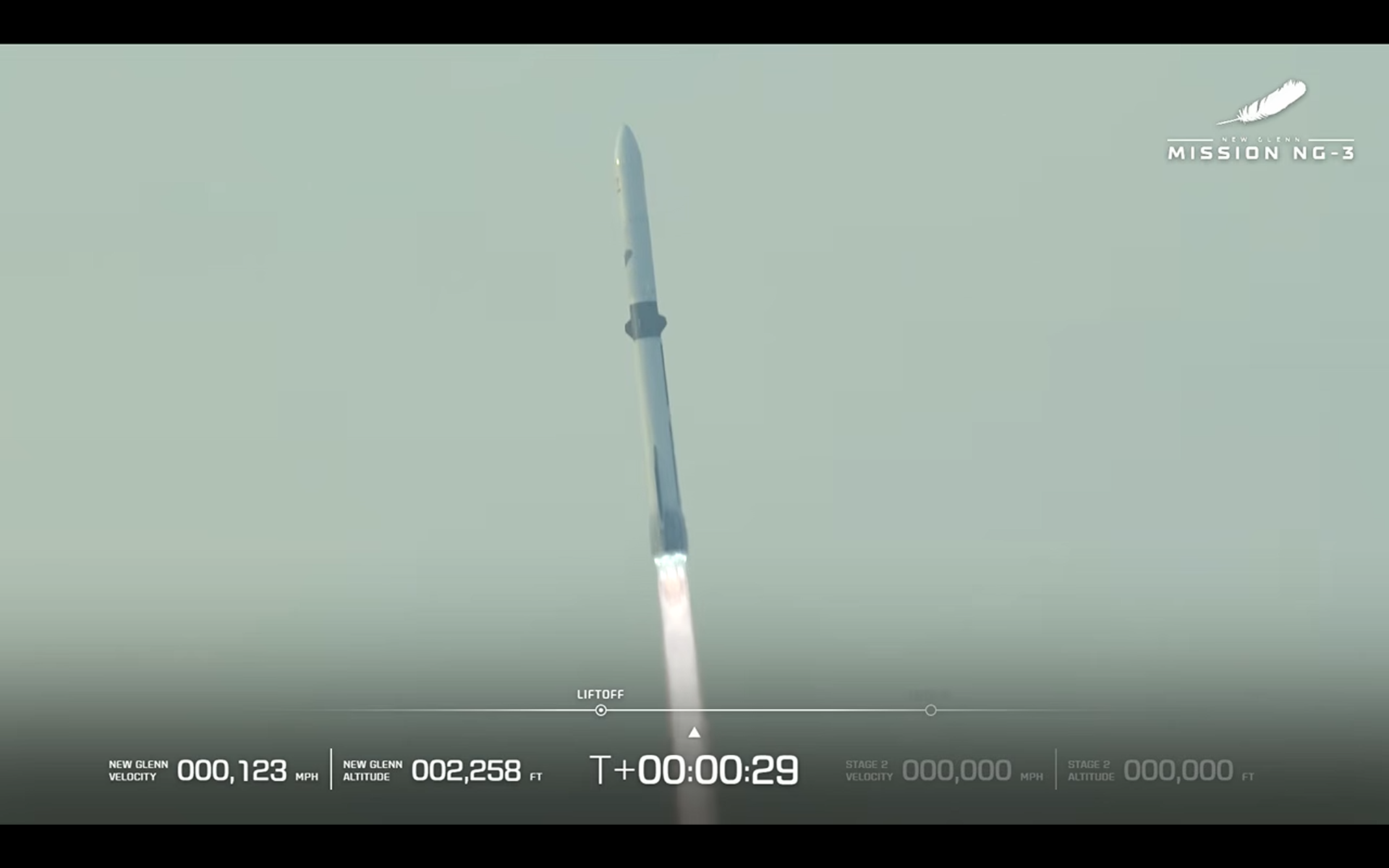
Blue Origin, the aerospace company founded by Jeff Bezos, has reached a significant milestone in rocket reusability with the third launch of its colossal New Glenn rocket. The mission, designated NG-3, successfully lifted off from Cape Canaveral Space Force Station in Florida on Sunday morning, April 19, 2026, at 7:25 a.m. EDT (1125 GMT). This flight marked a critical advancement as it utilized a previously flown first-stage booster, a crucial step toward the company’s ambitious goal of making spaceflight more economical and sustainable. However, the mission was marred by a significant setback concerning its primary payload, the AST SpaceMobile BlueBird 7 satellite.
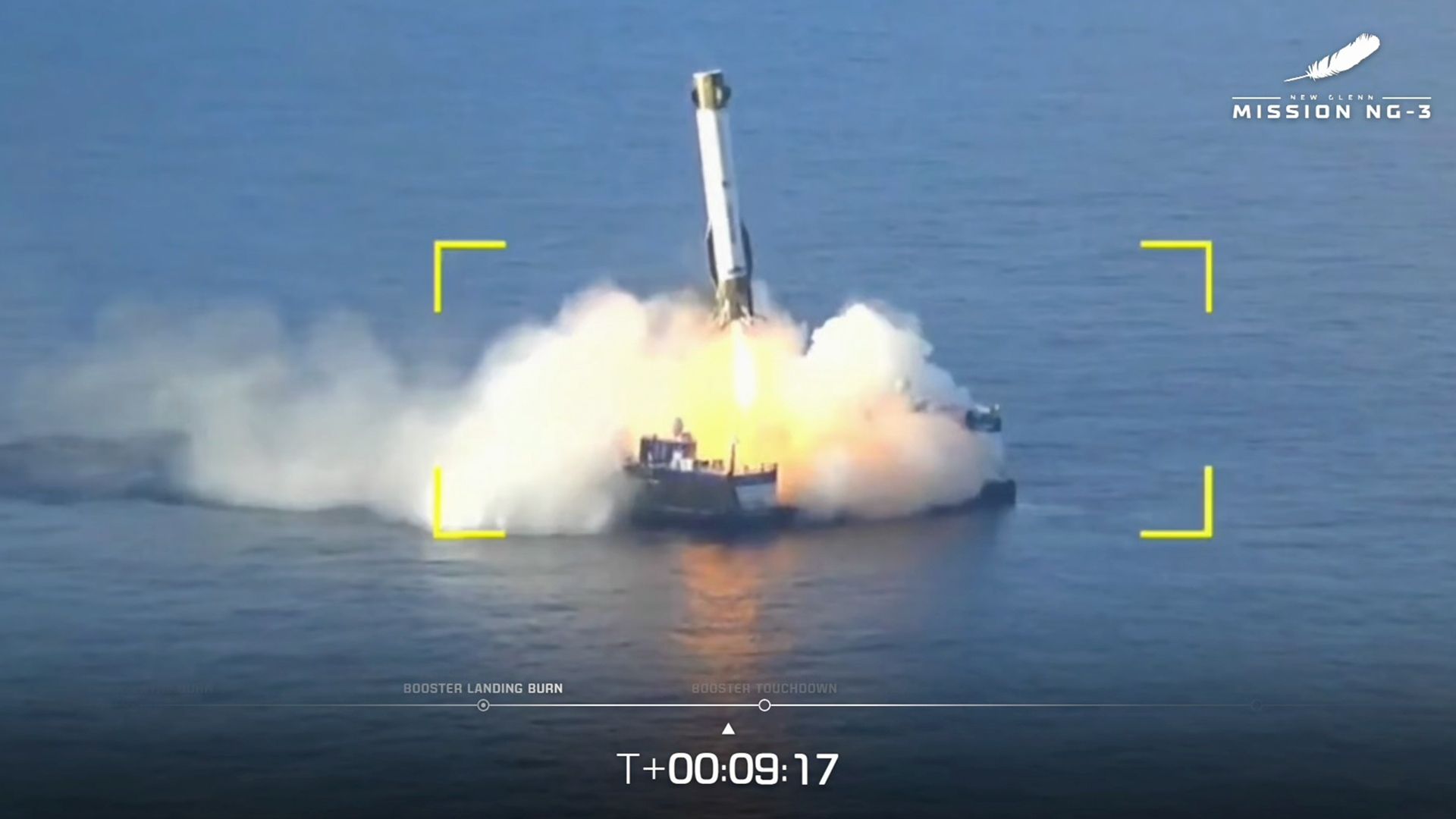
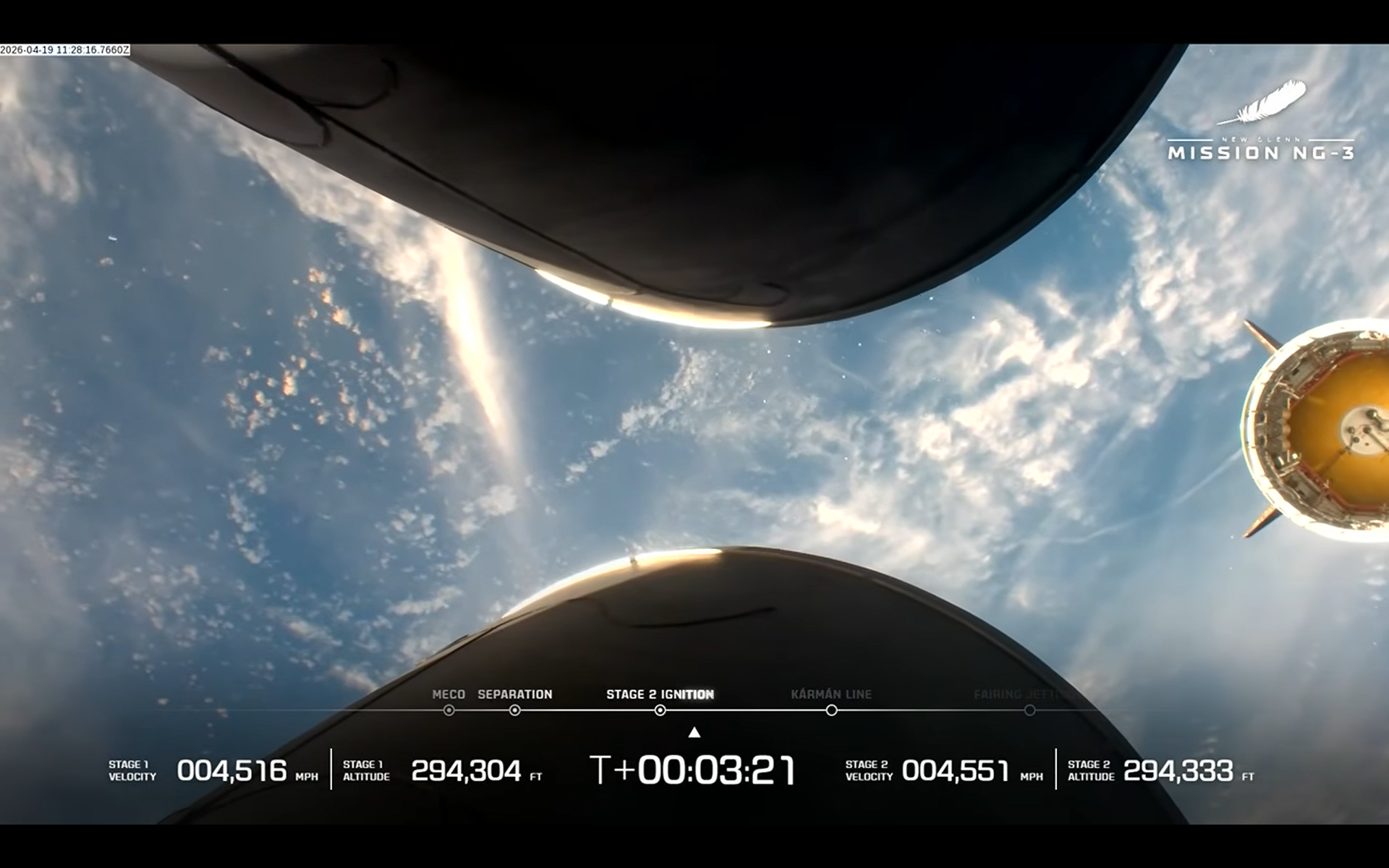
The NG-3 mission, carrying the massive BlueBird 7 satellite destined for low Earth orbit (LEO), represented a dual objective for Blue Origin: demonstrating the reusability of its powerful New Glenn first stage and successfully deploying a cutting-edge communication satellite. The first stage of the New Glenn rocket, nicknamed "Never Tell Me The Odds" (technical designation GS-1), performed admirably, separating from the upper stage approximately 3.5 minutes into its ascent. It subsequently executed a controlled descent and landed successfully on Blue Origin’s autonomous droneship, "Jacklyn," positioned in the Atlantic Ocean, roughly six minutes after separation. This landing was met with cheers from Blue Origin employees across the country, underscoring the importance of this reusability achievement.
This marks the second successful landing of a New Glenn first stage. The first instance occurred during the NG-2 mission in November 2025, which carried NASA’s ESCAPADE probes to Mars. The inaugural New Glenn flight in January 2025 achieved orbit but did not attempt a first-stage landing. The successful recovery of the booster on NG-3, even with newly installed engines, is a testament to Blue Origin’s persistent efforts to refine its recovery and refurbishment processes.
Reusability: A Cornerstone of Blue Origin’s Vision
The ability to reuse rocket components, particularly the first stage, is a pivotal strategy in reducing the cost of space access. Blue Origin has designed the New Glenn rocket’s first stage to be capable of at least 25 flights, a figure that, if realized, would drastically lower the financial barrier for launching significant payloads into orbit. This reusability capability positions New Glenn as a direct competitor to SpaceX’s highly successful Falcon 9 and Falcon Heavy rockets, both of which have demonstrated extensive reusability, and the forthcoming Starship.
During the launch commentary, Jordan Charles, Vice President of New Glenn for Blue Origin, highlighted the technical enhancements made to the booster for this mission. "We made a few tweaks with respect to how the rocket actually reenters, and then on the inside of the rocket, just making sure all of our systems continue to work as we expect that they will," Charles stated. Specifically, engineers refurbished the thermal protection system at the base of the rocket to better withstand the intense heat of atmospheric reentry. Guidance system upgrades were also implemented, further refining the booster’s performance during its return to Earth.
The New Glenn rocket stands as a titan in the launch vehicle landscape, measuring 322 feet (98 meters) in height. This impressive stature rivals that of NASA’s Space Launch System (SLS), which propelled the Artemis 2 mission around the Moon, and significantly surpasses the 230-foot (70-m) Falcon 9. The rocket’s first stage is powered by seven BE-4 engines, which utilize a liquid oxygen and liquid methane (methalox) propellant combination. This same fuel is employed by the 33 Raptor engines that power SpaceX’s Super Heavy booster, indicating a convergence in propulsion technology for next-generation heavy-lift vehicles.
A Hefty Payload and an Unexpected Outcome
While the reusability of the first stage was a significant achievement, the primary objective of the NG-3 mission was the successful deployment of the BlueBird 7 satellite. This satellite is a crucial component of AST SpaceMobile’s ambitious constellation designed to provide direct-to-cellphone internet connectivity. BlueBird 7 is the second "Block 2" satellite in this constellation, a larger and more advanced iteration than its predecessors.
The Block 2 satellites, including BlueBird 7, boast an impressive antenna span of 2,400 square feet (223 square meters). This is a substantial increase compared to the "Block 1" satellites (BlueBirds 1-5), which had antennas covering a more modest 693 square feet (64.4 square meters) each. The immense size of these antennas is critical for the satellite’s primary function: to establish direct communication links with standard mobile phones on Earth without the need for specialized satellite phones or user terminals.
The deployment of BlueBird 7 was scheduled to occur from New Glenn’s upper stage approximately 1 hour and 15 minutes after liftoff. However, as the mission progressed, initial reports from Blue Origin indicated that something had gone awry. Around two hours post-launch, Blue Origin released a statement: "We have confirmed payload separation. AST SpaceMobile has confirmed the satellite has powered on. The payload was placed into an off-nominal orbit. We are currently assessing and will update when we have more detailed information."
This announcement cast a shadow over the otherwise successful launch. An "off-nominal orbit" means the satellite was not placed into its intended operational orbit. Subsequently, AST SpaceMobile provided a more definitive and concerning update: "While the satellite separated from the launch vehicle and powered on, the altitude is too low to sustain operations with its on-board thruster technology and will [be] de-orbited." This confirmed that the BlueBird 7 satellite, a significant investment for AST SpaceMobile, would not be able to fulfill its mission and would be intentionally brought back to Earth to burn up in the atmosphere. The company stated that the cost of the lost satellite is expected to be covered by its insurance policy.
Timeline of the NG-3 Mission
- January 2025: First flight of the New Glenn rocket (NG-1). Achieved orbit but did not attempt a first-stage landing.
- November 2025: Second flight of the New Glenn rocket (NG-2). Successfully launched NASA’s ESCAPADE probes and achieved the first successful landing of a New Glenn first stage on the "Jacklyn" droneship.
- April 19, 2026, 6:45 a.m. EDT (1045 GMT): Initial launch window opens for NG-3.
- April 19, 2026, ~6:41 a.m. EDT: Countdown paused at T-3 minutes, 57 seconds due to an undisclosed reason.
- April 19, 2026, 7:25 a.m. EDT (1125 GMT): NG-3 successfully lifts off from Launch Complex 36 at Cape Canaveral Space Force Station, Florida.
- Approximately 7:28 a.m. EDT: New Glenn first stage shuts down engines and separates from the upper stage.
- Approximately 7:31 a.m. EDT: First stage booster successfully lands on the "Jacklyn" droneship.
- Approximately 8:40 a.m. EDT: Scheduled deployment of the BlueBird 7 satellite from the upper stage.
- Approximately 9:25 a.m. EDT: Blue Origin reports payload separation and that the satellite powered on, but notes it was placed into an "off-nominal orbit."
- Approximately 11:30 a.m. EDT: AST SpaceMobile confirms the satellite’s altitude is too low for sustained operations and it will be de-orbited.
Broader Implications for Lunar Missions and Space Competition
The successful reuse of the New Glenn first stage is a critical step for Blue Origin, particularly as the company gears up for its ambitious Blue Moon lunar lander program. Blue Origin is developing the Blue Moon lander as part of NASA’s Artemis program, which aims to return humans to the Moon. The company has been selected as one of two commercial providers to develop lunar landers capable of transporting astronauts to the lunar surface.
NASA has indicated a preference for having astronauts practice rendezvous and docking maneuvers in Earth orbit with lunar landers before committing to a lunar landing. This would involve using the Orion spacecraft to dock with either Blue Origin’s Blue Moon or SpaceX’s Starship lunar lander. The Mark 1 Blue Moon lander, an uncrewed version, recently completed rigorous environmental testing and is being prepared for a lunar mission by the end of the summer. Blue Origin is also working on a crewed version of the Blue Moon lander for potential use in later Artemis missions.
The setback with the BlueBird 7 payload, however, raises questions about the reliability of the New Glenn’s upper stage performance, which is responsible for orbital insertion. While the first stage’s recovery and reuse were successful, the failure to place the payload into the correct orbit could impact timelines for critical missions, including the Blue Moon lander deployments, if the issue stems from the upper stage or payload integration.
NASA has recently adjusted its Artemis program timelines, with Artemis 3, originally intended as the first human lunar landing mission, now focused on crewed practice in Earth orbit. The agency aims to have astronauts land on the Moon by mid-2027, with whichever lander is ready at that time being prioritized. Both Blue Origin and SpaceX face a series of technological demonstrations and certifications, including on-orbit cryogenic fuel transfer and uncrewed lunar landings, before their landers can be certified for crewed missions.
SpaceX is actively testing its updated Super Heavy booster and Starship upper stage, with the 12th test flight anticipated soon. Concurrently, Blue Origin’s Mark 1 Blue Moon lander has undergone extensive vacuum chamber testing at NASA’s Johnson Space Center and is undergoing final preparations at the Kennedy Space Center. The successful integration and performance of the New Glenn upper stage will be crucial for ensuring that Blue Origin can meet its commitments within the Artemis program and for its commercial satellite deployment services.

The incident serves as a stark reminder that spaceflight, even with significant advancements in reusability and payload capacity, remains a complex and challenging endeavor. While Blue Origin celebrates a major reusability win, the loss of the BlueBird 7 satellite underscores the inherent risks and the continuous need for rigorous testing and validation of all mission components, from the launch vehicle to the payload itself. The company’s ability to swiftly diagnose and address any issues with the upper stage will be critical for maintaining confidence and momentum in its ambitious future endeavors.