The sidewalk outside the Uruguayan restaurant El Chivito D’Oro, situated at the intersection of 73rd Street and 84th Avenue in Jackson Heights, Queens, typically serves as a standard thoroughfare for the neighborhood’s diverse residents. However, as the 2026 FIFA World Cup takes hold of the global consciousness, this specific corner in the heart of "Little Colombia" has transformed into a bustling open-air exchange. Every day, dozens of collectors—ranging from young children to seasoned enthusiasts—gather in a dense cluster to participate in a tradition that is as much about community building as it is about completing a collection. The air is filled with the rhythmic sounds of "Qué te falta?" and "Whatchu got?" as participants navigate the complex world of Panini sticker trading.
Since 2010, this Queens street corner has served as the unofficial headquarters for World Cup sticker enthusiasts. The objective is singular and daunting: to fill every slot in the official FIFA World Cup sticker album produced by the Italian company Panini. The 2026 edition of the album is particularly ambitious, featuring 980 stickers to represent the expanded roster of players, teams, and host stadiums across North America. While the stickers are distributed through major national retailers like Target, Walgreens, and CVS, the organic marketplace that has formed in Jackson Heights offers something the big-box stores cannot: the opportunity to eliminate the "blind box" frustration of duplicates through direct, face-to-face negotiation.
The Mechanics of a Global Phenomenon
The Panini World Cup sticker album is a tradition that dates back to the 1970 World Cup in Mexico. Over the last five decades, it has evolved from a niche European and Latin American hobby into a massive global enterprise. For the 2026 tournament, the stakes are higher than ever. With 48 teams participating—an increase from the previous 32-team format—the sheer volume of stickers required to complete an album has grown significantly.
A standard pack of five stickers typically retails for approximately $2.00. Given the "blind" nature of these packs, the probability of completing a 980-sticker album without trading is statistically improbable and prohibitively expensive. Mathematical models from previous tournaments suggest that a collector might need to purchase nearly 5,000 stickers to find every unique player by chance alone. This mathematical reality necessitates the existence of trading hubs like the one in Jackson Heights.
The marketplace at El Chivito D’Oro is supported by "professional" traders—devoted enthusiasts who source stickers in bulk directly from Panini and maintain exhaustive inventories of duplicates. These individuals have established a steady presence at the corner since the tournament began, often setting up shop as early as 10:00 a.m. and remaining until the peak hours around 5:00 p.m. While these vendors do sell individual stickers to help collectors fill specific gaps, many claim their primary motivation is communal. The minimal profit margins are often secondary to the social role they play in maintaining a local tradition.
A Multigenerational Cultural Bridge
For the immigrant communities of Queens, sticker trading is more than a hobby; it is a cultural touchstone that connects generations. Many parents currently standing on the sidewalk grew up collecting stickers in Colombia, Ecuador, or Mexico. Now, they use the 2026 World Cup as a vehicle to pass that heritage down to their American-born children.
Sophia Ballinas, a 23-year-old Spanish teacher from Forest Hills, represents the enduring nature of this pursuit. Having started her collection as a child with an album gifted by her father, a Mexican immigrant, she recalls trading in the lunchrooms of her predominantly Latino school. Despite her years of effort, she never possessed the financial resources to complete an album as a child. "Now, as an adult, I finally can," Ballinas noted, though she admitted the hobby still keeps her connected to her family roots. "Even now I joke with my dad and ask him to buy me some packs." Her current goal is the acquisition of a Lionel Messi sticker, a "holy grail" for many collectors in the 2026 set.
The scene at the corner is defined by these family units. Diana Peralta, 42, and her son David Orellana, 24, recently immigrated from Quito, Ecuador. During the 2022 World Cup, their transition to life in New York meant they lacked a community in which to trade, resulting in their first incomplete album in years. The 2026 tournament has offered them a chance at redemption. In a collaborative effort typical of the Jackson Heights hub, David handles the negotiations and swapping while his mother meticulously places the acquired stickers into the album, ensuring every corner is perfectly aligned.
The Evolution of the American Soccer Fan
The 2026 World Cup, hosted across the United States, Canada, and Mexico, has catalyzed a shift in the American sporting landscape. While baseball cards have historically dominated the domestic sports memorabilia market, the surge in sticker trading suggests that soccer’s "mainstream" status is reaching a tipping point.
Kevin Julia, 32, serves as an example of this transition. Growing up in a neighborhood filled with soccer-loving Ecuadorian and Colombian neighbors, he initially identified as a "baseball guy." He began collecting stickers in high school primarily to fit in with his peers. However, the 2026 tournament being held on U.S. soil has transformed his casual interest into a family-wide obsession. Julia now visits Jackson Heights with his father and sisters, turning the quest for "blind boxes" into a bonding activity. "I think these are certainly memories that I’m gonna have, opening these packs with my father," Julia said, noting that the excitement of the World Cup being "here" has changed the stakes.
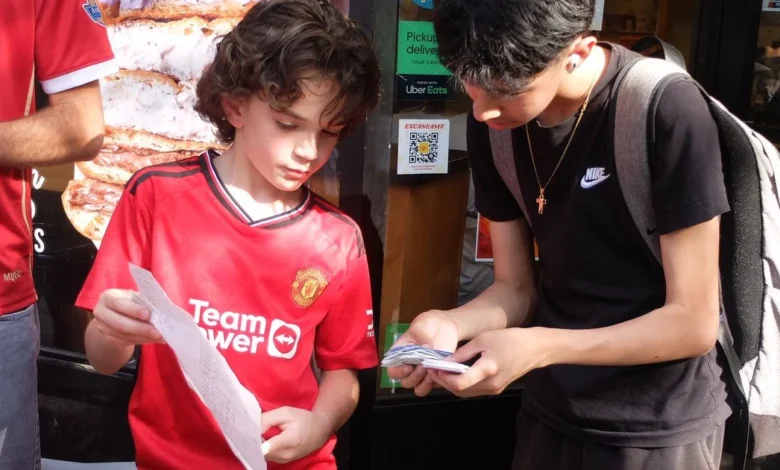
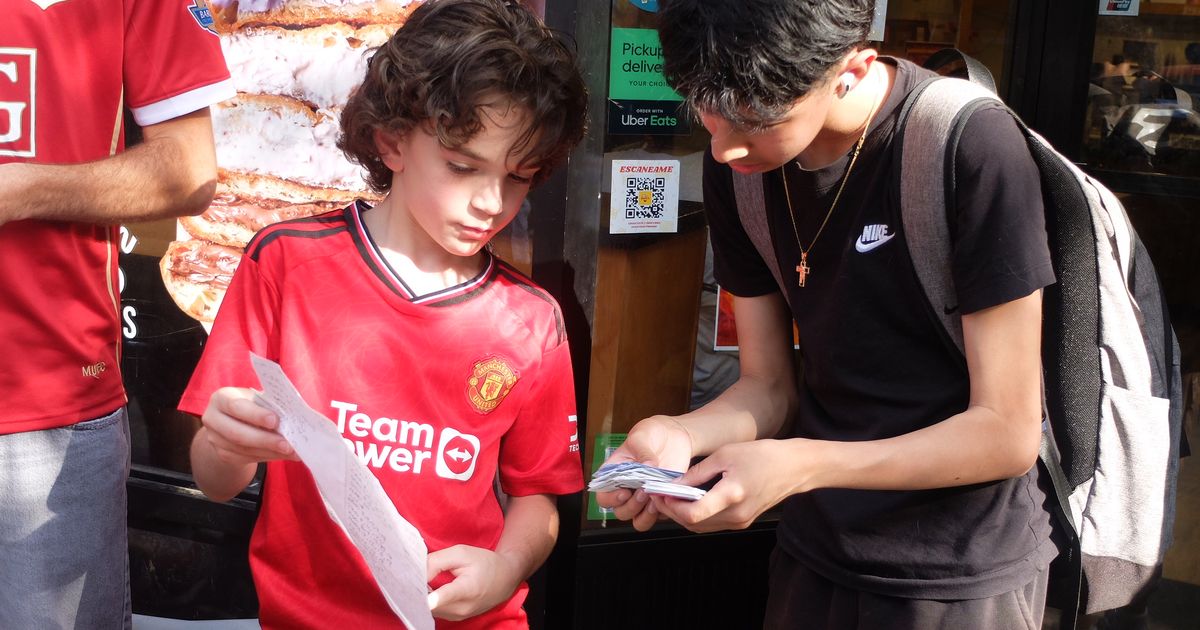
The younger generation is also taking the lead in these negotiations. Mason Gonzalez, 9, has become a proficient trader under the tutelage of his 16-year-old brother, Marco. Their father, Gary, observes from the sidelines as Mason navigates a crowd of adults and peers, list in hand, checking off missing numbers with the precision of a seasoned auditor. "He’s ready. He knows how to do it," Marco observed of his younger brother. For the Gonzalez family, the month-long quest to finish the album has served as a significant bonding period, highlighting how the hobby fosters social skills and patience in younger participants.
The Geography of the Exchange
The physical layout of the Jackson Heights exchange is both chaotic and organized. On weekends, the crowd can swell to over 50 people at any given hour. The "veteran" traders often occupy the most visible spots, while smaller groups of amateurs form pockets along the sidewalk. Julian Cruhigger, a 20-year-old who has been participating in the exchange for four World Cup cycles, has witnessed the growth of the scene firsthand.
"I remember it being maybe two stands in 2014. Now, every block has at least three stands selling stickers," Cruhigger said. Although he has moved to Long Island, where he spends much of his time playing baseball, the allure of the Jackson Heights sticker scene brings him back to his Colombian roots. He recently assisted the Gonzalez brothers by providing 40 stickers from his own surplus, an act of mentorship common in the community.
Broader Implications and the "Third Place"
Urban sociologists often speak of "third places"—social surroundings separate from the two usual social environments of home and the workplace. In Jackson Heights, the Panini trading corner has become a vital third place. It facilitates "low-stakes, mildly addictive" social interaction that transcends age and economic status.
The 2026 World Cup of Stickers highlights a unique intersection of commerce, culture, and community. While Panini benefits from the global sales of millions of sticker packs, the value of the stickers on the 73rd Street sidewalk is measured in social capital. For many residents, the completion of the album is secondary to the act of standing on a corner, speaking about fútbol, and reaffirming their place within the neighborhood’s vibrant Latino community.
As the tournament progresses toward the final matches, the urgency at El Chivito D’Oro is expected to intensify. For those a few stickers short of a completed 980-page legacy, the Jackson Heights exchange remains the most reliable—and most human—way to cross the finish line. The phenomenon serves as a reminder that even in an increasingly digital world, the most meaningful connections are often found on a crowded sidewalk, centered around a small piece of adhesive paper and a shared love for the beautiful game.