Inside the Ultra-Exclusive World of PS: How Private Terminals Are Reshaping Luxury Air Travel

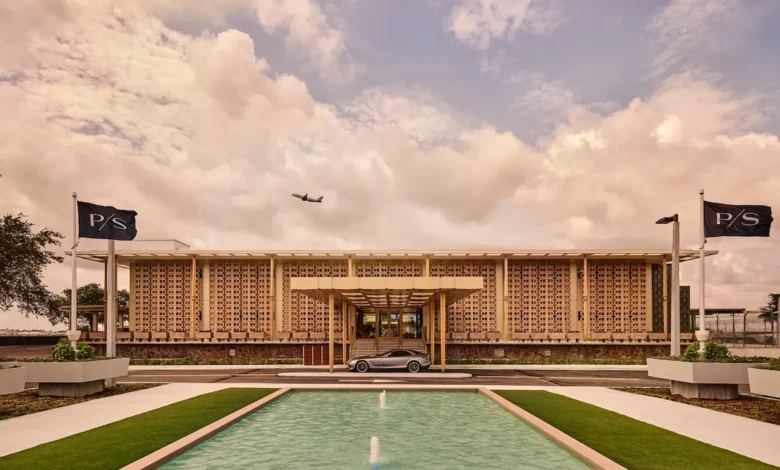
When travelers check into the PS private terminal in Los Angeles, they are often greeted by name, with staff members instantly recalling their preferences from previous visits—down to their preferred refreshments and lounge arrangements. This high-touch, hyper-personalized level of guest recognition is a standard that surprisingly few luxury hotels manage to maintain consistently, and one that private members’ clubs have increasingly struggled to achieve in recent years. Yet, for an elite clientele navigating the notoriously high-stress environment of commercial aviation, this seamless continuity of service has become the ultimate definition of modern travel luxury.
Serving this notoriously demanding clientele within the exceptionally complicated ecosystem of airport infrastructure requires a rare blend of hospitality finesse and rigorous security logistics. To understand how the brand maintains its operational edge, industry analysts frequently look to Amina Belouizdad Porter, the chief executive officer of PS. Bringing a diverse professional background spanning private equity and hotel development, Porter approaches the business with a distinct dual perspective: the hard-nosed discipline of an investor combined with the genuine affection of an experienced hospitality operator. Under her leadership, PS has evolved from an innovative local concept into a multi-hub powerhouse that is quietly redefining how ultra-high-net-worth individuals and corporate executives experience commercial flight.
Decoding the PS Model: Escaping the Public Terminal
At its core, PS—originally founded in 2017 under the name The Private Suite at Los Angeles International Airport (LAX)—was designed to solve one of the most persistent friction points of modern air travel: the chaotic public terminal. The foundational premise of the service is deceptively simple yet logistically monumental. Rather than navigating crowded check-in counters, public security lines, and bustling boarding gates, PS members bypass the traditional airport infrastructure entirely.
Guests arriving at a PS facility are whisked away from the public eye into private lounges, known as "The Salons," or into more secluded private suites equipped with daybeds, private bathrooms, spa services, and fully stocked bars. While guests relax, unwind, or conduct confidential business meetings, dedicated teams handle their luggage, check them in for their commercial flights, and process their security requirements.
When it is time for departure, guests clear a private, dedicated Transportation Security Administration (TSA) checkpoint located directly within the facility. They are then driven across the tarmac in a luxury BMW sedan directly to the door of their commercial aircraft, stepping on board just as the final passengers are settling in. For arriving international passengers, the luxury is reversed: guests are met at the aircraft door, driven to the private terminal, and cleared through on-site customs and immigration without ever waiting in a conventional airport queue.
A Chronological Evolution: From LAX Startup to National Footprint
The trajectory of PS reflects a calculated, methodical expansion strategy rather than a rapid, speculative land grab. When the concept first launched at LAX in 2017, industry skeptics questioned whether a sufficiently large market of commercial airline passengers would be willing to pay thousands of dollars per trip simply to avoid the public terminal. However, strong demand from Hollywood executives, touring musicians, diplomats, and privacy-seeking travelers quickly proved the viability of the model.
For several years, the Los Angeles facility served as the sole proving ground for the brand, allowing operators to refine their security protocols, luxury amenities, and relationships with airport authorities and federal agencies. The first major geographic milestone outside of California occurred in May 2023, when PS officially opened its second location at Hartsfield-Jackson Atlanta International Airport (ATL). Choosing Atlanta—the busiest airport in the world by passenger traffic—signaled that the brand was capable of scaling its operations beyond niche West Coast markets into major national aviation hubs.
The expansion pace accelerated dramatically in the summer of 2026, when PS effectively doubled its operational footprint in a single stroke by launching two new locations at Dallas-Fort Worth International Airport (DFW) and Miami International Airport (MIA). These strategic additions positioned the brand in critical Southern and Texas corridors, capturing lucrative corporate travel markets and international jet-setting demographics. Today, the network connects some of the most critical commercial aviation bottlenecks in the United States, transforming how elite travelers move through the national airspace system.
Financial Architecture and Investment Discipline
Behind the plush velvet ropes and luxury amenities lies a complex financial and regulatory infrastructure. Operating within the secure perimeter of major international airports requires navigating a labyrinth of federal regulations, municipal lease agreements, and stringent security clearances from agencies like the TSA and U.S. Customs and Border Protection.
Amina Belouizdad Porter’s background in private equity has played a pivotal role in navigating these capital-intensive hurdles. Developing a PS terminal requires significant upfront real estate investment, specialized architectural design to ensure tarmac access, and robust ongoing operational costs. Unlike traditional airport lounges—which are typically operated by airlines and funded through ticket sales or credit card partnerships—PS operates on a membership and per-use fee model.
Members pay an annual fee (currently hovering around $4,850 for an individual membership), which grants them access to book the private terminals. Each individual use incurs an additional fee, which varies depending on whether the traveler books a shared salon space or a private suite, as well as the number of accompanying passengers. This dual revenue stream ensures a steady baseline of recurring membership capital coupled with high-margin transactional revenue per visit.
According to internal company metrics and industry estimates, the target demographic is willing to pay premium prices—ranging from several thousand dollars per domestic transit to upwards of $5,000 to $7,000 for international suites—to reclaim hours of productive time, protect their personal privacy, and completely insulate themselves from the unpredictability of modern commercial air travel.
Official Responses and Stakeholder Perspectives
The expansion of private terminal infrastructure has garnered attention not only from affluent travelers, but also from airport authorities and commercial airlines seeking to enhance the overall value proposition of their hubs. Airport directors view private terminals as a valuable amenity that can attract high-yield passengers and corporate HQs to their cities.
In statements regarding recent expansions, airport executives have praised PS for integrating seamlessly into existing airfield layouts without disrupting standard commercial operations. "Integrating a high-end private terminal service like PS enhances our airport’s competitiveness on a global scale," noted a regional aviation official during the rollout of the Miami facility. "It provides an elevated option for executive travelers who demand the utmost discretion and efficiency, complementing our broader modernization efforts."
Meanwhile, representatives from the hospitality and luxury service sectors frequently point to PS as a benchmark for experiential loyalty. Industry analysts emphasize that the brand’s ability to retain institutional knowledge about its clients—such as remembering dietary restrictions, preferred vehicle types, and specific security preferences across different geographical locations—represents the gold standard of modern customer relationship management (CRM).
Broader Impact and Industry Implications
The rise of companies like PS reflects a broader structural shift in the luxury travel market: the blurring lines between commercial aviation and private jet travel. While flying via private jet (on fractional ownership programs or jet cards) remains the ultimate expression of airborne exclusivity, soaring fuel costs, aircraft availability constraints, and environmental scrutiny have made commercial first and business class increasingly attractive, even for ultra-wealthy individuals.
By bridging the gap between private aviation and commercial ticketing, PS allows travelers to enjoy the logistical perks of a private jet experience—such as tarmac transfers, private security screening, and secluded lounges—while still utilizing the global route network, reliability, and spacious cabins of major commercial carriers like Delta, American, United, and international legacy carriers.
Furthermore, the success of the private terminal model is inspiring copycats and prompting traditional airport operators to rethink the monetization of airport real estate. As airports become less like transit hubs and more like lifestyle destinations, the demand for segregated, hyper-exclusive spaces within terminals is projected to grow.
Looking ahead, industry watchers anticipate that PS will continue its methodical expansion into other major domestic hubs, such as New York, Chicago, and London, as well as select high-volume international gateways. As long as commercial airports remain crowded, complex, and security-heavy, the value proposition of bypassing the terminal entirely will only strengthen. For Amina Belouizdad Porter and her team, the ongoing challenge will be scaling their signature personalized service across an expanding empire without losing the intimate, detail-oriented touch that earned the brand its fiercely loyal following in the first place.
Related posts: