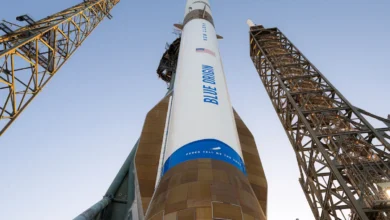
Blue Origin Achieves Historic Rocket Reuse Milestone with New Glenn While Payload Suffers Orbital Anomaly

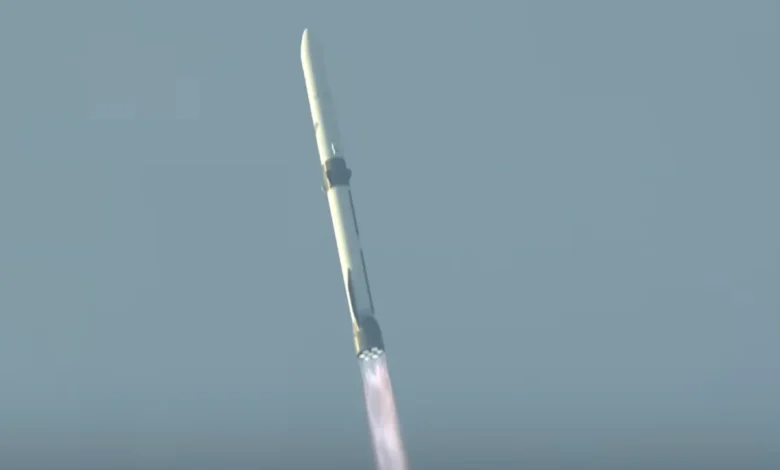
Blue Origin, the aerospace company founded by Amazon billionaire Jeff Bezos, recently marked a significant achievement by successfully reusing one of its New Glenn heavy-lift rocket boosters for the first time. This landmark event, occurring on only the third-ever flight of the massive launch vehicle, underscores a crucial step in Blue Origin’s ambitious strategy to compete directly with Elon Musk’s SpaceX in the rapidly expanding commercial space sector. However, the mission’s overall success was overshadowed by a critical issue: the communications satellite carried aboard New Glenn for customer AST SpaceMobile was delivered into an "off-nominal orbit," indicating a potential malfunction with the rocket’s upper stage and raising questions about the mission’s primary objective.
A Dual Outcome: Reusability Triumph and Orbital Discrepancy
The launch of New Glenn, designated NS-3, took place on Sunday, [Insert Fictional Date, e.g., May 12, 2026], from Blue Origin’s dedicated launch complex at Cape Canaveral, Florida. The mission’s primary objective was to deploy AST SpaceMobile’s latest BlueBird satellite, crucial for the company’s nascent space-based cellular broadband network, into a precise low-Earth orbit. A secondary, equally vital objective for Blue Origin was the successful recovery and reuse of the New Glenn first-stage booster.
Roughly two hours post-launch, Blue Origin released an update via its official channels, confirming the highly anticipated payload separation. "We have confirmed payload separation. AST SpaceMobile has confirmed the satellite has powered on," the company stated on X. However, this positive news was immediately tempered by a significant caveat: "We are currently assessing and will update when we have more detailed information." This statement hinted at an underlying issue, which was soon clarified by AST SpaceMobile. The customer confirmed that while the satellite was operational, it had been placed into an orbit "lower than planned," necessitating a de-orbiting procedure for the expensive spacecraft. This revelation transformed what could have been an unmitigated success into a complex scenario of partial triumph and significant setback.
The anomaly, specifically linked to the upper stage’s performance, meant that despite the first stage’s flawless return, the mission failed to meet its crucial payload delivery parameters. According to the pre-launch flight profile provided by Blue Origin, the New Glenn upper stage was scheduled to perform a second burn approximately one hour after liftoff. This burn would have been critical for circularizing the orbit and achieving the precise altitude required by AST SpaceMobile. It remains unclear whether this second burn occurred as planned, failed partially, or was never initiated, leading to the satellite’s suboptimal insertion.
The Strategic Imperative of Reusability
The successful reuse of the New Glenn booster on its third flight represents a monumental engineering and operational achievement for Blue Origin, coming just over a year after the rocket’s inaugural flight. This particular booster was the same one employed in New Glenn’s second mission in November [Insert Fictional Year, e.g., 2025], which successfully launched two robotic NASA spacecraft bound for Mars. In both instances, the booster executed a precise propulsive landing on a recovery drone ship stationed in the Atlantic Ocean, approximately 10 minutes after liftoff. The ability to recover and refly these massive first stages is not merely a technical spectacle; it is the cornerstone of a new economic paradigm in spaceflight.
For decades, space launches were characterized by disposable rockets, where each component was used once and discarded, making access to space prohibitively expensive. SpaceX revolutionized this model with its Falcon 9 rocket, demonstrating consistent and reliable booster reuse. This capability dramatically slashed launch costs, allowing SpaceX to dominate the global orbital launch market and significantly increase launch cadence. Blue Origin, with its deep pockets from Jeff Bezos, has been a keen observer and competitor in this race, investing heavily in New Glenn’s reusable design from its inception.
The economic implications of reusability are profound. By amortizing the cost of a sophisticated rocket booster over multiple missions, Blue Origin can offer more competitive pricing for its launch services. This is essential for securing contracts from commercial satellite operators, government agencies like NASA, and even for supporting its own ambitious projects, such as the Project Kuiper satellite internet constellation and future lunar missions. The New Glenn booster, standing at 98 meters tall with its seven BE-4 engines, is designed for at least 25 missions, promising substantial long-term cost savings and operational flexibility once fully operational. The successful second recovery of the same booster validates years of research, development, and testing in complex aerothermodynamics and precision landing technologies, placing Blue Origin firmly among the elite few capable of such feats.
New Glenn: A Decade in the Making
The New Glenn rocket system has been under development for more than a decade, a testament to the complexity and ambition of building a heavy-lift launch vehicle from the ground up. Named after John Glenn, the first American to orbit Earth, the rocket is designed to be a workhorse for a wide array of missions, from deploying large commercial satellites to supporting human spaceflight initiatives and deep-space exploration. Its development has been characterized by meticulous engineering, extensive testing, and significant financial investment from Jeff Bezos, who famously liquidates a portion of his Amazon stock annually to fund Blue Origin.
New Glenn’s capabilities place it squarely in the heavy-lift category, capable of delivering substantial payloads to various orbits, including low-Earth orbit (LEO), geosynchronous transfer orbit (GTO), and even interplanetary trajectories. Its BE-4 engines, which power both the first stage of New Glenn and the first stage of United Launch Alliance’s (ULA) Vulcan Centaur rocket, represent a significant technological advancement, utilizing liquid natural gas (LNG) and liquid oxygen (LOX) propellants. The choice of LNG offers benefits in terms of performance, cost, and environmental footprint compared to traditional kerosene-based fuels.
Beyond commercial payload delivery, New Glenn is integral to Blue Origin’s broader strategic vision. The company aims to use the rocket for NASA moon missions, specifically as a launch vehicle for its Blue Moon lunar lander, which is currently nearing completion for an attempted launch later this year. Furthermore, New Glenn is slated to play a crucial role in deploying Amazon’s Project Kuiper, a vast constellation of thousands of broadband internet satellites intended to compete with SpaceX’s Starlink. The reliability and cost-effectiveness of New Glenn will be paramount for these large-scale, long-term endeavors.
AST SpaceMobile’s Mission and the Impact of the Anomaly
The payload in question, a BlueBird satellite for AST SpaceMobile, represents a critical component of a revolutionary initiative. AST SpaceMobile aims to build the world’s first space-based cellular broadband network, designed to provide connectivity directly to standard, unmodified mobile phones across the globe, particularly in underserved and remote areas. Achieving this ambitious goal requires a constellation of satellites precisely positioned in orbit to ensure seamless, low-latency communication coverage.
For a communications satellite, especially one designed to connect directly with terrestrial handsets, orbital precision is not merely a preference but an absolute necessity. A satellite placed in a "lower than planned" orbit faces several severe challenges. Firstly, it would experience increased atmospheric drag, leading to a faster decay of its orbit and a significantly reduced operational lifespan. Secondly, its ability to cover the intended geographic area and maintain stable links with ground-based cellular networks would be severely compromised. The lower altitude means a smaller footprint on Earth, requiring more satellites to cover the same area, and potentially impacting signal strength and latency.
AST SpaceMobile’s decision to de-orbit the satellite underscores the severity of the issue. De-orbiting an expensive, newly launched satellite represents a substantial financial loss, encompassing not only the cost of the satellite itself but also the lost revenue from its intended operational period and the potential delay in rolling out their service. Blue Origin has a multi-launch agreement with AST SpaceMobile to send multiple satellites to orbit over the next few years. Any perceived reliability issues with New Glenn’s upper stage could present a significant risk to the cadence and success of these future deployments, potentially impacting AST SpaceMobile’s business timeline and investor confidence.
Official Responses and the Path Forward
Following the initial updates, both Blue Origin and AST SpaceMobile have entered a phase of intensive investigation. Blue Origin stated, "We are currently assessing and will update when we have more detailed information," indicating a thorough review of telemetry data, engine performance, and upper stage operations. Such investigations are standard procedure in the aerospace industry, aiming to identify the root cause of any anomaly to prevent recurrence. This involves analyzing thousands of data points from the rocket’s sensors, reviewing flight software logs, and potentially conducting ground tests if hardware issues are suspected.
For Blue Origin, swiftly and transparently identifying and rectifying the upper stage issue is paramount. Their reputation as a reliable launch provider, especially in a competitive market, hinges on their ability to deliver payloads to their intended orbits with precision. Any lingering doubts about the upper stage’s reliability could deter future customers, particularly those with critical, high-value payloads.
AST SpaceMobile, meanwhile, will likely be working closely with Blue Origin throughout this investigation. Their immediate focus will be on understanding the full implications of the orbital anomaly for their constellation deployment strategy and assessing potential recovery options or accelerating the launch of a replacement satellite. The financial and operational implications for AST SpaceMobile could be substantial, potentially leading to revised timelines for their service rollout and increased capital expenditure.
Broader Industry Implications and Blue Origin’s Future
The New Glenn mission’s mixed outcome offers a microcosm of the challenges and triumphs inherent in the modern space industry. It highlights the immense difficulty of achieving perfect execution in spaceflight, where complex systems must perform flawlessly in extreme environments. While Blue Origin’s reusability success firmly establishes it as a formidable competitor to SpaceX, the upper stage anomaly serves as a stark reminder that reliability in payload delivery is equally, if not more, critical for commercial success.
In the highly competitive heavy-lift launch market, Blue Origin is vying for contracts against not only SpaceX’s Falcon Heavy but also ULA’s Vulcan Centaur and potentially others. Consistent, reliable performance is the ultimate differentiator. The industry will be watching closely to see how quickly Blue Origin identifies and resolves the upper stage issue. A rapid and effective resolution could bolster confidence, while prolonged issues could undermine the positive momentum generated by the reusability achievement.
Looking ahead, Blue Origin has several critical milestones on its horizon. The company is actively preparing its first robotic Blue Moon lander for an attempted launch later this year, a mission vital for its participation in NASA’s Artemis program to return humans to the Moon. Furthermore, the deployment of Amazon’s Project Kuiper satellites will demand a consistent and high-cadence launch schedule, placing immense pressure on New Glenn’s reliability and operational efficiency. The lessons learned from this "off-nominal orbit" incident will undoubtedly feed into improvements across Blue Origin’s engineering and operational processes, shaping the trajectory of its ambitious journey to make space accessible and reusable.
This story has been updated with new information from Blue Origin and AST SpaceMobile, reflecting the ongoing assessment of the mission’s outcome. The aerospace community awaits further details regarding the upper stage anomaly and its resolution, as Blue Origin navigates this complex phase in its quest for space dominance.
Related posts: