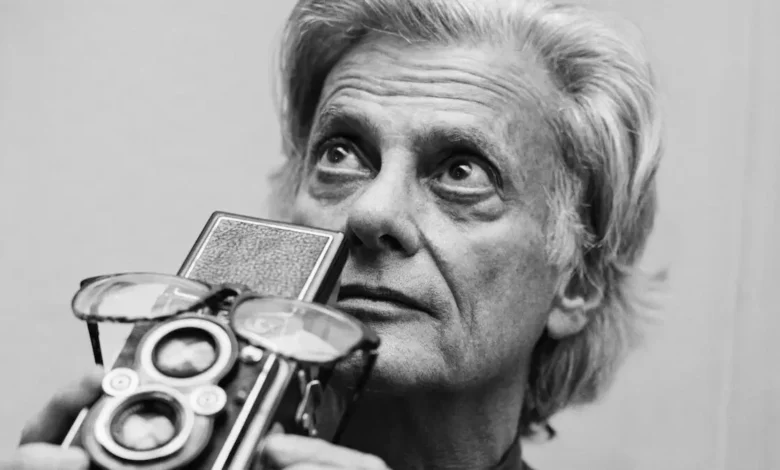
Ron Howard’s latest documentary, Avedon, serves as a definitive exploration of the life and career of Richard Avedon, a man whose work fundamentally altered the trajectory of 20th-century visual culture. Widely regarded as Howard’s most accomplished documentary work to date—surpassing even the acclaimed The Beatles: Eight Days a Week—the film provides a meticulous look at a photographer who transcended the traditional boundaries between high-fashion editorial work and stark, democratic humanism. Edited by Andrew Morreale, the documentary employs a sophisticated, rhythmic structure that weaves together hundreds of Avedon’s iconic photographs, creating an immersive experience that dissects the metaphysical shift Avedon brought to the art of photography.
The Genesis of a Singular Vision
Born in New York City in 1923, Richard Avedon’s artistic journey began long before he held a professional camera. As a child, he frequently practiced "visual memory" exercises, closing his eyes on busy streets to retain the images he had just witnessed, effectively framing reality in his mind. His formal introduction to the medium occurred during his tenure in the U.S. Merchant Marines at the age of 19. Tasked with photographing enlisted men for identification cards, Avedon captured approximately 100,000 portraits.
This period was, in his own estimation, the crucible of his style. The requirement of the stark white background for military ID photos forced him to confront his subjects without the distraction of setting or artifice. He observed that when placed against a vacuum of white, subjects revealed an inherent vulnerability and individuality. This utilitarian exercise birthed the "Avedon style"—a minimalist, head-on approach that stripped away the context to reveal the psyche.
A Chronology of Iconic Influence
Avedon’s career spanned six decades, from 1944 until his death in 2004. Throughout this period, he maintained a staggering output, completing approximately 16,000 portrait sittings. This averages to one sitting per business day for 60 years, a feat of consistency that highlights his obsession with the human face.
- 1940s–1950s: Avedon establishes his name in the fashion industry, revolutionizing it by capturing models in motion rather than static poses. His influence is solidified in popular culture through the 1957 film Funny Face, which featured a protagonist modeled directly after him.
- 1957: The infamous shoot with Marilyn Monroe occurs. Unlike the polished, performative images typical of the era, Avedon captures a moment of exhaustion and candid reflection, showcasing the woman behind the icon.
- 1960s–1970s: Avedon turns his lens toward the political and social landscape, documenting the Chicago 7, the Warhol Factory scene, and the American West. His work in the West, which depicted raw, often uncomfortable realities, was initially rejected by New York galleries for being too unvarnished.
- 1980s: He pivots into high-profile commercial work, including the culturally pervasive Obsession perfume campaigns, proving his ability to blur the lines between high art and mass-market advertising.
Technical Deconstruction: The Invisible Method
The documentary sheds light on the paradox of Avedon’s technique: his profound success relied on the intentional abandonment of technical dogma. In the film, various contributors—including Isabella Rossellini, Tina Brown, and Hilton Als—note that Avedon rarely spoke of f-stops, lighting ratios, or camera specs. Instead, he treated the photography session as a psychological encounter.
His method involved long periods of conversation and coffee, often delaying the actual act of taking a photograph until the final minutes of a scheduled hour. By doing so, he exhausted the subject’s ability to "perform" for the camera. The resulting image was rarely a product of a technical setup, but rather a byproduct of the "ineffable dance" between the artist and his subject. This approach allowed him to capture iconic moments, such as the 1953 portrait of Charlie Chaplin holding his hands in the shape of devil horns—a spontaneous reaction that became one of the most recognized images of the 20th century.
Professional Perspectives and Archive Access
The production of the documentary was bolstered by unprecedented access to the Richard Avedon Foundation archives, facilitated by executive director James Martin. This access allows the audience to see the work that did not make the final cut, providing a granular view of his iterative process. The film also features testimonies from luminaries such as Larry Gagosian, John Lahr, Twiggy, Adam Gopnik, Calvin Klein, and the photographer’s son, John Avedon.
These contributions provide a humanizing counter-narrative to Avedon’s sleek, commanding professional persona. The film does not shy away from the darker aspects of his life, including his struggles with his sister’s mental illness and the complexities of his personal relationships. By juxtaposing his private turmoil with his public success, the film constructs a holistic portrait of a man who used his work as both a mask and a mirror.
Broader Impact and Theoretical Implications
The implications of Avedon’s work on the modern visual landscape cannot be overstated. By shifting the focus of portraiture from the external "glamour" of the subject to the internal, psychological state, Avedon democratized the image. Whether he was photographing a fashion model, a war general, or an oil field worker, he applied the same rigor and standard of truth.
Critics and art historians have noted that Avedon’s "existential classicism" anticipated the work of Diane Arbus and others who sought to highlight the "off-kilter" or uncomfortable aspects of the human condition. His ability to find beauty in the unfiltered moment—as seen in his later-life portraits of his father—demonstrates that his aesthetic was not merely about fashion, but about the relentless pursuit of clarity.
As Howard illustrates, Avedon’s commercial work, such as his surrealist television spots, was not a departure from his portraiture but an extension of it. He believed that the same principles of engagement applied whether he was selling a fragrance or documenting the American West. Every project, regardless of its end goal, was designed to challenge the viewer’s perception.
Conclusion: A Legacy Reaffirmed
Avedon serves as more than just a biographical recap; it is an analytical study of how a singular vision can reorient the world’s perspective. Through Ron Howard’s lens, we see that Avedon’s "rules" were non-existent because he followed his intuition. By rejecting the constraints of conventional photography, he created a visual language that remains timeless.
The film concludes that Avedon’s true brilliance lay in his understanding that the camera is not just a tool for documentation, but an instrument of revelation. In a modern era defined by digital manipulation and the commodification of the self, Avedon’s insistence on the "real"—on the power of the white background to strip away all pretense—feels more relevant than ever. Howard’s work ensures that this legacy is not only preserved but studied, offering a masterclass in the intersection of biography, art history, and the enduring power of the photographic image.