Heathrow Expansion Collides With Net Zero Goals As Climate Advisers Call For Demand Management

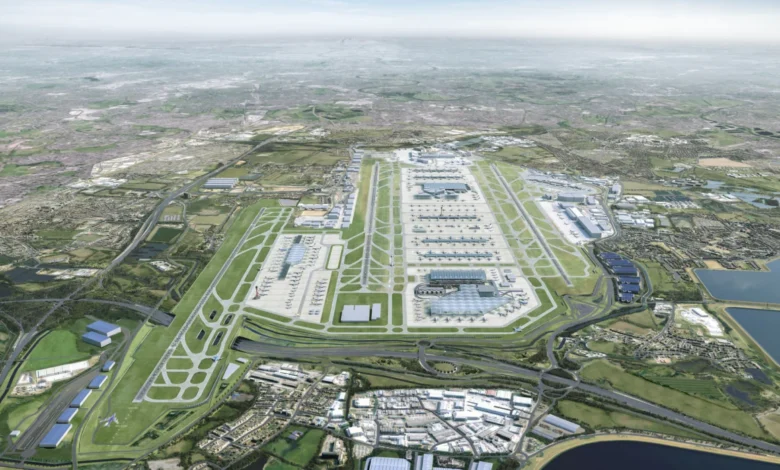
The debate surrounding the proposed expansion of London Heathrow Airport has reached a critical juncture, drawing intense scrutiny from environmental scientists, government advisors, and policymakers alike. At the heart of the controversy is a paradoxical proposal: managing and potentially throttling passenger demand to curb soaring carbon emissions, even as billions of pounds are poured into expanding the airport’s sprawling physical infrastructure. This tension highlights a profound policy conflict within the United Kingdom, where legally binding net-zero carbon targets clash directly with the relentless economic imperatives of the global aviation sector.
The controversy was thrust back into the national spotlight following stark warnings from the Climate Change Committee (CCC), the UK government’s official independent advisory body. According to the committee, the expansion of the UK’s busiest aviation hub is fundamentally incompatible with the nation’s legally mandated pathway to achieve net-zero greenhouse gas emissions by 2050. As aviation continues to recover from the disruptions of the early 2020s, the challenge of reigning in the sector’s carbon footprint has transformed from a distant environmental concern into an immediate policy crisis.
The Core Conflict: Infrastructure Versus Emissions
The fundamental dilemma facing British policymakers is straightforward yet deeply complex: expanding Heathrow—widely considered the jewel in the crown of UK transport infrastructure—would inherently facilitate a greater volume of flights. More flights translate directly to higher fuel consumption and increased greenhouse gas emissions.
Nigel Topping CMG, chair of the Climate Change Committee, articulated the gravity of the situation in recent statements, pointing out that emissions generated by commercial aviation are projected to rise significantly, even in a baseline scenario where Heathrow is never expanded. More concerningly, the CCC maintains that the UK government currently lacks a credible, enforceable policy framework to bring these emissions down in line with national climate budgets.
"Emissions from flying are projected to rise, even without Heathrow expansion, and the UK does not currently have a credible plan to bring them down. That poses a serious challenge to our climate commitments," Topping stated. He emphasized that under current conditions, a Heathrow expansion is "not currently compatible with the UK’s Net Zero target."
Furthermore, the CCC argues that the structural economics of the aviation industry shield airlines from the true environmental cost of their operations. "Government needs to ensure that the aviation industry takes responsibility for the emissions it creates and bears the costs of decarbonisation. Those conditions do not exist today," Topping added, pointing to a regulatory vacuum that allows carriers to emit carbon without facing the full financial burdens associated with clean energy transition and atmospheric damage.
Historical Context and Chronology of the Heathrow Expansion Debate
To understand the current impasse, it is necessary to examine the decades-long saga surrounding Heathrow’s third runway and terminal expansion. The debate is not new; rather, it is the latest chapter in a protracted political and legal battle that spans multiple administrations.
- 2003: The UK government publishes a white paper on the future of air transport, first signaling the need for additional runway capacity in the South East of England.
- 2009: The Labour government, under Prime Minister Gordon Brown, officially gives the green light to a third runway at Heathrow, triggering widespread opposition from local residents, environmental groups, and local authorities.
- 2010: Following a change in government, the incoming Conservative-Liberal Democrat coalition officially cancels the third runway project, fulfilling a prominent campaign pledge.
- 2012–2015: Recognizing a looming capacity crisis, the government establishes the independent Airports Commission, led by Sir Howard Davies. In July 2015, the commission unanimously recommends expanding Heathrow by building a new northwest runway.
- 2016–2018: After years of deliberation, Prime Minister Theresa May’s cabinet approves the Heathrow expansion in June 2018. Parliament overwhelmingly votes in favor of the National Policy Statement (NPS) supporting the third runway later that year.
- 2020: In a landmark legal victory for environmental campaigners, the Court of Appeal rules that the government’s approval of the expansion was unlawful because ministers failed to properly account for the UK’s commitments under the Paris Climate Agreement.
- December 2020: The UK Supreme Court overturns the Court of Appeal’s ruling, declaring the expansion legal and clearing the path for Heathrow Airport Limited to submit a formal planning application.
- 2021–Present: While the legal hurdle is cleared, the project faces mounting economic headwinds, shifting political priorities, and increasingly urgent warnings from climate scientists regarding the acceleration of global heating.
Supporting Data: Aviation’s Environmental Footprint
Globally, commercial aviation accounts for approximately 2.5% of total carbon dioxide emissions. While this percentage may appear modest when compared to sectors like power generation or heavy manufacturing, the climate impact of aviation extends far beyond direct carbon dioxide output.
When accounting for non-CO2 effects—such as the formation of condensation trails (contrails) and cirrus clouds that trap atmospheric heat, as well as emissions of nitrogen oxides (NOx) and water vapor at high altitudes—the aviation industry’s total contribution to effective radiative forcing is estimated to be at least two to three times greater than its carbon dioxide emissions alone.
Domestically, the challenge is equally pronounced. The UK aviation sector is one of the largest in Europe. Prior to the disruptions of the COVID-19 pandemic, Heathrow alone handled over 80 million passengers annually, utilizing its existing two runways to near-maximum capacity. Projections indicate that passenger demand will continue to grow as global middle classes expand and international travel resumes its upward trajectory.
Without aggressive interventions, bridging the gap between this growing demand and the UK’s carbon budgets appears mathematically implausible. The Climate Change Committee notes that technological solutions—such as sustainable aviation fuels (SAFs), hydrogen propulsion, and electric aircraft—will not scale rapidly enough to offset the emissions growth expected over the next two decades. Consequently, reducing absolute demand for flights has emerged as a controversial yet mathematically necessary policy lever.
Official Responses and Stakeholder Positions
The debate over Heathrow expansion exposes deep ideological and economic divisions among key stakeholders in the United Kingdom.
The Aviation Industry and Heathrow Management
Representatives for Heathrow Airport argue that expansion is vital not only for the airport’s commercial viability but for the broader UK economy. Proponents maintain that a globally connected Britain requires a major hub capable of competing with continental European mega-airports like Frankfurt, Paris Charles de Gaulle, and Amsterdam Schiphol, as well as rapidly growing hubs in the Middle East.
Heathrow management has consistently pledged that any expansion would be delivered in line with net-zero commitments, pointing to prospective investments in sustainable aviation fuels, airspace modernization, and operational efficiencies. Industry advocates argue that throttling passenger demand would inflict severe damage on international trade, tourism, and business connectivity, effectively handing a competitive advantage to international rivals whose home countries are expanding aviation capacity without equivalent constraints.
Environmental NGOs and Local Communities
Conversely, environmental organizations and local residents living under the flight paths have welcomed the CCC’s intervention. Groups such as Greenpeace UK and Friends of the Earth argue that the government must stop viewing infinite growth in aviation as an inevitability.
Local action groups have long campaigned against the expansion on the grounds of increased noise pollution, local air quality degradation, and the destruction of residential housing. From their perspective, the economic benefits of a third runway accrue disproportionately to corporate entities and frequent flyers, while the environmental and social costs are borne primarily by local communities and future generations.
Government and Regulatory Dilemma
For the incumbent government, the situation presents a classic policy trilemma: balancing economic growth, regional connectivity, and legally binding climate targets. While ministers have repeatedly emphasized their commitment to achieving net-zero emissions by 2050, successive administrations have been reluctant to explicitly restrict consumer choice or place caps on passenger numbers, fearing the political backlash associated with curbing holiday travel and business mobility.
Fact-Based Analysis of Implications
The standoff over Heathrow expansion carries profound implications for UK climate policy, economic strategy, and the global aviation industry.
First, the integration of demand management into mainstream climate discourse marks a significant shift. For decades, the aviation sector relied on the promise of technological fixes—such as more fuel-efficient engines and future green fuels—to square growth with emissions reductions. The CCC’s insistence that demand management must be considered signals that technology alone is currently deemed insufficient to meet emission reduction trajectories.
Second, the Heathrow case serves as a litmus test for the credibility of national climate laws. If a major infrastructure project with such a massive carbon footprint is permitted to proceed without a fully funded, technologically proven decarbonization plan, it calls into question the enforceability and seriousness of the net-zero framework. Conversely, halting or permanently restricting the expansion would set a powerful precedent for other major carbon-intensive projects across the country, fundamentally altering how infrastructure planning is evaluated against environmental criteria.
Finally, the international dimensions cannot be overlooked. The UK positions itself as a global leader in climate diplomacy, frequently urging other nations to adopt more ambitious emission reduction targets. Contradictions between domestic infrastructure approvals and international climate rhetoric can undermine the UK’s diplomatic standing on the world stage.
As the debate continues to unfold, policymakers face the unenviable task of reconciling two fundamentally competing forces: an insatiable global demand for air travel and the unforgiving physics of a warming planet. Whether the government ultimately chooses to prioritize physical expansion or climate containment will define the trajectory of British transport and environmental policy for generations to come.