A Global Reckoning: Nations Move to Restrict Social Media Access for Minors Amid Growing Concerns Over Mental Health, Privacy, and Digital Well-being.

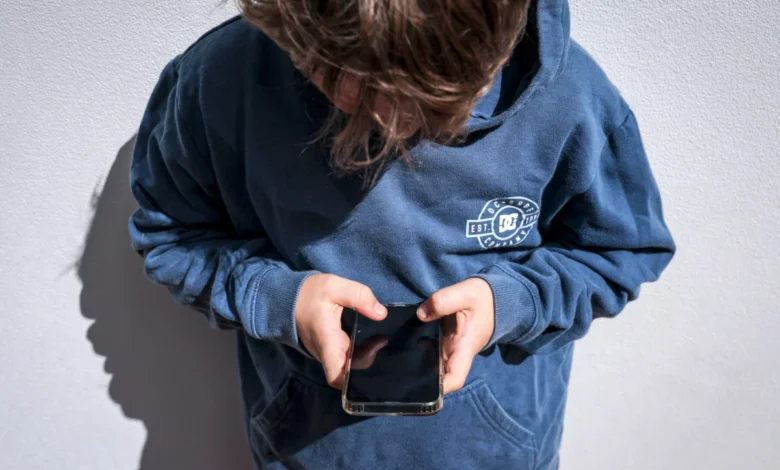
Over the past months, a significant and rapidly accelerating global trend has emerged, with numerous countries announcing comprehensive plans to restrict or outright ban social media access for children and teenagers. This concerted international movement signals a profound shift in how governments perceive and regulate digital platforms, driven by escalating concerns over the profound impact of social media on young users’ mental health, safety, and development. Australia, at the close of 2025, became the inaugural nation to implement such sweeping measures, setting a critical precedent that is now being meticulously observed and, in many cases, emulated by other countries worldwide. France recently joined this growing cohort, becoming the latest to enact similar legislation, further solidifying the momentum behind these protective policies.
The Driving Force: Protecting the Next Generation
The array of regulations and legislative proposals being advanced by governments globally is primarily motivated by an urgent desire to mitigate the pervasive pressures and inherent risks that young users frequently encounter on social media platforms. These risks are multifaceted and well-documented, encompassing the insidious spread of cyberbullying, the increasingly recognized phenomenon of digital addiction, a documented rise in mental health issues such as anxiety, depression, and body image disorders, and the ever-present danger of exposure to online predators and inappropriate content. Lawmakers and public health officials increasingly point to the intentionally addictive design of these platforms, which leverage sophisticated algorithms and psychological triggers to maximize user engagement, often to the detriment of adolescent well-being. Studies from organizations like the American Psychological Association and the Royal College of Psychiatrists have highlighted correlations between excessive social media use and adverse mental health outcomes in young people, fueling the legislative push. Concerns extend to the disruption of sleep patterns, the fostering of comparison culture, and the potential for reduced in-person social interaction, all of which are critical for healthy youth development.
Navigating the Ethical Minefield: Privacy and Intervention Concerns
Despite the compelling motivations, these restrictive measures are not without significant controversy and robust opposition. A central point of contention revolves around the implementation of invasive age verification technologies, which critics argue pose substantial privacy risks. The reliance on methods such as facial recognition, AI-powered age estimation, or the sharing of sensitive personal data with third-party verification services raises alarm bells regarding data security, potential for misuse, and the erosion of digital anonymity. Furthermore, concerns are vocally expressed about what some deem "excessive government intervention" into personal freedoms and parental autonomy. Critics, including prominent human rights organizations like Amnesty Tech, have argued that blanket bans are often an "ineffective quick fix" that fails to address the root causes of online harm and, crucially, ignores the complex realities of how younger generations interact with the digital world. Amnesty Tech posits that such bans can inadvertently limit young people’s access to vital information, educational resources, and opportunities for social connection and activism, which can be particularly important for marginalized youth. They advocate instead for comprehensive digital literacy education, robust platform accountability, and targeted support systems for young people struggling online, rather than broad prohibitions that may be easily circumvented and stifle positive online engagement.
A Global Timeline of Legislative Action
The past year has witnessed a rapid acceleration of legislative efforts across continents, creating a complex and evolving tapestry of regulations. This timeline illustrates the swift movement of nations from discussion to definitive action:
-
December 2025: Australia Leads the Charge
Australia distinguished itself as the world’s first country to implement a comprehensive ban on social media for children under 16. The landmark legislation, which took effect at the end of 2025, specifically prohibits individuals under the age of 16 from accessing a broad range of popular platforms, including Facebook, Instagram, Snapchat, Threads, TikTok, X (formerly Twitter), YouTube, Reddit, Twitch, and Kick. Notably, the ban carves out exceptions for messaging services like WhatsApp and educational platforms such as YouTube Kids, acknowledging their different operational models and perceived risk profiles. The Australian government has placed a significant onus on social media companies, demanding they implement rigorous measures to prevent underage access to their services. Non-compliance carries severe financial repercussions, with penalties potentially reaching up to AUD 49.5 million (approximately USD 34.4 million). Crucially, the government mandates that platforms employ multiple, robust verification methods, explicitly stating that mere self-declaration of age by users will not suffice, thereby pushing for advanced age assurance technologies. -
November 2025: Denmark Secures Political Support
Prior to Australia’s enactment, Denmark laid the groundwork for its own ban, announcing in November 2025 that it had garnered crucial cross-party support for legislation that would prohibit social media access for children under 15. The Danish government, with backing from its three governing coalition parties and two opposition parties, anticipates that these plans could transition into law as early as mid-2026. Complementing this legislative effort, the Danish digital affairs ministry is proactively developing a "digital evidence" app, which is expected to incorporate advanced age verification tools, forming an integral part of the proposed ban’s enforcement mechanism. -
Early March 2026: Indonesia Targets Broad Platforms
Indonesia announced in early March its intention to ban children under 16 from using social media and a host of other popular online platforms. The country’s ambitious plan targets a wide array of services, including YouTube, TikTok, Facebook, Instagram, Threads, X, Bigo Live, and Roblox, reflecting a comprehensive approach to protecting its youth in the digital sphere. -
Late March 2026: Austria’s Draft Legislation Emerges
Austria joined the growing list in late March, signaling its intent to ban social media for children up to the age of 14. Draft legislation outlining the specifics of this prohibition is expected to be finalized by June, indicating a rapid progression towards formal enactment. -
April 2026: Greece Targets Mental Health Crisis
Greek Prime Minister Kyriakos Mitsotakis publicly announced in April that Greece would ban social media access for children under 15, commencing in January 2027. Mitsotakis explicitly linked this decisive move to addressing a national crisis of rising anxiety and sleep problems among children, as well as countering the intentionally addictive design inherent in many social media platforms. -
April 2026: Turkey’s Parliament Acts
The Turkish parliament passed a bill in April aimed at restricting social media access for children under 15. The legislation now awaits the crucial assent of Turkish President Recep Tayyip Erdogan to officially become law, underscoring the political will behind such measures in the region. -
Early June 2026: Canada Introduces Digital Safety Bill
The Canadian government introduced a comprehensive digital safety bill in early June, which notably includes provisions for a social media ban for children under 16. The proposed legislation, however, offers a potential pathway for social media giants to sidestep the ban if they can demonstrably prove they have robust policies and mechanisms in place to protect young users. Officials have indicated that the legislative process could take up to a year to conclude, allowing for extensive debate and potential amendments. -
June 15, 2026: UK Announces Intent
U.K. Prime Minister Keir Starmer announced on June 15 that his government intends to impose a ban on social media use for children under 16. This proposed ban would encompass a broad spectrum of platforms, including Snapchat, TikTok, YouTube, Instagram, Facebook, and X. Similar to Australia, messaging services such as WhatsApp and Signal are expected to be exempt. The U.K. proposal also addresses emerging technologies, with limitations planned for AI tools, specifically requiring "romantic companion" chatbots to ensure usability only by individuals over 18. While Starmer acknowledged the inherent enforcement challenges, he expressed confidence in the feasibility of implementation, projecting a potential enactment by spring 2027. -
July 21, 2026: France Enacts Legislation
France passed a pivotal law on July 21, banning access to social media for anyone under 15. This significant legislation is slated to come into effect as early as September 1, marking a rapid transition from proposal to implementation. Adding another layer of protection, the law also extends the existing ban on cellphones in primary and middle schools to include high schools, reinforcing a holistic approach to digital well-being for minors.
Nations in Deliberation: The Path Forward
Beyond those who have already enacted or are on the cusp of implementing bans, several other countries are actively engaged in discussions and drafting legislation, signaling a wider international contemplation of these issues:
-
February 2026: Germany’s Conservatives Propose Curbs
In early February, German Chancellor Friedrich Merz’s conservative party initiated discussions around a proposal to bar children under 16 from using social media. However, initial indications suggested a degree of hesitancy from his center-left coalition partners to endorse an outright ban, highlighting the nuanced political landscape within some nations. -
November 2025: Malaysia Plans 2026 Implementation
The Malaysian government announced in November 2025 its intention to ban social media for children under 16, with plans to implement the ban within the current year (2026). -
February 2026: Poland Drafts Legislation
Bloomberg reported in February that Poland’s ruling party is actively drafting new legislation that would prohibit children under 15 from accessing social media platforms, posing a direct challenge to the operational models of major U.S. tech companies. -
Early February 2026: Slovenia Prepares Legislation
Slovenia’s deputy prime minister announced in early February that the country is in the process of drafting legislation to prohibit children under 15 from accessing social media. The government’s focus is on regulating social networks where content is extensively shared, specifically citing platforms such as TikTok, Snapchat, and Instagram. -
Early February 2026: Spain Seeks Parliamentary Approval
Spain’s prime minister announced in early February that the country intends to ban social media for children under 16, a measure that still requires parliamentary approval. In a related move, the Spanish government is also pursuing a law that would hold social media executives personally accountable for the dissemination of hate speech and illegal content on their platforms, indicating a dual approach to platform regulation.
The Broader Implications and Ongoing Debate
The global push for social media bans for minors ignites a complex debate with far-reaching implications. Technologically, it presents an unprecedented challenge for platforms to develop robust, privacy-preserving age verification systems that are both effective and compliant across diverse regulatory landscapes. This could spur innovation in identity verification but also risks creating an "arms race" with minors seeking to circumvent restrictions.
Economically, the bans could impact the user growth and advertising revenue of social media companies, particularly those heavily reliant on younger demographics. The cost of implementing and maintaining sophisticated age verification systems will also be substantial.
Societally, the long-term impacts are yet to be fully understood. While proponents envision a generation freed from the pressures and harms of early social media exposure, critics worry about potential unintended consequences, such as driving youth to less regulated, more clandestine online spaces, or limiting their access to positive aspects of online community and learning. There’s also the question of the evolving role of parents, who may find themselves with increased responsibility for monitoring their children’s digital activities, potentially with fewer technological tools to aid them. The effectiveness of these bans will largely hinge on their enforceability and whether they truly address the underlying issues of mental health and online safety, or merely shift the problem.
This global movement reflects a growing consensus among policymakers that the unfettered access of minors to social media platforms is unsustainable. The coming years will be crucial in evaluating the efficacy of these diverse legislative approaches, the technological responses of the platforms, and the ultimate impact on the digital well-being of the world’s youth. The ongoing debate between protection and privacy, intervention and individual autonomy, will undoubtedly continue to shape the future of the internet for generations to come.
This story was originally published in February 2026 and is updated regularly with new information.