Macy’s Thanksgiving Day Parade Rescheduled for the First Time in History Due to Severe Weather

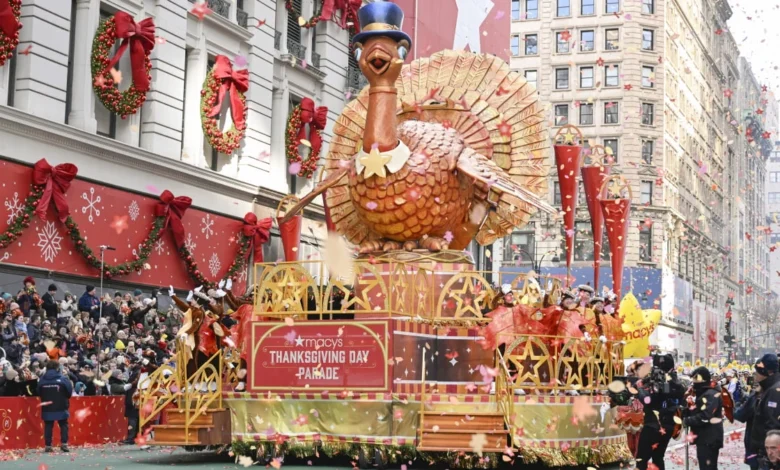
In an unprecedented disruption to a century-old American holiday tradition, the annual Macy’s Thanksgiving Day Parade will not take place on Thanksgiving Day. Marking its monumental 100th anniversary year, organizers announced that the massive festive procession has been officially rescheduled for Saturday, November 28, following dire weather forecasts warning of an impending nor’easter hitting New York City.
The decision marks a historic departure from a holiday staple that has, for generations, defined Thanksgiving morning for tens of millions of television viewers nationwide. While the parade has faced wartime suspensions and occasional weather-related restrictions in the past, it has never before been entirely postponed to a completely different day of the week.
A Nor’easter Threatens New York City
According to meteorological updates from the Weather Channel, New York City is bracing for severe atmospheric conditions on Thursday, characterized by heavy precipitation and hazardous winds associated with a powerful nor’easter. City officials, emergency management teams, and Macy’s executives held intensive consultations before making the difficult choice to alter the schedule.
The primary safety concern centers on the iconic, towering character balloons that serve as the visual centerpiece of the parade. Under strict municipal safety guidelines implemented in the wake of a severe 1997 incident—in which a high-wind gust drove a balloon into a lamppost, causing it to collapse and critically injure a bystander—city regulations explicitly prohibit giant balloons from flying if sustained winds exceed 23 miles per hour, or if gusts surpass 34 miles per hour.
With forecasts predicting wind speeds well beyond these safety thresholds, organizers faced a stark choice: run the parade entirely without its signature balloons or postpone the event altogether. Ultimately, municipal authorities and Macy’s leadership prioritized public safety, opting to move the entire celebration rather than compromise the integrity and scale of the centennial event.
A Century of Tradition and Rare Interruptions
The Macy’s Thanksgiving Day Parade holds a deeply ingrained place in American culture. Launched in 1924 by Macy’s department store employees—many of whom were first-generation immigrants wanting to celebrate the American holiday with the pageantry of European festivals—the parade has grown into a massive national broadcast event, traditionally televised across the country via NBC and its affiliates.
Throughout its illustrious 100-year history, cancellations and major alterations have been exceptionally rare. Prior to this week’s announcement, the parade had only ever been canceled three times: consecutively from 1942 to 1944, during the height of World War II, when rubber and helium were severely rationed for the war effort.
Even severe weather has rarely stopped the show. The last time the giant balloons were grounded due to inclement weather was 55 years ago, in 1971, when persistent rain and high winds forced handlers to keep the inflatables safely packed away while the marching bands and floats continued down the route. Operating under normal conditions, the parade routinely draws roughly 3.5 million spectators to the streets of Manhattan, alongside an estimated 50 million television viewers tuned in from home.
Official Statements and Rescheduling Details
Macy’s executives released an official statement on Wednesday outlining the decision and expressing gratitude to the massive network of participants who make the holiday spectacle possible.
"The safety of our participants and spectators is our top priority, and after close consultation with our City and agency partners, we have made the decision to move this year’s celebration," Macy’s said in the statement. "Thank you to the thousands of volunteers, performers, and partners who create the magic millions enjoy each year. We look forward to celebrating together on Saturday."
Under the revised schedule, the centennial parade will kick off at 8:30 a.m. ET on Saturday, November 28. City logistical teams, police departments, and transit authorities are currently working around the clock to adjust street closures, security perimeters, and staffing arrangements to accommodate the weekend timeline.
Public Reaction and Cultural Impact
The announcement immediately sent shockwaves across social media platforms, with millions of users expressing disbelief, humor, and nostalgia over the weekend shift. For generations of families, watching the parade while preparing Thanksgiving dinner has functioned as an unwritten holiday ritual. Transitioning the event to a Saturday morning shatters a decades-long psychological association between the parade and the Thanksgiving holiday itself.
Social media reactions ranged from bewildered commentary about Thanksgiving morning feeling incomplete without the broadcast to humorous predictions about leftover turkey being consumed while watching marching bands in late November sunlight. Despite the widespread disruption, the prevailing sentiment among the public remained supportive of the safety precautions necessitated by the severe weather forecast.
Broader Economic and Logistical Implications
Rescheduling an event of this magnitude with mere days of notice carries significant economic and operational repercussions. The Macy’s Thanksgiving Day Parade is not merely a cultural broadcast; it is a complex logistical operation involving thousands of out-of-town marching band members, professional performers, balloon handlers, Macy’s employees, and municipal service workers.
Hotels, restaurants, and tourism boards in New York City now face an unexpected shift in visitor patterns. Many tourists who traveled to Manhattan specifically for a Thanksgiving-week holiday experience must now adjust their travel itineraries, hotel bookings, and restaurant reservations to accommodate a Saturday parade. Conversely, local businesses along the parade route may see altered foot traffic patterns as crowds redistribute to the weekend schedule.
Broadcaster NBC and its corporate partners also face immediate scheduling adjustments to accommodate the live broadcast on Saturday morning, a time slot typically reserved for children’s programming and weekend news. However, given the massive advertising revenue and historical viewing figures associated with the parade, network executives are expected to retain significant viewership despite the calendar change.
As city crews prepare for the incoming nor’easter on Thursday, attention will rapidly pivot to Saturday morning, when New York City will finally get to celebrate the historic 100th anniversary of its most beloved holiday tradition under hopefully clearer skies.