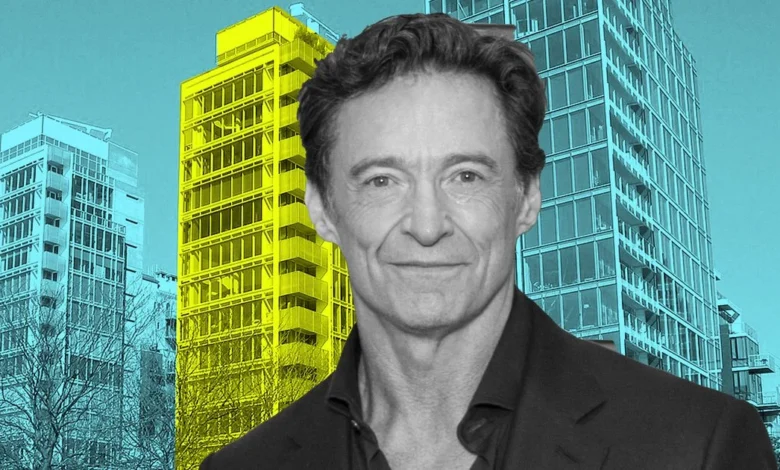
After a protracted four-year journey on the real estate market, Hollywood star Hugh Jackman has successfully offloaded his expansive triplex apartment located within the iconic Meier Towers in Manhattan’s West Village. The transaction, which according to the Olshan Report signals the conclusion of one of the most high-profile celebrity listings in recent New York City history, marks a significant milestone in the actor’s personal and financial restructuring following his divorce from Deborra-Lee Furness.
The property, an 11,000-square-foot architectural statement piece at 176 Perry Street, had become a fixture of the luxury market since its initial debut in 2022. The sale brings an end to a period of uncertainty for the residence, which witnessed the dissolution of the couple’s nearly 30-year marriage and the subsequent shifting of their extensive real estate portfolio.
A Chronology of the Listing
The history of the Perry Street triplex is a case study in the volatility of the ultra-luxury New York City market. When Jackman and Furness first listed the home in 2022, they set an ambitious asking price of $39 million. The couple had originally acquired the unit in 2008 for $21 million, investing in a decade-and-a-half of appreciation. However, the market’s response was tepid.
By 2023, as the couple’s personal lives underwent public shifts—coinciding with Jackman’s high-profile return to Broadway in The Music Man and his subsequent separation from Furness—the strategy for the property pivoted. In September 2023, the apartment was withdrawn from the sales market and offered as a rental for $125,000 per month, a move often used by high-net-worth individuals to maintain liquidity while waiting for a more favorable sales climate.
The property returned to the sales market in March 2026 under the stewardship of Deborah Grubman of the Corcoran Group. With the price slashed to $29 million, the adjustment reflected a clear intent to finalize the asset’s sale. While the final purchase price remains undisclosed pending the filing of public records, market analysts suggest that the extended duration of the listing and the series of price reductions granted significant leverage to the eventual buyer.
Architectural Pedigree and Building Profile
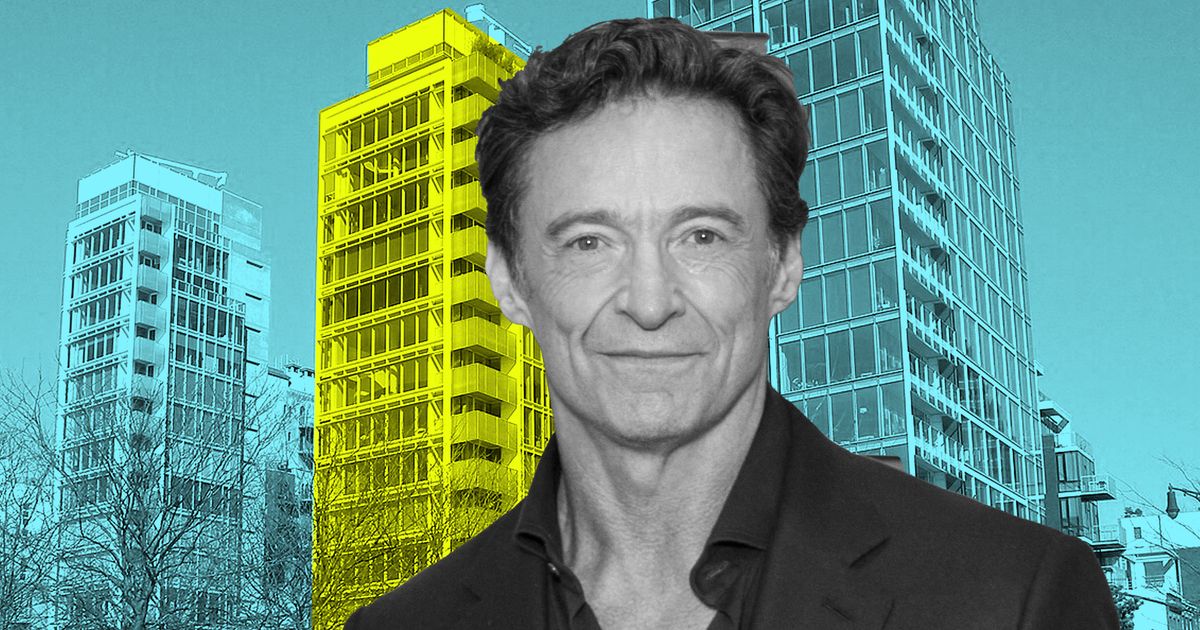
The triplex occupies the eighth, ninth, and tenth floors of 176 Perry Street, a building designed by the renowned, albeit controversial, architect Richard Meier. The Perry Street towers are widely credited with catalyzing the transformation of the West Side waterfront, shifting the area from an industrial fringe into one of the most exclusive residential enclaves in Manhattan.
The unit itself is a testament to the minimalist, glass-heavy aesthetic that defined Meier’s career. The tenth floor is configured as an expansive primary suite, featuring specialized dressing areas, an exercise spa, a sauna, and a dedicated spa bath. The ninth floor serves as the heart of the home, dominated by a double-height living room featuring floor-to-ceiling windows that provide unobstructed views of the Hudson River. The eighth floor contains four additional bedrooms, designed to accommodate guests or family.
Beyond the unit’s internal footprint, the building offers white-glove amenities, including a private fitness center and, notably, direct dining service from the ground-floor restaurant, Perry St, managed by the Jean-Georges Vongerichten group. Despite the controversy surrounding Richard Meier following allegations of sexual harassment in 2018, the "Meier Towers" brand remains a powerful identifier in the Manhattan real estate market, with the building’s architectural significance continuing to attract buyers seeking a blend of cultural pedigree and structural prestige.
The Broader Real Estate Extraction
The sale of the Perry Street home is the latest in a series of asset divestments and transfers following the divorce of Jackman and Furness. In 2025, the legal and financial disentanglement of their assets became public when Furness appeared to acquire Jackman’s interest in a penthouse at 100 11th Avenue. The transaction was executed through an entity identified as "Phoenix Rising I," a name that reflected the couple’s transition into separate lives.
A similar mechanism was used for their Hamptons estate, which was transferred to an entity titled "Phoenix Rising II," effectively ensuring that the coastal property remained under Furness’s control. These moves have been interpreted by real estate observers as a methodical approach to dividing a substantial and complex portfolio without the need for contentious public litigation.
For his part, Jackman has maintained a lower profile regarding his permanent residence in New York City. While his professional life remained centered in the city throughout 2025 and 2026—marked by back-to-back theater productions—his domestic arrangements have remained private.
Market Implications and Analysis
The sale of the Jackman triplex offers a window into the current state of Manhattan’s ultra-luxury condo market. Properties priced north of $25 million have faced headwinds in recent years due to shifting interest rates, a surplus of new inventory in areas like Billionaires’ Row, and a cooling of the post-pandemic buying frenzy.
"When you see a property of this magnitude sit for four years, it’s rarely just about the architecture," says a senior analyst with a Manhattan-based real estate consultancy. "It’s about the alignment of the seller’s price expectations with the reality of a buyer’s market. In the $20 million-plus tier, buyers are incredibly discerning. They aren’t just buying the square footage; they are buying the narrative and the value proposition. The fact that this eventually moved at $29 million, down from an initial $39 million, shows that even high-profile celebrity sellers are subject to the same market forces as anyone else."
Furthermore, the "celebrity premium"—the tendency for properties once owned by stars to command higher prices—often hits a ceiling. While the pedigree of the Perry Street building is undeniable, potential buyers are increasingly prioritizing modern building technology, sustainability features, and updated interior finishes, which can sometimes clash with the rigid, modernist designs of the early 2000s.
The Legacy of the Meier Towers
The Perry Street towers were built at a time when the West Village was still shedding its bohemian reputation in favor of ultra-luxury development. The sale of one of the building’s largest units serves as a reminder of how quickly the definition of "modern" changes in the Manhattan landscape. As these towers approach their third decade of existence, they have transitioned from "new development" to "classic luxury."
For Jackman, the sale of the apartment is a logistical closing of a chapter that began long before his recent career shifts and personal milestones. For the buyer, the property represents an opportunity to acquire a substantial piece of Manhattan’s modern architectural history. As the keys change hands, the transaction confirms that even in the highest echelons of the real estate market, patience and flexibility remain the most essential tools for a successful closing.
With this final property likely cleared from the couple’s shared ledger, both Jackman and Furness are now positioned to continue their independent paths, both in their professional careers and in their respective residential pursuits. The Perry Street triplex, once a symbol of their partnership, now stands ready to begin its next life under new ownership.