The Evolution of the Gramercy Listing
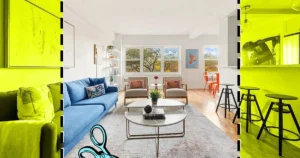
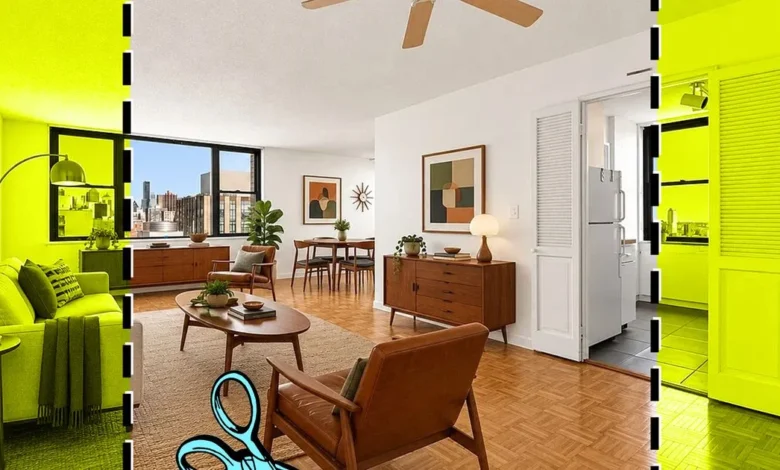
The primary focus of this week’s market analysis is a converted one-bedroom unit located at 201 East 17th Street, known as Park Towers. Listed for $995,000, the unit represents a significant departure from traditional residential layouts. Originally designed as a standard two-bedroom floor plan, the apartment has been extensively modified by a previous owner to create a expansive, open-concept living space.
The unit features nearly 300 square feet of common area finished in honey-blond parquet flooring. The strategic removal of walls has allowed for a flow of natural light that is rare for units in this price bracket, particularly in high-density areas like Gramercy. The living area is oriented to face north, providing skyline views, while the former second bedroom has been repurposed into a dedicated dining alcove with a western exposure. The kitchen retains an L-shaped configuration with dual access points, maintaining functionality for those who prioritize culinary space.
The primary bedroom itself is notable for its scale. It features deep, custom-built closets and an additional west-facing oversized window. The layout includes a reading nook, a feature often sacrificed in newer construction, and is complemented by one-and-a-half bathrooms. With a monthly maintenance fee of $2,376, the building offers a comprehensive suite of services including a 24-hour doorman, live-in superintendent, bike storage, cold storage, an exercise room, and on-site garage parking.
Contextualizing the Sub-Million Dollar Market
The current inventory in New York City for properties priced under $1,000,000 has been characterized by a "flight to quality" among buyers. While the city saw a cooling period in luxury sales during late 2024, the sub-million-dollar segment remains highly competitive. Data from recent market reports indicate that buyers are increasingly willing to sacrifice square footage or proximity to primary transit hubs for "turnkey" properties—units that require zero renovation.
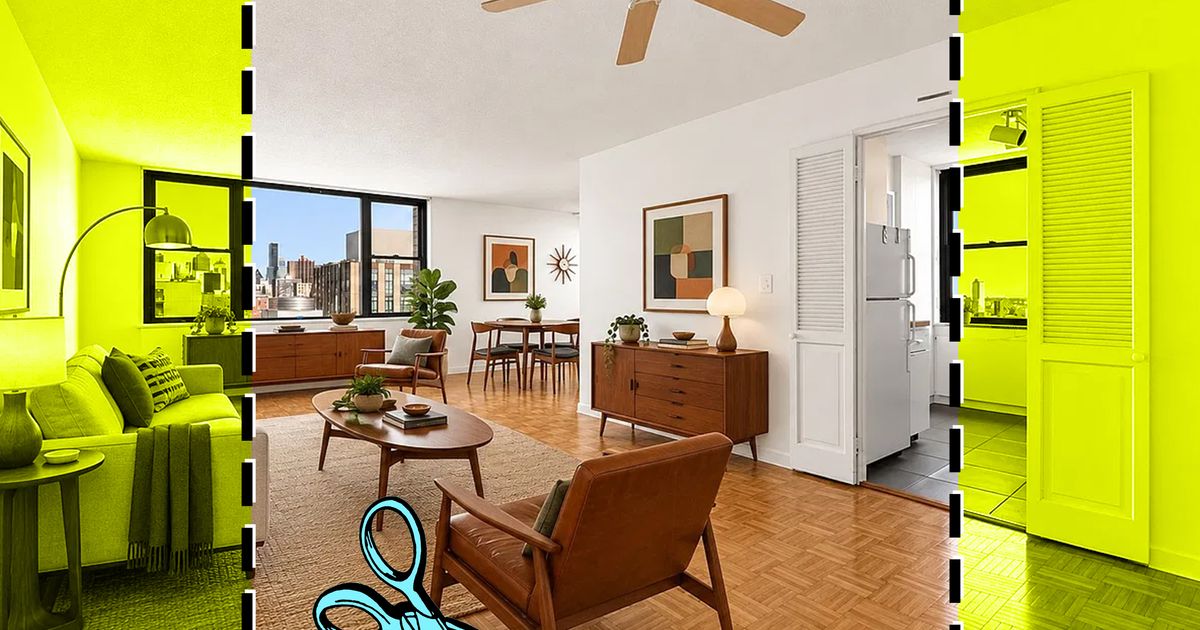
However, the trend of converting larger, dated units into "oversized" one-bedrooms, as seen in the Park Towers example, offers a third path: buying space in an older building and accepting the trade-off of higher monthly maintenance fees in exchange for lower upfront costs and a more prime location. This strategy allows buyers to secure a foothold in established neighborhoods like Gramercy or the Upper West Side, where new developments often start at double the price per square foot.
Comparative Analysis: Prospect Heights and the Upper West Side
Beyond the Gramercy listing, other neighborhoods are seeing a surge in interest for pre-war inventory. At 169 Park Place in Prospect Heights, a floor-through apartment is currently being marketed as a prime example of Italianate architecture. This unit, priced competitively, features original moldings and an arched fireplace. Unlike the Park Towers unit, this property highlights the "fixer-upper" potential that many buyers currently seek. The kitchen and bathroom in this unit are noted to be in need of modernization, a factor that is often reflected in the lower maintenance fees ($1,095) associated with self-managed co-ops.
Similarly, 304 West 88th Street on the Upper West Side presents a different value proposition. Located less than a block from Riverside Park, this unit emphasizes aesthetic upgrades—bold cabinetry, stainless steel appliances, and quartz countertops. The presence of exposed brick and crown molding appeals to the segment of the market that prioritizes pre-war charm over the "open-concept" industrial aesthetic of newer conversions.
Financial Implications and Market Pressures
For prospective buyers, the financial structure of these co-ops is as important as the physical condition of the unit. The disparity in monthly maintenance fees between the Gramercy unit ($2,376) and the Prospect Heights unit ($1,095) illustrates the cost of amenities. In the former, the buyer is paying for a high level of service and building infrastructure, while in the latter, the lower monthly nut reflects a "lean" management style with fewer building-wide perks.
Real estate analysts point to the current economic environment—marked by stabilization in mortgage rates compared to the highs of the previous two years—as the reason for the renewed activity in these specific segments. Buyers are no longer waiting for the "perfect" time to enter the market; instead, they are looking for long-term stability in neighborhoods with established infrastructure. The proximity of these listings to cultural touchstones, such as the historic Joe Jr. diner in Gramercy or the burgeoning restaurant scene along Vanderbilt Avenue in Brooklyn, remains a primary driver of property value.

The Role of Garden Apartments
The listing at 107 Morton Street in the West Village provides a glimpse into the niche demand for garden-level units. While these apartments are historically viewed as "less desirable" due to lower natural light levels, they often offer unique amenities such as private outdoor space. The Morton Street unit, with its storybook vines and private patio, caters to a buyer who values privacy and outdoor access over floor-to-ceiling windows. The presence of two live-in superintendents and a common garden space suggests that while the unit is at the garden level, the building is professionally managed, mitigating the common concerns regarding moisture and maintenance that often plague lower-level apartments.
Future Outlook for Urban Housing
As New York City moves toward 2027, the challenge of providing affordable, spacious housing for middle-income residents persists. The inventory of apartments under $1,000,000 is effectively a finite resource. As developers continue to focus on luxury high-rises, the existing stock of pre-war co-ops remains the primary engine of homeownership for the city’s professional class.
The trend of modifying floor plans to suit modern lifestyles—removing walls, opening kitchens, and converting second bedrooms into dining alcoves—is likely to continue. This adaptive reuse of existing space is a practical response to the physical constraints of older buildings. However, as these renovations become more common, the "original" historical footprint of these units is slowly being erased. Buyers are advised to conduct thorough due diligence, particularly regarding the structural changes made to these units, to ensure that all renovations were permitted and comply with current building codes.
Ultimately, the selection of an apartment in this price range requires a balancing act between the desire for modern amenities and the reality of maintenance costs. Whether one chooses the full-service environment of a Gramercy high-rise or the historic, self-managed charm of a Brooklyn brownstone, the fundamental criteria remains the same: location, layout, and the long-term viability of the co-op board’s financial health. As the market enters the next fiscal quarter, these properties serve as a barometer for the health of New York City’s residential real estate sector, reflecting a resilient demand for space, history, and urban connectivity.