Paramount Global Moves Toward Historic $111 Billion Merger with Warner Bros. Discovery as Regulatory and Administrative Hurdles Near Resolution

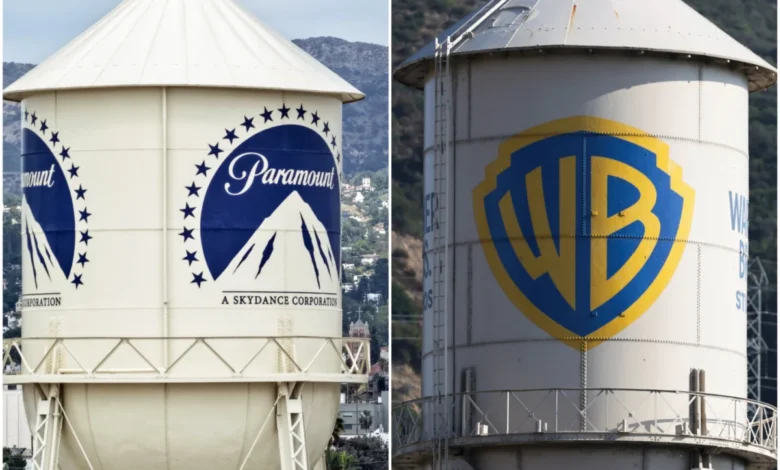
The landscape of the global media and entertainment industry stands on the precipice of a tectonic shift as Paramount Global and Warner Bros. Discovery (WBD) maneuver through the final, complex administrative stages of a proposed $111 billion merger. While the deal has not yet reached a formal closing, both organizations have begun aligning their corporate structures and financial instruments in anticipation of a transaction that promises to redefine the competitive hierarchy of Hollywood. This consolidation represents one of the largest corporate marriages in the history of the media sector, signaling a defensive and strategic consolidation in an era dominated by streaming fragmentation and the decline of traditional linear television.
Administrative Realignment and Exchange Shifts
In a series of definitive steps disclosed in an SEC filing on Friday, September 25, the Paramount board of directors authorized a strategic transition of its stock listing. The company confirmed its decision to voluntarily withdraw its Class B common stock from the Nasdaq Global Select Market, where it has traded under the ticker symbol “PSKY,” in favor of the New York Stock Exchange (NYSE). This transition is projected to be finalized by the close of market on or about October 5, with trading on the NYSE commencing on October 6.
Such moves are rarely purely aesthetic; they often reflect a company’s desire to align with specific institutional investor bases or to consolidate corporate governance structures during a transition period. By shifting to the NYSE, Paramount seeks to provide a stable platform for shareholders as the company navigates the uncertainty of the pending WBD integration.
However, the path to this transition is tethered to the volatility of the merger itself. Paramount noted that the distribution of warrants—which would allow eligible holders of Class B Common Stock to purchase shares in the post-merger entity—is strictly contingent upon the successful closing of the WBD acquisition. Given that the merger remains subject to final closing conditions, Paramount has built in a safety mechanism, reserving the right to cancel or postpone the record date for these warrants should the merger timeline drift beyond current projections.
The Chronology of the Mega-Merger
The journey toward this $111 billion deal has been marked by intense scrutiny and complex negotiations. The genesis of the deal involved a high-stakes search for a buyer or strategic partner for Paramount, a search that eventually saw David Ellison, his father Larry Ellison, and RedBird Capital Partners’ Gerry Cardinale emerge as the primary architects.
- Initial Proposals: Throughout 2024, Paramount engaged in a series of discussions with various suitors, including Apollo Global Management and Skydance Media. The Skydance-led proposal eventually gained traction due to its focus on long-term growth and the infusion of fresh capital.
- The WBD Convergence: The integration of Warner Bros. Discovery was the final puzzle piece, intended to create a massive content powerhouse capable of competing with Netflix, Disney, and Amazon.
- The Antitrust Challenge: The deal faced significant headwinds from 12 Democratic state attorneys general, who raised concerns regarding market concentration and the potential for reduced competition in local broadcast and cable markets.
- The Settlement: A breakthrough occurred this week when a settlement was reached with those attorneys general. While the presiding judge is still reviewing the proposed consent decree—and has invited comment from lawmakers like Sen. Cory Booker—the resolution of this litigation removes the most significant legal obstacle to the deal’s finalization.
Financial Mechanics and the “Ticking Fee”
The financial architecture of this deal is as intricate as its legal framework. Paramount has disclosed plans to issue approximately 470 million warrants on October 5, provided the deal proceeds. These warrants are structured to allow existing shareholders to participate in the new entity under terms comparable to those secured by the equity syndicate led by the Ellison family and RedBird Capital.
A critical component of the deal’s pressure is the “ticking fee.” Starting October 1, Paramount is obligated to pay a $7 million-per-day penalty to Warner Bros. Discovery shareholders. This fee acts as a powerful incentive for Paramount’s leadership to expedite the closing process, as every day of delay directly impacts the company’s bottom line. The existence of this fee underscores the urgency felt by all parties involved to finalize the transaction before the end of the calendar year.
Regarding the warrant exercise price, Paramount has established a flexible range to protect against excessive market volatility. The price will be based on the 20-day volume-weighted average price (VWAP) leading up to the closing, with a floor of $12.00 per share and a ceiling of $16.02 per share. This range provides a degree of predictability for investors who are looking to capitalize on the potential upside of the newly merged entity.
Warner Bros. Discovery’s Debt Management
In conjunction with the pending merger, Warner Bros. Discovery is also streamlining its financial obligations. On Friday, WBD announced its intent to voluntarily delist its “Euro Notes”—specifically the 4.302% senior notes due 2030 and 4.693% senior notes due 2033—from Nasdaq. This move is consistent with the broader strategy of simplifying the capital structure of the combined entity and reducing the administrative complexity associated with maintaining debt listings across multiple exchanges. WBD expects to file the necessary notifications with the SEC around October 6, mirroring the timeline set by Paramount.
Broader Market Implications and Strategic Analysis
The consolidation of Paramount and WBD represents a defensive reaction to the "streaming wars." For years, traditional media conglomerates have struggled to offset the precipitous decline of linear cable subscribers with growth in direct-to-consumer (DTC) platforms. By combining the vast content libraries of Paramount (including CBS, Nickelodeon, and the Paramount+ service) with the assets of Warner Bros. Discovery (including HBO, CNN, and Max), the new entity will possess an unparalleled depth of intellectual property.
Market analysts suggest that the merger will likely lead to significant cost synergies. By eliminating redundant departments—from marketing and distribution to administrative overhead—the combined company aims to improve its free cash flow and reduce the substantial debt loads that have historically burdened both Paramount and WBD.
However, the merger is not without risk. The regulatory environment remains delicate. Sen. Cory Booker’s request for an independent review of the consent decree suggests that even with the support of state attorneys general, there is ongoing legislative interest in the potential impact of this merger on consumer choice and media diversity. Any further delays could exacerbate the financial pressure caused by the $7 million daily ticking fee, potentially forcing the companies to divest more assets than originally anticipated to satisfy regulators.
Conclusion
As the October deadlines approach, the focus of the industry remains squarely on the court’s decision regarding the antitrust settlement and the logistics of the stock transfer. The transition to the NYSE and the delisting of various debt instruments are clear signals that the companies are in the "closing phase." If successful, the Paramount-WBD merger will serve as a definitive case study in media consolidation, setting a precedent for how legacy players must adapt to an increasingly digital-first economy. For now, shareholders and observers alike are waiting for the final word from the judiciary, which will determine whether this $111 billion deal proceeds as planned or faces further, potentially costly, intervention.