The U.S. Naval Blockade of Iran is Creating an Economic Chokepoint that Threatens the Nation’s Industrial Stability

The current geopolitical standoff in the Persian Gulf has evolved into a sophisticated game of economic attrition, with the U.S. naval blockade of Iran standing as the primary instrument of pressure. By effectively severing the maritime lifelines that previously accounted for over 80% of Iran’s trade tonnage, the U.S. military has forced the Islamic Republic into a desperate and increasingly expensive pivot toward land-based logistics. As the U.S. Central Command (CENTCOM) maintains its ironclad grip on the Strait of Hormuz, the cumulative effect on Iran’s economy has transitioned from a manageable challenge to a systemic crisis, characterized by runaway inflation, severe fuel shortages, and a crumbling import-export infrastructure.
The Maritime Stranglehold: A Chronology of the Blockade
The current crisis traces its origins to the onset of the latest regional conflict, which saw an immediate intensification of naval posturing. Prior to the war, Iran relied heavily on its southern ports—such as Bandar Abbas and Chabahar—to facilitate the vast majority of its international commerce. The U.S. naval response, coordinated through CENTCOM, involved the deployment of carrier strike groups and mine-countermeasure vessels to ensure freedom of navigation for global shipping while simultaneously interdicting vessels suspected of violating sanctions or facilitating Iranian war efforts.
As of early September 2026, the efficacy of this blockade is clear. CENTCOM reported that it has redirected 109 commercial vessels in recent weeks alone to ensure compliance with blockade protocols. Adm. Brad Cooper, the head of CENTCOM, noted that the U.S. military has successfully supported the transit of over 1 billion barrels of oil through the Strait of Hormuz in the last two months, providing security for more than 2,000 commercial vessels. This contrast is stark: while the rest of the Persian Gulf experiences a return to near-normal shipping volumes following the clearing of mine-infested lanes, Iran’s maritime exports have effectively been reduced to zero.
The Logistical Bottleneck: Land Routes Under Pressure
Faced with the closure of its primary maritime gateways, the Iranian government has attempted to reroute cargo through its porous land borders with Turkey, Pakistan, Afghanistan, Iraq, and Turkmenistan. While this strategy has led to a measurable increase in bilateral trade—notably a 19% jump in trade with Turkey, totaling $3.2 billion in the first half of the year—the infrastructure was never intended to handle such volume.
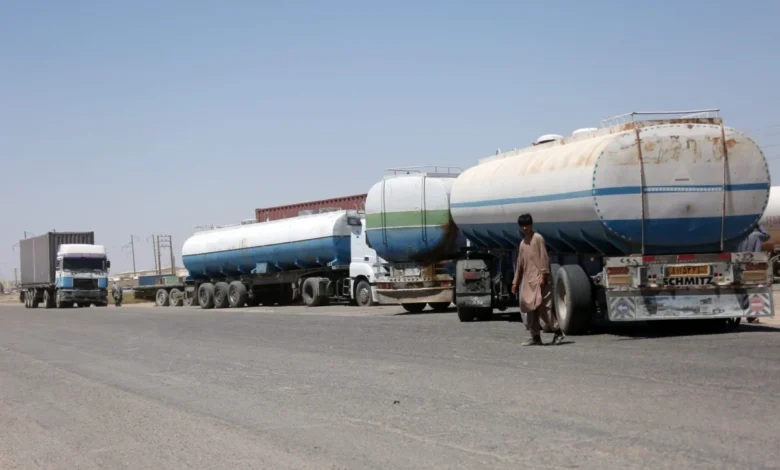
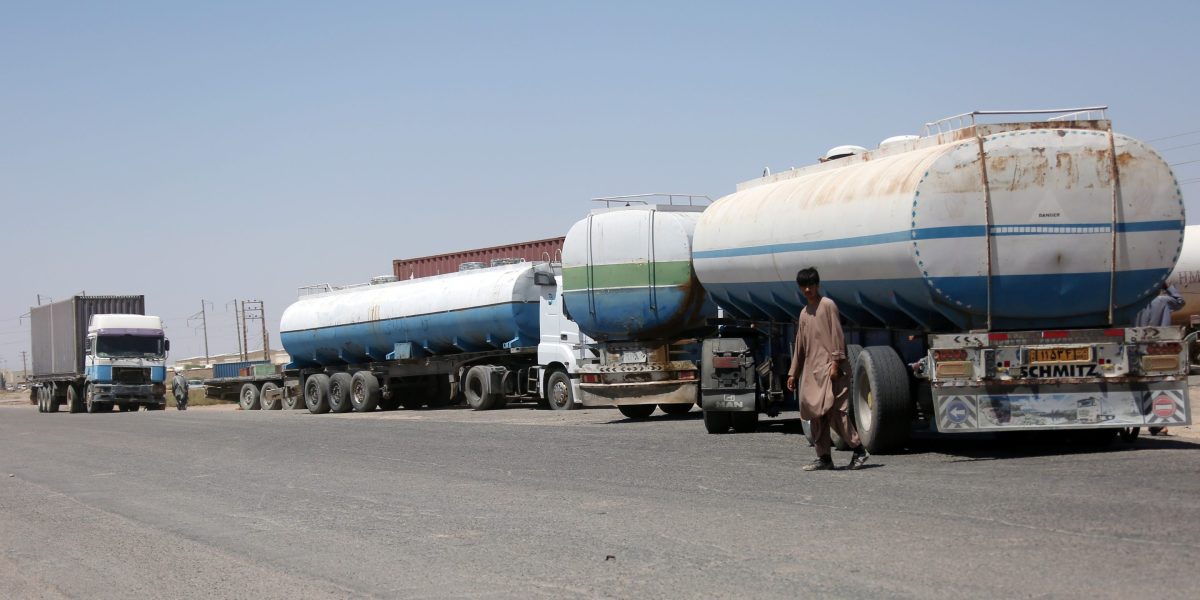
The result has been a logistical catastrophe. The capacity of regional border crossings is insufficient for the sheer volume of redirected freight. Reports from the ground describe scenes of chaos, with miles-long queues of heavy-duty vehicles waiting at customs checkpoints. At key border crossings with Turkey, officials have documented as many as 3,700 trucks stranded simultaneously on the Iranian side.
The human and financial toll of these delays is severe. Drivers frequently report waiting periods exceeding three weeks to cross a single border. For perishable goods, these delays are fatal to the cargo’s value. Even for non-perishables, the added cost of fuel, driver wages, and equipment wear-and-tear is devastating. The inefficiency of these routes is a primary driver of Iran’s current 90% inflation rate, as the cost of importing basic essentials continues to climb alongside the rising price of logistics.
Economic Analysis: The High Cost of Bypassing the Sea
The economic reality of land-based trade is unsustainable compared to maritime shipping. Majidreza Hariri, head of the Iran-China Joint Chamber of Commerce, provided a sobering breakdown of the fiscal disparity: while the cost of shipping a single container between Iran and China by sea is approximately $3,000, the overland alternative inflates that cost to $12,000.
When extrapolated across the 2 million containers that historically passed through Iran’s southern ports annually, the math becomes grim. Industry analysts estimate that the shift to land transport imposes an additional $18 billion in annual transportation costs on the Iranian economy. This is not merely an inconvenience; it is a structural barrier that, according to Hariri, will eventually cause the nation’s industrial output to "grind to a halt."
Furthermore, the lack of modern infrastructure at these land borders—specifically a deficit in warehouse capacity and the absence of digitized, streamlined customs registration—has prevented any meaningful scale-up in rail or road transport. Trade data confirms the decline: in the five-month period ending August 22, Iranian customs reported that non-oil exports fell by 28% to $15 billion, while imports plummeted by 26% to $17 billion.
Internal Pressures and Domestic Consequences
The collapse in trade has had a cascading effect on domestic stability, most notably in the energy sector. Because Iran lacks sufficient domestic refining capacity, it has historically relied on the import of refined gasoline to meet consumer demand. The blockade has throttled these imports, leading to chronic gasoline shortages across the country. In response, the Tehran government has been forced to implement aggressive price hikes to curb demand, further fueling public discontent and inflationary pressures.
The political leadership, including Supreme Leader Ayatollah Mojtaba Khamenei, has acknowledged the gravity of the situation. Public anxiety regarding the economy is at an all-time high, with the value of the national currency, the rial, remaining under extreme pressure. Despite these hardships, analysts suggest the regime is unlikely to shift its foreign policy solely due to economic pain. The government appears prepared to endure prolonged economic isolation, banking on the theory that the international community—and specifically the U.S. electorate—will grow weary of the cost of the conflict, particularly regarding high global energy prices, before the Iranian state collapses.
Official Stances and Strategic Implications
The U.S. administration, under President Donald Trump, maintains that the policy of economic warfare is the most viable path toward a permanent resolution to the conflict. The strategy relies on the belief that by restricting the flow of capital and essential goods, the regime will be forced to choose between total economic disintegration and meaningful diplomatic concessions.
From the perspective of the Iranian Chamber of Commerce, the writing is on the wall. Representatives have begun to signal that the status quo is untenable, with members explicitly stating that there is "little alternative" but to find a mechanism to restore the southern trade corridors. However, as long as the U.S. maintains its current naval posture, these corridors remain off-limits.
The broader implications of this blockade extend beyond Iran’s borders. By effectively de-linking Iran from the global maritime trade network, the U.S. has signaled a willingness to use its naval superiority to reshape regional economic alliances. For the neighboring states, the surge in trade has been a double-edged sword: while they benefit from being the sole conduits for Iranian goods, they also face the risk of secondary sanctions and the logistical burden of an overwhelmed infrastructure system.
Conclusion: A War of Attrition
As of mid-September 2026, the situation remains locked in a stalemate. The U.S. Navy has successfully achieved its tactical objectives, ensuring that the primary transit lanes of the Strait of Hormuz are open for global commerce while keeping Iran’s commercial fleet effectively sidelined. For Iran, the reliance on overland trade routes has proven to be a costly, inefficient, and ultimately insufficient substitute for the high-volume capacity of its southern ports.
The coming months will likely test the endurance of both the Iranian regime’s domestic control and the international resolve to maintain such a comprehensive blockade. With inflation at 90%, fuel shortages becoming a standard feature of daily life, and the cost of trade four times higher than it was before the conflict, the Iranian economy is facing a critical inflection point. Whether the regime can survive this "grinding to a halt" or whether the logistical and economic pressure forces a fundamental shift in strategy remains the defining question of the current conflict. As it stands, the blockade has achieved what few diplomatic efforts could: a total disruption of the Iranian economic engine, forcing the nation to face the consequences of isolation in an increasingly interconnected global market.
Related posts: