The Impending Calorie Count Crisis Threatening Erewhon Cult Status As Expansion Nears Federal Threshold

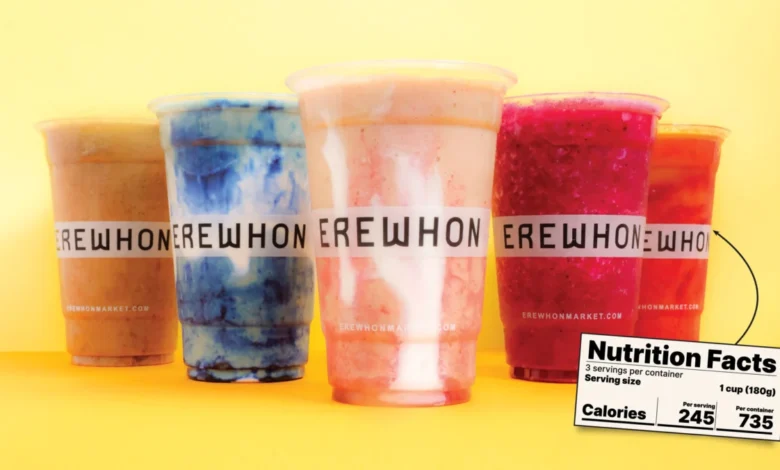
The rapid and aggressive expansion of Southern California’s ultra-exclusive grocery chain Erewhon is quietly hurtling toward a significant regulatory milestone that could fundamentally alter the consumer experience for its health-conscious, celebrity-studded clientele. With the recent grand opening of its newest storefront in Thousand Oaks, the luxury market chain officially reaches 16 operational locations across the region. This expansion marks a notable geographical leap, finally allowing Ventura County residents to purchase the brand’s signature $21 specialty smoothies and meticulously sourced organic produce without crossing county lines. However, this retail milestone brings the brand uncomfortably close to a strict federal regulatory threshold that governs food-service establishments and nutritional transparency.
As Erewhon pushes forward with its calculated real estate trajectory—including two confirmed store openings slated for 2027 in downtown Los Angeles and Costa Mesa, alongside reports of an additional undisclosed location currently in development—the company’s total footprint will climb to 19 stores. This proximity to the magic number of 20 locations places the beloved status symbol at a fascinating crossroads. Under federal statute, specifically provisions tied to the Affordable Care Act and enforced by the Food and Drug Administration (FDA), any food-service establishment operating 20 or more locations under the same name must formally and visibly display calorie counts for all prepared, restaurant-type foods directly on their menus, menu boards, and digital ordering platforms.
The impending legal requirement to publish exact caloric metrics strikes at the very heart of the Erewhon brand identity. For years, the retailer has successfully cultivated an aura of wellness, pristine health, and guilt-free indulgence, largely sustained by aesthetic presentation, premium organic ingredient sourcing, and high-profile celebrity collaborations. The psychological barrier of seeing hard numerical data attached to these luxury comfort foods could introduce a jarring dose of reality to a demographic that historically prefers wellness marketing over hard nutritional accounting.
Anatomy of the Menu: The Hidden Calories Behind Luxury Wellness
To understand the potential cultural friction of federal calorie disclosure, one must examine the actual nutritional composition of Erewhon’s most popular prepared food and beverage offerings. While the brand is synonymous with clean eating, raw ingredients, and functional nutrition, the caloric density of its gourmet menu items often rivals—and sometimes exceeds—traditional comfort food establishments.
Consider, for instance, the luxury market’s upscale steak-and-eggs breakfast burrito, which features premium ingredients such as chipotle mayo, pasture-raised eggs, and high-end cuts of beef. Nutritional estimates compiled by culinary analysts indicate that this popular morning staple comfortably sits in the 800- to 900-calorie range. Similarly, the organic coconut turmeric chicken tenders—prepared with wholesome components including organic coconut cream, brown rice flour, and non-GMO avocado oil—clock in at upward of 700 calories for a standard portion size.
The liquid assets of the establishment present a comparable narrative. The beverage bar, which frequently generates viral social media attention through high-profile celebrity partnerships, features items like the $21 Hailey Bieber Strawberry Glaze Skin Smoothie. While touted for its skin-boosting properties through ingredients such as organic maple syrup, fresh avocado, sea moss, and marine collagen peptides, the beverage approaches approximately 600 calories per serving.
For the dedicated consumer seeking lower-calorie alternatives, financial investment remains a prerequisite. A modest 400-calorie bag of artisanal organic kale chips provides a lighter snack profile, yet carries a retail price tag of roughly $16. When federal guidelines compel the clear posting of these figures next to the respective price points, the juxtaposition of high financial cost and high caloric density may prompt a period of consumer re-evaluation among the brand’s loyal base.
The Growth Trajectory and Chronology of an Empire
To fully appreciate Erewhon’s current standing, it is necessary to examine the historical evolution of a business model that transformed a humble, independent health food store into a dominant cultural touchstone of modern Los Angeles lifestyle and media.
Founded originally in Boston in 1966 by Michio and Aveline Kushi as a macrobiotic shop, the brand relocated to Los Angeles later that decade, embedding itself within the counterculture movement of the era. For decades, the single storefront on Fairfax Avenue served as a quiet sanctuary for macrobiotic adherents, yoga enthusiasts, and early adopters of alternative health practices.
The contemporary era of Erewhon began in 2011 when the business was acquired by Tony and Josephine Shriver. The couple recognized the untapped potential of merging elite organic product curation with high-end luxury retail design, transforming the grocery shopping experience into a status-driven social event. Under their leadership, the brand initiated a steady, highly controlled expansion strategy across affluent Los Angeles enclaves.
Chronology of Key Expansion Phases:
- 2011: Tony and Josephine Shriver acquire the original Fairfax location, setting the stage for a luxury rebranding strategy.
- 2014–2018: Strategic expansion into wealthy Westside neighborhoods, including locations in Pacific Palisades, Santa Monica, and Venice, cementing the brand’s association with affluent coastal demographics.
- 2019–2023: Rapid acceleration into central Los Angeles and the San Fernando Valley, with prominent openings in Silver Lake, Studio City, and Beverly Hills, accompanied by the explosive rise of celebrity-driven smoothie collaborations.
- 2024: The opening of the Thousand Oaks market pushes the total store count to 16, marking the brand’s strategic expansion beyond traditional core boundaries into adjacent regional markets.
- 2027 (Projected): Confirmed store openings in downtown Los Angeles and Costa Mesa will elevate the total count to 18, bringing the enterprise to the precipice of the federal regulatory threshold.
- Future Pipeline: Additional sites currently in development or negotiation are projected to push the overall portfolio to 19 locations and beyond, triggering mandatory calorie disclosure laws.
Corporate Silence and Industry Response
As discussions surrounding the 20-store federal threshold intensify within retail and culinary circles, the corporate leadership at Erewhon has maintained a guarded stance. Inquiries directed to the company’s corporate communications and marketing departments regarding their compliance strategy, menu modifications, or timeline for hitting the 20-store milestone have gone unanswered.
This corporate silence aligns with the brand’s overarching marketing strategy, which historically relies on organic social media visibility, scarcity, and aesthetic allure rather than traditional public relations outreach. Industry analysts note that luxury brands frequently avoid commenting on impending regulatory burdens until compliance becomes legally unavoidable.
However, behind closed doors, retail consultants suggest that Erewhon management has likely modeled several strategic responses to the upcoming federal mandate. Potential paths forward include reformulating select prepared food recipes to reduce caloric density before hitting the threshold, expanding pre-packaged grab-and-go retail items—which carry different labeling exemptions compared to standard menu boards—or simply absorbing the regulatory requirement as a minor hurdle in an otherwise unstoppable luxury expansion wave.
Broader Implications for Lifestyle Retail and Consumer Culture
The intersection of federal menu labeling laws and high-end boutique grocery stores highlights a broader tension within contemporary American consumer culture: the collision between strict regulatory oversight designed to combat public health crises and the marketing of artisanal, calorie-dense indulgence under the banner of wellness.
Originally designed primarily for fast-food chains and national restaurant franchises, the FDA menu labeling rule was intended to empower everyday consumers with transparent nutritional information to combat obesity and related health conditions. The statute’s broad legal definition of "restaurant-type food"—which encompasses prepared foods intended for immediate consumption, whether sold at a traditional restaurant or a supermarket hot bar—inevitably captures upscale grocers that have evolved into hybrid dining destinations.
For Erewhon’s core demographic, the arrival of calorie counts on menus may serve as a fascinating sociological experiment. Whether the revelation that a celebrity-endorsed smoothie or a gourmet breakfast burrito packs substantial caloric weight will deter affluent shoppers remains to be seen. In a subculture where status is frequently derived from exclusivity and premium pricing rather than dietary restraint, numerical transparency may simply become another factor to be casually navigated by a clientele accustomed to paying top dollar for lifestyle curation. Nevertheless, as the chain edges closer to its 20th storefront, the era of blissful ignorance regarding the nutritional reality of luxury market dining is rapidly drawing to a close.
Related posts: