SpaceX Secures First Mars Mission Contract, Will Launch Europe’s Rosalind Franklin Rover in 2028

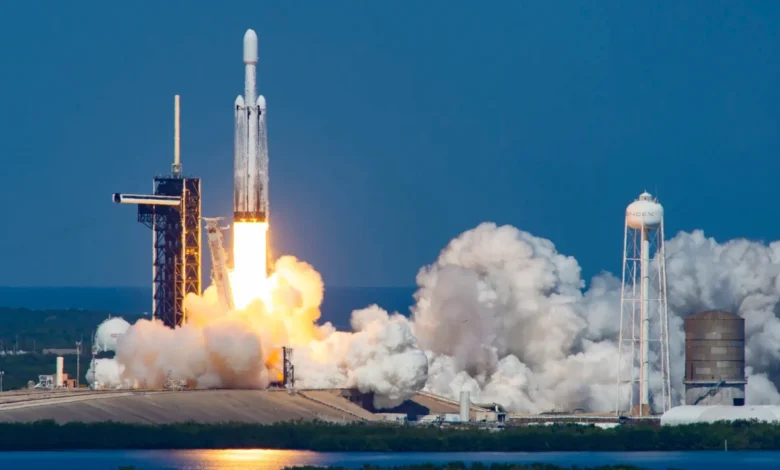
SpaceX has officially inked its first contract to launch a mission to Mars, a significant milestone for Elon Musk’s ambitious interplanetary ambitions. The aerospace giant will utilize its powerful Falcon Heavy rocket to send Europe’s groundbreaking Rosalind Franklin rover to the Red Planet in late 2028. This agreement marks a pivotal moment, not only for SpaceX’s long-held vision of Mars colonization but also for the European Space Agency’s (ESA) persistent pursuit of its life-hunting rover, which has faced a complex and protracted development journey.
The announcement, made by NASA on Thursday, April 16, confirmed that the U.S. space agency has selected SpaceX’s Falcon Heavy for the crucial launch. The liftoff is slated to occur from NASA’s Kennedy Space Center in Florida, marking the first time a commercial entity has been contracted by NASA for the launch of a European planetary mission. This partnership underscores a renewed collaborative spirit between the two agencies in the face of past challenges.
A Long and Winding Road for Rosalind Franklin
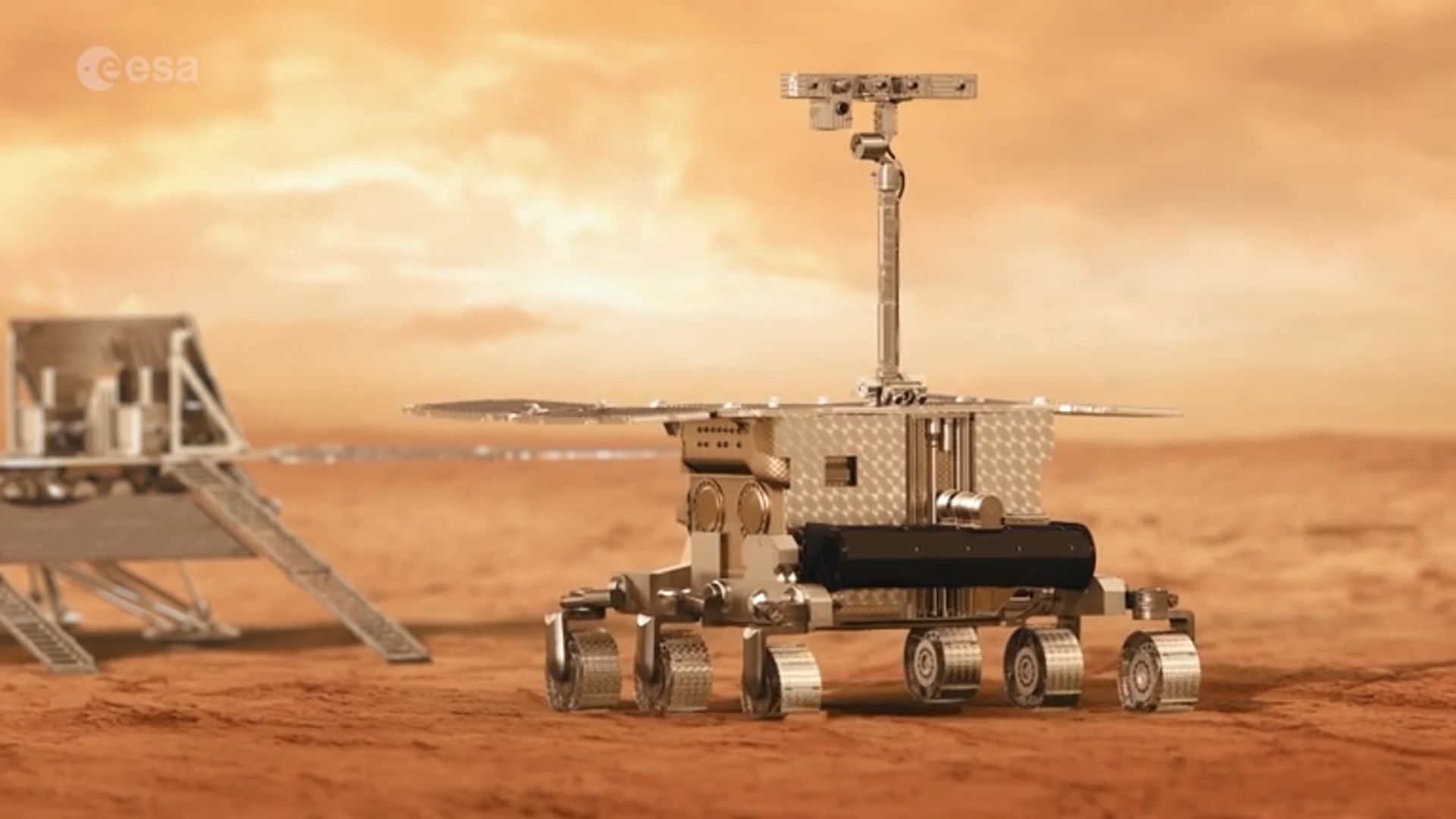
The Rosalind Franklin rover, a key component of ESA’s ExoMars program, has endured a series of setbacks and reconfigurations since its inception approximately 15 years ago. Originally envisioned as a two-part mission, ExoMars was designed to explore the Martian surface for signs of past or present life. The program initially comprised the Rosalind Franklin rover and the Trace Gas Orbiter (TGO), which was tasked with analyzing the Martian atmosphere for methane and other trace gases that could indicate biological activity.
NASA was a foundational partner in the early stages of the ExoMars program. The initial plan called for both the TGO and the Rosalind Franklin rover to be launched on United Launch Alliance’s Atlas V rockets. The TGO successfully launched in 2016, carrying with it instruments developed by NASA, and is currently operational in orbit around Mars. However, the Rosalind Franklin rover’s launch was scheduled for 2018.
Shifting Alliances and Unforeseen Obstacles
The ExoMars program faced its first major hurdle in 2012 when NASA withdrew from the mission due to budget constraints. This withdrawal left ESA in a precarious position, necessitating a search for new partners. ESA subsequently forged a significant alliance with Russia’s Roscosmos. Under this new collaboration, Roscosmos provided the launch vehicle for the Rosalind Franklin rover – a Proton rocket – along with a landing platform and several scientific instruments.
Despite this new partnership, the rover’s launch continued to be postponed. A series of technical challenges, including concerns about the performance of its parachutes and disruptions caused by the global COVID-19 pandemic, contributed to significant delays. The mission was eventually slated for a September 2022 launch on a Proton rocket.
However, geopolitical events dramatically altered the course of the ExoMars program. Russia’s invasion of Ukraine in February 2022 prompted Europe to sever most of its space cooperation agreements with Russia. This decision directly impacted the ExoMars mission, forcing ESA to once again seek an alternative launch solution and abandon its collaboration with Roscosmos.
A Return to Collaboration and a New Launch Provider
Faced with the prospect of abandoning its ambitious life-hunting mission, ESA turned back to its original partner, NASA. In 2024, the two agencies formalized a new agreement outlining NASA’s contributions to the Rosalind Franklin mission. Under this renewed partnership, NASA committed to procuring a commercial launch vehicle for the rover, as well as providing crucial components for its landing system and thermal control.
NASA’s support extends to the rover’s scientific payload as well. The agency is supplying specialized electronics and a sophisticated mass spectrometer for the Mars Organic Molecule Analyzer (MOMA) instrument. MOMA is designed to analyze collected samples for organic compounds, the fundamental building blocks of life, at the rover’s landing site in Oxia Planum.
The recent announcement from NASA signifies the official approval to move into the "implementation" phase of this revitalized partnership, solidifying the mission’s path toward its 2028 launch target. The selection of SpaceX’s Falcon Heavy as the launch provider is a testament to the rocket’s proven capabilities and SpaceX’s growing role in the global space launch market.
Understanding the Falcon Heavy
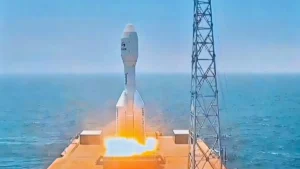
SpaceX’s Falcon Heavy is one of the most powerful operational rockets in the world. It is essentially composed of three modified Falcon 9 first-stage boosters strapped together, with a single Falcon 9 second stage positioned on top, carrying the payload. A key feature of the Falcon Heavy is the reusability of its first-stage boosters, a core element of SpaceX’s strategy to reduce launch costs.
The Falcon Heavy made its maiden flight in February 2018, successfully launching a Tesla Roadster into orbit as a demonstration payload. Since then, it has completed 11 launches, all of which have been successful. Its most recent mission was the launch of NASA’s Europa Clipper probe on October 14, 2024, which is now en route to Jupiter’s ocean moon. The rocket’s robust performance and payload capacity make it an ideal choice for the complex requirements of launching a substantial scientific payload like the Rosalind Franklin rover on a trajectory to Mars.
SpaceX’s Own Mars Ambitions
While the Rosalind Franklin contract represents a significant commercial achievement for SpaceX, the company continues to pursue its own ambitious Mars objectives with its next-generation Starship megarocket. Starship, designed to be the largest and most powerful launch system ever constructed, is envisioned by SpaceX founder Elon Musk as the key to establishing human settlements on both the Moon and Mars.
Starship has undergone a series of suborbital test flights from SpaceX’s Starbase facility in Texas. The program has seen remarkable progress, with the last two test flights achieving full mission success, including controlled re-entry and splashdown of both the Super Heavy booster and the Starship upper stage. However, the vehicle has yet to reach orbit and demonstrate crucial capabilities such as in-orbit refueling, which are essential for deep-space missions.
SpaceX plans to deploy an uncrewed fleet of Starships to Mars once the vehicle is deemed ready for interplanetary flight. The timing of these missions remains uncertain, particularly given the limited launch windows to Mars, which occur only once every 26 months. The next such window opens in October of this year, but it appears unlikely that Starship will be ready for a Mars launch during that period. Consequently, SpaceX’s own Mars exploration dreams, like those of the Rosalind Franklin rover, may also align with the 2028 launch window.
The Scientific Imperative of Rosalind Franklin
The Rosalind Franklin rover is equipped with a sophisticated drill capable of penetrating up to two meters beneath the Martian surface. This capability is crucial for its primary scientific objective: to search for evidence of life in a region where potential biosignatures would be protected from the harsh radiation and oxidative conditions on the Martian surface.
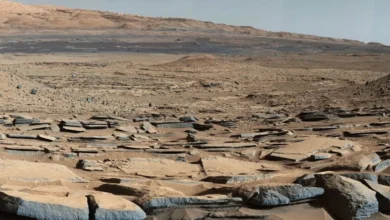
The chosen landing site, Oxia Planum, is a clay-rich area believed to have been shaped by flowing water in Mars’ ancient past. The rover’s scientific instruments, including the MOMA instrument enhanced by NASA’s contributions, will be instrumental in analyzing soil and rock samples for organic molecules and other indicators of past or present life. The rover also carries a panoramic camera, a high-resolution camera, a ground-penetrating radar, and a spectrometer to study the mineralogy and composition of the Martian environment.
The successful deployment of the Rosalind Franklin rover would represent a significant leap forward in humanity’s quest to understand whether life exists, or has ever existed, beyond Earth. The complex history of its development, marked by shifting international partnerships and unforeseen challenges, underscores the inherent difficulties and the remarkable perseverance required for ambitious deep-space exploration. With SpaceX now at the helm for its launch, the rover’s long-awaited journey to Mars is finally set to become a reality.