Patrick Muldoon, Star of ‘Starship Troopers’ and Daytime Soap Opera Favorite, Dies at 57

Veteran actor Patrick Muldoon, a familiar face on both the big and small screen, known for his memorable roles in the cult sci-fi classic Starship Troopers and the long-running soap opera Days of Our Lives, has died. He was 57. Muldoon passed away on Sunday at his Beverly Hills home due to a heart attack, according to a report by TMZ. His passing marks the end of a career that spanned four decades, during which he often portrayed characters who embodied a compelling blend of charm and roguishness, frequently oscillating between leading man appeal and the persona of a charming cad.
Born in San Pedro, California, on September 27, 1968, Muldoon’s early life hinted at a future in the spotlight. He attended Loyola High School in Los Angeles, where he developed his athletic abilities as a football player. His academic journey continued at the University of Southern California (USC), where he pursued a degree in English and Communications, graduating in 1991. During his time at USC, he also continued his football career with the Trojans and, alongside his studies and athletic pursuits, engaged in modeling. This diverse background provided a foundation for his eventual foray into acting.
Muldoon’s professional acting career began to take shape in 1990 when a talent scout discovered him, leading to his first television appearance on ABC’s popular sitcom Who’s the Boss?. This initial role was quickly followed by a brief, yet notable, recurring part on NBC’s iconic teen drama Saved by the Bell in 1991. However, it was the following year that marked a significant turning point in his career. In 1992, Muldoon landed what would become one of his most defining roles: Austin Reed on the highly popular NBC daytime soap opera Days of Our Lives.

From Daytime Heartthrob to Primetime Player
On Days of Our Lives, Muldoon quickly became a fan favorite, embodying the character of Austin Reed, a kind-hearted romantic lead. His on-screen chemistry with co-star Christie Clark, who played Carrie Brady, became a central and enduring storyline for viewers. The popular pairing captivated audiences, and Muldoon reprised his role in two Days of Our Lives telefilms, Night Sins (1993) and Winter Heat (1994), further cementing his status as a daytime television heartthrob. After a period away from the show, he returned to the role of Austin Reed from 2011 to 2012, reconnecting with a generation of fans. It is worth noting that the character of Austin Reed was also portrayed by other actors, including Austin Peck, who held the role for significant periods during the 1990s and 2000s.
Transitioning from the wholesome world of daytime drama, Muldoon embraced a more complex and morally ambiguous character on the highly successful 1990s primetime soap opera Melrose Place. In 1995, he joined the cast during its third season as Richard Hart, a charismatic but ultimately treacherous criminal. His character’s presence added a significant dose of intrigue and drama to the series, and Muldoon remained a part of the show until his character’s demise in the fifth season. This shift in character type showcased his versatility as an actor, demonstrating his ability to convincingly portray both heroic and villainous figures.
A Memorable Turn in a Sci-Fi Cult Classic
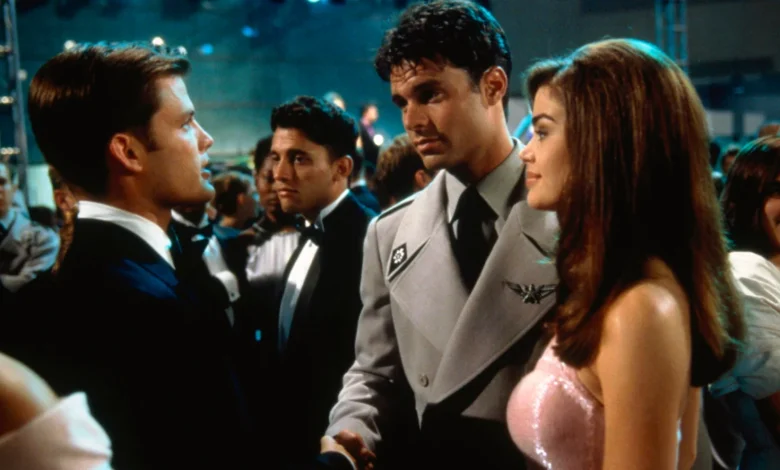
While his television roles garnered significant attention, Patrick Muldoon is perhaps most widely recognized for his indelible performance in Paul Verhoeven’s 1997 science fiction action film, Starship Troopers. In this cult classic, Muldoon delivered a memorable portrayal of Zander Barcalow, a cocky and ambitious pilot. Zander served as a direct rival to the film’s protagonist, Johnny Rico, played by Casper Van Dien, particularly in their shared pursuit of Carmen Ibanez, a role brought to life by Denise Richards. The character of Zander Barcalow became an iconic figure within the film’s narrative, known for his brash attitude and his ultimate, unforgettable demise. His final moments, defiantly confronting an alien Brain Bug and famously declaring, "One day, someone like me is going to kill you and your whole fucking race!" before having his brain consumed, are etched into the annals of memorable cinematic deaths. This role solidified Muldoon’s presence in pop culture and introduced him to a global audience.
A Diverse Filmography and Continued Television Work
Beyond his most prominent roles, Muldoon’s filmography includes a range of projects that further highlight his acting breadth. He appeared in Rupert Wainwright’s supernatural thriller Stigmata (1999), John Hough’s horror film Bad Karma (2001), and James Fargo’s action movie Born to Ride (2011), the latter reuniting him with his Starship Troopers co-star Casper Van Dien. His career also remained active in the realm of television movies, where he was a prolific presence, starring in titles such as Chain of Command (2000), Project Viper (2002), and the romantic comedy A Boyfriend for Christmas (2004). These numerous telefilm roles demonstrated his consistent work ethic and his ability to connect with audiences across various genres.

A Life Beyond the Screen
Patrick Muldoon’s personal life, while not extensively publicized, included a long-term relationship with his partner, Miriam Rothbart. He is also survived by his sister, Shana Muldoon-Zappa, who is married to Ahmet Zappa, son of the legendary musician Frank Zappa. This familial connection highlights a tie to a prominent artistic lineage within the entertainment industry.
The news of Patrick Muldoon’s sudden death has prompted a wave of tributes from colleagues and fans alike, reflecting the impact he had on the entertainment landscape. His ability to embody a range of characters, from the earnest hero to the charming antagonist, left a lasting impression. The circumstances of his passing, a heart attack at the age of 57, serve as a somber reminder of the fragility of life, even for those who have graced the public eye for decades. His contributions to television and film, particularly his iconic role in Starship Troopers and his beloved character on Days of Our Lives, ensure that his presence will continue to be remembered by many. The analysis of his career reveals a performer who navigated the complexities of Hollywood with a consistent presence, leaving behind a diverse body of work that will continue to be enjoyed by audiences for years to come. The early reports of his death, particularly the mention of the cause and location, provide the immediate factual context that is crucial in such news reporting. As more information becomes available, further details regarding any public memorials or tributes may emerge, offering a more complete picture of the actor’s legacy and the mourning process for his fans and peers. The breadth of his work, from the serialized drama of daytime television to the high-octane action of a cult film, underscores his versatility and appeal across different demographics. His passing represents a loss to the acting community and to the audiences who followed his career.
Related posts: