The Evolution of AI Search Analytics Tools and the New Frontier of Answer Engine Optimization

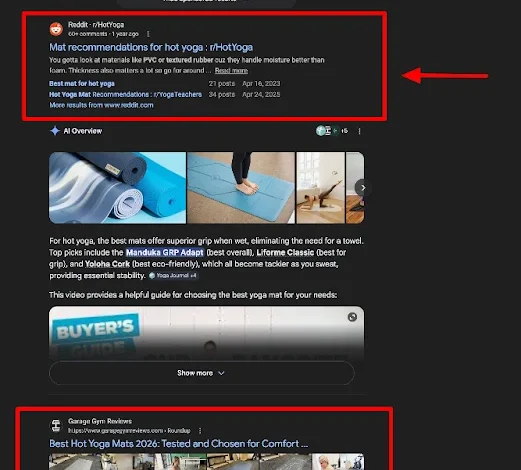
The global digital marketing landscape is currently undergoing its most significant transformation since the inception of the search engine, driven by a widening disconnect between traditional organic traffic metrics and actual sales pipelines. As generative artificial intelligence platforms like ChatGPT, Perplexity, and Google AI Overviews become the primary interfaces for consumer information gathering, a new category of enterprise software has emerged: AI search analytics tools. These platforms are designed to bridge the "visibility gap" where brands may rank highly in traditional search engine results pages (SERPs) but remain entirely absent from the synthesized answers provided by AI chatbots. This shift represents a move from Search Engine Optimization (SEO) to Answer Engine Optimization (AEO), a transition that industry analysts suggest is no longer optional for growth-focused organizations.
The Shift from Links to Synthesis
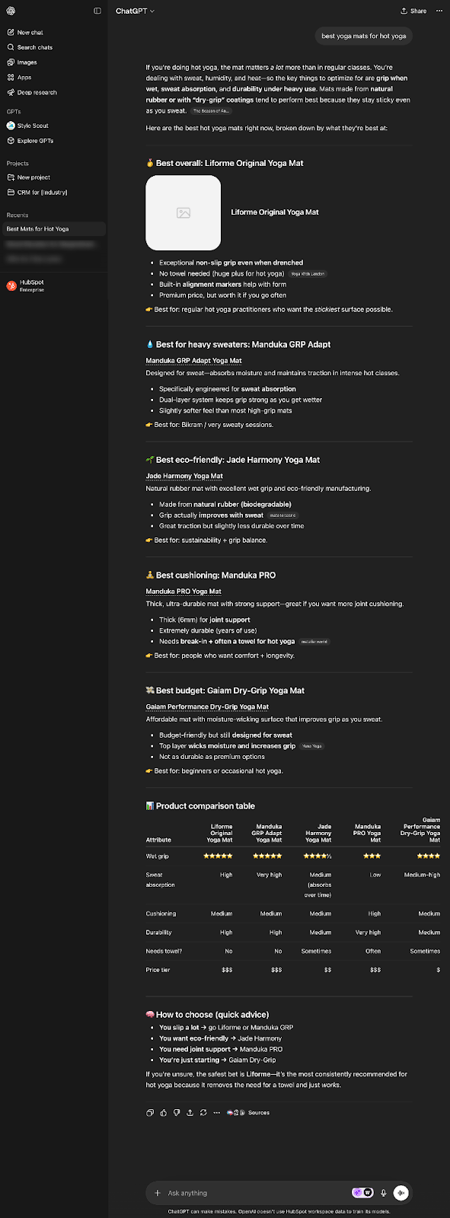
For over two decades, the primary goal of digital marketing was to secure a position among Google’s "ten blue links." However, consumer behavior has pivoted toward "answer engines." When a prospective buyer asks an AI model for a recommendation—such as "the best CRM for a mid-sized SaaS company"—the model does not provide a list of links; it synthesizes a direct narrative response. If a brand is not mentioned within that synthesis, it effectively does not exist in that buyer’s research phase.
Traditional SEO tools are ill-equipped to track these interactions because AI models do not always rely on live web crawling in the same way Google does. Instead, they draw from massive training datasets and real-time retrieval-augmented generation (RAG). AI search analytics tools have been developed specifically to monitor these "black box" environments, providing marketers with data on brand mentions, citation frequency, and sentiment within AI-generated responses.

A Chronology of the AI Search Evolution
The trajectory of this technology has moved with unprecedented speed, following the broader timeline of generative AI development:
- Late 2022: The public launch of ChatGPT introduces the concept of conversational search to the mainstream, though it initially lacked real-time web access.
- Early 2023: Microsoft integrates GPT-4 into Bing, marking the first major attempt to combine traditional search with generative AI.
- Late 2023: Specialized startups begin developing the first iteration of "AEO trackers," focusing on brand mentions within static model responses.
- 2024: Google begins the wide rollout of Search Generative Experience (SGE), later rebranded as AI Overviews. This forces a massive shift in the SEO industry as AI-generated summaries begin to occupy the "zero position" on search results.
- 2025-2026: Industry maturity reaches a point where AI search traffic begins to rival traditional organic search. Market reports from March 2026 indicate that 73% of B2B buyers now utilize AI tools as a core component of their purchase research process.
Supporting Data and Market Trends
The urgency for adopting AI search analytics is supported by increasingly stark performance data. According to a comprehensive study by Semrush and other industry leaders, AI-referred visitors convert at 4.4 times the rate of organic visitors coming from traditional search links. This is attributed to the high intent of users engaging with AI and the fact that an AI recommendation acts as a "pre-vetted" lead.

Furthermore, the prevalence of these AI interfaces is expanding. Google AI Overviews now appear in approximately 25% of all searches, a significant increase from just 13% in early 2025. With ChatGPT surpassing 800 million weekly active users, the volume of queries shifting away from traditional SERPs represents a multi-billion dollar shift in potential ad spend and organic reach. Despite these figures, only 22% of marketing teams currently track their AI visibility, creating a significant competitive advantage for early adopters.
Key Features of Modern AI Search Analytics Platforms
To navigate this new environment, enterprise-level tools have moved beyond simple keyword tracking. Experts identify several core capabilities that define a robust AI search analytics stack:
Multi-Platform Coverage
A brand’s presence is rarely uniform across different models. A company may appear in 90% of prompts on Perplexity but be entirely absent from Claude or Gemini. Effective tools must provide a unified dashboard that monitors ChatGPT, Google Gemini, Perplexity, Microsoft Copilot, and Claude simultaneously.
Prompt and Citation Analysis
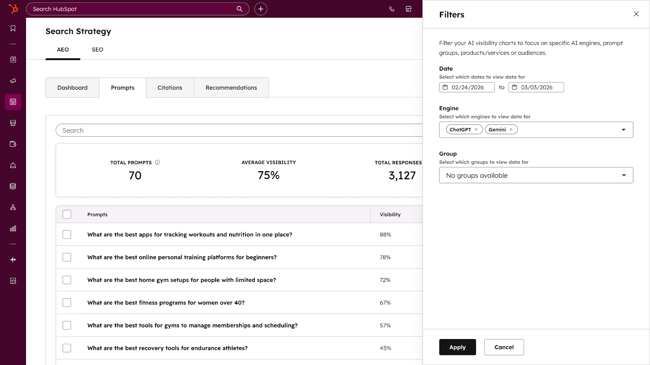
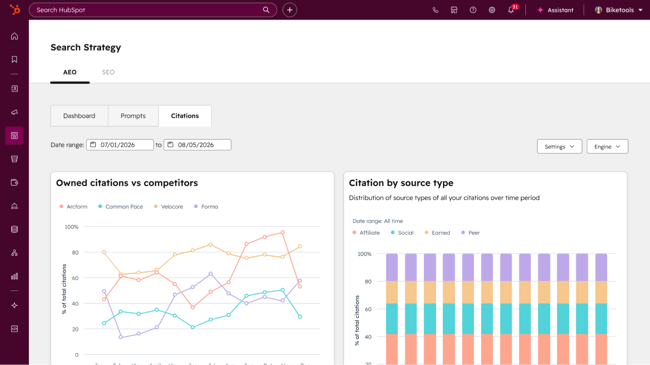
The "prompt" has replaced the "keyword" as the fundamental unit of search. Analytics tools now allow teams to track specific conversational queries and identify which URLs the AI is citing as sources. This allows marketers to understand which pieces of their content—or which third-party review sites—are actually influencing the AI’s training and retrieval data.
Sentiment and Share of Voice
Beyond mere presence, the "tone" of an AI’s response is critical. Sentiment analysis features score whether an AI describes a brand positively, negatively, or neutrally. Simultaneously, "Share of Voice" metrics calculate the percentage of AI responses in a given category that include a specific brand versus its primary competitors.
Competitive Landscape: Leading Industry Solutions
The market for these tools has bifurcated into integrated marketing suites and "pure-play" AI monitoring platforms.
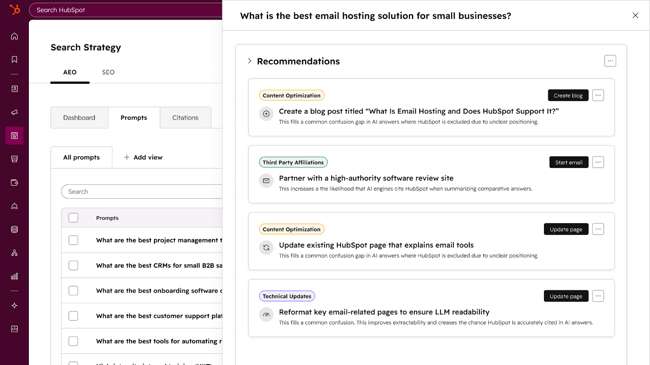
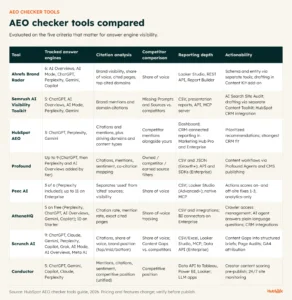
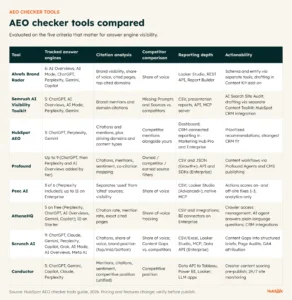
- HubSpot AEO: Positioned as an integrated solution, HubSpot’s tool connects AI visibility data directly to CRM and content creation workflows. It provides prioritized recommendations, such as suggesting specific content updates to fill "citation gaps."
- Semrush AI Visibility Toolkit: A natural extension for traditional SEO teams, this toolkit integrates AI mention tracking with existing rank-tracking infrastructure, allowing for a side-by-side comparison of traditional and generative visibility.
- Profound: Targeting the enterprise segment, Profound offers deep model coverage (including Grok and DeepSeek) and maintains high compliance standards like SOC 2 Type II. Its "Conversation Explorer" provides a real-time window into millions of anonymized user prompts.
- Otterly.AI and Peec AI: These platforms offer more accessible, monitoring-focused entries into the space, providing granular segmentation by region and persona, which is particularly valuable for B2B SaaS teams.
Implementation Strategy and ROI
Industry experts suggest that the most successful marketing teams follow a "baseline and benchmark" approach. This involves establishing a "T0" benchmark—a snapshot of current visibility across all major AI models—before attempting any optimization.
Proving the return on investment (ROI) for these tools requires a shift in reporting. Rather than focusing on "clicks," marketers are now tracking "AI-assisted conversions." Data from 2025 indicates that visitors arriving via AI citations spend 68% more time on-site than those from traditional search, suggesting that while the volume of traffic might be lower, the quality and readiness to buy are significantly higher.
Broader Implications for the Future of Marketing
The rise of AI search analytics signals the end of the "black box" era of generative AI for brands. As these tools become more sophisticated, they will likely integrate more deeply with technical SEO, specifically regarding schema markup and crawler accessibility. For instance, ensuring that "GPTBot" or "PerplexityBot" can access key product pages has become as essential as being indexable by Googlebot.
Furthermore, the consensus among digital strategists is that AI visibility relies on a "multi-source signal." AI models look for brand consistency across trusted platforms like Reddit, high-authority news outlets, and YouTube. AI search analytics tools allow marketers to see which of these channels are working, enabling them to focus their distribution efforts where they will have the greatest impact on the AI’s "perception" of the brand.

Conclusion: The Competitive Window
The transition to AI-mediated search is no longer a futuristic projection but a present-day reality for millions of users. For organizations, the window to gain an early-mover advantage is narrowing as more brands realize that their traditional SEO strategies are failing to capture the generative search market. By investing in AI search analytics now, marketing teams can move from a reactive state of "scrambling to understand" their traffic losses to a proactive state of "engineering their presence" in the answers that define the modern buyer’s journey. The fundamental principle of the new era is clear: in a world of synthesized answers, visibility cannot be improved until it is accurately measured.
Related posts: