The Odyssey: Christopher Nolan’s Epic Adaptation Shatters Box Office Records and Redefines Cinematic Storytelling

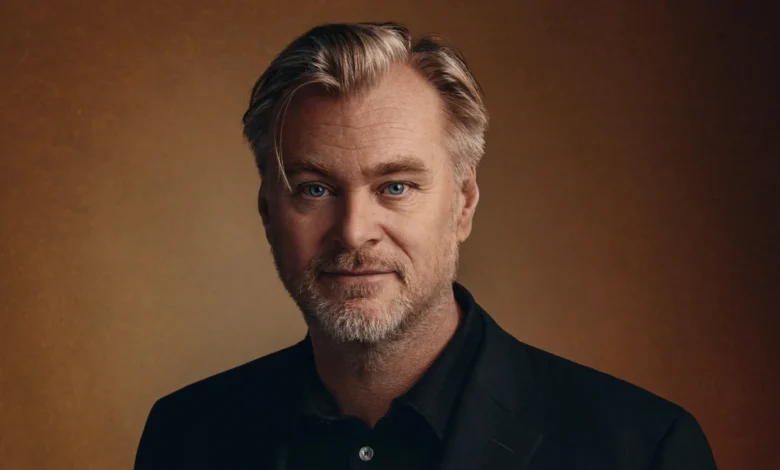
Christopher Nolan, a filmmaker synonymous with ambition, intellectual depth, and breathtaking visual spectacle, has once again captivated audiences and critics with his latest masterpiece, The Odyssey. Fresh off the monumental success of his seven-Oscar-winning film Oppenheimer, Nolan’s thirteenth directorial venture has not only achieved critical acclaim but has also stormed the global box office, setting new personal records and solidifying his status as a cinematic titan.
Nolan’s consistent ability to deliver thought-provoking blockbusters for over two and a half decades has cultivated a deeply loyal audience who trust his vision. The Odyssey, an ambitious adaptation of Homer’s ancient Greek epic poem, represents a significant milestone in Nolan’s career, being the first narrative feature entirely shot on IMAX film. This technological choice underscores Nolan’s unwavering commitment to immersive cinematic experiences, pushing the boundaries of what is possible on screen.
The film, which chronicles the arduous decade-long journey of the Greek hero Odysseus (portrayed by Matt Damon) as he strives to return home after the Trojan War, has been met with near-universal praise. This critical reception has translated into staggering box office numbers. Worldwide, The Odyssey has debuted to an impressive $264 million, surpassing all previous opening weekend records for Nolan. This monumental figure contributes significantly to his already remarkable career box office total, which now exceeds $6.2 billion globally. Domestically, the film achieved $124 million, marking Nolan’s strongest opening outside of his celebrated Batman trilogy. Notably, a substantial 23.8 percent of this domestic gross originated from IMAX screens, a testament to the format’s appeal for his films.
A Decades-Long Fascination with Homer’s Epic
Nolan’s connection to Homer’s The Odyssey dates back to his childhood. The epic poem first captured his imagination during a grade school play, planting a seed that would take decades to fully blossom into a cinematic endeavor. The allure of the story was so potent that Nolan nearly brought it to the screen much earlier in his career. During a brief development period for Wolfgang Petersen’s 2004 film Troy, Nolan was involved enough to envision a pivotal, haunting image: the iconic Trojan Horse, a deceptive gift that would alter the course of the war, wedged into the shores of Troy. This potent visual motif is powerfully established within the opening 30 seconds of his Odyssey, hinting at the deep well of inspiration drawn from his early engagement with the source material.
However, it was only when Nolan began the rigorous process of writing The Odyssey that he fully recognized the profound and often unconscious ways in which Homer’s epic had already permeated his previous cinematic works. This realization led to a unique interweaving of his filmography within his adaptation, creating a layered narrative that resonates with fans familiar with his distinctive style.

Echoes of Nolan’s Filmography Within The Odyssey
The thematic and visual connections between The Odyssey and Nolan’s earlier films are striking and have been a significant talking point among critics and audiences. Viewers can spot familiar characters and narrative threads from his acclaimed movies seamlessly integrated into Odysseus’s journey. Alfred Borden (Christian Bale) from The Prestige, Cobb (Leonardo DiCaprio) from Inception, and the beleaguered Allied soldiers from Dunkirk all appear, embodying the universal struggle to return home to loved ones.
Furthermore, the film evokes the melancholic specter of isolation and yearning seen in Interstellar and The Dark Knight Rises. A ghost-like figure, reminiscent of Matthew McConaughey’s Coop in Interstellar or Christian Bale’s Bruce Wayne in The Dark Knight Rises, observes the characters’ homes. The narrative also features a profound leap of faith to escape a metaphorical prison, a motif strongly associated with The Dark Knight Rises.
Odysseus’s struggle with fragmented memories and his quest for self-discovery are presented in a manner that directly echoes the narrative structure of Memento, where Leonard Shelby (Guy Pearce) grapples with his own unreliable recollections. Additionally, a character portrayed by Anne Hathaway bears witness to exceptional archery skills, a scene that draws a parallel to Selina Kyle/Catwoman’s observations in The Dark Knight Rises.
Perhaps the most compelling thematic connection lies in the apocalyptic undercurrents shared with Nolan’s other recent films, Tenet and Oppenheimer. The Trojan Horse, a symbol of cunning strategy that leads to destruction, serves as a parallel to the atomic bomb in Oppenheimer. Both Odysseus and J. Robert Oppenheimer (Cillian Murphy) are depicted wrestling with the profound consequences of their groundbreaking ingenuity, fearing that their actions have not only irrevocably altered the rules of conflict but also potentially damaged the fabric of civilized society.
Nolan’s Artistic Process and Thematic Exploration
Nolan, known for his deliberate avoidance of explicit interpretations of his films, acknowledges that these thematic overlaps often emerge organically rather than through conscious design. "Now that I look back on it after finishing The Odyssey, there are interesting parallels [to Oppenheimer]," Nolan shared with The Hollywood Reporter. He elaborated on his approach, stating, "I try to leave each film I do with thematic concerns and questions that stay a little bit open for me and hopefully the audience too. They are things that I want to explore further without being too self-conscious about it." This philosophy allows his films to possess a resonant depth, inviting viewers to engage with complex ideas long after the credits roll.
The Golden Rule and the Essence of Civilization
At its core, The Odyssey emphasizes the significance of Zeus’s law, often understood as the Golden Rule: treating others as you wish to be treated. While the film concludes with a cautionary note about the perils of ignoring historical warnings, Nolan expresses an underlying optimism in humanity’s capacity for good.

"The fact that we have mutual respect is what, to some extent, defines civilization," Nolan remarked. "I don’t think that’s something that can be entirely imposed by, for example, a religious framework. I think it has to be innate in us for that to be as prevalent and as effective as it has been over thousands of years." This perspective suggests that empathy and consideration are fundamental to the human condition and the foundation of societal order.
A Personal Connection to the Narrative’s Heartbreak
The interview also delves into the personal influences that shaped Nolan’s interpretation of The Odyssey. A poignant moment in the film involves Odysseus’s reunion with his faithful hunting dog. Nolan revealed that his recent experience as a dog owner profoundly informed his portrayal of this emotionally charged scene. Having never owned a dog due to his demanding travel schedule, his family acquired their first dog as their children were leaving for college. This timing, coinciding with his work on The Odyssey, which he describes as "the ultimate dog movie," provided him with a unique emotional vantage point. "So I was definitely better prepared to take on the ultimate dog movie having become a dog owner," he admitted.
Embracing Horror and Pushing Cinematic Boundaries
The conversation touched upon the persistent demand from fans for Nolan to direct a horror film. Nolan playfully responded that The Odyssey itself delves into various horror sub-genres, suggesting that audiences seeking such experiences need only to purchase a ticket. He views horror as a genre that requires a strong conceptual foundation, emphasizing that the idea is paramount. He cited films like Speak No Evil as examples of how a compelling concept, rather than mere technical execution, can create profound horror. While The Odyssey has certainly whetted his appetite for more, his approach to directing a pure horror film remains contingent on discovering an "amazing idea."
Technological Advancements in IMAX Cinematography
A significant aspect of The Odyssey‘s production was its complete filming in IMAX, a feat made possible by newly innovated sound blimps that render the cameras virtually silent. Nolan, who first experimented with IMAX on The Prestige and significantly integrated it into The Dark Knight, discussed the evolution of IMAX filmmaking. He highlighted the collaborative efforts with Panavision to develop a wider array of lenses, faster lenses, and improved focus control systems tailored for Hollywood cinematographers.
"The idea that IMAX has now been able to engineer a way to contain the camera so that it’s effectively silent, that’s a big leap forward," Nolan stated. He acknowledged the ongoing nature of technological advancement, noting that his cinematographer, Hoyte van Hoytema, and his team have provided crucial feedback for refining these systems. The commitment to thoroughly road-testing the new Keighley IMAX camera on The Odyssey underscores Nolan’s dedication to pushing the technical envelope in filmmaking.
Collaboration and the Evolution of Nolan’s Creative Team
Nolan also reflected on the dynamics of his creative team. While he has a history of collaborating with trusted artisans, the transition to working with cinematographer Hoyte van Hoytema marked a significant shift. He explained that balancing the comfort of familiar working relationships with the need for fresh perspectives and new ideas is an ongoing process. He expressed gratitude for the exceptional balance achieved on The Odyssey with new collaborators like composer Ludwig Göransson, editor Jennifer Lame, and production designer Ruth De Jong, alongside long-standing partnerships.

The discussion also touched upon the continuity of his collaborations, noting the loyalty he shows to actors who consistently deliver, such as Josh Stewart, Sean Avery, and the late Larry Holden. He credits his casting director, John Papsidera, for introducing him to a wide range of talented performers, emphasizing the critical role of actors in smaller parts who must deliver under pressure.
The Discipline of Budget and Schedule
In an industry where blockbuster productions frequently face budget overruns and schedule delays, Nolan’s consistent adherence to both stands out. His "secret," he explained, lies in a strategic approach to filmmaking: staying on budget and on schedule minimizes external interference and grants him greater creative freedom. "What I realized early on is that if I stayed on budget and on schedule, I got less interference," he said. "I didn’t give people a reason to panic. That’s when you find people breathing down your neck and questioning everything you’re doing." This disciplined approach allows him to make necessary compromises on his own terms, a philosophy he acknowledges is not universally shared but one he finds essential to his creative process.
A Highly Anticipated Re-Release of The Prestige
Looking ahead, Nolan confirmed a forthcoming 70mm re-release of his 2006 film The Prestige to commemorate its 20th anniversary. He lauded Christian Bale’s performance in the film as "one of his most underrated" and expressed his excitement to introduce it to new audiences. The re-release will involve 70mm blow-ups from the original anamorphic 35mm film, promising a visually stunning experience, a testament to Wally Pfister’s cinematography and Nathan Crowley’s production design. Nolan also expressed openness to reuniting with Christian Bale for future projects, acknowledging him as "one of the great actors of his generation."
The Odyssey is now playing in theaters nationwide. This extended exploration of Christopher Nolan’s latest cinematic achievement will be featured in the July 22 issue of The Hollywood Reporter.