Maximizing Small Spaces: Expert Strategies for Enhancing Apartment Liveability and Functionality

The modern real estate landscape is increasingly defined by a shift toward urban density, where the premium on square footage has forced a revolution in interior design and spatial management. While many renters face the inherent challenges of living in constrained environments, architectural experts and interior designers assert that an apartment’s physical dimensions do not solely dictate its perceived spaciousness. Through a combination of intentional layout choices, multi-functional furniture, and strategic aesthetic interventions, even the most modest studio can be transformed into a functional and airy residence. From the high-demand markets of San Diego, California, to the historic neighborhoods of Richmond, Virginia, the demand for small-space optimization has never been higher, prompting a new wave of design philosophies aimed at maximizing every square inch of available living space.
The Economic Context of Modern Urban Living
The trend toward smaller living spaces is not merely a stylistic choice but a response to broader economic pressures. Over the last decade, the average size of new apartment builds in the United States has decreased by approximately 5% to 10%, while rental prices in major metropolitan hubs have continued to climb. According to recent market data, the "micro-apartment" movement—units typically under 400 square feet—has gained significant traction in cities where land is scarce and demand is high. In this environment, the ability to effectively design a small space has become a vital skill for renters and a selling point for property developers.
Industry experts emphasize that the psychological impact of a home’s layout is as significant as its physical footprint. A cramped, poorly lit apartment can contribute to increased stress and a sense of confinement, whereas a well-organized, light-filled space promotes a sense of well-being and productivity. To address these needs, property managers and design consultants are advocating for a set of core principles that prioritize flow, light, and versatility.
The Foundation of Flow: Prioritizing Open Floor Plans
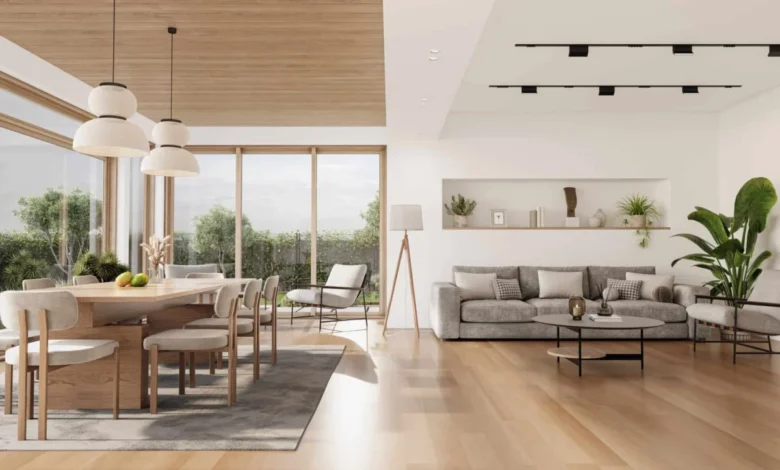
One of the most effective ways to mitigate the limitations of a small footprint is through the implementation of an open floor plan. By removing unnecessary partitions and walls, designers can create a seamless transition between the kitchen, dining, and living areas. This approach eliminates visual "dead ends" and allows the eye to travel across the entire length of the home, which creates an immediate sense of expansion.
The team at Goldmark Property Management, based in Fargo, North Dakota, notes that an open layout serves a dual purpose: it maximizes functional space while improving social connectivity. Without walls interrupting sightlines, a smaller apartment feels more integrated. This sentiment is echoed by developers at The Q Topanga in Woodland Hills, California. They argue that an open floor plan is most effective when paired with high ceilings and abundant natural light. Their latest development, The Q De Soto, utilizes these architectural features to ensure that even units with limited square footage feel polished and expansive. By tucking away everyday essentials into well-planned storage, the "clutter" that often plagues small apartments is minimized, allowing the architectural flow to take center stage.
The Rise of Multi-Use and Versatile Furniture
In a space where every foot must earn its keep, the traditional model of "one room, one purpose" is being replaced by a more fluid approach. Multi-use furniture has become the cornerstone of small-apartment living. Ezra Gershanok, Co-founder of Ohana Housing Co., a leading subletting marketplace in New York City, observes that the most successful small-space designs are those that embrace a "less is more" philosophy.
Gershanok, who operates in one of the most space-constrained markets in the world, suggests that renters should focus on a few high-quality, versatile items rather than attempting to cram standard-sized furniture into a small room. For instance, a television mounted on a swivel can serve both a living room area and a bedroom area in a studio layout, eliminating the need for multiple screens and bulky stands. This reduction in the total number of furniture pieces reduces "visual noise," making the environment feel more intentional and less crowded.
Intentional Placement and the Science of Staging
The arrangement of furniture is just as critical as the furniture itself. In a small apartment, the layout must be curated to define specific zones—such as a workspace, a relaxation area, and a dining nook—without the use of physical barriers. This technique, often referred to as "zoning," helps the brain categorize the space, making it feel like a collection of distinct "rooms" rather than a single, cramped box.
Stage & Fold, a New York-based staging firm, highlights that thoughtful staging can significantly alter a person’s perception of size. By using well-scaled furniture—pieces that are proportional to the room—renters can demonstrate the functionality of a space without overwhelming it. For those on a budget, alternative staging solutions, such as digital staging or the use of lightweight, modular furniture, can achieve a similar effect. The goal is to allow the eye to move freely through the room, ensuring that no single piece of furniture acts as a visual or physical blockade.
Aesthetic Minimalism and the Power of Editing
When it comes to decor, the mantra of the small-space expert is "editing." Clutter is the primary enemy of spaciousness, as it adds "visual weight" to a room. The team at Month2Month, a corporate housing provider, suggests that renters should swap out bulky, opaque items for pieces that have a lighter footprint. For example, replacing a solid wooden media console with a slim, tripod-style TV stand or opting for a glass coffee table can significantly open up a room. Because glass and thin-framed furniture allow light to pass through them, they occupy less "visual space," making the floor area appear larger.
Furthermore, the strategic use of mirrors and color can create powerful optical illusions. A full-length mirror placed opposite a window does more than just provide a reflection; it acts as a "second window," bouncing natural light into the deeper corners of the room and reflecting the exterior view. This technique effectively doubles the perceived depth of a space. Similarly, choosing rugs and flooring in a consistent color palette—ideally a shade or two lighter than the walls—can soften the edges of a room and draw the eye outward, creating a sense of continuity.
Verticality: Drawing the Eye Upward
When horizontal space is limited, the only direction left to go is up. Utilizing vertical space is a classic design trick that changes the perceived proportions of a room. Kimberly Sektnan of Performance Properties in Portland, Oregon, recommends using floor-to-ceiling design elements to emphasize height. Hanging curtains several inches above the actual window frame and extending them to the floor can make a standard window appear much larger and more grand.
Additionally, vertical shelving and tall, slender light fixtures can draw the eye toward the ceiling, distracting from a narrow floor plan. This vertical orientation creates a sense of loftiness that is often missing in standard apartment builds. Leaning large mirrors against the wall rather than mounting them also contributes to this effect, providing a designer-inspired look that maximizes the sense of openness without requiring permanent structural changes.
Continuity Through Uniformity and Layered Lighting
A common mistake in small apartment design is the use of disparate materials and lighting sources, which can make a space feel fragmented. Experts from Goldmark Property Management advocate for uniform flooring throughout the entire unit. When the same material flows from the kitchen into the living area and into the bedroom, it creates a visual "long line" that makes the apartment feel like one large, cohesive environment rather than a series of small, chopped-up boxes.
Lighting also plays a pivotal role in spatial perception. A single overhead light often casts harsh shadows in corners, effectively "shrinking" the room. To counter this, designers recommend "layering" light. By combining floor lamps, table lamps, and wall sconces at different heights, renters can create overlapping pools of light that wash over the walls. This eliminates dark corners and draws the eye across the entire width of the room. Using warm-toned bulbs can also make a space feel more inviting and less clinical, enhancing the overall "liveability" of the apartment.
Long-Term Implications for the Rental Market
As urban populations continue to grow, the ability to design and live comfortably in small spaces will remain a critical aspect of the housing market. For renters, these design strategies offer a way to reclaim their environment and improve their quality of life. For landlords and developers, incorporating features like open layouts, built-in storage, and high-quality finishes into smaller units can increase property value and attract long-term tenants.
The evolution of small-apartment design reflects a broader cultural shift toward minimalism and efficiency. By prioritizing functionality and light over raw square footage, modern residents are proving that a home’s value is not measured by its size, but by how effectively it serves the needs of its occupants. As these expert-led strategies become more mainstream, the "challenge" of small-space living is increasingly being viewed as an opportunity for creative, intentional, and sophisticated design.