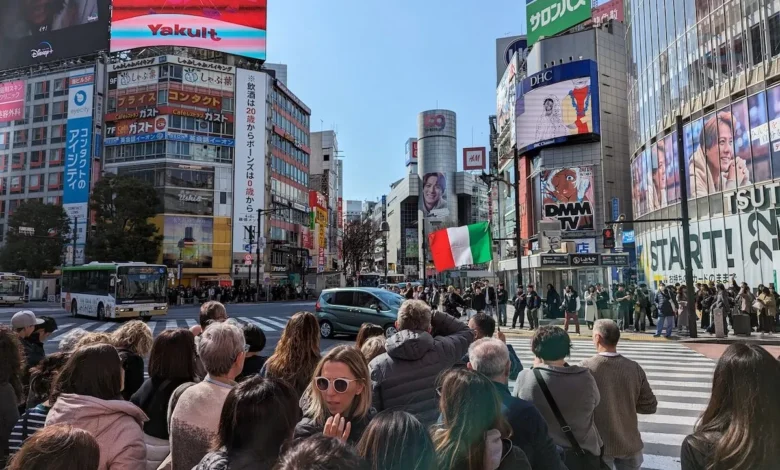
The status of the United States as the premier destination for international tourists is facing an unprecedented challenge, with new data revealing that Japan has successfully surpassed the U.S. in key global markets. According to research shared by Brand USA—the nation’s destination marketing organization—during its November board meeting, the historical lead long enjoyed by the United States has steadily eroded. While the U.S. has maintained a traditional dominance in attracting long-haul travelers from around the world, shifting consumer preferences, economic factors, and the rising global appeal of Asian tourism hubs have reshaped the international travel landscape.
The findings, presented by Chelsea Benitez, senior director of research and analytics at Brand USA, mark a significant psychological and strategic turning point for the American tourism industry. Although the U.S. continues to hold a marginal lead on a year-to-date basis, the monthly breakdown tells a different story. In recent months, Japan has captured the imaginations and travel budgets of global consumers in a way that poses a direct and formidable threat to America’s tourism sector.
A Shift in the Global Travel Hierarchy
For decades, the United States sat comfortably at the top of international travel wish lists, driven by iconic landmarks, cultural exports, and diverse geographic offerings. However, recent data indicates that this dominance is no longer guaranteed.
In January of the previous year, the United States maintained a commanding lead over Japan, outperforming its Asian competitor by more than eight percentage points as the preferred destination among surveyed international travelers. This gap, which industry insiders once viewed as a safe cushion, began to narrow rapidly over the subsequent months. By August and October, the trend had inverted entirely: Japan finished ahead of the United States in overall preference rankings for those specific periods.
"We still lead year to date, but Japan is now our most direct competitor for the long-haul international traveler," Benitez noted during the board presentation.
This development underscores a broader pivot in global travel patterns. Travelers from major outbound markets are increasingly prioritizing destinations that offer a blend of safety, distinct cultural experiences, favorable exchange rates, and efficient infrastructure—areas where Japan has excelled significantly in recent years.
Methodology Behind the Findings
The insights shared by Brand USA are derived from an extensive and continuous research initiative designed to track global travel sentiment. The organization’s monthly tracking survey polls roughly 11,000 individuals across 11 critical outbound markets for the United States.
The scope of the survey encompasses a diverse cross-section of geographic regions and economic profiles, ensuring a comprehensive view of international consumer behavior. The 11 key markets included in the research are:
- Argentina
- Australia
- Brazil
- Canada
- France
- Germany
- India
- Japan
- Mexico
- South Korea
- United Kingdom
By sampling these nations consistently, Brand USA can identify emerging shifts in consumer intent long before those changes fully manifest in official border arrival statistics. The methodology captures not only where people actually book, but also where they aspire to travel, providing an early warning indicator for destination marketing organizations.
Chronology of a Narrowing Gap
The erosion of the U.S. market share did not happen overnight. It is the culmination of post-pandemic recovery trends, economic fluctuations, and strategic marketing efforts by competing nations.
In the immediate wake of global travel restrictions lifting, the pent-up demand for U.S. travel created a strong rebound. Travelers eager to visit North America flooded major hubs, taking advantage of reopened borders. However, as global aviation capacity recovered unevenly and inflationary pressures affected consumer wallets worldwide, the cost of traveling to and within the United States became a significant deterrent.

Concurrently, Japan experienced a historic tourism boom. Following the full reopening of its borders, a combination of a weakened Japanese yen—which made travel to the country exceptionally affordable for foreign tourists—and aggressive promotion by the Japan National Tourism Organization (JNTO) drove unprecedented interest. By late winter, the gap between the U.S. and Japan had shrunk to single digits, paving the way for Japan’s eventual monthly victories in August and October.
Economic Drivers and Exchange Rate Realities
A critical component of Japan’s surging popularity lies in global economics. Over the past couple of years, the Japanese yen has traded at historically weak levels against major global currencies, including the U.S. dollar, the euro, and the British pound. This currency dynamic transformed Japan from a traditionally expensive destination into a high-value, highly accessible vacation spot for international tourists.
Conversely, the United States has faced persistent challenges regarding the cost of travel. High inflation rates, rising hotel accommodations, expensive domestic transportation, and the complex process of securing U.S. visitor visas in certain emerging markets have created friction for potential travelers. While wealthy long-haul travelers from markets like India, Brazil, and Europe previously absorbed these costs with minimal hesitation, value-conscious consumers are increasingly weighing their options and finding greater purchasing power in destinations like Japan.
The Visa and Friction Factor
Industry experts point out that travel friction plays a substantial role in destination selection. While Japan offers visa-free entry or streamlined electronic travel authorizations for passport holders from a vast number of countries, the United States maintains a notoriously stringent visa application process.
For travelers in high-growth outbound markets—such as India and parts of Latin America—obtaining a visa interview for the United States can involve wait times stretching for months. This administrative barrier often steers prospective visitors toward destinations that welcome international tourists with fewer bureaucratic hurdles. Japan’s streamlined entry procedures have capitalized on this friction, capturing travelers who might have otherwise chosen American cities.
Implications for the U.S. Tourism Economy
The rise of Japan as a primary competitor carries profound economic implications for the United States. International tourism is a massive export industry, generating billions of dollars in economic activity, supporting millions of American jobs, and contributing significantly to local economies across all 50 states.
When international travelers bypass the U.S. in favor of destinations like Japan, the economic ripple effects are felt across the entire hospitality ecosystem—from major airlines and hotel chains to independent tour operators, restaurants, and retail centers. Cities that rely heavily on international convention and leisure travelers, such as New York, Los Angeles, Orlando, and Las Vegas, face heightened pressure to revitalize their appeal.
Furthermore, the shift highlights the necessity for increased funding and strategic recalibration for Brand USA. As the official destination marketing organization for the United States, Brand USA relies on a public-private partnership model to promote the country abroad. With competitors like Japan investing heavily in targeted global campaigns, industry advocates argue that the U.S. must step up its promotional efforts to reclaim its historical market share.
Strategic Responses and Future Outlook
In response to the mounting competition, tourism stakeholders are evaluating new ways to attract long-haul travelers. Discussions at industry forums increasingly center on improving the visitor experience, reducing entry friction where possible, and promoting lesser-known regional destinations within the U.S. to diversify appeal.
Moreover, the U.S. travel sector is looking ahead to major upcoming global events on American soil—including the 2026 FIFA World Cup and the 2028 Summer Olympic Games in Los Angeles. These mega-events are viewed as crucial catalysts to re-engage international audiences, showcase American hospitality, and reverse the recent downward trend in preference rankings.
As the global travel market continues to normalize and evolve post-pandemic, the traditional hegemony of the United States is being tested like never before. The data from Brand USA serves as a clear signal to policymakers, destination marketers, and travel industry leaders: maintaining the status quo is no longer an option in an increasingly competitive global arena.