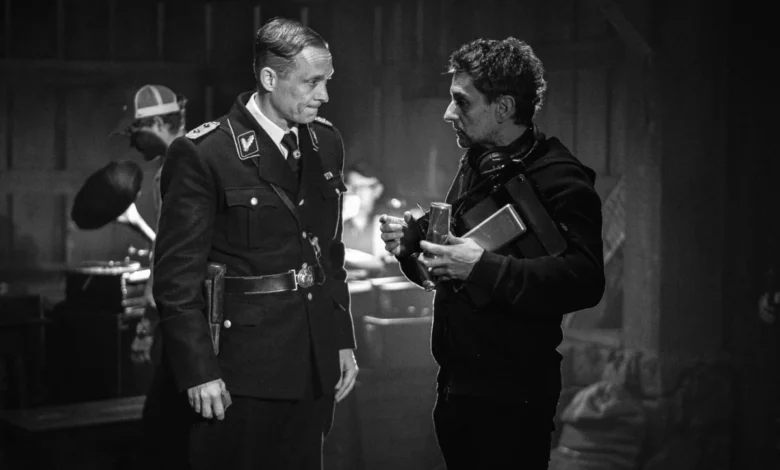
Netflix has finalized its acquisition of Play Dead, the highly anticipated World War II thriller directed by Jaume Collet-Serra, a deal that was first exclusively reported by Deadline in February 2025. This strategic acquisition underscores Netflix’s continued investment in high-caliber genre filmmaking and its strong, ongoing relationship with the prolific director. While the financial terms of the acquisition were not disclosed, the move signals significant confidence in the project’s commercial and critical potential.
The film boasts a compelling cast, featuring the talents of Noah Jupe, known for his acclaimed performances in Hamnet and A Quiet Place, and Matthias Schweighöfer, who recently garnered attention for his role in Christopher Nolan’s Oppenheimer. Play Dead plunges viewers into the harrowing final days of World War II, centering on a soldier who, having witnessed the brutal annihilation of his unit in a deadly ambush, is forced into a desperate bid for survival. His only recourse is to feign death amidst a surrounding battalion of Nazi soldiers, a night fraught with unimaginable tension and peril.
Early descriptions of Play Dead have drawn comparisons to the claustrophobic tension of Don’t Breathe and the immersive, grand-scale spectacle of 1917, suggesting a film that blends intimate, character-driven suspense with the vast, devastating backdrop of wartime. This dual appeal is likely a key factor in Netflix’s decision to secure exclusive distribution rights.
A Director’s Vision and a Streamer’s Commitment
Jaume Collet-Serra, a director with a proven track record in crafting successful thrillers, helmed Play Dead from a script penned by Natalie Conway and Peter Stanley-Ward. The project’s ambitious scope and gripping narrative are further bolstered by a powerhouse production team. Sam Raimi and Rob Tapert of Ghost House Pictures, renowned for their work in the horror and thriller genres, are producing, alongside J.D. Lifshitz and Raphael Margules for BoulderLight, Dane Eckerle for Bad Grey, and Akiva Nemetsky and Keaton Heinrichs for Nocturnal. Notably, Nocturnal provided the full financing for the film, marking its debut feature production.
The extensive list of executive producers includes Collet-Serra himself, Scott Greenberg, Chris M. Bonifay, Jose Cañas, Romel Adam, Chris Musselwhite, Louis Winters, and Michele Chan Soon-Shiong, highlighting the collaborative effort and broad industry backing behind Play Dead. WME Independent skillfully managed the film’s sales, navigating the complex landscape of global distribution to bring this project to Netflix.
This acquisition comes at a pivotal time for Collet-Serra’s relationship with Netflix. The director is currently engaged in a multi-year creative partnership with the streaming giant, a testament to the success of his previous collaborations. Under this pact, he recently set up The Cage, a high-concept cop action thriller spec, also slated for a Netflix release, further cementing his position as a key creative partner.
Collet-Serra’s burgeoning relationship with Netflix was significantly amplified by the monumental success of his thriller Carry-On. Starring Taron Egerton and Jason Bateman, Carry-On has ascended to become Netflix’s third-most-popular film of all time, a remarkable achievement that speaks to the director’s ability to deliver commercially viable and widely appealing content. This success undoubtedly paved the way for further ambitious projects like Play Dead to find a home on the platform.
Beyond Play Dead and The Cage, Collet-Serra’s first project to emerge from his creative partnership is the erotic thriller An Innocent Girl. This film, which he is executive producing, also stars Kerry Washington in a leading role, alongside James Marsden, Chloe East, and Colman Domingo, showcasing the director’s versatility and his ability to attract top-tier talent across various genres.
The Strategic Significance of Play Dead
The acquisition of Play Dead by Netflix is more than just adding another title to its vast library; it represents a calculated move to secure a premium genre film with strong directorial talent, a compelling premise, and promising performances. In an increasingly competitive streaming market, acquiring films that generate buzz and appeal to a broad audience is crucial for subscriber retention and acquisition.
Timeline of Developments:
- February 2025: Deadline exclusively reports that Jaume Collet-Serra is attached to direct the WWII thriller Play Dead.
- Present: Netflix officially acquires the distribution rights to Play Dead.
The film’s setting in World War II provides a rich historical backdrop that often resonates with audiences, offering opportunities for both intense action and profound human drama. The survivalist element, where a single soldier must outwit and outlast a superior enemy force through deception, taps into primal fears and provides inherent narrative tension.
Supporting Data and Market Context:
The global box office for war films, while subject to fluctuations, consistently demonstrates audience appetite for stories set against historical conflicts. Films like Dunkirk, 1917, and Saving Private Ryan have achieved significant critical and commercial success, highlighting the enduring appeal of well-crafted narratives within these settings. The streaming landscape has further amplified this, with platforms actively seeking content that can draw large viewership numbers. Netflix, in particular, has seen substantial success with its acquisition and production of large-scale action and thriller titles.
The inclusion of Noah Jupe, a young actor rapidly establishing himself as a formidable talent, alongside the experienced Matthias Schweighöfer, suggests a dynamic on-screen pairing that could captivate audiences. Jupe’s recent performances have showcased a maturity and depth that would be essential for portraying a soldier grappling with trauma and the extreme pressures of combat. Schweighöfer’s presence, especially following his significant role in Oppenheimer, adds a layer of gravitas and international appeal to the project.
The comparisons to Don’t Breathe and 1917 are particularly telling. Don’t Breathe was a critical and commercial success, praised for its inventive premise and suspenseful execution within a confined setting. 1917, a Best Picture nominee, redefined cinematic storytelling with its immersive, seemingly continuous shot technique and its visceral depiction of trench warfare. If Play Dead can successfully blend the intense, claustrophobic tension of the former with the epic scope and visceral realism of the latter, it has the potential to be a landmark film.
Analysis of Implications:
For Netflix, acquiring Play Dead is a strategic reinforcement of its genre film slate. It signals a continued commitment to working with established directors like Collet-Serra, who have demonstrated an ability to deliver both artistic merit and commercial success. The multi-year creative partnership with Collet-Serra, already bearing fruit with Carry-On, provides a consistent pipeline of high-concept projects, reducing the risk associated with acquiring individual films and building a recognizable brand for the streamer’s genre offerings.
The acquisition also highlights the increasing importance of international talent and production in the global streaming market. The involvement of German actor Matthias Schweighöfer, coupled with the European setting of the film, points to Netflix’s strategy of diversifying its content and appealing to a global audience.
For the filmmakers, the Netflix acquisition offers a guaranteed global release and significant marketing support, ensuring that Play Dead reaches a vast audience without the uncertainties of traditional theatrical distribution, especially for a film that might be perceived as more niche within the broader blockbuster landscape. The financing provided by Nocturnal, a relatively new player in feature film production, also showcases the evolving landscape of film financing, where streaming platforms can act as crucial off-takers for independent productions.
The success of Carry-On has undoubtedly set a high bar for future collaborations between Collet-Serra and Netflix. Play Dead, with its potent combination of historical setting, intense survival narrative, and directorial pedigree, is poised to be another significant entry in this fruitful partnership. The film’s ability to balance visceral thrills with emotional depth will be key to its reception, and early indicators suggest that Netflix has secured a project with considerable potential to captivate audiences worldwide. The anticipation surrounding Play Dead is palpable, and its eventual release on Netflix is eagerly awaited by fans of the genre and admirers of Collet-Serra’s distinctive filmmaking style.