Nvidia launches internal investigation into CEO Jensen Huang following allegations of foreign intelligence targeting

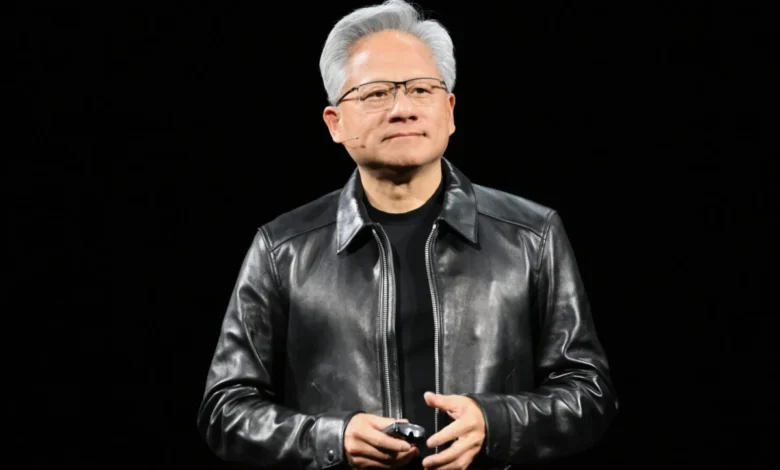
In a move that has sent shockwaves through the global technology sector, Nvidia has officially initiated an independent investigation into its CEO, Jensen Huang, following reports that he may have been the target of a sophisticated foreign intelligence operation. The probe, which will be overseen by a special committee of independent board members and retained outside counsel, comes at a critical juncture in the escalating geopolitical struggle for artificial intelligence supremacy between the United States and China.
The controversy centers on a romantic relationship between Huang and Alice Huang, an executive at Singapore-based data center firm Megaspeed. U.S. intelligence officials have reportedly identified Alice Huang as an operative acting on behalf of China’s Ministry of State Security. While Nvidia’s board has stressed that there is currently no evidence suggesting that sensitive corporate intellectual property or national security assets were compromised, the scope of the inquiry is expected to be exhaustive.
The Chronology of the Disclosure
The situation escalated rapidly over the weekend following intense media scrutiny. In a rare and candid internal communication to Nvidia employees, Jensen Huang confirmed the existence of the relationship and publicly apologized. "I was unfaithful to my wife. My actions hurt her and our children. There is no excuse for what I did. I am deeply sorry," Huang wrote in the statement.
The timeline of these events coincides with a broader tightening of U.S. export controls and increased scrutiny of the semiconductor supply chain. Megaspeed, the firm where Alice Huang was employed, has been a major player in the Asian data center market, having procured more than $4.8 billion in Nvidia hardware over the last two fiscal years. However, the company has faced significant legal headwinds; last year, U.S. investigators examined allegations that Megaspeed acted as a conduit for the illicit smuggling of restricted, high-performance AI chips into China, an accusation the firm has consistently denied.
The Geopolitical Context: Economic Warfare
This investigation does not occur in a vacuum. The U.S. government has significantly ramped up its efforts to combat industrial espionage, particularly within the AI and semiconductor sectors. The current administration has viewed the protection of Nvidia’s cutting-edge chip technology as a cornerstone of national security. Because these chips serve as the foundational infrastructure for the most advanced large language models, their flow to adversaries is considered a direct threat to U.S. military and economic dominance.
Intelligence experts note that the use of "honey traps" or romantic entanglements is a classic, high-reward tactic in the toolkit of state-sponsored intelligence agencies. By targeting the leadership of essential tech firms, foreign intelligence services aim to gain non-public insights into product roadmaps, supply chain vulnerabilities, and internal strategic shifts.
The Pentagon and the Expansion of Intelligence Operations
Recent reports suggest that the U.S. defense establishment is shifting from a passive defense posture to a more aggressive, proactive strategy. The Washington Post recently disclosed that the Pentagon is developing a "non-official cover" program, wherein intelligence officers pose as corporate executives to monitor and disrupt foreign efforts to steal American technology.
Furthermore, the emergence of the Department of Defense’s "Technology Support Office" suggests a formalization of these tactics. Established in April through the consolidation of previously classified programs, the office is tasked with the covert sabotage of foreign technology initiatives deemed a threat to U.S. superiority. While the Pentagon has formally denied these reports, characterizing them as "fantasies" or "badly misinformed" claims, industry analysts suggest that the creation of the Economic Defense Unit earlier this year—specifically mandated to "deter, deny, and disrupt" adversaries through economic means—signals a fundamental shift in how the U.S. views the intersection of private industry and national security.
A Growing Rift Between Tech and the State
The pressure on Nvidia follows a notable breakdown in the relationship between the Pentagon and other prominent AI firms, most notably Anthropic. The dispute between the San Francisco-based AI startup and the U.S. military highlights the tension between private corporate ethics and government security mandates.
Earlier this year, Anthropic attempted to limit the use of its AI models in mass domestic surveillance and autonomous weaponry. The Pentagon, however, refused to accept these constraints, leading to a breakdown in cooperation. Following a failed attempt at mediation, the administration ordered the military to phase out Anthropic’s technology, with Defense Secretary Pete Hegseth going so far as to label the company a "supply-chain risk." Although a federal appeals court recently struck down the legality of that specific designation, the military has confirmed it has ceased using Anthropic’s tools, illustrating the high cost of non-compliance for firms operating in the defense-adjacent space.
Implications for Nvidia and Global Markets
For Nvidia, the investigation into Jensen Huang creates a period of extreme volatility. As the leader of a company that has become the de facto engine of the global AI revolution, Huang’s reputation and the company’s internal controls are of paramount interest to shareholders and regulators alike.
Key Factors for Investors:
- Supply Chain Integrity: The probe will likely focus on whether any information regarding Nvidia’s chip allocation, shipment logistics, or R&D schedules was shared with Alice Huang or her associates at Megaspeed.
- Corporate Governance: The involvement of independent directors is intended to provide a firewall between the CEO and the investigation, but the board faces the challenge of maintaining investor confidence during a time of extreme sensitivity.
- Regulatory Scrutiny: Should the investigation uncover any breach of security, Nvidia could face intensified scrutiny from the Committee on Foreign Investment in the United States (CFIUS) and other regulatory bodies, potentially complicating future export license applications.
Analysis: The New Reality of Corporate Leadership
The unfolding situation marks a turning point in the relationship between high-profile tech executives and national security. In the past, CEOs of major tech firms were primarily focused on market share, product innovation, and shareholder returns. Today, they are increasingly viewed as key actors in a global shadow war.
The fact that an executive as prominent as Jensen Huang has been caught in the crosshairs of an alleged foreign intelligence campaign suggests that no level of corporate success provides immunity from these geopolitical pressures. As the U.S. intelligence community continues to treat the AI sector as a primary front in the struggle against China, the threshold for what constitutes "security-relevant information" will continue to expand.
Moreover, the incident places other major players in the AI ecosystem on notice. Firms with extensive exposure to Asian markets, complex supply chains, or reliance on foreign data centers may find themselves subjected to similar inquiries. The expectation for "security-first" management is no longer merely a regulatory requirement; it is now a fundamental survival trait for the C-suite.
Future Outlook
As the investigation into Jensen Huang proceeds, the technology industry will be watching closely for the board’s findings. The resolution of this inquiry will likely determine not only the future of Nvidia’s leadership but also set a precedent for how American corporations handle the increasingly blurred lines between private commercial activity and state-level economic defense.
While Nvidia has stated that there is no reason to believe national security was compromised, the mere perception of a vulnerability in a company so essential to the U.S. AI stack is likely to prompt further legislative action. Lawmakers in Washington have already signaled that they may pursue more stringent oversight of tech firm interactions with foreign entities, particularly those based in jurisdictions that are currently under heavy export restrictions.
For now, the global AI industry remains in a state of suspense, waiting to see whether this high-profile investigation will conclude with a restoration of stability or if it represents the beginning of a more fractious and restrictive era for the American technology sector. As the Pentagon continues to build its capacity for economic warfare, the private sector will find itself increasingly integrated into, and perhaps inseparable from, the national security apparatus of the United States.