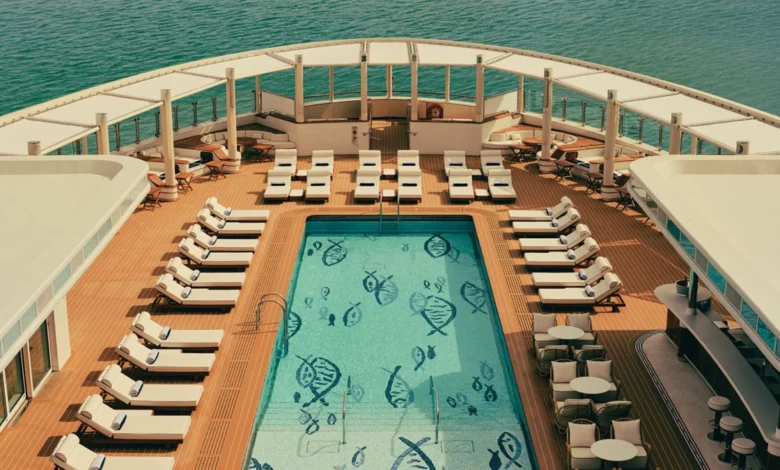
The global luxury cruise industry has experienced an unprecedented paradigm shift over the past several years, expanding far beyond traditional ocean liners to encompass a diverse array of maritime experiences. Modern travelers accustomed to uncompromising standards of high-end hospitality can now select from ultra-modern expedition vessels navigating remote polar environments, sumptuously appointed river ships traversing waterways from the Amazon to the Mekong, and sleek, high-profile superyachts previously reserved for private ownership. Aboard these floating sanctuaries, passengers encounter amenities mirroring the world’s most exclusive land-based hotels, ranging from multi-story penthouses and round-the-clock butler service to Michelin-starred culinary programs.
This sector-wide expansion is largely defined by the entrance of prestigious hospitality brands into the maritime space. Rather than relying on legacy cruise conglomerates, top-tier hotel groups are designing vessels with significantly lower passenger capacities. This intentional scale cultivates the intimate atmosphere of a private charter or boutique floating hotel rather than a traditional cruise ship, complete with meticulous attention to architectural design and bespoke dining concepts. Furthermore, scheduling strategies have evolved; luxury lines are actively extending their Mediterranean itineraries into the shoulder seasons and winter months, substantially increasing the availability of high-end voyages year-round.
The Evolution of Legacy Cruise Lines and Fleet Modernization
While newcomers capture headlines, the established guard of luxury cruising—including Regent Seven Seas Cruises, Seabourn, and Crystal—is continuously adapting to meet the sophisticated demands of contemporary travelers. Regent Seven Seas has focused on reducing passenger counts across its Explorer Class ships to expand average cabin dimensions while simultaneously preparing for the December arrival of its opulent new vessel, the Seven Seas Prestige. Similarly, Seabourn is rolling out a comprehensive fleet-wide overhaul of its culinary programs to elevate dining standards further. Crystal, which officially dropped the word "Cruises" from its brand identity to reflect a broader luxury positioning, is advancing construction on the Crystal Grace, slated for deployment in June 2028.
Expedition cruising has likewise undergone a radical transformation, incorporating high-end luxury into historically utilitarian vessels. Silversea provides an all-suite, butler-serviced experience complete with complimentary caviar across four specialized exploration ships, including the 100-passenger Silver Origin, which operates exclusively in the Galapagos Islands. Industry competitors are following suit; Scenic Luxury Cruises & Tours operates two sleek polar-capable yachts and plans to debut the 270-passenger Scenic Ikon in April 2028, featuring two helicopters, a submersible, and 15 distinct dining venues. Meanwhile, French luxury line Ponant commands attention with Le Commandant Charcot, the world’s only luxury icebreaker capable of navigating to the true North Pole. Seabourn complements this segment with its twin polar-class expedition ships, Seabourn Venture and Seabourn Pursuit, both equipped with dual submarines to facilitate deep-sea exploration in remote geographies.
Hotel-Branded Superyachts Redefine Private Seascapes
The convergence of luxury hospitality and maritime travel has accelerated significantly with the introduction of hotel-branded superyachts. These vessels offer residential-style layouts and personalized services tailored to ultra-high-net-worth individuals.

Aman at Sea
Scheduled to set sail in spring 2027 following an open reservation window, the 94-passenger Amangati embodies Aman’s signature design philosophy centered on space, architectural minimalism, and absolute privacy. The vessel features an expansive two-deck spa complete with a traditional Japanese serenity garden. Catering directly to elite clientele, the ship includes dedicated "host suites" designated for personal security or support staff, alongside dual helipads, making it an optimal candidate for private charter operations.
Four Seasons Yachts
The residential-leaning Four Seasons I, which made its debut in March 2026, maintains a strict one-to-one passenger-to-crew ratio to ensure personalized service delivery. It will be joined in May 2028 by the 79-suite Four Seasons II, designed for extended Mediterranean deployments featuring multi-bedroom suites on upper decks and 11 distinct culinary concepts. Breaking with traditional cruise industry norms, Four Seasons includes only breakfast in its base fares, introducing an a la carte dining model common in luxury land-based resorts (with estimated daily food and beverage expenditures averaging $250 per person). Programming emphasizes wellness, highlighted by a longevity-focused Lanserhof Reset experience during its November inaugural transatlantic crossing, alongside late-night port stays and customized shore excursions.
Orient Express Sailing Yachts
Emphasizing environmental innovation, Orient Express utilizes bespoke vessels equipped with three fully automated rigs capable of delivering 100% wind-powered propulsion under favorable meteorological conditions. Supported by liquefied natural gas (LNG) propulsion and dynamic positioning systems, the 54-suite Orient Express Corinthian operates in the Mediterranean through autumn, offering five restaurants under the culinary direction of multi-Michelin-starred chef Yannick Alléno. Its sister ship, the Orient Express Olympian, is scheduled to launch the following spring, offering a blend of included and customized excursion packages.
Ritz-Carlton Yacht Collection
Leveraging its established reputation for bespoke service and fine dining, the Ritz-Carlton Yacht Collection features three all-suite, all-inclusive vessels: the 149-suite Evrima, the 224-suite Ilma, and the 226-suite Luminara. Each ship provides five specialized dining venues, an extensive watersports marina platform, spa therapies tailored to individual guest preferences, and onboard boutiques featuring luxury houses such as Cartier.
Expedition Cruising: Reaching Earth’s Extremes in Comfort
Expedition travel no longer requires sacrificing physical comfort. Operators in this category combine ice-strengthened hulls with lavish interiors and high-tech exploration tools.
Ponant
As the operator of Le Commandant Charcot, Ponant provides access to ice-bound polar regions otherwise inaccessible to standard luxury vessels. Onboard dining features Le Nuna, the only fine-dining establishment at sea affiliated with chef Alain Ducasse. The line also operates a fleet of six bilingual explorer ships tailored to warmer climates, alongside specialized English-only itineraries developed in partnership with organizations like Smithsonian Journeys.

Seabourn (Expedition Fleet)
Seabourn’s twin expedition vessels, the 264-passenger Seabourn Venture and Seabourn Pursuit, hold PC6 Polar Class ratings, enabling safe navigation through heavy ice packs. These ships maintain all-suite layouts, high-end culinary programs, and dedicated expedition teams to guide excursions in remote polar environments.
Scenic Luxury Cruises & Tours
Scenic’s fleet of ultra-luxury "discovery yachts" accommodates up to 228 guests per vessel. These ships feature extensive wellness facilities, 10 dining venues, two onboard helicopters, a custom submersible, Zodiac boats, kayaks, and stand-up paddleboards, balancing high-adventure activities with high-end hospitality.
Silversea (Expedition & Infrastructure)
In addition to traditional luxury ocean liners, Silversea operates four specialized expedition vessels—three dedicated to polar and remote regions including the Kimberley coast of Australia, and one operating year-round in the Galapagos. To streamline travel logistics for its passengers, Silversea announced the October 2026 opening of The Cormorant at 55 South in Puerto Williams, Chile, designed to serve as the Earth’s southernmost luxury hotel and a dedicated waystation for Antarctic voyages.
Ocean Liners: Classic Elegance Meets Contemporary Upgrades
For travelers preferring traditional ocean-going voyages, established operators continue to refine their fleets with structural and programmatic enhancements.
Crystal
Following its acquisition by Abercrombie & Kent Travel Group, Crystal operates two ultra-luxury ships: the 740-passenger Crystal Serenity and the 606-passenger Crystal Symphony. Both vessels feature universal butler service, specialized pillow menus, 24-hour room service, and an Asian specialty restaurant affiliated with Nobu Matsuhisa. Strategic partnerships with Abercrombie & Kent allow for integrated itineraries combining maritime and land-based exploration.
Explora Journeys
The luxury lifestyle brand Explora Journeys is expanding its fleet significantly. Following the deployment of its initial vessels, the line will introduce Explora IV in summer 2027, featuring 461 suites, five heated pools, and seven distinct dining venues. Similar to Explora III, these ships offer a private chef’s table, a beach-club-inspired Shore Club eatery, extensive wine cellars, and family-oriented programming. Subsequent sister ships, Explora V and Explora VI, are scheduled for delivery in December 2027 and August 2028, respectively.

Oceania Cruises
Oceania focuses heavily on culinary programming across its fleet. Alongside existing vessels, the line will introduce the 238-accommodation Oceania Aurelia in November 2027, followed by Oceania Arietta in 2029. Oceania maintains an ongoing editorial collaboration with Condé Nast Traveler to provide passengers with curated, insider-perspective guides for shore-side activities.
Regent Seven Seas Cruises
Regent reinforces its market position with the upcoming December debut of the Seven Seas Prestige. This vessel introduces expanded suite configurations featuring in-suite private elevators, personal gym facilities, and dedicated butler services, aimed at the highest tier of luxury consumers.
Seabourn (Ocean Fleet)
Seabourn’s ocean fleet, comprising the 600-passenger all-suite ships Seabourn Encore and Seabourn Ovation, alongside the newly refurbished 458-passenger Seabourn Quest, emphasizes a "quiet luxury" aesthetic characterized by understated elegance, multiple fine-dining options, and exclusive private retreat areas.
SeaDream Yacht Club
Operating the twin mega-yachts SeaDream I and SeaDream II (each accommodating 112 passengers), SeaDream emphasizes a casual yachting lifestyle supported by gourmet cuisine, attentive crew-to-guest ratios, and a deployable watersports marina. A larger vessel, SeaDream III, is planned for 2029 to expand the line’s destination footprint.
River Cruising: Intimate Waterways and Cultural Immersion
Luxury river cruising has similarly evolved, offering access to interior waterways with an emphasis on regional cultural integration and culinary excellence.
Riverside Luxury Cruises
Operating a fleet of three all-suite ships in Europe, Riverside focuses on high-end gastronomy paired with exclusive onshore excursions, such as private candlelit dinners at historic French wine estates and private classical concerts in Vienna.

Uniworld Boutique River Cruises
Uniworld plans to expand its fleet to approximately 24 distinctively designed vessels by 2028. Each ship’s interior design is customized to reflect its specific sailing region, mimicking the aesthetic of European boutique hotels with operations spanning Europe, Vietnam, Cambodia, and Egypt.
AmaWaterways
Positioned in the accessible luxury segment, AmaWaterways offers intimate ship sizes that maintain a low environmental impact while delivering high service standards. A notable operational milestone for the line is the introduction of luxury river cruising on Colombia’s Magdalena River, marking the first commercial passenger operations on the waterway in decades.
Viking River Cruises
As a dominant force in European river navigation, Viking operates one of the largest river cruise fleets globally. Characterized by Scandinavian minimalist design, adult-only atmospheres, and Nordic-inspired spa facilities, Viking consistently maintains high passenger satisfaction ratings for its consistent service delivery and destination-focused programming.
Economic and Industry Implications
The rapid capital investment into ultra-luxury maritime travel reflects broader shifts in consumer spending habits among high-net-worth individuals, who increasingly prioritize experiential travel, wellness integration, and privacy over traditional mass-market tourism. By lowering passenger densities, incorporating sustainable propulsion technologies such as LNG and wind assist, and integrating land-based hospitality brands into ship design, the cruise industry has successfully captured a demographic previously resistant to traditional cruising. Analysts note that this sector expansion is expected to drive further competition among luxury providers, ultimately accelerating infrastructure developments in remote polar and riverine destinations through the end of the decade.