Should You Sell Your House Now? Navigating the Complex 2026 Housing Market Amid Economic Volatility and Shifting Buyer Demand

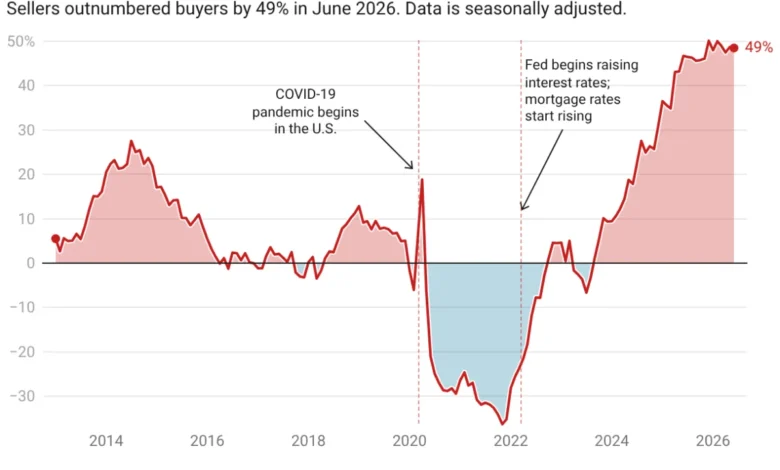
The decision to list a home for sale has historically been driven by seasonal cycles and personal milestones, but in 2026, the equation has become significantly more complex. As the spring selling season approaches, homeowners find themselves at a crossroads, caught between record-high property values and a cooling demand environment shaped by geopolitical instability and domestic economic shifts. With the typical monthly housing payment now surpassing the $2,600 threshold, the financial barrier to entry for many prospective buyers has reached a breaking point, fundamentally altering the traditional dynamics of the real estate market.
The current housing landscape is defined by a stark disconnect between listing prices and consumer affordability. Since the post-pandemic era, home prices have ascended at a trajectory that far outpaces wage growth, leaving a substantial portion of the population on the sidelines. This stagnation has been further exacerbated by a series of external shocks, ranging from conflict in the Middle East to domestic concerns regarding the impact of artificial intelligence on the labor market. For sellers, the question is no longer just about the value of their property, but about whether a viable pool of buyers exists to meet their asking price in an era of heightened economic anxiety.
The Macroeconomic Backdrop: Conflict, Inflation, and Interest Rates
To understand the 2026 housing market, one must look toward the global stage. The ongoing war in Iran has emerged as a primary driver of market volatility, exerting upward pressure on energy costs and reigniting fears of persistent inflation. These geopolitical tensions have a direct pipeline to the American mortgage market. As energy prices climb, the Federal Reserve and bond markets react to inflationary signals, keeping mortgage rates elevated and volatile.
Chen Zhao, Head of Economics Research at Redfin, notes that the brief windows of relief in mortgage rates have often been tied to temporary peace negotiations, only for rates to climb again as conflict resumes. This "see-saw" effect has made it nearly impossible for buyers to plan long-term, leading to a "wait-and-see" approach that has chilled transaction volumes. Furthermore, domestic policies including new tariff structures and evolving immigration laws are contributing to a sense of unpredictability. These factors, combined with a looming fear of an AI-driven shift in the job market, have made consumers more conservative with large-scale debts.
A Shift in Power: The Rise of the Buyer’s Market
For the first time in several years, the national data indicates a significant shift in leverage. Currently, there are nearly 500,000 more sellers than buyers active in the market. While this gap was narrowing in late 2025, the early months of 2026 have seen a resurgence in inventory as more homeowners decide they can no longer delay their moves, despite high interest rates.
Daryl Fairweather, Redfin’s Chief Economist, characterizes the current environment as a "strong buyer’s market," albeit one where buyers are exceptionally wary. "Rising inventory has given buyers more options, but record costs have made them cautious," Fairweather explains. This caution manifests in longer days on market and an increased demand for seller concessions. In many regions, buyers are no longer competing in frenzied bidding wars; instead, they are leading negotiations, demanding repair credits, and often requesting mortgage rate buy-downs as a condition of the sale.
Regional Divergence: The Great Geographic Split
While the national trend points toward a buyer’s market, the reality on the ground is highly localized. A distinct geographic divide has emerged, separating the "stable" markets of the Midwest and Northeast from the "volatile" markets of the Sun Belt.
In cities like Rochester, New York, and Milwaukee, Wisconsin, housing supply remains chronically low. These regions did not experience the same speculative boom as the South during the pandemic years, and as a result, they remain relatively affordable. Sellers in these markets are still seeing multiple offers and quick sales because demand continues to outpace the available inventory.
Conversely, the Sun Belt—once the darling of the real estate world—is facing a reckoning. In states like Florida and Texas, a combination of skyrocketing homeowners’ insurance premiums and increasing climate-related risks has led to a surge in listings. Many homeowners in these areas are looking to exit before further insurance hikes or climate events impact their equity. This influx of supply has tipped the scales heavily in favor of buyers, forcing sellers to be much more aggressive with price cuts and incentives.
Chronology of a Cooling Market: 2022 to 2026
The transition from the hyper-competitive market of the early 2020s to the current environment has been marked by several key phases:
- The Post-Pandemic Peak (2022): Characterized by sub-3% mortgage rates and homes selling in under 30 days. Demand was fueled by remote work flexibility and low borrowing costs.
- The Rate Shock (2023-2024): The Federal Reserve’s aggressive interest rate hikes to combat inflation began to "lock" sellers into their existing low-rate mortgages, causing inventory to plummet.
- The Inventory Thaw (2025): Life events—divorce, job changes, and aging—began to force "rate-locked" sellers to list their homes despite high interest rates, leading to a gradual increase in supply.
- The 2026 Stagnation: The market enters a phase where supply is rising, but buyer affordability is at an all-time low. The average time to sell has nearly doubled from 2022 levels, now sitting at approximately 60 to 70 days from listing to closing.
Strategic Analysis: When to List and When to Wait
Deciding whether to sell in this climate requires a cold-eyed assessment of financial health and local market conditions.
Indicators That It Is a Good Time to Sell:
- Low Local Inventory: If you reside in a pocket of the country (like the Northeast) where homes are still scarce, you can still command a premium.
- Life Necessity: Relocation for a high-paying job or downsizing to eliminate a large mortgage can outweigh the downsides of a difficult market.
- Financial Readiness: Sellers who have significant equity in their current homes are better positioned to weather a slightly lower sale price while still having a substantial down payment for their next purchase.
Indicators That You Should Wait:
- Recent Refinancing: If you refinanced during the 2020-2021 window, selling now likely means trading a 3% rate for a 7% or 8% rate, while also losing money on closing costs.
- Significant Repair Needs: In a buyer’s market, homes in poor condition are often overlooked or heavily discounted. If you cannot afford to make necessary updates, waiting until the market tightens may be wiser.
- High Mortgage Rate Sensitivity: If your next purchase depends on mortgage rates dropping to be affordable, selling now may leave you "homeless" or forced into a rental market that is also seeing price pressures.
The Role of Phased Marketing and Modern Selling Strategies
In response to the 2026 market conditions, real estate professionals are adopting new tactics to help sellers find success. One such strategy is "phased marketing." This involves listing a property to a targeted, smaller audience or within "coming soon" networks before the official MLS debut. This allows sellers to gauge interest and test pricing without the "days on market" counter ticking up publicly.
Furthermore, "price transparency" has become critical. Overpricing a home in the current market is a recipe for stagnation. Data shows that homes that undergo a price cut after three weeks on the market eventually sell for less than they would have if they had been priced correctly from the start.
Broader Impact and Future Outlook
The implications of the 2026 housing slowdown extend beyond individual transactions. The broader economy is feeling the effects of reduced residential investment. With fewer people moving, spending on home improvements, new furniture, and moving services has also softened.
Looking ahead, economists suggest that housing affordability is unlikely to improve substantially unless one of two things happens: a massive surge in homebuilding or a significant economic recession that forces interest rates down. Neither scenario appears imminent. For the remainder of 2026, the market is expected to remain a tug-of-war between sellers who need to move and buyers who are financially stretched to their limits.
Ultimately, the 2026 real estate market rewards the patient and the prepared. While the days of "easy sales" and "bidding war frenzies" have largely retreated into the rearview mirror, a well-priced home in a desirable location remains a valuable asset. Sellers who work with experienced agents, remain flexible on terms, and understand the global economic pressures affecting their local buyers will be the ones who successfully navigate this period of uncertainty.