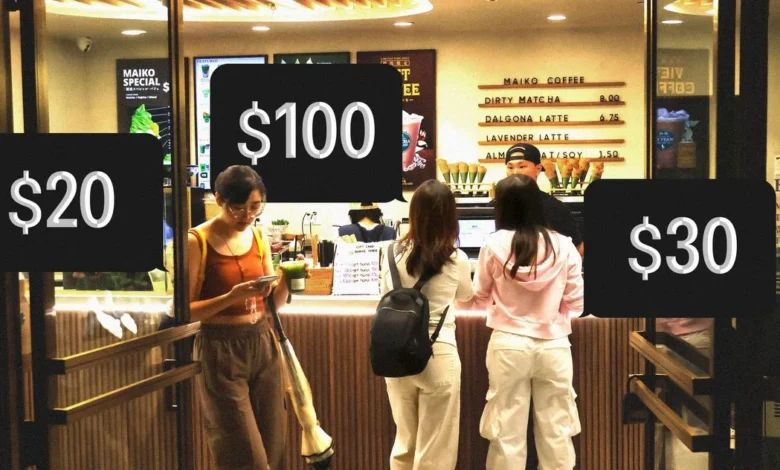
The streets of New York City have long served as a sprawling playground for its youth, but in an era of rising inflation and evolving social norms, the cost of admission to these "third spaces" is sparking a quiet conflict within households. From the brownstone-lined streets of Park Slope to the high-rise corridors of the Upper East Side, parents and teenagers are increasingly at odds over what constitutes a fair allowance. In a city where a single Belgian waffle can cost nearly $4 and a specialty bubble tea often exceeds $8, the traditional "dollar-per-age" rule is being tested against the harsh realities of urban retail.
For ten-year-old Ollie, a student in Center Slope, the walk home from school is a gauntlet of consumer temptation. On most afternoons, he and his peers congregate at local delis to purchase Gatorade Zero and BBQ potato chips. On Thursdays, he treats himself to a pack of Hubba Bubba gum as an "almost-end-of-the-week prize." However, these small indulgences carry a significant price tag. A single treat at the Showroom Bakehouse, such as a $3.95 Belgian waffle, consumes nearly 40% of his $10 weekly allowance. While Ollie expresses contentment with his budget, his twelve-year-old brother, Owen, describes the stipend as insufficient, noting that his funds are often exhausted within hours of receipt, necessitating frequent requests for "emergency" infusions of cash from their mother.
The Economic Geography of the NYC Teenager
The struggle over allowance is not merely a matter of spoiled expectations; it is a reflection of New York City’s unique urban geography. Unlike suburban teenagers who may rely on parents for transportation to a centralized mall or a friend’s house, New York City youth navigate the city independently via public transit. This independence places them in constant contact with commercial storefronts.
Catie Hogan, a personal-finance expert and author of the Cents of Humor newsletter, argues that for NYC teens, allowance is more than just pocket change—it is "social currency." In a city where apartments are often too small for large groups to congregate, "third spaces" like Starbucks, boba shops, and pizza parlors become the primary venues for socialization. Access to these spaces requires a financial transaction. "It isn’t just regular currency," Hogan notes. "It’s the price of participation in a social circle."
The pressure is particularly acute in Manhattan, where the density of high-end bakeries and boutiques is highest. Some parents on the Upper East Side report that their children feel pressured to match the spending habits of wealthier peers who may have "open access" to parental credit cards. This creates a tiered social environment where a child’s ability to "hang out" is directly tied to their weekly budget.
Statistical Divergence: NYC vs. The Nation
Data from Greenlight, a financial technology company that provides debit cards and automated allowance tools for families, highlights a stark disparity between New York City and the rest of the United States. According to Greenlight’s 2025 report, the average annual allowance for a child in New York City was $831, or approximately $16 per week. In contrast, the national average stood at just $347 per year—less than half of the NYC figure.
However, the $16 average masks a wide range of financial realities. Interviews with local parents reveal a spectrum of spending:
- The Minimalists: Some parents maintain a strict $5 to $10 weekly limit, focusing on teaching the value of a dollar through scarcity.
- The Pragmatists: Many parents provide between $20 and $40, intended to cover a few snacks and one "social" meal per week.
- The High-Rollers: In certain private school circles and affluent neighborhoods, allowances can reach $100 to $200 per week.
Bethany, a mother living in Battery Park City, provides her 17-year-old son with $100 per week. She justifies this amount by pointing to a lack of affordable options at his school. "There’s no cafeteria in his school where he can actually get lunch," she explains. With a standard bodega sandwich or a food-truck meal costing $15, the majority of the allowance is consumed by basic nutrition, leaving little for discretionary "fun" spending.
Chronology of the Allowance Evolution
The concept of allowance has shifted significantly over the last three decades, moving from a reward for household chores to a tool for financial literacy and social survival.
- The 1990s-Early 2000s: Allowance was largely cash-based and often tied to specific tasks like mowing the lawn or washing dishes. In NYC, a "dollar-per-age" rule was common and generally sufficient for a slice of pizza and a soda.
- The 2010s: The rise of digital payments (Apple Pay, Venmo) began to decouple the physical sensation of spending from the act itself. The "Starbucks culture" took hold among middle-schoolers, raising the baseline cost of a social outing.
- 2020-2023: Post-pandemic inflation saw the "99-cent slice" nearly vanish from New York City, replaced by $3.50 or $4.00 standard slices. Boba tea emerged as a dominant social staple, with prices often hitting $7-$9 after tax and tip.
- 2024-Present: Parents are increasingly using apps like Greenlight or Apple Cash to monitor spending in real-time, leading to more frequent "negotiations" as parents see exactly where the money goes.
The Psychological Burden of Parents
For many parents, the decision of how much to give is fraught with emotional baggage from their own upbringings. Jay, a Manhattan father of a 16-year-old, provides his son with $200 per week. Growing up in an immigrant family in Queens, Jay had no allowance and often felt excluded from the social lives of his more affluent peers. By providing a generous stipend, he hopes to shield his son from that sense of marginalization, particularly as the boy attends a private school where some classmates have "unlimited" resources.
Conversely, other parents worry that excessive allowances prevent children from learning the "tough choices" necessary for adult life. Ron Lieber, a personal-finance columnist for the New York Times and author of The Opposite of Spoiled, advocates for a balanced approach. Lieber utilizes a "spend, save, and give" model, where a 10-year-old might receive $10 a week, but only $4 is available for immediate discretionary spending. The goal, according to Lieber, is to ensure kids have "just enough so that they have what they need… but not so much that they don’t have to make tough choices on the regular."
Financial Literacy and the "Learning Blunder"
Despite the friction, the allowance system serves as a laboratory for financial decision-making. Some New York City teens are proving to be surprisingly savvy. Owen, despite his initial struggles with overspending at the deli, recently reported saving $20.22 by opting out of daily snack runs.
Furthermore, local business owners have observed a sophisticated level of social etiquette among the city’s youth. Jonathan Webb, owner of the Showroom Bakehouse in Park Slope, notes that his younger customers are often exemplary tippers. "For a $5.20 purchase, they’ll leave $6 and tell the person working, ‘You can keep the rest,’" Webb says. This suggests that the "social currency" of allowance also includes the acquisition of service-industry norms.
However, the learning curve can be expensive. One Manhattan teenager recently withdrew $1,000 from a personal brokerage account—funded by years of saved allowance and gifts—to purchase Pokémon cards, betting on their future appreciation. His father viewed the move as a significant mistake, but the teen argued that the autonomy provided by an allowance should include the right to make poor investments.
Broader Implications and the Future of Urban Youth
The "allowance gap" in New York City is a microcosm of the city’s broader affordability crisis. As the cost of "third spaces" continues to rise, there is a risk that the city’s public life will become increasingly stratified for the next generation. If a teenager needs $20 just to sit in a cafe with friends for an hour, those without such means are pushed to the margins—often relegated to parks (weather permitting) or staying home in front of screens.
Furthermore, the transition to digital currency has altered the "pain of paying." When a teen taps an iPhone to pay for a $9 boba, the lack of physical cash can make the transaction feel abstract. Parents report that their children are more likely to overdraw accounts when using Apple Cash than when they carried physical twenty-dollar bills.
As New York City continues to evolve, the allowance will remain a primary point of negotiation in the parent-child relationship. It is no longer just about buying a comic book or a candy bar; it is a complex navigation of inflation, social standing, and the first steps toward financial independence in one of the world’s most expensive environments. For the NYC teen, the question isn’t just "How much do I get?" but "Is it enough to keep me in the room?"