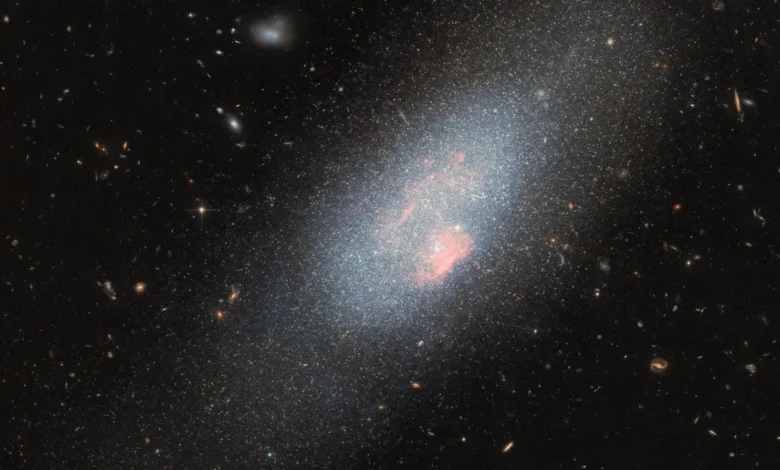
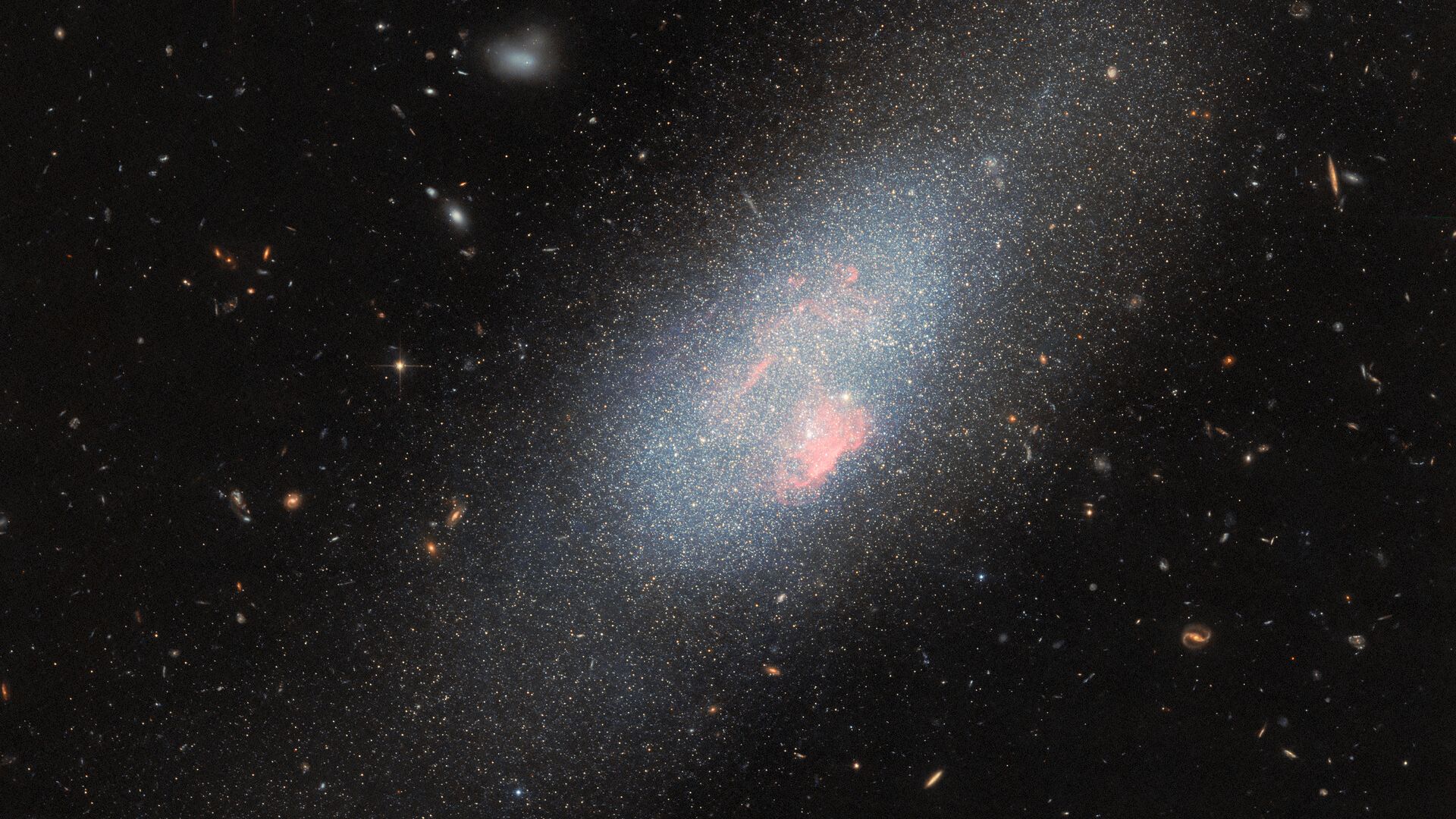
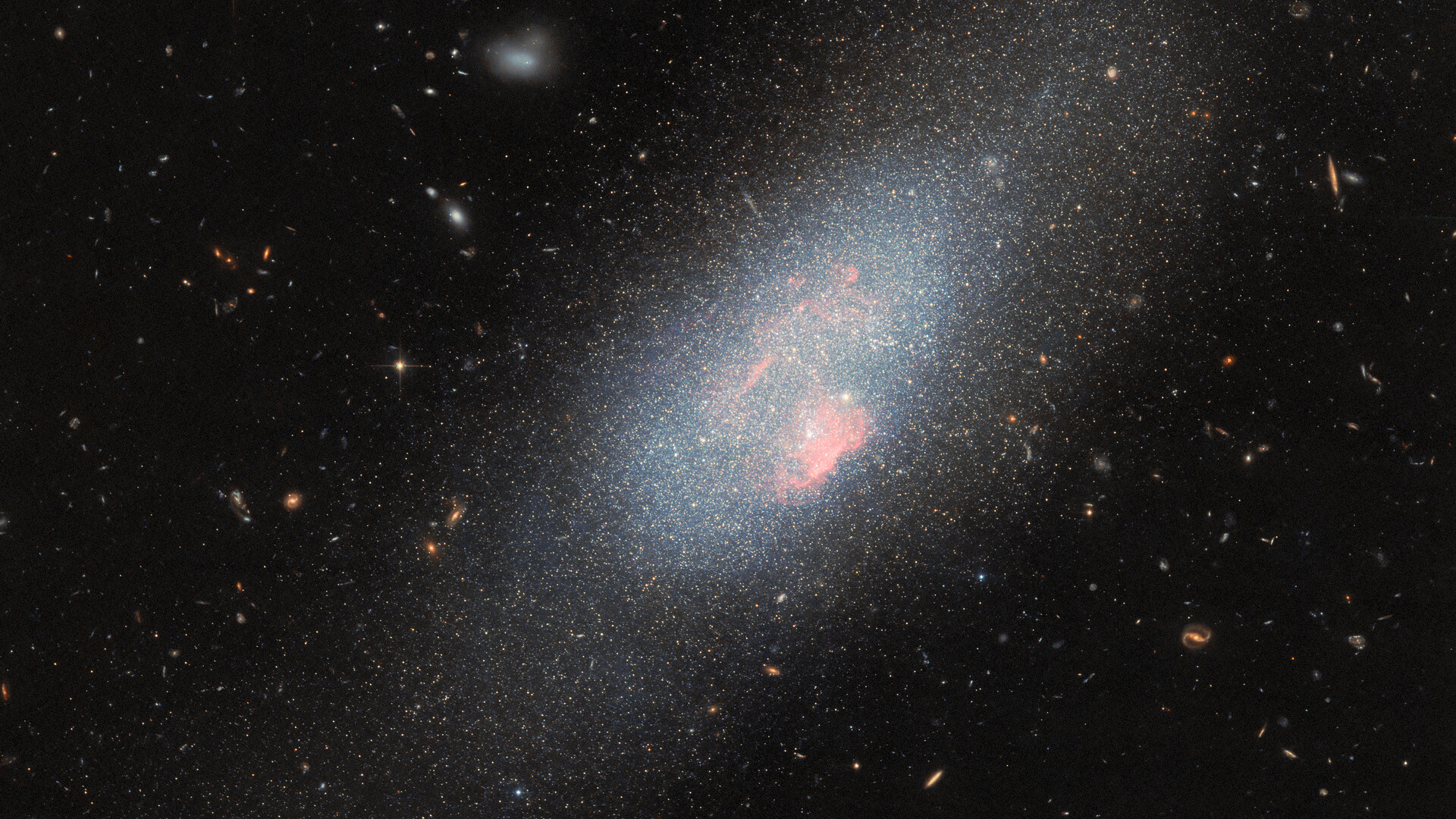
Our universe is a canvas painted with celestial wonders, but among its most enigmatic brushstrokes are the dwarf spheroidal galaxies. These dim, often minuscule galactic companions, frequently found in the gravitational embrace of larger behemoths like our own Milky Way, present a profound cosmic puzzle. Packed with an invisible abundance of dark matter, they act as cosmic icebergs, their true mass concealed from direct observation, rendering them some of the most exotic objects known to astronomy. However, a persistent discrepancy between theoretical predictions and observed stellar movements within these galaxies has ignited a fervent debate, questioning the very foundations of our understanding of dark matter and the intricate processes of galaxy formation.
The Core Dilemma: A Mismatch in Galactic Architecture
The prevailing cosmological model, known as the Lambda Cold Dark Matter (ΛCDM) model, posits that dwarf spheroidal galaxies should possess a dense, "cuspy" core of dark matter at their center. This theoretical expectation is derived from simulations that depict the hierarchical formation of structures in the universe, where smaller dark matter halos merge to form larger ones. Within these larger halos, the most massive ones are predicted to have accumulated the greatest density of dark matter at their centers.
Yet, observational data, particularly from the analysis of stellar kinematics – the study of stellar motions – has frequently revealed a different story. Instead of a sharp, dense core, many dwarf spheroidal galaxies appear to exhibit a "cored" structure, characterized by a flatter, more diffuse distribution of mass towards their centers. This observed "core-cusp problem" suggests that either our models of dark matter behavior are incomplete, or the processes governing galaxy formation and evolution are more complex than currently understood. The implications are significant, potentially impacting our understanding of fundamental physics and the very architecture of the cosmos.
A New Paradigm: The "Dynamical Attractor" Hypothesis
Emerging from the collaborative efforts of Jorge Peñarrubia and Ethan O. Nadler, researchers affiliated with the Institute for Astronomy at the University of Edinburgh and the Department of Astronomy & Astrophysics at the University of California, San Diego, respectively, is a groundbreaking new hypothesis. Their research proposes that dwarf spheroidal galaxies are not static entities, but rather dynamic systems constantly evolving towards a specific, stable configuration – a "dynamical attractor." This concept suggests that regardless of their initial conditions, these galaxies are inexorably drawn towards a predetermined final form.
"Dwarf spheroidal galaxies are constantly evolving towards a particular, stable configuration," Peñarrubia and Nadler explain in their recent publication. "This stable state, which we term a ‘dynamical attractor,’ represents a cosmic resting place that these galaxies are destined to reach." This implies that the observed diversity in their shapes and internal structures is not necessarily a reflection of their birth conditions, but rather a snapshot of their ongoing journey toward this ultimate equilibrium.
The Cosmic Engine: Internal Heating and Dark Subhalos
How do these galaxies achieve this seemingly preordained form? The answer lies in a complex interplay of internal and external forces, primarily driven by "stochastic force fluctuations" and gravitational interactions. Peñarrubia and Nadler’s research highlights the crucial role of "dark subhalos" – smaller clumps of dark matter embedded within the larger, smoother dark matter halo of a galaxy. These subhalos, acting like invisible bumpers in a cosmic pinball machine, exert unpredictable gravitational tugs on the galaxy’s stars.
These constant, chaotic gravitational nudges impart energy to the stars, causing their orbits to expand. This process, akin to an internal "heating" mechanism, drives the galaxy’s evolution, gradually spreading its stellar population outwards. Imagine a swarm of bees; initially clustered tightly, they are continuously jostled by unseen forces, causing them to spread out into a larger, more diffuse formation. Similarly, the stars within dwarf galaxies are energized by these dark subhalos, leading to a gradual puffing up of the stellar system.
The External Influence: Tidal Stripping and Gravitational Tugs
Beyond internal dynamics, external gravitational forces play a pivotal role in shaping dwarf spheroidal galaxies, particularly those in close proximity to more massive galaxies. Our own Milky Way, with its immense gravitational pull, is a prime example of such an influence. When a dwarf galaxy ventures too close, it can experience "tidal stripping," a process where the larger galaxy’s gravity tears away the outer layers of its less massive companion.
This external stripping acts as an accelerant, further enhancing the internal heating and outward expansion of the dwarf galaxy, pushing it more rapidly towards its dynamical attractor. However, the researchers emphasize that even isolated dwarf galaxies, free from the gravitational harassment of larger neighbors, will still evolve towards this stable state, albeit at a considerably slower pace. For a truly isolated dwarf galaxy, reaching this equilibrium could take as long as 14 billion years – the approximate age of the universe itself. This underscores the relentless, albeit sometimes slow, nature of cosmic evolution.
Empirical Validation: N-Body Simulations and Observational Data
The "dynamical attractor" hypothesis is not merely a theoretical construct. Peñarrubia and Nadler have bolstered their claims through extensive N-body simulations, sophisticated computer models that meticulously track the gravitational interactions of millions or even billions of particles over cosmological timescales. These simulations allow researchers to recreate the evolution of dwarf galaxies under various conditions, including their interactions with larger host galaxies.
Their experiments demonstrated a critical threshold: a dwarf spheroidal galaxy must shed more than 99% of its initial dark matter before its stellar component begins to experience significant mass loss due to tidal forces. This separation of stellar and dark matter components over time is a key prediction of their model.
Furthermore, the researchers applied their "Heating Argument" to real-world observational data from dwarf galaxies orbiting the Milky Way. They found that these galaxies exhibit specific "tidal tracks" that align remarkably well with their simulation predictions. Specifically, the observed stellar velocity dispersion – a measure of the random motion of stars within a galaxy – in these dwarf galaxies is, on average, about half the peak speed that dark matter could impart within their halos. This ratio, consistently observed across different theoretical dark matter distributions (whether cuspy or cored), provides compelling evidence for a universal evolutionary process.
Implications for Our Understanding of the Universe
The implications of this research are far-reaching, offering a potential resolution to the long-standing core-cusp problem and refining our understanding of galactic evolution.
- Reconciling Theory and Observation: The "dynamical attractor" model provides a framework for understanding why observations often deviate from the predictions of simpler dark matter models. It suggests that the observed core-like structures are not necessarily indicative of a fundamentally different dark matter composition, but rather an evolutionary outcome.
- A Unified Evolutionary Path: The research implies that the apparent diversity among dwarf spheroidal galaxies is largely an evolutionary stage rather than a reflection of distinct initial conditions. This suggests a more unified and predictable path for the formation and evolution of these small galaxies.
- Understanding Dark Matter Distribution: While the model doesn’t fully resolve the precise distribution of dark matter in individual galaxies, it offers a new perspective on how that distribution can evolve over time. The consistency observed in stellar velocity dispersions across different theoretical dark matter profiles is particularly significant.
- Challenges and Future Research: The study also acknowledges remaining challenges. The "mass-anisotropy degeneracy," the difficulty in disentangling mass distribution from the direction of stellar motion, continues to complicate precise dark matter profiling. Furthermore, determining the full 3D orientation of these faint galaxies remains a hurdle. The model’s simplification in not fully accounting for the impact of dark subhalos on the smooth dark matter potential also points to areas for further refinement.
The Ongoing Cosmic Detective Work
Despite these complexities, the "dynamical attractor" hypothesis presents a powerful new lens through which to examine these dark-matter-dominated worlds. It highlights the profound influence of subtle, ongoing interactions in shaping a galaxy’s ultimate destiny. The universe, it appears, possesses an elegant mechanism for guiding even its smallest inhabitants towards predictable, stable states, offering a tantalizing glimpse into the grand, unfolding narrative of cosmic evolution.
The ongoing quest to unravel the mysteries of dark matter and galaxy formation continues. Each observation, each simulation, and each new theoretical framework like the "dynamical attractor" hypothesis brings us closer to understanding the intricate tapestry of the cosmos. The detective work persists, one tiny, dark galaxy at a time, as astronomers strive to decipher the hidden attractors that govern the lives and evolution of these celestial enigmas. The universe, in its vastness and complexity, continues to offer profound questions, and the pursuit of answers promises to illuminate the fundamental workings of the cosmos.