Crypto Market Crash Trump Tariffs & Tradfi Impact
Crypto market crash trump tariffs tradfi reveals a complex interplay between global economic policies and the volatile digital asset market. Trump’s trade tariffs, particularly their timing relative to significant crypto market crashes, offer a fascinating case study. This exploration investigates potential correlations, examining the impact on traditional finance (tradfi) sectors, investor behavior, and regulatory responses. We’ll delve into historical context, analyze case studies, and compare this crash to past market downturns.
The analysis will consider how Trump’s tariffs might have influenced investor sentiment and trading decisions in both crypto and tradfi markets. We’ll examine the potential transmission mechanisms linking the two, considering factors such as investor confidence, market liquidity, and regulatory uncertainty. The resulting impact on tradfi asset classes and specific sectors will be a key focus.
Correlation Between Crypto Market Crash and Trump Tariffs
The tumultuous period of the Trump presidency saw significant shifts in global trade policies, including the imposition of tariffs on various goods. Simultaneously, the cryptocurrency market experienced periods of dramatic volatility. This analysis delves into the potential correlations between these events, examining the historical context, potential economic indicators, and investor sentiment to understand the interplay between trade policies and the crypto market.The impact of trade wars, particularly those involving significant economies like the US, often ripples through global markets.
Trump’s aggressive tariff policies aimed at China and other trading partners were a defining feature of his administration, leading to considerable uncertainty and disruption in international commerce. Understanding how these policies might have influenced the crypto market, a relatively nascent and volatile asset class, requires a careful examination of the historical context and economic indicators of the time.
Historical Overview of Trump’s Trade Policies
Trump’s administration implemented a series of tariffs on imported goods from China and other countries. These tariffs were intended to address perceived trade imbalances and protect American industries. The tariffs often sparked retaliatory measures from other nations, leading to trade wars that impacted global supply chains and economic activity. These actions resulted in increased costs for consumers and businesses, creating uncertainty in international markets.
Timeline of Significant Crypto Market Crashes and Potential Connections to Trump’s Tariffs
Several significant crypto market crashes occurred during the period of Trump’s presidency. Analyzing the timing of these crashes relative to tariff announcements or implementation can reveal potential correlations. For example, a sharp decline in the value of Bitcoin might have coincided with a major tariff announcement, indicating a potential relationship.
Potential Economic Indicators Influencing Both the Crypto Market and Tariffs
Various economic indicators, such as GDP growth, inflation rates, and unemployment figures, could have influenced both the crypto market and Trump’s tariffs. A strong correlation between these indicators and the behavior of the crypto market during periods of tariff implementation could highlight potential causal links. For example, periods of economic uncertainty might have pushed investors towards both crypto and safe-haven assets, such as gold, during periods of trade war escalation.
Mechanisms Linking Trump’s Tariffs to Crypto Market Volatility
Several mechanisms could have linked Trump’s tariffs to crypto market volatility. Increased uncertainty and risk aversion in global markets due to trade disputes might have influenced investors to seek alternative investment avenues, such as cryptocurrencies. The volatility in global markets, driven by tariffs, could have impacted investor confidence in cryptocurrencies, leading to price fluctuations.
The crypto market crash, seemingly influenced by Trump tariffs and traditional finance (TradFi) issues, is definitely a complex situation. Recent events like the Bybit hack, with reported withdrawals of $5.3 billion and reserves supposedly secure from hackers, highlights the vulnerabilities in the current crypto landscape. The cascading effects of such incidents, combined with other market pressures, make the future of crypto and its relation to TradFi very uncertain, and a potential domino effect.
Impact of Investor Sentiment on Both Crypto and Tradfi Markets
Investor sentiment plays a crucial role in both crypto and traditional financial (tradfi) markets. Periods of heightened uncertainty, such as during trade disputes, often lead to risk aversion. This could manifest in a flight to safety in tradfi assets or a shift in investor sentiment towards cryptocurrencies. During periods of market uncertainty, investor sentiment can influence market volatility and price fluctuations.
Comparison of Effects of Tariffs on Various Cryptocurrencies
| Cryptocurrency | Potential Impact of Tariffs |
|---|---|
| Bitcoin | Potentially experienced significant price volatility, influenced by investor sentiment and global market uncertainty. |
| Ethereum | May have mirrored the broader crypto market trends, with potential price fluctuations based on investor reaction to tariffs. |
| Other Cryptocurrencies | Could have exhibited varying degrees of price volatility depending on market capitalization, investor interest, and perceived risk. |
The table above offers a simplified overview of potential impacts. Detailed analysis of each cryptocurrency’s performance during specific tariff periods would require further investigation.
Impact on Traditional Finance (Tradfi)
The recent crypto market downturn has undeniably cast a shadow over the traditional financial system (Tradfi). While the direct connection between the two markets isn’t always immediate or easily quantifiable, interdependencies exist, and a significant crypto crash can trigger ripple effects across various Tradfi asset classes. Understanding these relationships is crucial for predicting and mitigating potential risks.The relationship between crypto and Tradfi markets is complex and multifaceted.
Cryptocurrencies, while seemingly separate, are increasingly integrated into the global financial landscape. Many Tradfi institutions are exploring or already utilizing blockchain technology for various applications, including payments and asset management. Furthermore, crypto investments have become increasingly popular among institutional investors, further blurring the lines between the two systems. This interconnectivity means that a shock in one market can potentially impact the other.
Relationship Between Crypto and Tradfi Markets
The connection between crypto and Tradfi markets isn’t a simple one-to-one correlation. It’s more accurate to describe a complex network of interdependencies. Tradfi institutions, including banks and investment firms, are increasingly involved in crypto-related activities, from providing services to holding crypto assets. This intermingling can create a pathway for market shocks to propagate.
Potential Influence on Tradfi Asset Classes
A crypto market crash can influence various Tradfi asset classes. For example, a significant decline in crypto prices could lead to losses for Tradfi institutions holding crypto assets or those providing related services. The ripple effect could extend to other asset classes, such as stocks and bonds, as investors re-evaluate their portfolios and market sentiment shifts. This could lead to a decrease in overall market confidence.
Transmission Mechanisms for Shocks
Several transmission mechanisms can carry shocks from the crypto market to Tradfi. One key mechanism is the direct investment channel. If a Tradfi institution holds crypto assets, a crash can directly impact its portfolio value. A second channel involves the contagion effect. The market downturn can lead to a loss of confidence in the entire digital asset market, impacting investor sentiment across other asset classes, including those within Tradfi.
Finally, there’s the potential for regulatory responses to impact Tradfi institutions involved in crypto-related activities.
Tradfi Sectors with Potential Impacts
Numerous Tradfi sectors could experience direct or indirect impacts from a crypto market crash. These include:
- Investment Banks: These institutions often provide services for crypto-related transactions or have exposure to crypto-focused funds. A crash could lead to write-downs and lower profitability.
- Asset Management Firms: Firms managing portfolios with crypto exposure could face significant losses. Their clients could also experience lower returns, potentially affecting their trust in the asset management firm.
- Brokerage Firms: Brokerages involved in crypto trading could see decreased volume and lower revenues if trading activity declines due to the crash.
- Insurance Companies: Insurance companies might face claims related to crypto investments or related activities. A substantial crash could significantly impact the sector’s financial health.
- Hedge Funds: Hedge funds specializing in crypto or digital assets may face substantial losses and decreased profitability.
Regulatory Responses in Tradfi and Crypto Markets
The regulatory responses of Tradfi and crypto markets to the crash may differ significantly. Tradfi regulators typically have established frameworks for managing financial risks and maintaining market stability. In contrast, the crypto regulatory landscape is still evolving, with varying levels of oversight and regulation across different jurisdictions. This disparity in regulatory frameworks can further complicate the transmission of shocks.
Potential Ripple Effects on Tradfi Sectors
The following table illustrates potential ripple effects of the crypto crash on various Tradfi sectors:
| Tradfi Sector | Potential Impact |
|---|---|
| Investment Banks | Decreased profitability, potential write-downs, lower trading volume |
| Asset Management Firms | Portfolio losses, decreased investor confidence, lower returns |
| Brokerage Firms | Decreased trading volume, lower revenues, potential operational challenges |
| Insurance Companies | Claims related to crypto investments, potential financial strain |
| Hedge Funds | Significant losses, reduced profitability, investor anxiety |
Analyzing Investor Behavior
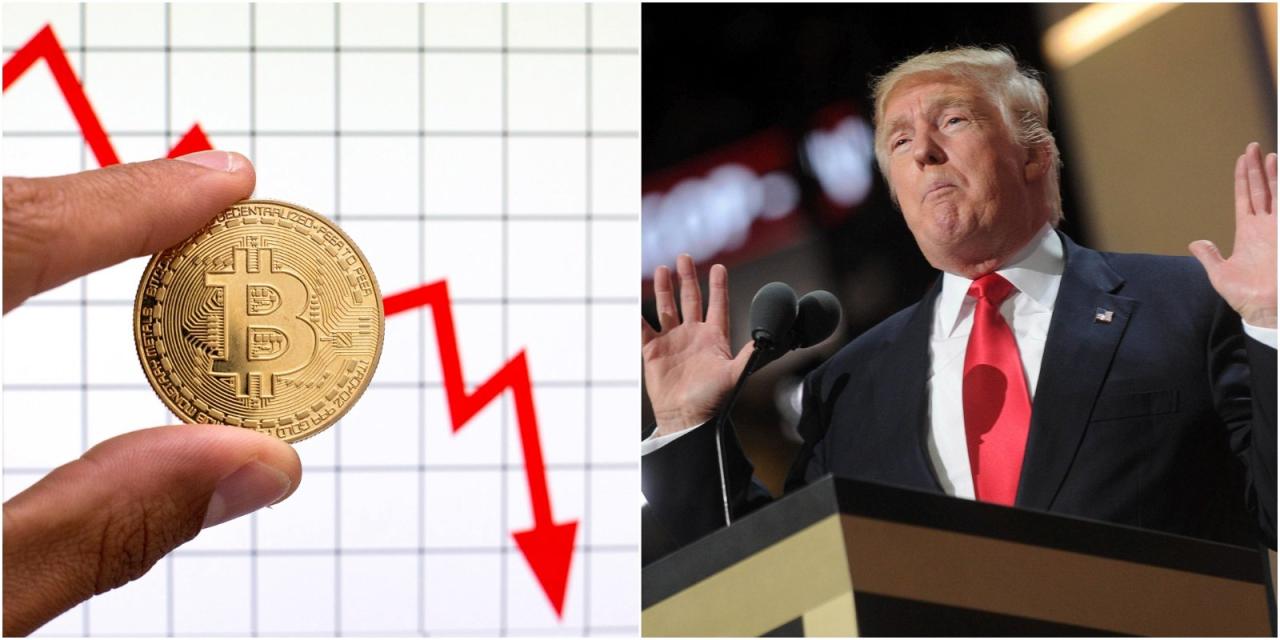
The crypto market crash, intertwined with the impact of Trump tariffs on traditional finance, exposed the complex interplay between speculation, fear, and investor psychology. Understanding how different investor groups reacted provides crucial insights into market dynamics and potential future trends. This analysis delves into the role of speculation and fear in market movements, the various investor types, the psychological impact of the crash, and potential patterns in investor behavior.Investor behavior is a multifaceted phenomenon, influenced by a multitude of factors.
From the thrill of potential gains to the terror of losses, the human element is deeply embedded in the market’s fluctuations. Examining the specific behaviors of investors, across various market segments, provides a clearer understanding of the forces at play.
The Role of Speculation and Fear
Speculation, often driven by anticipated future gains, can significantly influence market prices. This speculative activity, coupled with the inherent risk of cryptocurrencies, amplifies market volatility. Fear, triggered by negative news or market downturns, can lead to panic selling, further exacerbating the decline. These emotional responses often create self-fulfilling prophecies, where market sentiment itself drives price fluctuations. Fear and greed, as fundamental human emotions, play a substantial role in determining market movements.
The recent crypto market crash, seemingly influenced by Trump tariffs and traditional finance (TradFi) anxieties, has certainly opened up a can of worms. It’s fascinating to see how this relates to the consequences for House Democrats regarding Elon Musk and the SEC, as explored in this piece house democrats consequences elon musk sec. Ultimately, the ripple effects of these interconnected events on the crypto market crash and its relationship to TradFi are still being felt, and the complexities are undeniable.
Different Types of Investors
The crypto and traditional finance (Tradfi) markets attract diverse investor types. These range from individual retail investors, who often rely on online research and social media trends, to institutional investors, such as hedge funds and mutual funds, with sophisticated investment strategies. Furthermore, algorithmic traders, using complex computer programs, play a significant role in high-frequency trading. These different investor types exhibit varying degrees of risk tolerance and react to market movements in diverse ways.
Understanding the investment strategies of these groups can offer insight into the potential causes and consequences of market crashes.
Psychological Impact of the Crash
The crypto market crash, like any significant market downturn, had a profound psychological impact on various investor groups. Retail investors, often more emotionally invested in their holdings, experienced heightened anxiety and frustration. Institutional investors, accustomed to more stable market conditions, faced pressure to maintain portfolio stability and respond strategically. The fear of loss, and the perceived lack of security, can influence their subsequent investment decisions.
The long-term psychological effects of the crash on investor confidence and risk appetite remain to be seen.
Potential Patterns in Investor Behavior
During the crash, certain patterns in investor behavior emerged. A significant portion of retail investors displayed heightened emotional reactions, including panic selling and a loss of confidence. Institutional investors, on the other hand, often responded with more calculated strategies, such as portfolio adjustments and risk mitigation. The differing responses of various investor groups suggest the need for a deeper understanding of the underlying psychological mechanisms at play.
Investor Behavior Classification
| Investor Type | Reaction to Volatility | Example |
|---|---|---|
| Retail Investor | Panic selling, emotional responses, loss of confidence | Selling crypto holdings due to fear of further losses. |
| Institutional Investor | Portfolio adjustments, risk mitigation, strategic responses | Hedge funds reducing exposure to high-risk assets. |
| Algorithmic Trader | Automated responses, potential for exacerbated volatility | Automated sell orders triggered by pre-programmed market conditions. |
Sentiment Analysis and Correlation, Crypto market crash trump tariffs tradfi
Analyzing investor sentiment during the crypto crash, and its possible correlation with Trump’s tariffs, is a complex undertaking. A variety of sources, including social media data, news articles, and market trends, can offer insight into shifting public opinion. Determining a direct correlation between the tariffs and investor sentiment, and its impact on the crypto market, requires a careful consideration of multiple variables and a thorough examination of the data.
The crypto market crash, Trump tariffs, and TradFi’s role in all this have been a hot topic lately. While digging into the complexities of these financial factors, I stumbled upon a fascinating comparison of animation tools, specifically, Duik Bassel versus Puppet Tool. This insightful analysis of which tool is better for animation is well worth a look if you’re into that kind of thing.
duik bassel vs puppet tool which is a better tool for animation Ultimately, though, the underlying financial issues are still far more complex, and the real-world impacts of the crypto market crash and associated policies are still unfolding.
Regulatory and Policy Considerations: Crypto Market Crash Trump Tariffs Tradfi
The crypto market crash, often intertwined with global economic events, highlighted the need for a more robust regulatory framework. This period saw a shift in the understanding of the risks associated with decentralized finance (DeFi) and the need for clearer oversight, particularly in the wake of interconnectedness between crypto and traditional finance. Government responses to the crash, both direct and indirect, had a profound impact on market confidence and stability.The regulatory environment for cryptocurrencies and traditional finance (Tradfi) was evolving during this time.
Crypto markets lacked consistent, comprehensive regulation, while Tradfi institutions were under established, though sometimes debated, regulatory oversight. This disparity in regulatory frameworks created vulnerabilities and amplified the impact of market shocks. The ensuing crash underscored the necessity for a more cohesive and adaptable regulatory approach to both asset classes.
Regulatory Environment for Cryptocurrencies
The crypto market during the crash period lacked consistent and comprehensive regulation across jurisdictions. Many countries were still developing frameworks for digital assets, leading to a patchwork of rules and differing interpretations of existing regulations. This ambiguity created a fertile ground for illicit activities and market manipulation. Some countries attempted to address the situation through ad hoc measures, while others adopted more comprehensive regulatory approaches.
The lack of global coordination further complicated matters, as cryptocurrencies transcend geographical boundaries.
Regulatory Environment for Traditional Finance (Tradfi)
Tradfi institutions were operating under established regulatory frameworks, although these frameworks were sometimes subject to scrutiny and debate. Central banks and financial regulators had tools for managing financial crises, including interest rate adjustments and capital requirements. However, the interconnectedness between Tradfi and crypto markets was not fully appreciated or accounted for in existing regulations, potentially amplifying the impact of the crypto crash on Tradfi institutions.
Government Policies and Market Stability
Government policies and regulations play a critical role in maintaining market stability. Effective regulations should aim to balance innovation with risk management. Policies concerning market liquidity, capital adequacy, and consumer protection can significantly influence investor behavior and market confidence. A lack of clear guidelines or inconsistent implementation can lead to uncertainty and volatility.
Government Interventions During the Crypto Crash
Government interventions during the crash varied. Some countries implemented measures to protect consumers and stabilize financial markets, while others focused on investigations and enforcement actions. The responses often reflected the specific circumstances and regulatory framework of the affected jurisdictions. For instance, some countries introduced temporary measures to prevent further contagion, while others focused on identifying and prosecuting fraudulent activities.
Potential Long-Term Consequences of the Crash on Regulation
The crypto crash’s impact on regulation is multifaceted. It prompted a reevaluation of the existing frameworks for both crypto and Tradfi. The need for global coordination and harmonization of regulations became more apparent. The interconnectedness of financial markets was further exposed, highlighting the importance of comprehensive regulatory oversight that encompasses both traditional and decentralized finance.
Potential Policy Responses to Mitigate Similar Future Events
Potential policy responses to mitigate future crises include enhancing regulatory frameworks for cryptocurrencies and increasing coordination among regulatory bodies globally. This could involve developing clear definitions of crypto assets, establishing regulatory sandboxes for innovation, and implementing robust consumer protection measures. Implementing robust oversight mechanisms and enhancing the transparency of financial markets are crucial elements in this strategy.
Comparison of Regulatory Frameworks
| Feature | Crypto | Tradfi |
|---|---|---|
| Regulatory Framework | Developing and inconsistent; often lacking comprehensive coverage | Established and diverse; subject to ongoing review and refinement |
| Market Structure | Decentralized and often global | Centralized and regionally focused |
| Oversight Mechanisms | Evolving and often less developed | Well-established, with central bank supervision |
| Consumer Protection | Often lacking clear guidelines | Stronger consumer protection frameworks |
Illustrative Case Studies
Deciphering the crypto market’s volatile nature requires examining specific instances of crashes. These case studies offer valuable insights into the complex interplay of factors that can trigger significant price drops. By analyzing past events, we can gain a better understanding of the potential triggers, the broader market dynamics, and the impact on traditional finance.Understanding the specific circumstances surrounding cryptocurrency crashes is crucial for evaluating the broader market trends.
Analyzing the factors contributing to these crashes helps to identify potential patterns and risks, allowing for a more nuanced understanding of the market’s behavior. This section focuses on illustrative examples to demonstrate the interplay of market forces, regulatory responses, and broader economic conditions during periods of significant price drops.
Specific Cryptocurrency Crashes
Several cryptocurrencies have experienced substantial price declines in the past, illustrating the market’s vulnerability to various factors. Analyzing these cases reveals the complexities behind these events and the potential for future volatility.
- The 2018 Bitcoin Crash: Bitcoin’s price plummeted significantly in 2018, from an all-time high. This decline was partly attributed to regulatory uncertainty, investor sentiment shifts, and a lack of institutional adoption. The crash also coincided with a broader crypto market downturn, highlighting the interconnectedness of the sector. The price volatility during this period underscored the need for increased regulatory clarity and investor education.
- The 2022 Terra Luna Collapse: The Terra Luna ecosystem, which included the TerraUSD stablecoin, collapsed in 2022, causing a ripple effect throughout the crypto market. This collapse was triggered by algorithmic issues, a sharp decline in investor confidence, and speculation that exacerbated the market instability. The event demonstrated the vulnerabilities inherent in algorithmic stablecoins and the importance of robust risk management strategies in the crypto space.
- The 2022 FTX Collapse: The FTX exchange, a prominent player in the cryptocurrency market, faced a liquidity crisis and ultimately collapsed in 2022. Factors contributing to this event included questionable financial practices, a lack of transparency, and the rapid decline in investor confidence. The FTX collapse highlighted the need for robust oversight and regulatory frameworks in the cryptocurrency industry, and the importance of scrutinizing financial practices and maintaining transparency.
Potential Causal Factors
Several factors contributed to the price declines in the mentioned cryptocurrencies. Regulatory uncertainty, investor sentiment, macroeconomic conditions, and specific issues within the crypto ecosystem itself played critical roles.
- Regulatory Uncertainty: Ambiguous or evolving regulatory environments can create uncertainty and fear in the market, leading to investor reluctance and potential price declines. Changes in government regulations regarding cryptocurrencies or related financial instruments often cause considerable volatility.
- Investor Sentiment Shifts: Mass adoption and a positive market sentiment can fuel rapid price increases. Conversely, negative news or a shift in investor sentiment can trigger sharp declines. Investor behavior, often driven by emotions and speculative trends, can dramatically affect market stability.
- Macroeconomic Conditions: Broader economic trends, including interest rate hikes, inflation, and recessionary pressures, can impact the overall market, including the cryptocurrency market. A correlation between macroeconomic downturns and crypto market downturns can be observed.
- Specific Project Issues: Technical vulnerabilities, governance problems, or other issues specific to a cryptocurrency project can contribute to a crash. Poor security practices or vulnerabilities in the underlying technology can quickly lead to widespread investor panic.
Summary Table
| Cryptocurrency | Year of Crash | Price Fluctuation (Approximate) | Regulatory Response | Macroeconomic Conditions |
|---|---|---|---|---|
| Bitcoin | 2018 | Significant drop from all-time high | Limited regulatory response at the time | Mixed economic environment |
| Terra Luna | 2022 | Near-total collapse | Regulatory scrutiny and investigations | Rising inflation and interest rate concerns |
| FTX | 2022 | Near-total collapse | Extensive regulatory investigations | Rising inflation and interest rate concerns |
Historical Context and Comparison

The recent crypto market crash, like previous downturns, reveals recurring patterns in financial markets. Understanding these historical parallels provides valuable context for assessing the current situation and identifying potential lessons learned. Analyzing similar market corrections allows us to better grasp the dynamics at play and potentially anticipate future behavior.
Comparing Crypto Market Crashes to Previous Downturns
The crypto market, in its relatively short lifespan, has experienced several significant corrections. These events, though distinct in their specific triggers, share similarities with traditional market downturns. The comparison extends beyond the immediate factors; the broader economic and psychological aspects also exhibit parallel behaviors. Examining the causes and consequences of past market crashes offers insight into the current situation.
Similarities and Differences in Contributing Factors
Both crypto and traditional markets are susceptible to factors like speculative bubbles, regulatory uncertainty, and macroeconomic shifts. However, crypto markets often exhibit amplified volatility due to their decentralized nature, lack of established regulatory frameworks, and susceptibility to scams and hacks. Furthermore, the rapid pace of innovation and adoption within the crypto space introduces unique challenges compared to more established financial markets.
The impact of institutional adoption on market behavior and stability is a critical element in comparing the current crash to previous downturns.
Broader Economic Context
The economic climate during a market crash significantly influences its severity and duration. High inflation, rising interest rates, and geopolitical instability often coincide with market corrections. These macroeconomic factors can exacerbate existing vulnerabilities within the market, triggering a cascading effect. Assessing the interplay between these factors is essential for understanding the context of the current crypto market crash.
Historical Trends of Financial Markets
Financial markets exhibit cyclical behavior, with periods of growth followed by corrections. The history of market downturns reveals recurring themes of investor psychology, speculative activity, and regulatory interventions. Understanding these patterns can inform investors about potential risks and opportunities in the current market. Identifying the patterns helps us predict the course of future market behavior.
Comparison Table: Market Corrections
| Market Correction | Year | Key Contributing Factors | Impact on Tradfi | Lessons Learned |
|---|---|---|---|---|
| 2008 Financial Crisis | 2008 | Subprime mortgage crisis, excessive risk-taking, inadequate regulation | Significant disruption to the global financial system | Importance of robust regulation, risk management, and transparency |
| Dot-com Bubble Burst | 2000 | Overvaluation of technology stocks, speculative investment | Significant impact on investor confidence | Importance of assessing market valuations and avoiding speculative bubbles |
| Current Crypto Market Crash | [Year of the Crash] | [Specific contributing factors for the current crash] | [Impact on Tradfi, if any] | [Lessons learned from past market downturns, relevant to the current situation] |
Lessons Learned from Past Downturns
Past market downturns highlight the importance of diversification, risk management, and understanding market cycles.
“History repeats itself, but in different forms.”Karl Marx
Applying these lessons to the current crypto market crash can help investors navigate the downturn effectively. Investors should assess their risk tolerance and adjust their investment strategies accordingly. Understanding the cyclical nature of financial markets is critical to making informed decisions.
Ending Remarks
In conclusion, the crypto market crash, coupled with Trump’s tariffs, presents a compelling case study in the interconnectedness of global financial markets. This analysis underscores the significant potential for ripple effects across various sectors, emphasizing the importance of understanding historical context, investor behavior, and regulatory frameworks in assessing market volatility. The interplay between political decisions and market forces warrants further investigation, especially in today’s increasingly complex global economic landscape.