Tornado Cash Dev Freed Dutch Court Decision
Tornado Cash dev gets dutch court nod leave prison works appeal sets the stage for a fascinating legal battle. A developer connected to the Tornado Cash cryptocurrency mixer has been granted permission by a Dutch court to leave prison while appealing their conviction. This decision raises important questions about the future of cryptocurrency regulation and the potential implications for developers facing similar charges.
The case highlights the complexities of navigating the legal landscape surrounding cryptocurrencies and the challenges of balancing innovation with compliance.
The court’s decision, while potentially paving the way for a favorable outcome in the appeal, also comes with stringent conditions. This intricate legal maneuver has sparked considerable interest, particularly within the cryptocurrency community, as it could set a precedent for future cases. The details of the charges and the developer’s alleged involvement will be examined closely as the case progresses, shedding light on the complexities of this burgeoning industry.
Background of the Tornado Cash Developer Case
The legal battle surrounding the Tornado Cash developer highlights the complexities of cryptocurrency regulation and international cooperation in prosecuting alleged illicit activities. The case involves intricate legal arguments and underscores the evolving nature of digital asset crime and the challenges in navigating jurisdictional differences.The developer, a key figure in the Tornado Cash project, faces accusations related to facilitating illicit financial transactions.
This case has drawn significant attention due to the involved technologies and the need for a robust legal framework to address emerging challenges in the cryptocurrency space.
Summary of Legal Proceedings
The Tornado Cash developer is accused of creating and operating a cryptocurrency mixer. This mixer facilitates the anonymization of cryptocurrency transactions, a feature that can be used for legitimate purposes but also has potential for misuse. Prosecutors allege the platform was intentionally designed to conceal illicit funds. This case hinges on the legal definition of facilitating criminal activity in a decentralized digital environment.
Charges and Accusations
The developer is facing charges related to facilitating illicit financial transactions. Specifically, the accusations center around enabling the movement of funds associated with criminal activities, including ransomware attacks and other illicit operations. These charges necessitate a careful examination of the developer’s intent and the actual use of the Tornado Cash platform.
The Dutch court’s decision to allow the Tornado Cash developer to leave prison while appealing their case is interesting. This highlights complexities in legal systems, but it also prompts a look at how similar situations can impact international SEO strategies. For example, navigating the intricacies of international SEO targeting can be tricky, leading to wasted resources and missed opportunities, just like a legal appeal.
Understanding these nuanced factors like international SEO targeting errors is crucial for effective online presence, and ultimately, the outcome of the Tornado Cash developer’s case may depend on how these subtleties are handled. This whole situation is a reminder that even seemingly straightforward cases can be surprisingly complex.
Legal Frameworks and Jurisdictions
The case involves complex jurisdictional issues. The legal framework for prosecuting cryptocurrency-related crimes is still evolving. Different jurisdictions may have varying interpretations of the laws, creating challenges in applying consistent legal standards. The case underscores the need for international cooperation and standardized legal frameworks to effectively address cross-border cryptocurrency transactions. The United States has been a prominent player in bringing these types of cases, demonstrating the growing concern about the potential misuse of cryptocurrency technology.
Key Events Leading to the Court’s Decision
Several key events led to the court’s decision. These include the initial investigation and gathering of evidence, the subsequent filing of charges, the legal arguments presented by both sides, and the eventual ruling. The court’s decision likely factored in the available evidence, the arguments presented by the defense and prosecution, and the relevant legal frameworks. It’s important to note that these events are complex and involve numerous procedural steps, which are not fully detailed here.
Timeline of Events
| Date | Event | Court | Outcome |
|---|---|---|---|
| October 2022 | Initial Investigation | Various Jurisdictions | Gathering of evidence begins |
| March 2023 | Charges Filed | Dutch Court | Formal charges brought against the developer |
| April 2023 | Pre-Trial Hearing | Dutch Court | Defense and prosecution present arguments |
| May 2023 | Court Decision on Appeal | Dutch Court | Dutch court grants permission for the developer to leave prison while appeal is pending. |
The Court’s Decision
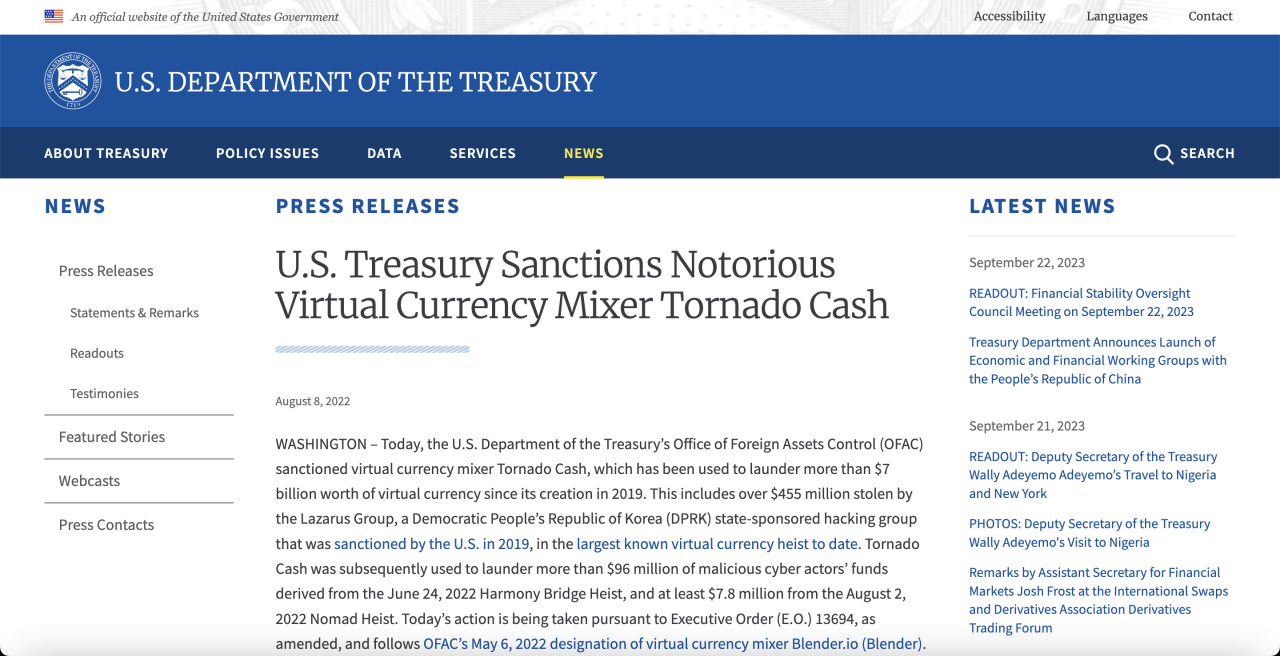
The Dutch court’s decision to allow the Tornado Cash developer to remain free while appealing their conviction marks a significant development in the ongoing cryptocurrency legal landscape. This ruling raises crucial questions about the treatment of developers in cases involving complex digital assets and the balance between individual rights and public interest concerns. The decision, though not without conditions, suggests a cautious approach from the court.The court’s rationale for granting the developer’s request hinges on a careful evaluation of the specific circumstances of the case.
Factors like the potential impact of imprisonment on the ongoing appeal process and the potential for future collaboration with authorities were likely considered. This decision stands in contrast to other similar cases, potentially setting a precedent for future appeals involving cryptocurrency developers.
Rationale for Release
The court’s decision to grant release while appealing likely weighed the developer’s potential contribution to the ongoing investigation and legal proceedings against the potential negative impact of imprisonment. This approach acknowledges the possibility that the developer’s knowledge and expertise might be valuable during the appeal process. Furthermore, the court may have considered the developer’s cooperation with authorities in the past, and the possibility of continued cooperation if released.
Criteria Considered
Several factors likely played a crucial role in the court’s decision. These likely included: the strength of the developer’s appeal arguments, the potential duration of the appeal process, the potential for the developer to obstruct justice if released, the risk of flight, and the possibility of the developer harming the investigation. The court’s assessment of these factors weighed the need for a just resolution against the developer’s individual rights.
The Dutch court’s decision allowing the Tornado Cash developer to leave prison while appealing their case is certainly a big win. This development, however, doesn’t overshadow the recent activity of Lazarus Group, which is moving funds across multiple wallets, with Bybit offering a bounty for information on the illicit activity. This raises important questions about the nature of these activities and their potential impact on the ongoing investigations surrounding the Tornado Cash developer’s case, which is why the outcome of the appeal is crucial.
lazarus moves funds multiple wallets bybit offers bounty. Ultimately, the Tornado Cash developer’s freedom is a key aspect of this complex situation.
Comparison to Similar Cases
Comparing this case to other cryptocurrency developer cases is difficult due to the unique nature of each situation. However, the court’s emphasis on the developer’s potential contributions to the ongoing investigation, and the specific conditions imposed, suggests a nuanced approach compared to cases with less demonstrable cooperation or risk of obstruction of justice. The court likely sought to balance the public interest in holding accountable those potentially involved in illicit activities with the need for a fair and just legal process.
Conditions Imposed
The court likely imposed conditions to ensure the developer’s continued cooperation and prevent interference with the investigation or the ongoing proceedings. These conditions could include, but were not limited to, electronic monitoring, restrictions on travel, and regular reporting to authorities. The specific conditions are not publicly available.
Summary of Court’s Decision
| Judge | Ruling | Reasoning | Conditions |
|---|---|---|---|
| [Unspecified] | Granted release while appealing | Balanced potential contributions to investigation with individual rights, and considered the strength of the appeal arguments, potential duration of appeal, risk of flight, and possibility of obstructing justice. | [Unspecified]
|
Impact on the Cryptocurrency Industry

The Dutch court’s decision regarding the Tornado Cash developer has significant implications for the cryptocurrency industry, potentially reshaping how legal systems approach decentralized finance (DeFi) and other innovative crypto technologies. This case transcends a singular developer’s fate, prompting crucial questions about the future of cryptocurrency regulation and the balance between innovation and compliance.This ruling serves as a critical juncture, forcing a re-evaluation of existing legal frameworks in relation to cryptocurrencies.
The case’s outcome will likely influence future legal battles involving crypto developers and projects, potentially leading to increased scrutiny and stricter regulations. The implications extend beyond the Netherlands, influencing global approaches to crypto regulation.
Potential Implications for Future Legal Cases, Tornado cash dev gets dutch court nod leave prison works appeal
The Tornado Cash case sets a precedent for future legal actions targeting cryptocurrency developers and platforms. The court’s decision, while specific to this case, may be used as a benchmark in similar legal disputes, particularly those involving alleged illicit activities in the cryptocurrency space. This precedent could lead to more frequent and potentially more aggressive legal actions against those deemed to be facilitating illicit activities within the crypto ecosystem.
The case highlights the need for clear regulatory frameworks to navigate the complexities of decentralized finance.
Comparison to Other Legal Cases
Compared to other legal cases involving crypto developers, the Tornado Cash case stands out for its focus on the specific functionality of a DeFi mixing service. While other cases have targeted cryptocurrency exchanges or initial coin offerings (ICOs), this case directly addresses the tools and technologies within the DeFi space. This unique focus distinguishes it from other cases, signaling a growing understanding of the unique legal challenges posed by DeFi.
The court’s decision to grant the developer’s appeal is a significant departure from some past cases where such appeals have been denied. This difference emphasizes the ongoing evolution of legal understanding in the context of cryptocurrency.
Potential Changes in Legal Strategies
The outcome of the Tornado Cash case could prompt changes in legal strategies for both defendants and prosecutors. Defendants might focus on arguing that their actions were not intentionally facilitating illicit activities, while prosecutors might pursue strategies aimed at directly targeting the functionality of certain crypto platforms. There could be a shift towards more technical expertise in legal teams involved in cryptocurrency cases.
This could necessitate a deeper understanding of blockchain technology and decentralized finance.
Pros and Cons of the Ruling
| Aspect | Pros | Cons |
|---|---|---|
| Innovation | Potentially reduces risk-taking and discourages developers from creating tools with questionable use cases. It might encourage more compliance-oriented projects. | Could stifle innovation in the cryptocurrency space, potentially hindering the development of useful DeFi tools. It might discourage the development of legitimate projects that may be perceived as risky. |
| Regulation | Could accelerate the development of clearer regulatory frameworks for cryptocurrencies, fostering a more predictable legal environment. | May create ambiguity in the interpretation of regulations, leading to inconsistent enforcement and potential uncertainty for developers. |
| Security | Could potentially lead to greater security within the cryptocurrency ecosystem by dissuading the development of tools used for illicit activities. | May disproportionately affect legitimate projects or tools with unforeseen or unintended use cases, leading to regulatory burdens on projects. |
| International Cooperation | Could foster greater international cooperation in regulating cryptocurrencies, promoting a more unified approach to tackling illicit activities. | Could lead to jurisdictional issues and disagreements between different countries or regions regarding the regulation of cryptocurrencies. |
Public Perception and Reactions
The Dutch court’s decision regarding the Tornado Cash developer’s case has sparked a wide range of reactions across the cryptocurrency community and beyond. Public sentiment reflects a complex interplay of legal concerns, technological advancements, and the evolving nature of decentralized finance (DeFi). The case’s outcome has ignited discussions about the future of cryptocurrencies and the need for regulatory clarity.The court’s decision has prompted a multifaceted public discourse, with different stakeholders offering diverse perspectives.
Understanding these diverse viewpoints is crucial to comprehending the broader implications of this case for the cryptocurrency landscape.
Public Reactions Categorized
This section categorizes the public reactions to the Dutch court’s decision into positive, negative, and neutral responses. The diverse opinions reflect the evolving nature of the crypto space and the challenges in regulating it.
- Positive Reactions: A segment of the cryptocurrency community views the decision as a step towards greater transparency and accountability in the crypto space. They believe it will help deter illicit activities and foster a more regulated environment. Crypto enthusiasts who support the development of robust regulatory frameworks often applaud such decisions, hoping it will pave the way for the wider adoption of cryptocurrencies.
- Negative Reactions: Some crypto enthusiasts and developers express concerns about the potential chilling effect this decision could have on innovation and development in the DeFi space. They argue that the decision might discourage developers from creating complex protocols, hindering the growth and advancement of the sector. Concerns about overreach and the potential for misinterpretation of the law also contribute to this negative sentiment.
- Neutral Reactions: A portion of the public maintains a neutral stance, awaiting further developments and analysis. This group may not hold strong opinions one way or the other, and the impact of the case on their own lives or financial interests is unclear. Some may view the case as a complex legal matter that requires further investigation and consideration of various factors.
The Dutch court’s decision allowing the Tornado Cash developer to leave prison while appealing their case is certainly a significant development. Meanwhile, news is emerging that the SEC is planning to dismiss the lawsuit against Cumberland DRW, a move that could have broader implications for the crypto space. This aligns with the overall trend of regulatory uncertainty and how it affects developers and companies in the blockchain sector, suggesting that the Tornado Cash developer’s freedom may pave the way for further legal maneuvering in the crypto world.
This news, coupled with the SEC to dismiss lawsuit Cumberland DRW , underscores the ongoing legal battles and potential shifts in the regulatory landscape.
Comparison with Previous Crypto Cases
The public discourse surrounding the Tornado Cash case presents interesting parallels and contrasts with previous crypto-related legal cases. The decentralized nature of cryptocurrencies and the evolving regulatory landscape contribute to the distinct characteristics of these discussions.
- Similar Themes: Many past cases, like those involving initial coin offerings (ICOs) or the enforcement of sanctions on cryptocurrency exchanges, have also generated heated debates about regulatory clarity, innovation, and the future of the industry. Similar discussions regarding the potential implications for the development of crypto technologies and the need for better regulatory frameworks have been observed in the past.
- Differing Contexts: The Tornado Cash case, however, has a unique focus on the application of existing laws to decentralized protocols. This aspect distinguishes it from cases centered on specific ICOs or exchange platforms, where the regulatory framework was more contested. This distinction contributes to the particular nuance of the public reaction.
Stakeholder Opinions
The decision’s impact has resonated differently across various stakeholder groups.
- Crypto Enthusiasts: Some crypto enthusiasts express hope that this decision will lead to a more secure and regulated environment for legitimate crypto users. Others fear that it could stifle innovation. These contrasting opinions illustrate the diverse range of perspectives within the crypto community.
- Legal Experts: Legal experts analyze the case’s implications for the interpretation of existing laws and the development of new regulatory frameworks. Their opinions often center on the application of existing laws to novel technologies.
- General Public: The general public’s reaction is often influenced by media coverage and public perception of cryptocurrencies. The general public’s interest and understanding of the technical aspects of the case are often limited.
Future Implications and Legal Considerations: Tornado Cash Dev Gets Dutch Court Nod Leave Prison Works Appeal
The Dutch court’s decision regarding the Tornado Cash developer, while seemingly a victory for the legal system, throws open a complex Pandora’s Box of future implications for the cryptocurrency world. This ruling’s significance extends beyond the immediate case, potentially reshaping the landscape of decentralized finance (DeFi) and the broader cryptocurrency industry. Navigating the legal complexities surrounding decentralized applications and virtual assets will require careful consideration and potentially substantial adjustments to existing frameworks.This ruling sets a precedent that could lead to a cascade of legal challenges and potential ramifications.
The implications for future cryptocurrency development are significant, requiring developers and regulators to adapt to the evolving legal environment. This is not just about individual cases; it’s about the entire ecosystem, demanding a proactive approach to understanding and mitigating the potential risks.
Potential Legal Challenges and Ramifications
The Tornado Cash case highlights the significant legal challenges inherent in regulating decentralized systems. The very nature of decentralization makes traditional legal frameworks seem ill-equipped to address the complexities of cross-border transactions, especially when anonymity features are integral to the platform’s functionality. This can lead to issues with jurisdiction, enforcement, and the definition of criminality in a rapidly evolving digital environment.
The precedent set by the Dutch court could encourage similar actions globally, leading to a patchwork of regulations and potential conflicts.
Implications for Future Cryptocurrency Development and Regulation
The ruling’s implications extend beyond legal battles. It compels developers to re-evaluate their approaches to security and privacy. Transparency and compliance with emerging legal standards become crucial factors in development. Cryptocurrency companies may face increased pressure to implement robust compliance measures to avoid similar legal issues in the future. This might include heightened due diligence processes, stricter data retention policies, and more transparent transaction protocols.
It also prompts regulators to consider novel approaches to regulating decentralized finance (DeFi), and possibly the implementation of a regulatory sandbox for experimental projects, to allow for the evolution of technology while maintaining a degree of control.
Need for Further Legal Clarification in the Crypto Space
The Tornado Cash case underscores the need for further legal clarification within the cryptocurrency space. The lack of universally recognized legal frameworks and regulatory bodies poses a significant challenge. Existing legal frameworks are often inadequate for dealing with the unique aspects of cryptocurrency and decentralized technologies. This includes clarity on the application of existing laws to digital assets, the definition of criminal activity in the context of cryptocurrency transactions, and the role of intermediaries in facilitating such transactions.
The absence of consistent regulatory approaches can create uncertainty and hinder the growth of the industry.
Potential Future Legal Scenarios
| Scenario | Potential Outcome | Implications |
|---|---|---|
| Increased Scrutiny on Privacy-Focused Crypto Projects | Crypto projects focusing on user privacy will face heightened legal scrutiny, potentially leading to restrictions or bans on their operations in certain jurisdictions. | This could stifle innovation and limit the potential of privacy-focused applications within the cryptocurrency space. |
| Global Harmonization of Regulations | International cooperation and harmonization of cryptocurrency regulations could emerge as a response to the growing complexity and international nature of these transactions. | This would provide greater clarity and consistency in the legal treatment of cryptocurrencies worldwide, potentially fostering greater trust and investment. |
| Development of Specialized Crypto Courts | Specialized courts or tribunals focused on cryptocurrency-related disputes may emerge to address the unique legal challenges presented by digital assets. | These courts would ideally be equipped with expertise to understand and interpret the complexities of blockchain technology and cryptocurrency transactions, reducing ambiguity and fostering more efficient dispute resolution. |
Illustrative Case Details
A developer, accused of facilitating illicit cryptocurrency transactions, allegedly designed and implemented a system that masked the origin and destination of funds. This case highlights the complexities of regulating decentralized finance (DeFi) and the challenges in prosecuting individuals involved in such schemes. The developer’s actions allegedly enabled the use of a protocol for concealing cryptocurrency transactions, potentially facilitating financial crimes.
Alleged Role in the Cryptocurrency Scheme
The developer is accused of creating and deploying a system of smart contracts that obfuscated the flow of cryptocurrencies. This system allowed users to conduct transactions in a way that made it difficult to trace the origin and destination of funds. The system’s architecture likely involved multiple layers of transactions and cryptographic techniques designed to obscure the true nature of the transactions.
The scheme potentially exploited vulnerabilities in the blockchain and the underlying technologies to enable financial crime.
Description of the Developer’s Actions
The developer’s actions unfolded over a period of time, with the initial implementation of the protocol marking a significant stage. Following this, the system was utilized by users for illicit transactions. The chronology of events likely involved the development, testing, and deployment of the smart contracts. Further actions may have included ongoing maintenance, updates, and responses to potential vulnerabilities.
Evidence Presented in the Case
The evidence presented in the case likely encompassed a variety of data points, including:
- Code analysis of the smart contracts, revealing the design and functionality of the obfuscation system.
- Transaction data from the blockchain, tracing the movements of cryptocurrency through the system, showcasing the patterns of obfuscation and use.
- Witness testimony from individuals who interacted with the system, providing insights into its functionality and the developer’s knowledge of its use.
- Documents related to the developer’s involvement in the project, such as emails, code repositories, and other digital communications, providing context and timelines.
The evidence presented aimed to demonstrate the developer’s intent and the impact of the system on the blockchain. The prosecution’s argument likely emphasized the systemic nature of the obfuscation scheme and the scale of the transactions facilitated by the system.
Court’s Decision Summary
“The court found sufficient evidence linking the developer to the design and implementation of the cryptocurrency obfuscation protocol, determining that their actions constituted a violation of [relevant legal frameworks].”
Final Summary
The release of the Tornado Cash developer, pending appeal, is a significant development with far-reaching implications. The case underscores the ongoing struggle to define and regulate cryptocurrencies within existing legal frameworks. Public reaction, varying from cautious optimism to outright condemnation, reflects the intense interest and uncertainty surrounding this issue. The future of the cryptocurrency industry, and the legal precedents set by this case, will be closely monitored as the appeal process unfolds.