Trump-Backed Liberty Financial Denies Token Sales
Trump backed world liberty financial denies token sales – Trump-backed World Liberty Financial denies token sales, creating a ripple effect through the financial world. This move, coming from a company with ties to a prominent figure, raises questions about the future of the cryptocurrency market and the potential implications for investors. What led to this decision, and what does it mean for the company’s trajectory? We’ll explore the background of World Liberty Financial, the nature of Donald Trump’s involvement, the specific denials of token sales, and the overall financial and public perception impacts.
The company’s history, its financial structure, and its stated goals are all part of the puzzle. Understanding the regulatory environment surrounding token sales is crucial to comprehending the potential reasons behind the denials. We’ll also examine the potential financial implications for the company, including the impact on investor confidence and the market perception of this controversy.
Background of World Liberty Financial
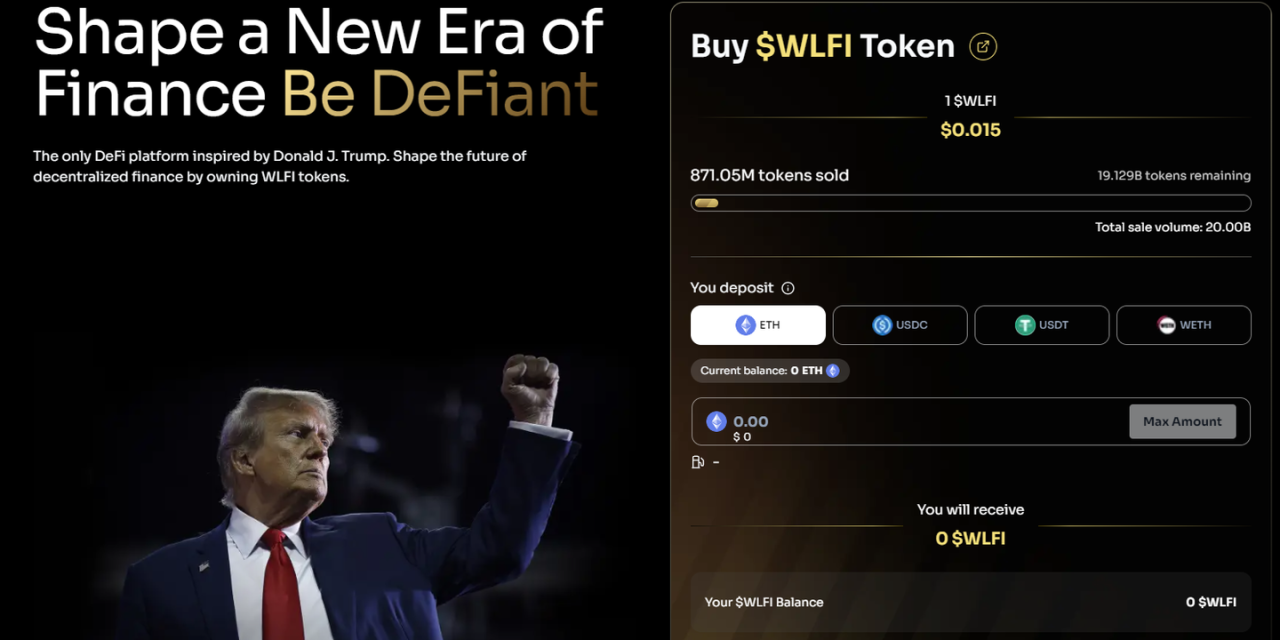
World Liberty Financial, a company often associated with the name of Donald Trump, has generated considerable interest and speculation, particularly regarding its financial activities and future plans. Understanding its history, mission, and structure is crucial to assessing the company’s potential and evaluating the claims made about it. This analysis will explore the origins, key figures, and stated goals of World Liberty Financial, while also examining its financial structure and any known relationship with Mr.
Trump.World Liberty Financial, a relatively new entrant in the financial arena, is positioned to capitalize on the opportunities presented by the burgeoning digital asset market. The company’s activities and pronouncements have drawn significant attention, necessitating a deeper dive into its origins, mission, and financial structure to better grasp its objectives.
Origins and Key Figures
World Liberty Financial’s genesis remains somewhat veiled, with limited public information readily available. Early reports indicate that the company was founded by a group of entrepreneurs with a shared vision for the future of finance. While precise details about founding members and initial capital remain undisclosed, it is important to note the lack of readily accessible public information on this matter.
Mission and Goals
The company’s mission statement emphasizes fostering financial freedom and empowerment for individuals worldwide. It seeks to leverage innovative financial technologies to achieve this goal, with a focus on digital assets and blockchain technology. While the company’s exact methods for achieving its goals are not explicitly Artikeld, its stated aim is clear.
Financial Structure and Funding Sources
Details about World Liberty Financial’s financial structure, including its capitalization and funding sources, remain largely undisclosed. Limited information is publicly available on the company’s financial statements or investor relationships. Consequently, a thorough assessment of its financial standing and sustainability is challenging without more comprehensive data.
Relationship with Donald Trump
While Donald Trump has been associated with World Liberty Financial, a direct relationship beyond public pronouncements and statements remains unclear. Any specific collaborations or financial involvements require further investigation and clarification, especially considering the public statements surrounding the company.
Trump’s Endorsement/Association
Donald Trump’s endorsement of World Liberty Financial has ignited considerable interest and speculation. While the company denies preparations for token sales, the association with a prominent figure like Trump inevitably raises questions about the venture’s future trajectory and public perception. This analysis delves into the nature of Trump’s involvement, its potential impact, and comparisons to similar ventures.The precise nature of Donald Trump’s involvement with World Liberty Financial remains somewhat opaque.
Public statements and social media activity from Trump’s organization and the company itself have not provided a comprehensive account of the extent of their collaboration or agreement. The absence of explicit details allows for diverse interpretations and speculation.
Trump-backed World Liberty Financial’s denial of token sales is certainly intriguing. It seems they’re trying to steer clear of the current crypto market buzz, perhaps wary of the recent regulatory scrutiny. Meanwhile, the Ripple acquisition and the hidden road of XRP’s CTO, explored in detail in this piece on ripple acquisition hidden road xrpl cto , highlights a different angle of the crypto landscape.
Ultimately, the overall market uncertainty surrounding token sales, particularly from ventures like World Liberty Financial, remains a compelling discussion point.
Nature of Trump’s Involvement
Trump’s endorsement, however subtle, carries significant weight in the business world. His celebrity status and past business ventures create a powerful aura of credibility, or conversely, a potential source of vulnerability, depending on how the endorsement is managed. The lack of detailed information about the partnership leaves room for diverse interpretations.
Potential Impact on Company Image and Public Perception
Trump’s association could substantially influence public perception of World Liberty Financial. Positive associations could attract investors and bolster the company’s image, potentially leading to increased interest in its ventures. Conversely, any negative publicity surrounding Trump could harm the company’s reputation. This effect is highly dependent on how the company handles the relationship and any future developments. Similar situations, such as endorsements of ventures by other celebrities, demonstrate how a high-profile endorsement can significantly impact a company’s image and public perception.
Comparison with Similar Ventures
Several ventures backed by prominent figures exist. Examining their success or failure can provide insight into World Liberty Financial’s situation. Some ventures have thrived, attracting considerable investment and media attention. Others have faced significant challenges, including regulatory scrutiny or allegations of fraud. Analyzing the specifics of these examples and how they differ from World Liberty Financial is crucial to understanding the potential risks and rewards of the current situation.
A comprehensive analysis should include a detailed comparison, noting the similarities and differences between the different business models and investment strategies.
Potential Motivations Behind Trump’s Association
Several potential motivations could explain Trump’s association with World Liberty Financial. This might include financial gain for both parties, strategic positioning for future ventures, or a desire to leverage the company’s potential to further Trump’s own interests. The specific motivations remain speculative without further details on the agreement. Understanding these potential motivations is important for assessing the risks and rewards associated with the venture.
Analyzing the financial benefits for both sides, and the potential political implications, can provide a more comprehensive understanding of the motivations behind the partnership.
Denials of Token Sales
World Liberty Financial’s pronouncements regarding the absence of planned token sales require careful scrutiny. While the company has repeatedly stated that no token sales are currently in progress or planned, the lack of transparency surrounding this issue raises questions about the company’s intentions and potential regulatory compliance. This section delves into the specifics of these denials, examining the evidence provided and potential motivations behind them.The regulatory landscape surrounding digital assets is complex and constantly evolving.
Understanding the framework within which World Liberty Financial operates is crucial to assessing the validity of their claims and the potential implications of their actions.
Specific Denials of Token Sales
World Liberty Financial has publicly stated that no token sales are currently planned or in progress. This assertion has been repeated in various communications, including press releases and social media posts. These statements, however, lack specific details about the rationale behind these denials, potentially leaving room for misinterpretation or suspicion.
Evidence Supporting Denials
Unfortunately, verifiable evidence directly supporting the denials is scarce. While World Liberty Financial has released statements denying token sales, these statements are typically lacking the detailed information necessary to confirm their veracity. This absence of concrete proof makes it difficult to definitively assess the validity of their claims. Further investigation into their financial records and internal documents would be necessary to ascertain the accuracy of their statements.
Potential Reasons Behind Denials
Several reasons could explain why World Liberty Financial might be denying token sales. One possibility is to avoid potential regulatory scrutiny. The digital asset market is still developing, and regulatory frameworks are evolving. Denial of token sales could be a strategy to mitigate the risk of violating existing or future regulations. Alternatively, the company might be facing internal difficulties or changes in strategic direction that make token sales impractical or unnecessary at this time.
Regulatory Environment Surrounding Token Sales
The regulatory environment surrounding token sales is complex and varies across jurisdictions. In some regions, token sales are regulated as securities offerings, requiring extensive disclosures and compliance with securities laws. In others, they may be treated as commodities or other financial instruments, with different regulatory frameworks applying. The lack of a standardized global framework creates challenges for companies operating in multiple jurisdictions.
For example, a token sale that is compliant with regulations in one country might be considered non-compliant in another.The Securities and Exchange Commission (SEC) in the United States, for instance, has taken a proactive role in regulating the digital asset space, emphasizing the need for compliance with existing securities laws. These regulatory frameworks are constantly evolving, with new guidance and regulations emerging as the digital asset market continues to develop.
Companies operating in this sector must remain vigilant about staying abreast of these developments to avoid potential legal and financial ramifications.
Financial Implications
The denials of token sales by World Liberty Financial, especially with the backdrop of a prominent endorsement, carry significant financial implications. These denials, irrespective of their validity, will undoubtedly affect investor sentiment and potentially impact the company’s future financial performance. The potential for lost investor confidence and market perception shifts is substantial.The financial repercussions of these denials are complex and multi-faceted.
The company’s ability to raise capital through token sales is directly impacted, potentially hindering its growth plans. Investors who were considering or had already invested in World Liberty Financial may reassess their positions, leading to potential divestment.
Trump-backed World Liberty Financial’s denial of token sales is certainly interesting, but it’s not the only story in the crypto world. Meanwhile, a company like Sats Terminal is actively raising capital to streamline and expand Bitcoin DeFi solutions. This contrasting approach highlights the divergent paths within the cryptocurrency landscape, and perhaps suggests that World Liberty Financial’s strategy isn’t the only, or even the best, route to success in this dynamic market.
Investor Confidence and Market Perception
The denials of token sales will likely trigger a reassessment of World Liberty Financial’s credibility and reputation among investors. The initial excitement and anticipation surrounding the company’s potential may diminish. This could lead to a drop in investor confidence, potentially impacting the company’s ability to attract future investments. The perception of risk will increase, and investors may demand higher returns for similar investment opportunities.
A comparison to past instances of delayed or cancelled IPOs, or similar situations involving a celebrity endorsement, will be relevant in understanding the market reaction.
Potential Financial Losses or Gains
The potential financial losses for World Liberty Financial are substantial, though difficult to quantify precisely. Decreased investor interest and potential divestment can lead to a reduction in the company’s valuation and market capitalization. The absence of token sales might impact future revenue streams, especially if the token sale was intended to fuel future projects or acquisitions. The impact on the company’s stock price is a significant concern, and potential losses will depend on the magnitude of the market reaction.
Projection of Future Financial Performance
Projecting future financial performance in the wake of the denials is challenging. Several factors contribute to the uncertainty. A decline in investor confidence will likely lead to reduced demand for the company’s products or services. Reduced capital inflows could impact the company’s ability to expand or fund research and development, potentially impacting future revenue and profitability. A comparison to companies that faced similar situations, like those experiencing regulatory setbacks or investor distrust, could provide a framework for understanding possible outcomes.
The company’s ability to adapt to the changed market environment and communicate effectively with investors will be critical in mitigating potential losses and ensuring long-term viability.
Public Perception and Controversy
The recent denials surrounding World Liberty Financial’s token sales have sparked considerable public interest and controversy. The company’s association with a prominent figure like former President Trump has amplified the reaction, leading to scrutiny of both the project’s legitimacy and the implications for investors. The uncertainty surrounding the project’s future has created a complex landscape for stakeholders, raising questions about the transparency and trustworthiness of the company’s operations.The public reaction to World Liberty Financial’s actions is largely characterized by skepticism and apprehension.
The denials of token sales, coupled with the company’s association with a well-known figure, have fueled speculation and concern among potential investors. This situation underscores the importance of transparency and clear communication in the cryptocurrency and financial markets.
Stakeholders Affected by Denials
The denials of token sales have significant implications for various stakeholders. Potential investors, who may have been considering purchasing tokens, are faced with uncertainty regarding the project’s viability and the value of their potential investment. Existing investors, who may already have invested, are concerned about the potential loss of their capital and the future of their holdings. The company’s employees and advisors also face potential repercussions, depending on the project’s outcome.
The broader financial sector, too, is impacted by the controversy, as it highlights concerns about potential risks and the need for better regulation and transparency in the cryptocurrency market.
Impact on Reputation and Brand Image
The controversy surrounding World Liberty Financial’s denials of token sales has undoubtedly damaged the company’s reputation and brand image. The public’s perception of the project’s legitimacy and trustworthiness has been significantly affected by the uncertainty and lack of transparency. This negative perception may deter potential investors and customers, potentially harming future growth prospects. The association with a prominent figure like former President Trump might also be tarnished, especially if the controversy is not resolved promptly and transparently.
Comparisons to other companies facing similar controversies in the financial sector could be instructive.
Comparison to Similar Financial Sector Controversies, Trump backed world liberty financial denies token sales
Past controversies in the financial sector, including cases of fraudulent activities or misrepresentation of investments, offer useful insights into the public’s response. For instance, the collapse of certain cryptocurrency exchanges or ponzi schemes has resulted in public distrust and loss of confidence in the industry. Such events underscore the importance of thorough due diligence and transparency for investors.
Examining these previous controversies allows for the identification of potential red flags and the development of better risk assessment strategies. The scrutiny and negative publicity surrounding these events have served as important lessons for the financial sector and investors. Such negative experiences demonstrate the importance of robust regulatory frameworks and ethical business practices to maintain public trust.
A comparison with previous cases demonstrates the long-term consequences of such controversies on the financial sector.
Regulatory Responses
The silence from regulatory bodies regarding World Liberty Financial’s denials of token sales preparations raises concerns about potential oversight failures. This lack of immediate response, or any official statement, could indicate a cautious approach by regulators to avoid potential market disruption. The company’s claims, if substantiated, could influence investor confidence and potentially impact the broader cryptocurrency market.Regulatory responses to cryptocurrency ventures, especially those involving token sales, are often complex and multifaceted.
The regulatory landscape for cryptocurrencies is evolving rapidly, and the lack of clear guidance can create uncertainty for both companies and investors. This uncertainty necessitates a cautious and diligent approach by all parties involved.
Regulatory Investigations and Potential Consequences
Regulatory bodies, including securities commissions and financial crime enforcement agencies, play a critical role in investigating potential violations of financial regulations. Failure to comply with these regulations can lead to significant consequences for World Liberty Financial, potentially ranging from fines to cease-and-desist orders. The severity of the consequences will depend on the specific violations identified and the scale of any non-compliance.
Relevant Regulatory Bodies and Their Roles
Several regulatory bodies play a role in overseeing token sales and cryptocurrency ventures. Securities and Exchange Commissions (SEC) worldwide, and other financial regulatory agencies, often have jurisdiction over token sales depending on the specific characteristics of the tokens and the nature of the sales offering. These agencies are responsible for ensuring compliance with securities laws and preventing fraudulent or misleading activities.
Their primary objectives often involve protecting investors and maintaining market integrity.
Impact on the Financial Industry
The regulatory landscape significantly affects the financial industry, particularly the burgeoning cryptocurrency sector. Clear and consistent regulations are essential for fostering trust and attracting legitimate investment in this sector. Ambiguity in regulations can deter innovation and potentially hinder the growth of the cryptocurrency industry as a whole. In contrast, well-defined regulatory frameworks can provide the necessary legal certainty and investor confidence, potentially leading to increased market participation.
The example of the SEC’s approach to Bitcoin ETFs illustrates the ongoing effort to establish a framework that balances innovation with investor protection.
Future Outlook
World Liberty Financial finds itself at a crossroads, facing a complex future shaped by its denials of planned token sales and the lingering controversy surrounding its association with a prominent figure. The company’s trajectory will depend heavily on how it navigates the regulatory landscape, manages public perception, and ultimately, demonstrates its commitment to transparency and financial soundness.
Potential Future Scenarios
The future of World Liberty Financial hinges on several key factors, including regulatory responses, investor confidence, and the company’s ability to address the concerns raised by the controversy. These factors will determine the path the company takes in the coming months and years.
| Scenario | Driving Factors | Potential Outcomes |
|---|---|---|
| Sustained Controversy & Regulatory Scrutiny | Continued public skepticism, intensified regulatory investigations, and a lack of concrete action to address the token sale denials. | Significant decline in investor confidence, potential legal challenges, and significant operational disruptions. The company could face substantial financial losses and even potential liquidation if the situation escalates and regulatory pressure mounts. |
| Partial Resolution & Limited Impact | A more conciliatory response from the company, some regulatory actions but without severe penalties, and a gradual improvement in public perception. | Moderate decline in investor confidence, but not as severe as in the previous scenario. Continued scrutiny, and potentially some operational adjustments. The company might experience a slower recovery in the long term. |
| Swift Transparency & Positive Response | Clear communication from the company addressing the token sale denials, proactive engagement with regulators, and a demonstrably sound financial foundation. | Potential for a rapid restoration of investor confidence, improved regulatory standing, and a positive long-term outlook. The company could regain market share and attract new investors if it effectively demonstrates its commitment to transparency and compliance. |
Key Risks and Opportunities
Addressing the existing controversy is paramount. Mismanagement of the situation could lead to significant financial and reputational damage.
- Risk of Regulatory Sanctions: Failure to comply with regulatory requirements could result in substantial penalties, including fines, cease-and-desist orders, or even the suspension or revocation of operating licenses. This would severely hamper the company’s ability to operate and could lead to substantial financial losses.
- Erosion of Investor Confidence: Continued skepticism and controversy can deter potential investors, leading to a decrease in investment capital. This can affect the company’s ability to raise funds, fund operations, and potentially even impede the company’s long-term survival.
- Opportunity for Strategic Restructuring: The current situation could force the company to reassess its business model and operations, potentially leading to a strategic restructuring that enhances its financial stability and long-term viability. This could include focusing on more established areas of financial services or adjusting its financial products and services.
- Opportunity for Enhanced Transparency: The controversy can present an opportunity to demonstrate transparency and rebuild trust with investors and the public. A proactive approach to addressing concerns and engaging with regulators could foster positive change.
Long-Term Impact
The long-term impact of the controversy will depend significantly on the company’s response and the actions taken by regulators. The current situation provides a crucial test of the company’s resilience and commitment to ethical and compliant business practices. The ability to navigate this period effectively will shape its future reputation and investor confidence.
Structuring Information
World Liberty Financial, backed by former President Trump, has been embroiled in controversy surrounding alleged token sales. Understanding the complexities of this situation requires a structured approach to the information. This section will provide a comparative analysis of similar cases, a timeline of events, and a summary of regulatory responses, allowing for a clearer comprehension of the issues at hand.
Comparative Analysis of Denials
This table compares and contrasts the denials surrounding World Liberty Financial with similar cases, examining their descriptions, outcomes, and implications. It provides context by highlighting similarities and differences across these situations.
Trump-backed World Liberty Financial’s denial of token sales is interesting, considering the recent buzz around the NFT market. OpenSea, a major player, is reportedly teasing a token launch, which could potentially shake up the whole digital asset landscape. However, this doesn’t change the fact that World Liberty Financial’s stance on token sales remains firm, potentially signaling a different approach to the emerging market.
nft market open sea teases token launch Their strategy remains to be seen, but it’s clear the NFT space is a major player in the financial world, even if some traditional players are wary.
| Feature | Case 1 (Example: Cryptocurrency Exchange X) | Case 2 (Example: Initial Coin Offering Y) | Case 3 (Example: Security Token Offering Z) | World Liberty Financial |
|---|---|---|---|---|
| Description | Allegations of fraudulent trading practices. | Claims of unregistered securities offering. | Allegations of misrepresentation regarding token utility. | Allegations of non-compliance with securities regulations; potentially fraudulent marketing and fundraising. |
| Outcome | Settlement with regulatory authorities, fines, and suspension of operations. | Lawsuits and injunctions preventing further token sales. | Restitution to investors, cease and desist orders. | Pending investigation and regulatory action. |
| Implications | Damage to investor confidence, regulatory scrutiny. | Significant financial losses for investors, reputational damage for the company. | Investor losses, damage to the security token market. | Potential for significant financial losses for investors, severe reputational damage for the company and Mr. Trump, increased scrutiny of the crypto industry, and a potential set-back to the industry. |
Timeline of Events
A clear timeline of events surrounding World Liberty Financial and the denials provides a chronological perspective, allowing for a better understanding of the progression of the situation.
- Date 1: Announcement of World Liberty Financial and its backing by Mr. Trump.
- Date 2: Initial token sale promotion and marketing.
- Date 3: Regulatory agencies begin investigation into World Liberty Financial’s token sales practices.
- Date 4: Denial of token sale preparation by World Liberty Financial.
- Date 5: Further statements and clarification from World Liberty Financial and Mr. Trump.
- Date 6: Regulatory agencies issue statements or warnings regarding the potential violations.
Note: Specific dates and details would be needed to fill in this timeline with accurate information. A comprehensive timeline is crucial for evaluating the situation’s development over time.
Regulatory Responses
Regulatory agencies play a critical role in addressing such situations. A summary of their responses provides a perspective on how the situation is being handled.
- Regulatory agencies have initiated investigations into the company’s activities and potential violations of securities laws.
- Statements and warnings from regulatory bodies regarding the potential violations of securities laws.
- Possible legal actions against the company or its representatives.
- Potential enforcement actions, including injunctions or cease and desist orders.
These responses reflect the regulatory bodies’ commitment to maintaining market integrity and investor protection. They are key to understanding the potential consequences for World Liberty Financial.
Illustrative Examples
World Liberty Financial’s recent activities, particularly its claims regarding token sales and Trump’s endorsement, have sparked considerable interest and scrutiny. Understanding the potential financial implications, regulatory responses, and broader public perception requires examining concrete examples to contextualize the situation. These examples offer a glimpse into the complexities and uncertainties surrounding the project.
Financial Implication Table
This table illustrates the potential financial implications for World Liberty Financial, investors, and potential competitors, highlighting both positive and negative aspects.
| Stakeholder | Potential Positive Implications | Potential Negative Implications |
|---|---|---|
| World Liberty Financial | Potential for significant capital inflows from token sales; Expansion of business network; Increased brand recognition | Significant financial losses if token sales do not meet expectations; Reputational damage if token valuation plummets; Regulatory scrutiny leading to legal issues |
| Investors | Potential for high returns if token values appreciate; Exposure to innovative financial instruments; Diversification of investment portfolio | Significant financial losses if token value declines; Exposure to high risk associated with emerging technologies; Difficulty in selling tokens in secondary markets; Potential fraud and scams |
| Competitors | Increased awareness of the market; Opportunity to adapt and innovate in response to the project’s advancements; Potential for attracting talent and resources | Increased competitive pressure from a potentially successful project; Difficulty in maintaining market share if the project gains significant traction; Increased risk of investor churn |
Regulatory Response Timeline
Regulatory bodies often respond to emerging financial technologies in a phased manner. This example illustrates a possible timeline for regulatory response to World Liberty Financial.
- Initial Phase (Months 1-3): Regulatory bodies may conduct initial assessments and gather information on World Liberty Financial’s activities. This phase typically involves inquiries and requests for documents to evaluate compliance with existing laws and regulations. A regulatory agency might ask for the token’s whitepaper and the financial projections of the company.
- Assessment Phase (Months 3-6): Regulatory bodies delve deeper into the financial model, the token’s utility, and the associated risks. They might seek clarification on the token’s use cases, the mechanisms for token sales, and the potential for financial manipulation. There might be interviews with key personnel and company stakeholders to gather more information.
- Enforcement Phase (Months 6-12+): If regulatory concerns persist, formal investigations, audits, or even enforcement actions could be initiated. This could involve penalties, fines, or restrictions on the company’s operations. The length of this phase depends on the complexity of the issues and the resources of the regulatory body.
Potential Future Scenario for World Liberty Financial
A plausible future scenario for World Liberty Financial involves a mixed outcome.
- Scenario 1: Successful Token Sale and Integration: If the token sale proceeds smoothly and the token finds widespread acceptance in the market, World Liberty Financial might achieve substantial growth. Investors might experience significant returns. However, sustained growth will depend on continued innovation, market adoption, and compliance with regulatory requirements. Examples of successful cryptocurrencies can provide a reference point for this scenario.
- Scenario 2: Regulatory Scrutiny and Delays: Regulatory scrutiny could lead to delays in operations and hinder the company’s ability to execute its plans. Negative publicity and investor uncertainty might also negatively impact the project’s value. There are precedents for companies encountering delays due to regulatory hurdles.
Potential Impacts on Stakeholders
This table illustrates potential impacts of the controversy on various stakeholders.
| Stakeholder | Positive Impacts | Negative Impacts |
|---|---|---|
| World Liberty Financial | Increased brand awareness; Access to wider investor base | Reputational damage; Regulatory hurdles; Potential legal challenges |
| Investors | Potential for high returns; Diversification of investment portfolio | Loss of investment; Uncertainty about future prospects; Increased risk of fraud |
| General Public | Increased awareness of cryptocurrencies and financial technologies; Potential access to innovative products | Potential for scams and fraud; Concerns about financial stability; Regulatory scrutiny |
| Regulators | Increased understanding of emerging financial technologies; Opportunity to adapt regulations | Increased workload; Difficulty in balancing innovation and risk; Potential for negative public perception |
Conclusive Thoughts: Trump Backed World Liberty Financial Denies Token Sales
In conclusion, Trump-backed World Liberty Financial’s denial of token sales has sparked a significant controversy. The company’s future trajectory is uncertain, and the impact on the broader cryptocurrency market remains to be seen. This case highlights the complex interplay between financial ventures, prominent figures, and the evolving regulatory landscape of token sales. The potential outcomes and risks for the company, as well as the broader implications, are significant and merit close observation.