Akinola Davies Jr. Celebrated as International Guest of Honor at Projeto Paradiso, Fostering Deeper Brazil-Nigeria Cinematic Ties

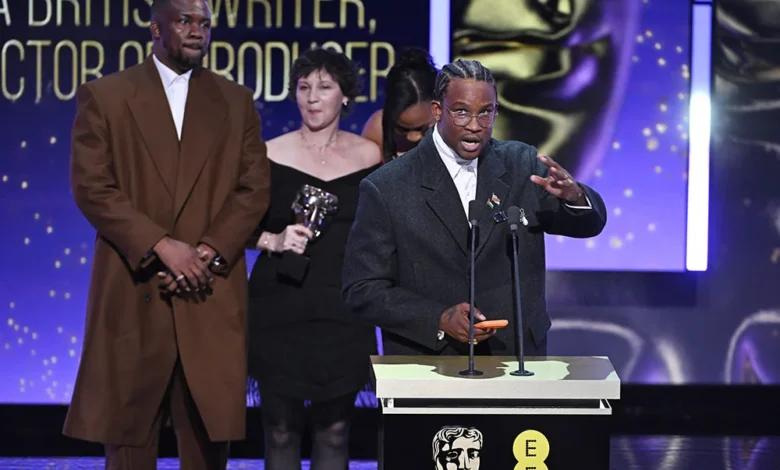
Recife, Brazil – The vibrant city of Recife played host to a significant cultural exchange as British-Nigerian filmmaker Akinola Davies Jr. was honored as the international guest of honor at this year’s Projeto Paradiso National Talent Network gathering. The prestigious event, dedicated to nurturing and connecting emerging cinematic talent, recognized Davies Jr. for the profound resonance of his BAFTA-winning film, "My Father’s Shadows," with Brazilian audiences and filmmakers alike. Josephine Bourgois, Executive Director of Projeto Paradiso, articulated the selection rationale, stating that Davies Jr.’s work possessed a universal quality, "a film that could have been made by a Brazilian filmmaker." This sentiment was echoed and amplified throughout Davies Jr.’s visit, culminating in a powerful screening of "My Father’s Shadows" at the historic Cinema São Luiz.
The overwhelming positive reception from Brazilian filmmakers underscored the immediate impact of Davies Jr.’s presence and artistry. Director Stefano Volp shared a deeply personal reaction, remarking, "I had never seen my skin tone shot like [it]." This observation highlights a critical aspect of the film’s appeal: its authentic and nuanced portrayal of Black identity and masculinity. Filmmaker Fernanda Lomba further elaborated on this sentiment, emphasizing the film’s contribution to the Brazilian cinematic landscape. " ‘My Father’s Shadows’ brings such a poetic and honest experience about masculinity, and particularly Black masculinity, to Brazil," she stated. Lomba lauded Davies Jr.’s approach, noting how he "bravely and generously weaves a fabulous patchwork of memory, private life, and Nigeria’s history." She concluded by asserting that Brazilian filmmakers have "a lot to learn from this filmmaker’s gentle radicality."
Bridging Continents: Shared Heritage and Cinematic Dialogue
Davies Jr.’s visit provided a crucial platform for him to articulate his own growing awareness of the profound connections between Brazil and Nigeria. In a candid conversation with acclaimed Brazilian screenwriter Jaqueline Souza earlier in the week, Davies Jr. revealed his realization of a "big bridge between Brazil and Nigeria that maybe a lot of Nigerians are not cognizant of." He elaborated on these shared cultural threads, pointing to commonalities in "spirituality, the way we see the world, food, and politically as well." This shared heritage, often overlooked or underexplored in global discourse, forms the bedrock of the burgeoning artistic dialogue between the two nations.
The filmmaker’s personal journey to Brazil further cemented this connection. Reflecting on his initial visit to Rio de Janeiro a few years prior, he recalled being captivated by the iconic landmarks but consistently drawn to recommendations to visit Salvador. His subsequent trip to the northeastern city proved to be a transformative experience. "When I finally visited, it was almost like a psychedelic experience. It was one of the most striking feelings I have ever felt. It was like a fever dream; everything felt so vivid," Davies Jr. recounted to Variety. He found a parallel between his visceral experience of Salvador and the descriptions of his film, stating, "When people describe ‘My Father’s Shadows’ as a fever dream, this is how I felt about Salvador." This profound personal resonance with Brazil, particularly its African-influenced Northeast, has fueled his desire to foster deeper cinematic collaboration.

A Poetic Premiere and a Celebrated Debut
The release of "My Father’s Shadows" in Brazil, scheduled for the end of the month, was preceded by a series of special events designed to immerse audiences in the film’s unique atmosphere. In Salvador, Davies Jr. presented a captivating screening accompanied by a live score performed by the film’s musicians, Duval Timothy and CJ Mirra. This innovative approach transformed the viewing experience into a multi-sensory event, further enhancing the film’s emotional impact.
The film’s distribution in Brazil, handled by Filmes da Mostra, the distribution arm of the Mostra de São Paulo, allowed for a subsequent special screening in São Paulo. This event served as a gesture of gratitude for the film’s inclusion in the prestigious festival, where it had its Brazilian premiere in October. Davies Jr. expressed his earnest desire to bring the film to Salvador, a city that had deeply impacted him. "I remember telling my Brazilian distributors once we struck a deal to show the film in Brazil that it would be incredible to have a proper premiere in Salvador," he stated. "I wanted to do something with the film in the city. I wanted to give the audience in Salvador something that felt truly special."
Documenting a Cinematic Bridge: The Making of a Short Film
Davies Jr.’s impactful journey through Brazil is being meticulously documented by a duo of filmmakers, director Lucas Crystal and cinematographer Henrique Alves. They are currently producing a special short film that explores the resonance of "My Father’s Shadows" within the Brazilian context. Crystal and Alves first encountered Davies Jr. at the Mostra de São Paulo and have since been closely following his experiences during his current visit.
Their documentary project stems from a compelling observation: Davies Jr.’s geographical progression through Brazil—beginning in the Northeast and moving southward—mirrors the migratory patterns and experiences of many Brazilians themselves. "We thought about making a documentary when we realized that Akinola’s journey through Brazil would mimic that of Brazilians themselves, starting in the Northeast and going all the way down towards the south," Crystal explained. He highlighted the inherent "poetry in this geographical mirroring," underscoring their desire to illuminate the "bridge between Brazil and Nigeria, one we didn’t even know existed before meeting Akinola at the Mostra."
Political Resonance and the Need for Diverse Narratives
The filmmakers believe their documentary will hold particular significance in light of Brazil’s upcoming presidential elections. Crystal noted the political undertones of Davies Jr.’s film, suggesting it "can talk to audiences at this key moment in our political history. We are about to make a choice that will define life for generations of Brazilians." Alves further elaborated on the evolving landscape of Brazilian cinema, acknowledging that films like "The Secret Agent" and "I’m Still Here" have cultivated a national appetite for political narratives. However, he pointed to a persistent gap in "Black-focused and Black-led political narratives." Alves shared a personal connection to Davies Jr.’s work, stating, "As a Black filmmaker, Akinola’s work spoke directly to me in a way Brazilian films haven’t in a while." This sentiment speaks to the power of representation and the vital role of diverse voices in shaping the national cinematic discourse.

The Potential for Co-Production and a New Era of Collaboration
The palpable connection between Davies Jr. and Brazil has naturally led to discussions about future collaborations, including the possibility of Brazilian-Nigerian co-productions. Davies Jr. expressed immediate enthusiasm for such an endeavor. "Absolutely, I’d love to," he affirmed. "It would be incredible to figure out the right relationship. I’ve met incredible Brazilian producers and filmmakers and everybody has been really generous and clever. I am sure when the time is right and the perfect opportunity arises, one hundred percent, I’d love to work with Brazil. There is a bridge to be built. There is a big Brazilian community in Lagos, so hopefully we can find the right story for co-production. I am completely open to it."
This sentiment is reciprocated by Brazilian filmmakers who are actively working to amplify the presence of Black creatives within the industry. Fernanda Lomba, who is involved with Nicho 54, an organization dedicated to strengthening the visibility of Black talent in Brazilian cinema, views Davies Jr.’s visit as part of a larger "Black zeitgeist." She believes it signifies a pivotal moment where "creative and business connections are heating up between Brazilian and African filmmakers thanks to a shared cultural imaginary." Lomba expressed her conviction that "we are witnessing the beginning of a long-awaited collaboration."
For Davies Jr., the opportunity to connect with the diaspora has proven to be even more impactful than he initially anticipated during the making of his film. "The response to the film has been overwhelming," he shared. "When you make an authentic piece of work, people in the diaspora can resonate with the film regardless of where they are." He underscored the critical need for increased cross-cultural cinematic engagement, stating, "I think we need to see more of each other’s films. I think there needs to be a lot more collaboration and a lot more sharing of resources, concepts and ideas between filmmakers."
Davies Jr. also highlighted the limitations of current global cinematic conversations, particularly the dominance of Anglophone perspectives. He pointed out the vast, often underserved, Francophone, Caribbean, and Latin American communities whose cinematic contributions deserve greater recognition. "I think for so much of the world, especially the Anglophone world, we look towards the U.K. and the U.S. and suddenly that seems to dominate the conversation, but there is a huge underserved Francophone community, there’s a Caribbean community, a Latin American community… We just need to figure out more ways of connecting," he concluded. The engagement fostered by Projeto Paradiso and the warm reception of "My Father’s Shadows" in Brazil represent a significant step towards building these vital connections and enriching the global cinematic tapestry.