Airbnb CEO Brian Chesky Hints at Major Strategy Shift to Include Hotels, Flights, and Traditional OTA Offerings


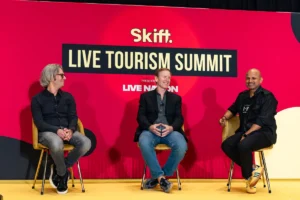
Nearly two decades after launching as a disruptive alternative to the traditional hospitality industry, Airbnb may soon look a lot more like the legacy travel giants it once set out to challenge. Speaking at the Skift Global Forum in New York City, co-founder and Chief Executive Officer Brian Chesky revealed that the company is softening its long-held resistance to incorporating standard online travel agency (OTA) offerings, such as hotels, flights, and car rentals, into its platform.
The remarks mark a profound philosophical evolution for a brand that built its multi-billion-dollar empire on the promise of unique peer-to-peer home-sharing. While Chesky insisted that alternative accommodations will remain the backbone of the platform, his openness to listing major hotel chains like Hilton and Marriott—and integrating commoditized travel products like flights—signals a potential realignment in the global travel sector.
A Shift Away From Ideological Resistance
For years, Airbnb positioned itself in strict opposition to traditional hospitality models. Where legacy OTAs like Booking.com, Expedia, and major hotel conglomerates offered standardized rooms and corporate consistency, Airbnb championed local immersion, quirky spaces, and direct connections with individual hosts. Chesky himself previously acknowledged a kind of corporate "religion" within the company that rejected commodities, viewing the inclusion of standard hotels or flights as a move that could dilute the distinct identity of the Airbnb brand and prove jarring to its loyal user base.
However, speaking to Skift Executive Editor Dennis Schaal, Chesky admitted that the company has become "a little less religious" about these rigid boundaries. Pointing to current offerings like car rentals, Chesky confirmed that Airbnb is already comfortable selling certain travel commodities and intends to introduce flight bookings "one day."
More surprisingly, Chesky addressed the possibility of expanding the platform’s inventory to include traditional hotel brands. When asked if Airbnb might eventually list properties from hospitality giants such as Hilton or Marriott, Chesky answered that it could happen "at some point."
Even so, the CEO was careful to manage expectations regarding a complete overhaul of the platform’s core identity. "We’ve gotten over a little bit of our religion of no commodities, but I will say the vast majority of our supply will always be unique," Chesky emphasized.
Redefining the Online Travel Agency Label
The debate over how to categorize Airbnb has persisted for years among travel industry analysts. When asked during the forum whether it is inaccurate to describe Airbnb as an online travel agency, Chesky did not reject the label outright, but instead called it "incomplete."
To distinguish Airbnb from conventional OTAs, Chesky pointed to the intrinsic social and communal nature of the platform. Unlike standard booking engines, which primarily process individual transactions for transient lodging, Airbnb fosters a different kind of travel dynamic. Chesky noted that the platform averages three guests per booking, highlighting a preference for group, family, and collaborative travel experiences rather than solo business trips in standardized hotel rooms. Furthermore, he emphasized that roughly 90% of nights booked on the platform involve stays of multiple guests, cementing its status as a community-driven ecosystem rather than a mere inventory aggregator.

Chronology of Expansion: From Airbeds to Global Travel Giant
To understand the magnitude of Chesky’s recent statements, it is helpful to look back at the strategic evolution of Airbnb since its founding in San Francisco in 2008 by Brian Chesky, Joe Gebbia, and Nathan Blecharczyk.
- 2008–2012 (The Bootstrapping and Hyper-Growth Era): Originally launched as "AirBed & Breakfast," the company initially focused on renting out air mattresses in a living room during a local conference. It rapidly expanded into a global marketplace for private rooms and entire homes, capturing the imagination of budget-conscious and experiential travelers.
- 2015–2018 (Beyond Homes): As the platform matured, Airbnb began looking beyond basic home rentals. In 2016, the company launched "Airbnb Experiences," allowing local experts to sell tours, classes, and excursions. In 2017, Airbnb acquired Luxury Retreats and invested in restaurant reservation platform Resy (later sold to American Express), signaling early ambitions to control a larger share of the travel trip-planning journey.
- 2020–2022 (Pandemic Pivot and Resilience): The COVID-19 pandemic severely disrupted the short-term rental market, forcing Airbnb to streamline operations, cut costs, and prepare for an initial public offering in December 2020. During the travel recovery, the company capitalized on remote work trends, longer stays, and non-urban destinations, achieving record profitability.
- 2023–2025 (Refining the Core and Expanding Categories): Airbnb shifted focus back to improving the guest and host experience, rolling out features like "Airbnb Rooms" to make private rooms more affordable and cracking down on disruptive house parties. Simultaneously, the company began subtly experimenting with broader travel add-ons, such as car rentals.
- 2026 and Beyond (The Convergence Era): Chesky’s comments at the Skift Global Forum suggest that the next phase of Airbnb’s growth will involve breaking down the walls between alternative accommodations and traditional travel infrastructure, positioning the company as a holistic travel super-app.
Market Implications: How Competitors and Consumers Might React
A move by Airbnb to incorporate hotels, flights, and other standardized travel products would have far-reaching implications for the global online travel ecosystem, which is currently dominated by a duopoly (Booking Holdings and Expedia Group) alongside emerging players like Google Travel.
For traditional OTAs, the inclusion of hotel supply by Airbnb would represent both a competitive challenge and a validation of the "super-app" strategy. Platforms like Booking.com have spent years successfully blurring the lines between alternative accommodations and traditional hotels, offering everything from treehouses and villas to major chain resorts alongside flights and ground transport. If Airbnb fully embraces this hybrid model, it could neutralize Booking’s historical advantage of offering a comprehensive one-stop-shop for all lodging types.
For major hotel chains like Marriott, Hilton, and Hyatt, listing inventory on Airbnb could open an entirely new distribution channel to reach younger, experience-driven demographics who might not typically browse brand-direct websites or traditional OTA platforms. However, hoteliers would likely weigh the benefits of incremental bookings against the commission fees and brand dilution risks associated with third-party marketplaces.
Industry analysts note that while integrating flights and hotels could significantly increase Airbnb’s total addressable market and boost user lifetime value, execution will be critical. Maintaining user trust, ensuring seamless customer service across vastly different supply types, and preserving the unique brand identity that made Airbnb a household name will present significant operational hurdles.
Broader Industry Trends and the Future of Travel
Chesky’s revelations arrive at a time when consumer expectations are rapidly evolving. Modern travelers increasingly demand frictionless, personalized booking experiences that combine transportation, lodging, and local activities within a single digital ecosystem.
Artificial intelligence and advanced recommendation engines are further accelerating this convergence, allowing platforms to curate end-to-end itineraries tailored to individual preferences. By hinting at a future where travelers can book a boutique treehouse, a cross-country flight, and a downtown luxury hotel all under the Airbnb umbrella, Chesky is signaling that the company is no longer content to merely nibble at the edges of the traditional travel industry.
Instead, Airbnb appears poised to challenge the very foundations of how the world books travel. Whether this evolution will dilute the brand’s unique counter-cultural roots or cement its status as an indispensable global travel companion remains one of the most closely watched narratives in the modern hospitality landscape.