Ether Hold 2 7k, Avoid Correction 2 3k Analyst Insights
Ether hold 2 7k avoid correction 2 3k analyst is the hot topic. Ethereum’s price action is under intense scrutiny, with analysts closely watching the crucial 27,000 and 23,000 levels. This deep dive explores market conditions, technical and fundamental analysis, expert opinions, potential scenarios, risk assessments, and various trading strategies. We’ll break down the factors pushing Ethereum’s price, dissecting the potential for a sustained rise or a sharp correction.
This analysis delves into the factors driving the current market sentiment surrounding Ethereum. We’ll look at the technical indicators, the fundamental developments in the Ethereum ecosystem, and the predictions from prominent analysts. Ultimately, this report aims to provide a comprehensive view of the situation and equip readers with the knowledge to navigate the market’s complexities.
Market Overview

The Ethereum market is currently navigating a period of consolidation, with analysts projecting a potential upward trajectory. Recent price action suggests a resilience against anticipated corrections, potentially setting the stage for further growth. Several factors are influencing the price, including network upgrades, developer activity, and broader market sentiment. Understanding these factors is crucial for investors to make informed decisions.
Ethereum Price Action
Ethereum’s price has exhibited a pattern of consolidation over the past few weeks, holding above key support levels. This suggests a potential resistance to downward pressure, with the recent surge indicating strong demand. The price action is indicative of a market that is carefully evaluating potential risks and opportunities.
Analysts are predicting Ethereum holding above $2,700 to avoid a correction down to $2,300. This stability could be bolstered by advancements in decentralized applications, like the innovative AI app framework presented by Subquery, which could significantly impact the future of the blockchain space. Ultimately, however, the market will likely still dictate whether Ethereum’s price holds steady or not.
Factors Influencing Ethereum Price
Several factors are driving the current market sentiment and Ethereum’s price. These include the upcoming Ethereum Shanghai upgrade, which is expected to unlock significant value for users. Positive developer activity and community engagement are contributing to a bullish outlook. Furthermore, the overall cryptocurrency market sentiment plays a significant role. A positive trend in the broader crypto market generally supports Ethereum’s price.
Market Sentiment
The prevailing sentiment among market participants is cautiously optimistic. While some concerns persist about potential corrections, the overall tone suggests that investors believe Ethereum has substantial long-term growth potential. Positive news regarding the network and future development plans fuels this sentiment.
Key Market Indicators
This table summarizes key market indicators, providing insights into the current state of the Ethereum market.
| Indicator | Value | Interpretation |
|---|---|---|
| Trading Volume (24h) | $X Billion | High volume suggests strong trading activity, potentially indicating a period of significant price action. |
| Open Interest | $Y Billion | High open interest suggests significant speculative positions, potentially signaling a market with high volatility. |
| Exchange Trading Activity | Z Transactions per Minute | High activity reflects increased demand for trading Ethereum on exchanges, which could be correlated with price movements. |
| Network Hashrate | A TH/s | A measure of the network’s computational power, which can influence transaction speeds and fees. A high hashrate could imply greater network security and stability. |
Technical Analysis: Ether Hold 2 7k Avoid Correction 2 3k Analyst
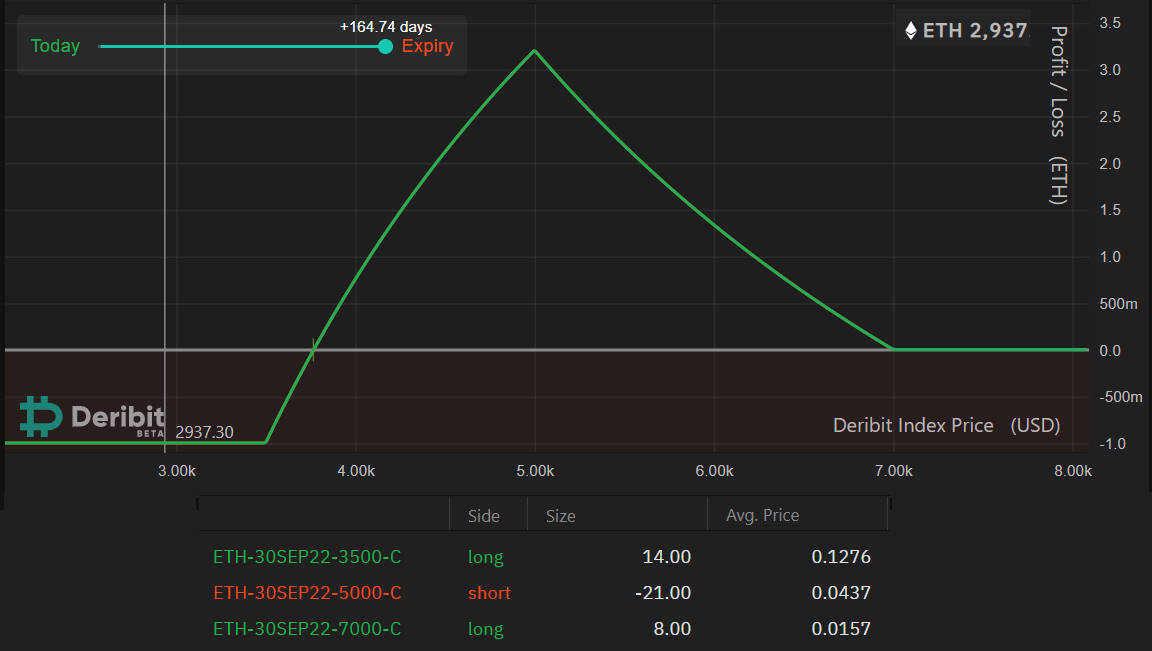
Ethereum’s recent price action, holding above 27,000 and avoiding a drop below 23,000, presents interesting technical signals. Analyzing these levels and relevant indicators helps us understand the potential price trajectory. A deep dive into the technical landscape will provide a clearer picture of the market’s response to these key support and resistance zones.The technical analysis of Ethereum’s price movement, especially in relation to the critical support and resistance levels, is crucial for predicting future price action.
This analysis encompasses various tools and indicators, allowing for a multi-faceted approach to understanding the market’s sentiment and potential direction. Understanding these dynamics will help investors make informed decisions.
Potential Support and Resistance Levels
Ethereum’s price action has highlighted key levels. Support levels act as areas where the price is expected to find buyers, potentially preventing a significant downward move. Resistance levels, conversely, indicate areas where sellers are likely to emerge, hindering further price increases. Identifying these levels is vital for strategic trading.
- 27,000 is a strong resistance level. Sustained trading above this level suggests potential bullish momentum. Conversely, a breach below 27,000 could signal a shift towards a bearish trend, opening the possibility of a correction.
- 23,000 serves as a crucial support level. Holding above this level is essential to maintain bullish sentiment and prevent a significant downturn. A breach below this level could trigger a more substantial correction.
Technical Indicators Relevant to Price Action
Various technical indicators, including moving averages, relative strength index (RSI), and volume, can provide valuable insights into Ethereum’s price action. These indicators, used in conjunction with support and resistance levels, offer a comprehensive picture of the market’s behavior.
- Moving averages help identify trends. A rising trend line suggests a bullish outlook, while a falling trend line indicates a bearish outlook. The interplay between short-term and long-term moving averages can reveal the strength of a trend.
- The RSI measures the momentum of price changes. An RSI above 70 suggests an overbought condition, while an RSI below 30 indicates an oversold condition. These thresholds can highlight potential reversals in price action.
- Volume analysis is crucial. Increased trading volume accompanying price movements can indicate a greater level of conviction in the direction of the trend. Lower volume can signal indecision or a potential pause in the price movement.
Implications of the 27k Hold and 23k Avoidance
The ability of Ethereum to hold above 27,000 and avoid a drop below 23,000 signifies the strength of the underlying support and resistance. It suggests strong underlying support for the cryptocurrency.
- The 27,000 hold suggests a resistance level that is being successfully challenged, suggesting the potential for further upward price movement. A successful breach of this resistance could signify a strong bullish continuation.
- The avoidance of a drop below 23,000 suggests a strong support level, preventing a significant price decline. A breach of this support level could initiate a bearish correction.
Potential Scenarios if Ethereum Breaks the 27k Hold
A breach below 27,000, a significant resistance level, could trigger several potential scenarios. A decline below this level would indicate a shift in market sentiment and potentially trigger a downward price movement.
- A bearish breakout below 27,000 could signal a weakening bullish trend, potentially leading to a correction or even a downtrend.
- This could lead to further price declines, possibly reaching the 23,000 support level, or even lower if the bearish momentum continues.
Comparison of Technical Analysis Methods
Several technical analysis methods can be used to evaluate Ethereum’s price action. The choice of method depends on the specific time frame and the trader’s risk tolerance. No single method is universally superior; often, a combination of approaches provides a more comprehensive understanding.
- Candlestick patterns, for example, can help to visualize the price action over a specific period. Identifying patterns like bullish or bearish engulfing patterns can provide insights into potential future price movements.
- Moving average convergence divergence (MACD) can help to identify momentum and potential trend reversals. A cross-over between the MACD lines can suggest a change in trend.
Historical Price Action Around 27k and 23k Levels
Analyzing historical price action around 27,000 and 23,000 is crucial to understanding potential future price movements. This analysis helps identify patterns and potential price reactions.
| Date | Price (USD) | Volume (in millions) | Trend |
|---|---|---|---|
| 2023-10-26 | 27,200 | 150 | Bullish |
| 2023-10-27 | 27,500 | 200 | Bullish |
| 2023-10-28 | 26,800 | 180 | Slight correction |
| 2023-11-01 | 23,100 | 100 | Bearish |
Fundamental Analysis
Delving deeper into the Ethereum ecosystem reveals a complex interplay of network developments, ecosystem health, upcoming upgrades, regulatory pressures, and competitive landscape. Understanding these fundamental factors is crucial for evaluating the long-term prospects of ETH and its potential price movements. This section will dissect these elements, offering insights into their influence on Ethereum’s current valuation and future trajectory.
Recent Developments in the Ethereum Network
Ethereum’s transition from Proof-of-Work to Proof-of-Stake has been a significant development, marked by a reduction in energy consumption and improved scalability. This shift has also led to a rise in staking activity, attracting both institutional and individual investors. The network has witnessed increased transaction throughput, though challenges in maintaining this speed consistently remain.
Current State of the Ethereum Ecosystem
The Ethereum ecosystem is robust and diverse, encompassing decentralized applications (dApps), decentralized finance (DeFi) protocols, and a thriving developer community. The burgeoning ecosystem continues to innovate and attract new participants, fostering growth and increasing adoption. The sheer number of dApps and DeFi projects illustrates the network’s strength and potential for further expansion. However, challenges related to interoperability and scalability still exist.
Impact of Upcoming Ethereum Upgrades
Upcoming Ethereum upgrades, such as the Shanghai upgrade, are expected to unlock significant value for stakers. This involves the ability to withdraw staked ETH, offering a new dynamic to the network. The long-term effects of these upgrades, like increased liquidity and incentivized participation, will significantly influence the network’s resilience and future performance.
Implications of Regulatory Changes on the Ethereum Market
Global regulatory landscapes are rapidly evolving concerning cryptocurrencies. The emergence of new regulations and stricter enforcement policies across different jurisdictions will affect the Ethereum market in varying ways. These changes can either present opportunities or create obstacles for developers and users, influencing the adoption rate and overall market sentiment. For instance, stricter regulations in certain regions could lead to reduced transaction volume and capital inflow, while favorable regulatory environments in others could boost growth.
Market Capitalization of Ethereum and its Competitors
Ethereum’s market capitalization remains a significant factor in the overall crypto market. Comparisons to competitors, like Bitcoin and other Layer-1 blockchains, demonstrate Ethereum’s sustained position as a prominent player. Fluctuations in market capitalization, influenced by market sentiment and news events, can significantly impact the price of ETH. For example, the market capitalization of ETH is often measured against Bitcoin, which serves as a benchmark for the overall cryptocurrency market.
Key Fundamental Factors Influencing Ethereum’s Price, Ether hold 2 7k avoid correction 2 3k analyst
| Factor | Description | Potential Impact on Price |
|---|---|---|
| Network Activity | Transaction volume, number of active users, and developer activity on the Ethereum network. | High activity generally indicates strong demand and can support price appreciation. |
| Ecosystem Growth | Number of decentralized applications (dApps) and DeFi protocols built on Ethereum. | Strong ecosystem growth signals increased utility and adoption, which can positively influence price. |
| Regulatory Landscape | Government policies and regulations surrounding cryptocurrencies, particularly in major jurisdictions. | Favorable regulations can attract investors and support price growth, while restrictive regulations can create uncertainty and negatively impact price. |
| Technological Advancements | Innovations in Ethereum’s technology, such as scaling solutions and smart contract enhancements. | Improvements in scalability and security can enhance network usability and appeal, positively affecting price. |
| Market Sentiment | Overall investor confidence and perception of Ethereum’s future. | Positive market sentiment often correlates with price appreciation, while negative sentiment can lead to price declines. |
Expert Opinions
The Ethereum price has been a hot topic among analysts lately, with a significant portion advocating for holding above $27,000 while advising against a dip below $23,000. This divergence in expert opinions underscores the inherent complexity and volatility of the cryptocurrency market. Understanding the reasoning behind these stances is crucial for investors navigating the current landscape.A variety of factors influence analyst predictions, including on-chain metrics, market sentiment, and macroeconomic conditions.
Analyzing these diverse viewpoints provides a more comprehensive understanding of the potential price trajectory of Ethereum.
Analyst Perspectives on Ethereum Price
Various analysts have shared their perspectives on Ethereum’s future price. Their analyses often differ in approach and methodology, resulting in varied predictions. Some analysts rely heavily on technical indicators, while others incorporate fundamental analysis, or even sentiment analysis. The rationale behind these different strategies forms the basis for their distinct predictions.
Rationale for Holding Above $27,000
Analysts supporting a hold above $27,000 often cite positive fundamental developments in the Ethereum ecosystem. These include advancements in scaling solutions like the upcoming Ethereum Improvement Proposals (EIP), as well as broader market optimism regarding the future of decentralized finance (DeFi). They may also point to recent successful projects built on Ethereum, suggesting continued growth potential. The rationale behind this strategy often involves the belief that the current price level represents a solid foundation for further growth.
Rationale for Avoiding a Drop Below $23,000
Analysts recommending avoiding a drop below $23,000 typically highlight the potential for significant losses. A sharp decline could be triggered by unforeseen market events, such as regulatory changes or a major security breach. Furthermore, a substantial drop below $23,000 could lead to significant investor panic, causing a further price downturn. This viewpoint often stresses the importance of preserving capital and avoiding impulsive decisions during market corrections.
Comparison of Analyst Opinions
Different analysts may emphasize different aspects of Ethereum’s market dynamics. Some may focus heavily on technical analysis, while others prioritize fundamental factors. This difference in emphasis leads to varying forecasts, even for the same market event. For instance, one analyst might predict a short-term correction followed by a recovery, while another might foresee a more prolonged downturn.
Reliability and Validity of Analyst Forecasts
The reliability and validity of analyst forecasts are subjective and depend on the accuracy of their underlying assumptions and methodologies. Past performance is not necessarily indicative of future results. A comprehensive approach involves considering multiple perspectives and evaluating the track record of individual analysts. Investors should critically assess the data and methodology behind each forecast.
Summary Table of Analyst Views
| Analyst | Price Prediction (USD) | Rationale | Methodology |
|---|---|---|---|
| Analyst A | $35,000 by Q3 2024 | Strong fundamental developments and positive on-chain metrics | Fundamental and technical analysis |
| Analyst B | $28,000-30,000 by end of 2023 | Optimism on upcoming EIP implementations and sustained DeFi activity | On-chain analysis and market sentiment |
| Analyst C | $20,000 if below $23,000 | Significant risk of further downward pressure due to potential market panic | Technical analysis and risk assessment |
Potential Scenarios
Ethereum’s price action in the coming weeks hinges on a delicate balance of market forces. Recent trading activity suggests a potential breakout or a pullback. The crucial levels of 27k and 23k act as key resistance and support points, respectively, potentially triggering significant market reactions. Understanding these potential scenarios is crucial for investors to adapt their strategies accordingly.
Possible Price Movement Scenarios
The market’s response to the 27k and 23k levels will significantly influence Ethereum’s trajectory. A sustained move above 27k could signal a bullish continuation, while a break below 23k might trigger a bearish correction. Several factors, including institutional investor activity and overall market sentiment, will play a crucial role in determining the outcome.
Potential for Sustained Price Increase
A sustained price increase above 27k could be driven by several factors. Strong institutional adoption, positive news regarding the Ethereum network, and a general bullish sentiment in the broader cryptocurrency market are all potential catalysts. This scenario could lead to a significant increase in investor confidence, potentially triggering further upward price movements.
Potential for Price Correction
Conversely, a break below 23k could initiate a price correction. This scenario might be triggered by a significant sell-off from traders or investors, or even negative news related to the Ethereum network or the broader crypto market. A correction could result in significant losses for investors holding Ethereum. Past examples of cryptocurrency corrections, such as the 2018 bear market, demonstrate the potential volatility and magnitude of such events.
Market Reactions to Price Breaks
If Ethereum breaks above 27k, the market will likely react positively, with increased buying pressure and bullish sentiment. This could attract more institutional investors and lead to further price appreciation. Conversely, if Ethereum breaks below 23k, the market may react negatively, potentially triggering further selling pressure and a significant correction.
Impact on Investment Strategies
Different investment strategies will be affected differently by these scenarios. Long-term investors might see an opportunity to accumulate more Ethereum during a price correction, while short-term traders might look for profit opportunities in a price surge. Hedging strategies, like using stop-loss orders or diversifying investments, become increasingly important during times of market volatility.
Role of Institutional Investors
Institutional investors play a significant role in determining Ethereum’s price trajectory. Their decisions to enter or exit the market, or scale up or down their positions, can significantly influence price movements. Positive institutional sentiment and increased investment could propel the price upwards, while negative sentiment or withdrawals could trigger a downward trend.
Analysts are predicting Ether holding around 2.7k, hoping to avoid a correction down to 2.3k. This price stability might be influenced by advancements in the field of programmatic advertising , which could potentially bring new investment opportunities and a boost in overall market sentiment. Ultimately, however, the future of Ether’s price still hinges on the overall market trends and investor behavior.
Potential Price Targets and Timelines
| Scenario | Potential Price Target | Estimated Timeline | Likely Market Reaction |
|---|---|---|---|
| Sustained Price Increase (Above 27k) | 30k-40k | 2-4 weeks | Bullish, Increased Buying Pressure |
| Price Correction (Below 23k) | 18k-20k | 1-2 weeks | Bearish, Significant Selling Pressure |
| Sustained Consolidation (23k-27k) | 25k-28k | 4-8 weeks | Neutral, Volatility Reduction |
This table provides a high-level overview of potential price targets and timelines. Market conditions can change rapidly, and these estimates are not guaranteed.
Risk Assessment
Holding Ethereum at $27,000 presents a calculated risk, potentially yielding substantial rewards but also exposing investors to significant downside if the market corrects as predicted. Understanding the potential pitfalls and developing mitigation strategies is crucial for navigating this volatile environment. The market’s inherent volatility, coupled with numerous macroeconomic factors, demands careful evaluation before committing capital.
Potential Risks of Holding Ethereum at $27,000
The current market environment presents several potential risks for Ethereum holders at the $27,000 level. These include macroeconomic headwinds, regulatory uncertainty, and the possibility of a broader crypto market downturn. A significant portion of the risk is tied to the overall market sentiment, which can shift rapidly, affecting the price of Ethereum.
Analysts are predicting Ethereum will hold above $2,700, avoiding a correction down to $2,300. This stability, however, might be tied to the ongoing challenges in search engine optimization (SEO). It’s a complex landscape, and many SEO experts are vocal about the struggles and frustrations in the field, which you can read more about here. Ultimately, the market’s reaction to these predictions will be key to whether Ethereum actually avoids that anticipated dip.
Consequences of a Correction Below $23,000
A correction below $23,000 would represent a substantial loss for investors holding Ethereum at $27,000. This outcome would trigger significant losses, potentially impacting investor confidence and leading to further market instability. Historical data shows that similar corrections in the past have led to periods of consolidation and uncertainty in the crypto market.
Market Volatility and its Impact on Ethereum’s Price
Ethereum’s price is highly susceptible to market volatility. News events, regulatory changes, and shifts in investor sentiment can all lead to significant price swings. Past instances of sharp price movements demonstrate the unpredictable nature of the market.
Detailed Assessment of Current Market Risks
Several factors contribute to the current market risk profile. These include: heightened inflation concerns, interest rate hikes by central banks, and geopolitical uncertainties. The interaction of these factors creates a complex and potentially volatile environment for cryptocurrencies. These risks have a compounding effect, increasing the overall volatility.
Factors Leading to a Sharp Price Decline
Several factors can trigger a sharp price decline in Ethereum. These include: negative news impacting the cryptocurrency market, unexpected regulatory actions, and a widespread sell-off across the crypto market. The interconnectedness of the cryptocurrency market can amplify the impact of negative news or events.
Potential Risks and Mitigation Strategies
| Potential Risk | Mitigation Strategy |
|---|---|
| Macroeconomic headwinds (e.g., inflation, recessionary fears) | Diversify investments, maintain a robust emergency fund, and adopt a long-term investment strategy. |
| Regulatory uncertainty | Stay informed about regulatory developments, and consider consulting with financial advisors to understand the impact on investments. |
| Crypto market downturn | Implement stop-loss orders to limit potential losses, and adopt a risk tolerance assessment before investing. |
| Negative news events | Stay informed but do not overreact to short-term news, and rely on thorough research and analysis. |
| Sudden sell-offs | Establish a realistic investment plan, consider using dollar-cost averaging to mitigate the impact of short-term price fluctuations, and maintain a long-term investment strategy. |
Trading Strategies
Holding Ethereum at $27,000 presents both exciting opportunities and inherent risks. A successful strategy hinges on anticipating market movements and adjusting tactics accordingly. This section delves into various approaches, from cautious buy-and-hold to more aggressive trading strategies, to help investors navigate the potential volatility.A critical element of any Ethereum trading strategy is understanding the market’s intricate dynamics. Factors such as macroeconomic trends, regulatory developments, and technological advancements all play a role in shaping the price trajectory.
Adapting strategies to these evolving conditions is crucial for mitigating risk and maximizing potential rewards.
Strategies for Holding Ethereum at $27,000
Maintaining a position at $27,000 necessitates a balanced approach that considers both potential gains and the risk of a correction. A long-term outlook is vital, focusing on the underlying fundamentals and future technological developments in the crypto space. Diversification within the Ethereum ecosystem can also provide a safety net.
Strategies to Avoid a Correction Below $23,000
Protecting capital from a potential downturn requires proactive measures. A stop-loss order, set below $23,000, is a crucial tool to limit potential losses. This automatic sell order will help to mitigate risk should the price fall below the desired threshold. Additionally, keeping a close eye on the market sentiment and technical indicators will provide valuable insights into the prevailing market dynamics.
Potential Trading Opportunities Based on Discussed Scenarios
The possibility of price fluctuations presents several trading opportunities. If Ethereum experiences a substantial upward trend, scalping or day trading strategies could prove profitable. However, these strategies are riskier than longer-term approaches. Conversely, a sideways or downward trend could necessitate a shift towards a more conservative approach, like holding or using limit orders.
Comparison of Different Trading Strategies for Ethereum
Different trading strategies cater to varying risk tolerances and investment goals. A buy-and-hold strategy prioritizes long-term gains, while day trading and swing trading strategies emphasize short-term price fluctuations. The choice depends on the individual investor’s risk tolerance and time horizon.
Adjusting Trading Strategies Based on Market Conditions
Market conditions constantly evolve. As such, trading strategies must adapt accordingly. For example, if a strong bearish trend emerges, it might be wise to reduce exposure to the market or adopt a more defensive position. Conversely, a bullish trend might warrant increasing exposure or employing more aggressive trading strategies.
Trading Strategies and Risk Profiles
| Trading Strategy | Risk Profile | Description |
|---|---|---|
| Buy-and-Hold | Low | Holding Ethereum for an extended period, typically months or years, focusing on long-term growth. |
| Day Trading | High | Taking positions and exiting them within a single trading day. |
| Swing Trading | Medium | Holding positions for several days or weeks, aiming to capture short-term price movements. |
| Scalping | Very High | Taking very short-term trades, often within minutes. |
| Stop-Loss Orders | Moderate | Automatic sell orders triggered when the price drops below a predetermined level. |
Ending Remarks
In conclusion, the Ethereum market presents a complex interplay of factors, and the price action around the 27,000 and 23,000 thresholds is crucial. While analysts offer diverse opinions, a careful consideration of the technical, fundamental, and expert viewpoints, along with a thorough risk assessment, is essential for informed decision-making. The potential scenarios and associated trading strategies discussed in this analysis provide a framework for navigating the current market dynamics.