Madrid, the sprawling capital of Spain and its most populous city, is a destination that captivates over 10 million visitors annually. Home to approximately 3.5 million residents, this metropolis pulsates with a unique energy, characterized by its stunning architectural tapestry, world-class culinary offerings, and a nightlife that extends until the early hours. While its sheer size might initially seem daunting, Madrid rewards those who embrace its rhythm – a slower pace, late-night revelry, and an authentic immersion into the heart of Spanish culture. This guide outlines a comprehensive five-day itinerary designed to explore the city’s iconic landmarks, delve into its rich artistic heritage, and uncover its hidden gems, all while offering practical tips for budget-conscious travelers.
Day 1: An Artistic Immersion Along the Paseo del Arte
The first day of exploration is dedicated to the "Paseo del Arte," or Art Walk, a prestigious area recognized as a UNESCO World Heritage site in 2021. This district is an unparalleled concentration of artistic masterpieces, boasting over 40 monuments and 40 significant buildings, forming one of the most picturesque and historically rich sectors of the city.
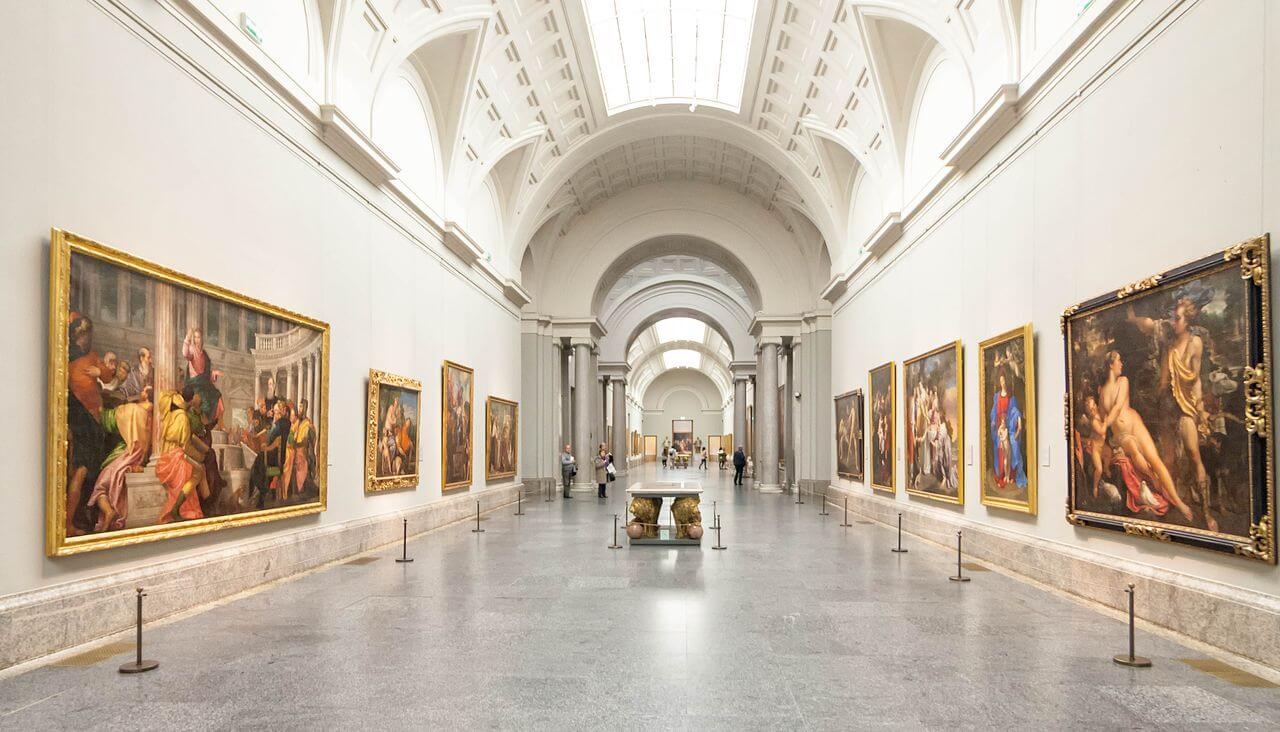
The journey commences at the Prado Museum, widely regarded as one of the finest art institutions globally. Within its hallowed halls reside seminal works by Spanish masters such as El Greco, Velázquez, and Goya, alongside contributions from international luminaries like Rubens, Botticelli, and Caravaggio. For any visitor aiming to experience Madrid’s artistic soul, the Prado is an essential pilgrimage, demanding several hours for even a cursory exploration of its vast collection. As one of the world’s largest museums, its sheer scale is impressive, housing over 8,000 paintings and more than 700 sculptures.
A mere 10-minute stroll along the elegant Paseo del Prado leads to the Thyssen-Bornemisza Museum. This remarkable private collection presents a comprehensive overview of Western art, spanning from the Renaissance to the Pop Art movement. The Art Walk culminates at the Reina Sofía Museum, dedicated to modern and contemporary art. Here, visitors can encounter the works of Picasso, Miró, Kandinsky, Dalí, and Bacon. The museum’s undisputed centerpiece is Picasso’s monumental 1937 oil painting, Guernica, a powerful and enduring anti-war statement. While modern art may not appeal to every visitor, the impact of Guernica is undeniable.
Following this artistic immersion, the focus shifts to Madrid’s vibrant culinary scene. For an authentic taste of cocido madrileño, a traditional Madrid stew, the rustic charm of Taberna La Fragua de Vulcano is highly recommended. Near the Reina Sofía, the lively garden terrace at Arzábal is celebrated for serving some of the city’s finest croquetas. For an unparalleled dining experience, Bodega de los Secretos, located near the Prado Museum, offers a unique ambiance within restored 17th-century wine cellars, providing a memorable backdrop for a meal.
The afternoon offers an opportunity to explore Madrid’s distinctive "House Museums." These former private palaces have been preserved to retain the intimate atmosphere of their original inhabitants. The jewel in this crown is the Sorolla Museum, the sun-drenched former residence and studio of Joaquín Sorolla, famously known as "the painter of light." Following an extensive architectural renovation, this often-overlooked museum is set to reopen in 2026, promising a revitalized presentation of its enchanting gardens and Mediterranean-inspired canvases. Alternatively, the nearby Museum of Romanticism provides a delightful setting for a coffee in its hidden garden, while the Lázaro Galdiano Museum showcases an impressive private collection of works by Goya, Murillo, Velázquez, El Greco, and Bosch, housed within a magnificent neo-Renaissance mansion. The day concludes with an evening dedicated to relaxation and further culinary exploration.
Day 2: Grandeur of the Historic Center – Habsburg Madrid
The second day is dedicated to delving into the medieval and Renaissance layout of Madrid, a district historically known as Habsburg Madrid (Madrid de los Austrias). The central nexus of this area is Puerta del Sol, a bustling square where photographs at Kilometer Zero and the iconic Bear and the Strawberry Tree statue are considered essential for any visitor’s geographical record. Kilometer Zero marks the official starting point for all national highways and railways in Spain, effectively designating it as the country’s geographical heart. A small plaque commemorates this significant spot.
Adjacent to Puerta del Sol stands the statue of El Oso y el Madroño (The Bear and the Strawberry Tree). This emblem, featured on Madrid’s coat of arms, depicts a bear reaching for fruit from a strawberry tree, symbolizing the city’s connection to both its urban identity and the surrounding natural landscape that has fostered its prosperity.
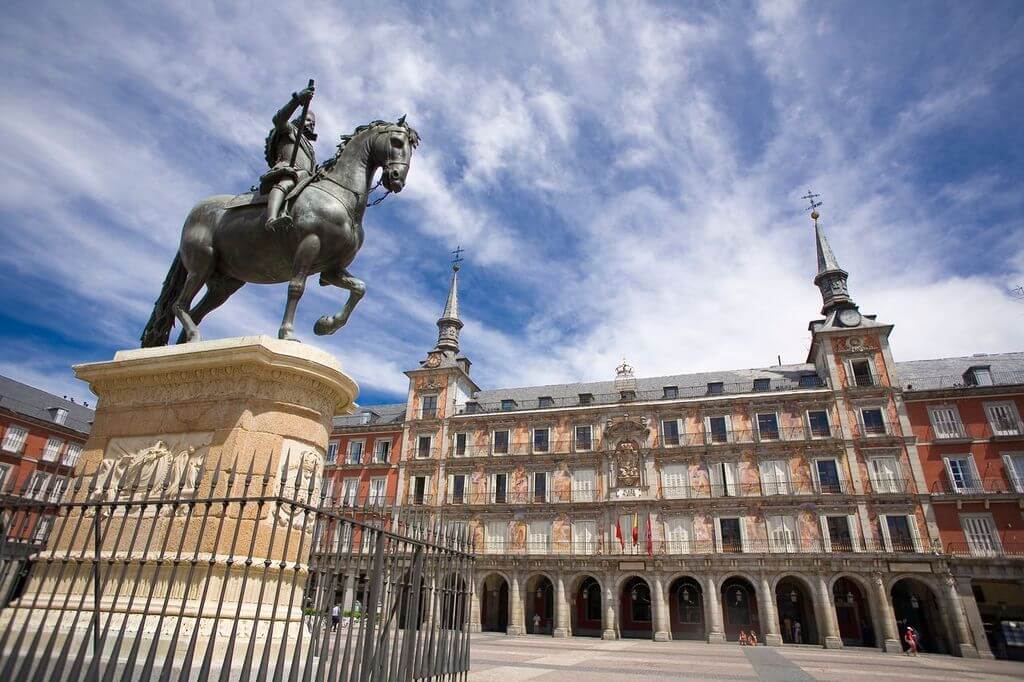
From Puerta del Sol, a short walk leads to the magnificent Plaza Mayor. This grand arcaded square, with its striking Casa de la Panadería, has a rich history, having hosted bullfights, markets, concerts, tournaments, and even public executions. Today, it is a vibrant hub lined with tourist shops, cafes, and restaurants, offering an ideal setting for people-watching and enjoying a drink, with occasional concerts and events adding to its lively atmosphere.
For an authentic taste of local life, indulging in a calamari sandwich from one of the nearby alleyway vendors is a highly recommended experience. Following lunch and the leisurely observation of city life, the itinerary proceeds to the Royal Palace of Madrid. This immense Baroque-style palace, constructed in the 18th century on the site of a former 9th-century Muslim fortress, is the largest royal palace in Western Europe, featuring over 3,400 sumptuously decorated rooms. While it remains the official residence of the Spanish royal family and is used for state functions, the royal family themselves do not reside here. The palace operates akin to an art museum, housing numerous masterpieces by artists including Caravaggio, Juan de Flandes, and Francisco Goya. Visitors can explore the palace at their own pace or opt for guided tours, starting with the grand staircase and progressing through elaborately appointed state rooms. The Royal Armory, showcasing a collection of medieval weaponry and armor, is another significant highlight.
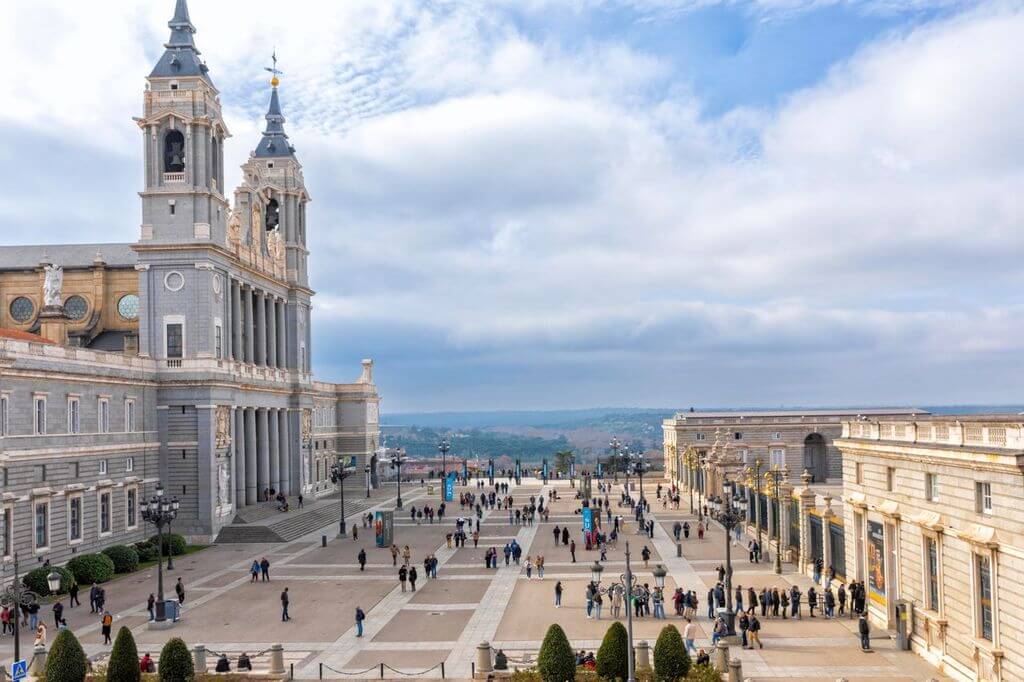
The day concludes with a visit to the Almudena Cathedral. Unlike many ancient European cathedrals, this one was constructed in the late 19th century and finally consecrated in 1993 by Pope John Paul II. Its exterior presents a Neo-Classical design, harmonizing with the nearby Royal Palace, while the interior boasts a Neo-Romanesque crypt with over 400 columns. Ascending to the dome offers panoramic views of the city.
Day 3: A Gastronomic Journey Through Madrid
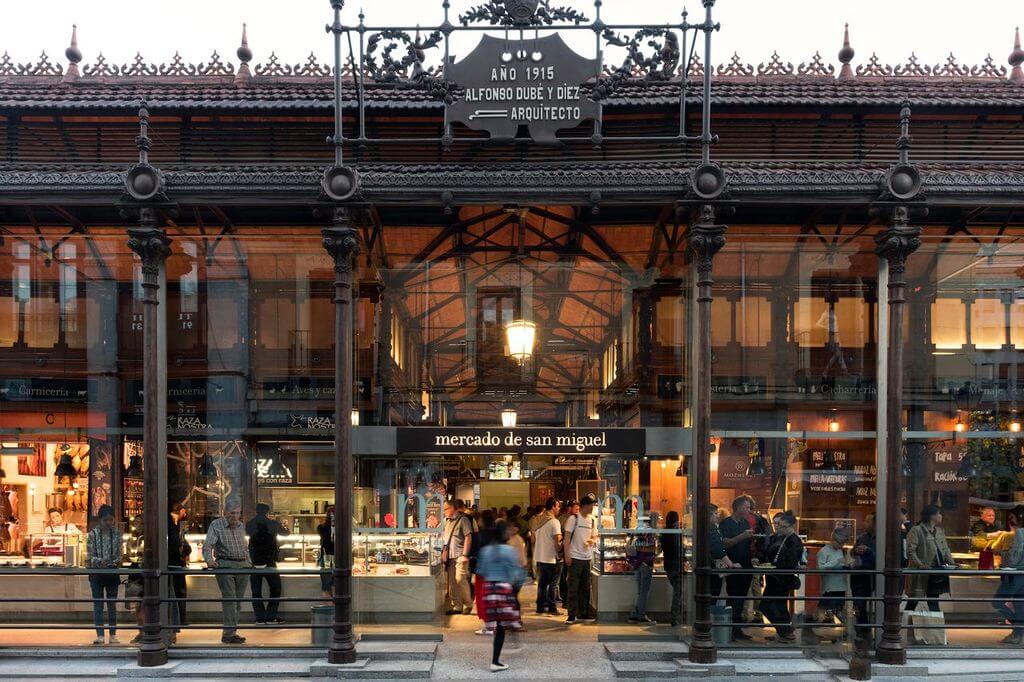
Madrid is a true haven for food enthusiasts, a significant draw for many repeat visitors. While organized food tours are available, embarking on a self-guided culinary exploration is highly encouraged. The city’s iconic gastronomic markets are the perfect starting point. The glass-enclosed Mercado de San Miguel, situated near Plaza Mayor, is an essential stop for gourmet tapas, popular with the after-work crowd and a regular haunt for many travelers. For a deeper dive into regional flavors, local favorites like Mercado de San Antón in Chueca and Mercado de Vallehermoso offer authentic experiences. The key is to arrive with a hearty appetite.
For those preferring a guided experience, numerous reputable food tours operate throughout the city.
Dinner presents an opportunity to dine at Sobrino de Botín, officially recognized by Guinness World Records as the world’s oldest operating restaurant. This historic establishment was a favored haunt of Ernest Hemingway during his time in Madrid. For a more casual dining experience, embracing the tradition of "tapas crawling" through the historic streets of La Latina or Barrio de las Letras is a quintessential Madrid activity.
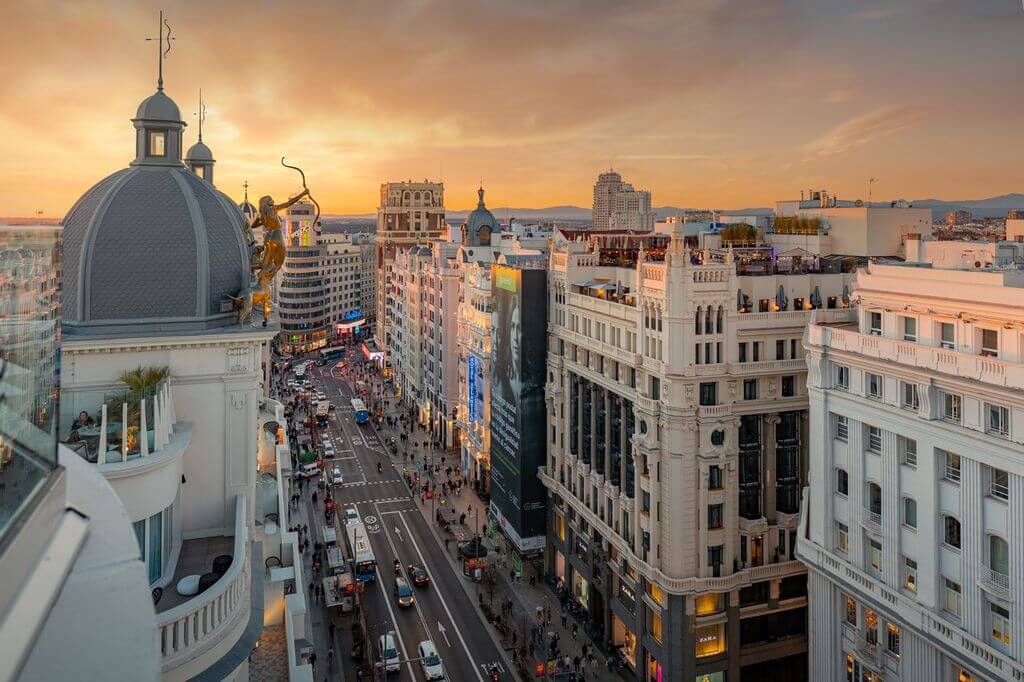
As dusk settles, attention turns to Madrid’s celebrated rooftop culture, particularly along the vibrant Gran Vía. Venues such as Picalagartos Sky Bar and the RIU Plaza España Sky Bar offer expertly crafted cocktails and delectable cuisine with breathtaking 360-degree views of the city skyline.
Madrid has also emerged as a leading destination for vegetarian and vegan cuisine in Europe. Neighborhoods like Malasaña are at the forefront of this culinary evolution, offering plant-based interpretations of traditional Spanish dishes and contributing significantly to the city’s diverse gastronomic identity. This growth reflects a broader trend in urban centers adapting to evolving dietary preferences.
Day 4: UNESCO World Heritage Wonders Beyond the City Limits
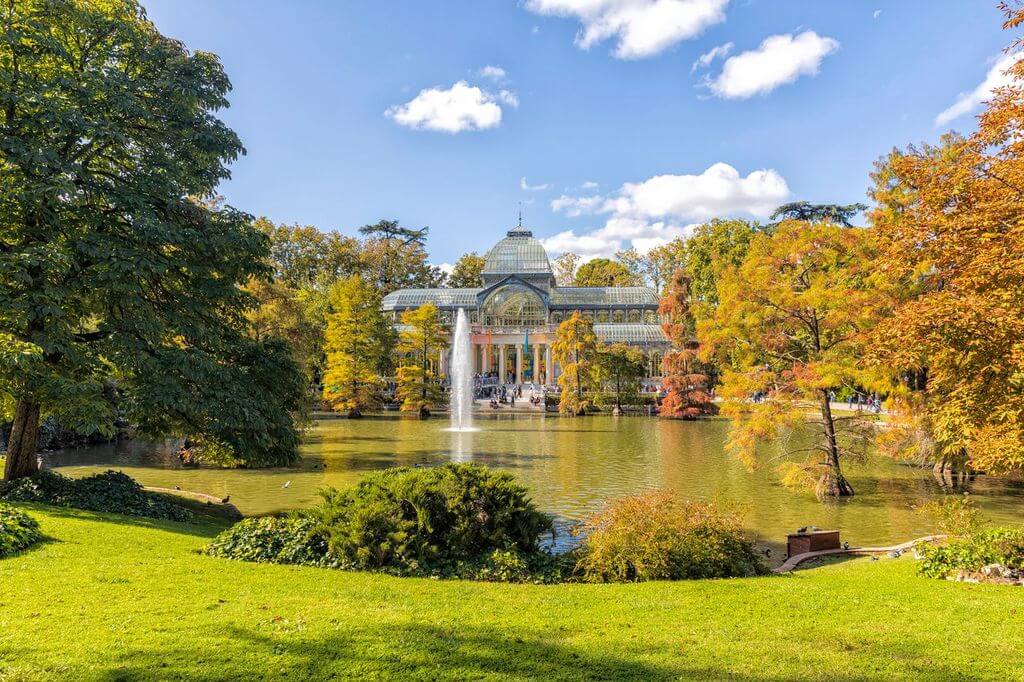
Madrid itself is home to the "Paisaje de la Luz" (Landscape of Light), a UNESCO World Heritage site encompassing the iconic El Retiro Park and the Paseo del Prado. This area represents a unique convergence of nature, science, and royal history within a European capital. However, this day is dedicated to venturing beyond the city to explore further UNESCO-listed treasures.
A popular day trip destination is the Monastery of San Lorenzo de El Escorial, an imposing imperial complex recognized for its profound historical significance. Located approximately one hour from Madrid by car, this monumental site was commissioned by Philip II in the 16th century. It functions as a vast palatial complex, integrating a monastery, library, royal palace, basilica, and the pantheon for Spanish monarchs. Despite its immense scale, its granite walls and symmetrical design lend it an austere elegance compared to other grand European palaces.
Another compelling day trip option is the Royal Palace and Gardens of Aranjuez. Designated as a World Heritage Cultural Landscape, its beauty rivals that of the Palace of Versailles. Situated about an hour south of Madrid, Aranjuez began as a royal hunting lodge, also commissioned by Philip II in the 16th century. The estate showcases a blend of Renaissance and Baroque architectural styles, with lavish interiors adorned with tapestries, porcelain, and intricate decorations. The extensive gardens and parkland, which served as the royal family’s spring residence, are a significant attraction.
Finally, the historic university city of Alcalá de Henares, the birthplace of the renowned Spanish novelist, poet, and playwright Miguel de Cervantes, offers another UNESCO World Heritage experience. Located just 45 minutes away by car, this city provides a remarkably preserved glimpse into the Spanish Golden Age (1492-1659), featuring a historic university campus and well-preserved architecture from the period. The preservation efforts in Alcalá de Henares are a testament to Spain’s commitment to safeguarding its cultural heritage.
Day 5: Uncovering Off-the-Beaten-Path Treasures
The final day is dedicated to venturing further off the well-trodden tourist paths and discovering some of Madrid’s hidden treasures. A step back into the Golden Age can be taken at the Monastery of Las Descalzas Reales and the nearby Royal Monastery of La Encarnación. These cloistered convents, behind their unassuming facades, house breathtaking royal art collections amassed over centuries.
The Monastery of Las Descalzas Reales, founded in 1559 by Joanna of Austria, sister of Philip II, derives its name, "Royal Barefoot Ladies," from the austere Order of Saint Clare nuns who resided there. Its uniqueness lies in the fact that numerous aristocratic women sought refuge within its walls, often bringing their valuable artworks and possessions. Over time, this practice transformed the convent into a veritable repository of art and historical artifacts, offering an intimate glimpse into the lives of Spain’s elite.
The Royal Monastery of La Encarnación, founded in 1611 by Margaret of Austria, wife of Philip III, was a royal convent enjoying direct support from the monarchy. While its exterior displays an austere Baroque style, the interior reveals a lavishness characterized by ornate chapels, vibrant frescoes, and numerous religious sculptures and paintings. It also houses significant relics, including a vial reputedly containing the blood of Saint Januarius. Although tours are available, certain areas remain inaccessible to the public, adding to their mystique and allure.
To conclude the Madrid experience with a local flourish, a visit to the expansive Casa de Campo park is recommended. Established in 1931, this is the largest public park in the city, spanning an impressive 17 square kilometers (6.5 square miles). It features an artificial lake, numerous walking paths, a zoo, and even an amusement park. The park offers the ideal setting for a leisurely picnic lunch or a final dinner at one of the lakeside terraces, providing unparalleled views of the Royal Palace and Almudena Cathedral against the city skyline. This tranquil retreat offers a fitting and scenic end to a memorable trip.
While Barcelona often garners more international attention, Madrid stands as one of Europe’s most compelling urban destinations. Its mouthwatering culinary landscape, electrifying nightlife, and an abundance of attractions cater to every interest and budget. Having visited the city for nearly two decades, the allure of its tapas, architecture, and history remains undiminished. Madrid is a city that delivers an exceptional density of experiences, ensuring something for everyone. This meticulously crafted itinerary aims to guide visitors through the essential sights while also encouraging exploration beyond the conventional tourist trails in Spain’s historic and dynamic capital.
Planning Your European Adventure
For travelers seeking to maximize their European experience while adhering to a budget, comprehensive resources are available. Detailed guidebooks, often exceeding 200 pages, provide practical information tailored for budget-conscious explorers. These resources typically include suggested itineraries, budget breakdowns, money-saving strategies, recommendations for both popular and off-the-beaten-path attractions, non-touristy dining options, market insights, bar recommendations, and crucial safety tips. Such guides aim to equip travelers with the necessary tools to navigate Europe affordably and effectively.
Logistical Essentials for Madrid
Booking Flights: Utilizing flight comparison engines like Skyscanner can help identify the most economical airfare by searching across numerous airlines and booking websites.
Accommodation: For budget travelers, Hostelworld offers a vast selection of hostels with competitive pricing. For hotels, guesthouses, and other forms of accommodation, Booking.com consistently provides competitive rates.
Travel Insurance: Comprehensive travel insurance is indispensable, offering protection against unforeseen events such as illness, injury, theft, and travel cancellations. Reputable providers ensure peace of mind during any journey.
Resource Hub: A dedicated travel resource page can offer a curated list of recommended companies for booking flights, accommodation, tours, and other travel services, all aimed at helping travelers save money on the road.
In-Depth Madrid Information: For an even more comprehensive planning guide to Madrid, a robust destination guide is available, offering extended tips and insights for a fulfilling visit.