Box office debut for ‘The Odyssey’ tops ‘Oppenheimer’ and is Christopher Nolan’s best opening since ‘The Dark Knight Rises’ in 2012 | Fortune

Christopher Nolan’s latest cinematic endeavor, "The Odyssey," has commenced its theatrical run with an extraordinary global performance, securing an estimated $124.5 million in domestic ticket sales and an additional $139.6 million from international markets, culminating in a staggering $264.1 million worldwide debut. This impressive opening weekend has not only surpassed the initial box office figures of Nolan’s critically acclaimed "Oppenheimer" but also marks his most successful launch since the 2012 blockbuster "The Dark Knight Rises," solidifying his unparalleled status as a director whose name alone can draw massive audiences to cinemas worldwide.
The film, a highly anticipated adaptation of Homer’s epic poem, represents a significant gamble by Universal Pictures. In an industry increasingly dominated by established intellectual properties and franchise extensions, Nolan has once again defied conventional wisdom by transforming one of the world’s oldest works of literature into an unlikely summer blockbuster. The audacious project carried a substantial production budget of $250 million, placing it among the most expensive R-rated films ever made, complemented by an aggressive global marketing campaign estimated at $125 million. Despite the considerable investment and the inherent risks associated with adapting a centuries-old narrative for a contemporary audience, "The Odyssey" has unequivocally demonstrated Nolan’s singular box-office might and his capacity to deliver a cinematic experience that resonates deeply with a diverse global viewership.
A Director’s Unique Box Office Power
Christopher Nolan has carved out a unique niche in Hollywood, distinguishing himself as a filmmaker whose creative vision and commitment to the theatrical experience often eclipse the star power of his ensemble casts. Unlike many contemporary directors who operate within existing cinematic universes, Nolan’s films are primarily driven by his distinct narrative style, intricate plots, and a profound dedication to visual grandeur, often employing practical effects and large-format film. This devotion to craft has cultivated an intensely loyal fanbase, transforming his name into a brand that guarantees a premium cinematic event.
His career trajectory showcases a consistent ability to blend critical acclaim with commercial success. From the mind-bending narratives of "Inception" and "Interstellar" to the gritty realism of "The Dark Knight" trilogy and the historical gravitas of "Dunkirk" and "Oppenheimer," Nolan has consistently pushed the boundaries of mainstream filmmaking. "The Dark Knight Rises," the final installment in his Batman trilogy, opened to $160.9 million domestically in 2012, a benchmark that "The Odyssey" has now approached, underscoring the enduring appeal of his work. Even "Oppenheimer," a three-hour historical drama released in 2023, defied expectations with a $82.4 million domestic opening and went on to gross nearly $975 million worldwide, ultimately securing the Academy Award for Best Picture. This track record provided Universal with the confidence to back "The Odyssey" with a significant financial commitment, betting on Nolan’s ability to turn an unconventional source material into a global phenomenon.
The Audacity of "The Odyssey" Adaptation
The decision to adapt Homer’s "The Odyssey" as a tentpole summer release is a testament to Nolan’s artistic ambition and Universal’s faith in his vision. The epic poem, a foundational text of Western literature detailing Odysseus’s perilous ten-year journey home after the Trojan War, presents a unique set of challenges for a modern cinematic interpretation. Its themes of resilience, temptation, divine intervention, and the longing for home are timeless, yet its ancient setting and narrative structure could deter mainstream audiences if not handled with exceptional skill.
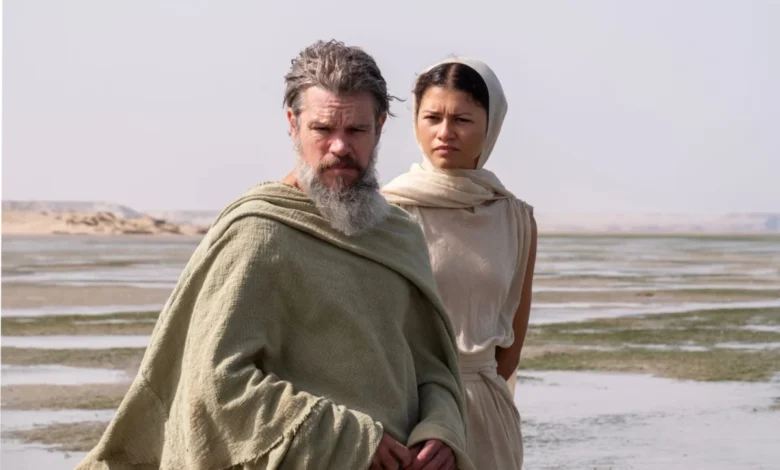
Nolan’s approach, known for its immersive storytelling and visual spectacle, appears to have unlocked the universal appeal of Odysseus’s saga. The film boasts a star-studded cast, including Matt Damon as the titular hero Odysseus, Tom Holland as his son Telemachus, Anne Hathaway as Penelope, Zendaya as Athena, Robert Pattinson as the suitor Antinous, and Charlize Theron as the sea nymph Calypso. Additionally, the casting of Lupita Nyong’o as Helen and Elliot Page as a soldier, while sparking some conservative commentary online (notably from Elon Musk), ultimately had no discernible impact on the film’s overwhelming success or its critical reception. Reviews have been overwhelmingly positive, with "The Odyssey" achieving a remarkable 95% "fresh" rating on Rotten Tomatoes and an "A" CinemaScore from audiences, indicating strong approval across the board. This suggests that Nolan’s compelling vision and the film’s inherent quality transcended any external controversies, allowing the story and its execution to speak for themselves.
The IMAX Experience: A Pillar of Success
A critical component of "The Odyssey’s" monumental success is its profound connection to the IMAX format. Billed as Nolan’s first feature film shot entirely with IMAX cameras, the movie was designed from its inception to be experienced on the largest possible screens. This commitment to cinematic immersion translated directly into staggering box office numbers for IMAX, which reported its best weekend ever. Globally, IMAX screenings accounted for $51.8 million of the total gross, with $29.6 million coming from domestic IMAX showings alone.
The demand for Nolan’s preferred format, particularly IMAX 70mm, reached unprecedented levels. Tickets for some 70mm showtimes were released a full year in advance, a testament to the fervent anticipation surrounding the film. To accommodate the extraordinary hype, some theaters added midnight and 3 a.m. screenings, which promptly sold out. While only 41 IMAX screens worldwide are equipped to project "The Odyssey" in 70mm, these select locations alone generated an impressive $6.3 million in ticket sales, highlighting the premium value audiences place on this specific, high-fidelity viewing experience. IMAX’s CEO, Rich Gelfond, aptly characterized the phenomenon, stating, "The IMAX of it all helped turn it from not only a blockbuster, but a global cultural event." He also noted the sustained demand, with tickets for week five already selling out in some theaters, underscoring the film’s long-term drawing power within the format. IMAX has dedicated its screens entirely to "The Odyssey" for three consecutive weeks, a rare move that reflects the distributor’s confidence in the film’s enduring appeal.
Nolan’s Role in Theatrical Revival
Christopher Nolan has emerged as a staunch advocate for the theatrical experience, playing a pivotal role in the resurgence of cinema attendance, particularly in the post-pandemic era. His 2020 film "Tenet" was one of the first major releases to brave cinemas during the initial stages of reopening, signaling a cautious return to the big screen. Three years later, his "Oppenheimer," released simultaneously with Greta Gerwig’s "Barbie," created the cultural phenomenon known as "Barbenheimer," which critics and industry analysts hailed as arguably the movies’ signature moment of the decade. This dual release energized moviegoers, demonstrating the enduring power of shared cinematic experiences and injecting much-needed vitality into the exhibition sector.
The success of "The Odyssey" arrives during Hollywood’s most robust summer season since 2019, further bolstering the industry’s recovery. According to Rentrak, year-to-date ticket sales are running 10.4% ahead of last year, with the industry now projecting the first $10 billion year at the domestic box office since before the pandemic. Nolan, alongside figures like Tom Cruise, stands as a high-profile ambassador for the big-screen experience, consistently reminding audiences of the unique magic of communal viewing in a darkened theater. Paul Dergarabedian, head of marketplace trends for Rentrak, articulated this sentiment, remarking, "Nolan is a director who’s a star as much as any movie star in front of the camera." This star power, combined with his unwavering commitment to presenting films in their intended grand scale, has been instrumental in drawing audiences back to cinemas en masse.
Market Analysis and Future Outlook
The immediate question following such a massive opening weekend is whether "The Odyssey" will prove to be a "front-loaded" success, given that many cinephiles had marked this weekend on their calendars months in advance. However, early indicators suggest a robust and sustained run. The film faced no new-release competition during its opening weekend and will enjoy another clear path next weekend, allowing it to consolidate its position at the top of the box office charts.
Universal’s head of domestic distribution, Jim Orr, expressed optimism for the film’s longevity, noting, "It’s incredibly rewarding to see the palpable excitement in theaters this weekend. Nolan has crafted an epic adventure. It’s on a scale that audiences have responded to extraordinarily well." He anticipates "The Odyssey" will enjoy a "very long, very successful run throughout not only the rest of the summer but into the fall, too." This projection is supported by strong presales for the film’s second weekend, which are reportedly among IMAX’s top 10 best presales ever, with many IMAX 70mm screenings largely sold out for the next month, save for some front-row seats. This indicates a significant portion of the audience is patiently awaiting their preferred viewing format, suggesting a staggered but consistent demand.
Demographically, "The Odyssey" resonated notably with male audiences, accounting for 59% of tickets sold. However, Orr emphasized that moviegoers were otherwise "ridiculously broad," spanning various demographics and geographical regions. "It’s delivering for a 17-year-old dude and it’s delivering for a female that’s 55 and up," he stated, underscoring the film’s wide appeal. The first significant competition for "The Odyssey" is slated for July 31, with the release of Sony’s "Spider-Man: Brand New Day," which ironically also stars Tom Holland and Zendaya, who feature prominently in Nolan’s epic.
The Competitive Landscape
While "The Odyssey" dominated the box office, other films in release offered a glimpse into the broader summer market. The Walt Disney Co.’s live-action "Moana" landed in a distant second place, earning $19 million in its third weekend. Following a disappointing $43 million launch, the remake experienced a significant 56% drop in its second weekend, highlighting the challenges even for established intellectual property when audience reception falls short. In two weeks, "Moana" has collected $178 million worldwide against a production budget of $250 million, indicating a poor commercial performance relative to its cost.
Universal’s "Minions & Monsters" and Disney’s "Toy Story 5" followed, both grossing approximately $14.8 million. These figures further underscore "The Odyssey’s" commanding lead and its ability to capture a massive share of the audience’s attention and wallets. The varied performance of these films showcases the dynamic and often unpredictable nature of the summer box office, where critical acclaim, unique vision, and a strong connection to the theatrical experience can sometimes triumph over mere brand recognition.
Broader Implications for Hollywood
The resounding success of "The Odyssey" carries significant implications for the wider film industry. Firstly, it further solidifies Christopher Nolan’s position as a singular force in contemporary cinema. He has demonstrated that a director with a distinctive artistic vision can still be the primary draw for audiences, effectively functioning as a franchise unto himself. This challenges the prevailing studio strategy of relying almost exclusively on pre-existing intellectual property from comic books, video games, or established film series.
Secondly, for Universal Pictures, this represents a monumental win that validates their substantial investment in Nolan’s ambitious project. It strengthens their position as a studio willing to take calculated risks on visionary filmmakers and high-concept, original (or uniquely adapted) storytelling. This success provides a crucial counter-narrative to the perception that only tentpoles rooted in existing universes can guarantee massive box office returns.
Thirdly, the film’s extraordinary performance, particularly in IMAX, reaffirms the vital role of premium large formats and the overall theatrical experience. In an era where streaming services compete aggressively for audience attention, "The Odyssey" serves as a powerful reminder that certain films are best, or perhaps only truly, appreciated on the biggest screens, designed for communal viewing. It reinforces the idea of "event cinema" – films that transcend mere entertainment to become cultural touchstones, necessitating a trip to the movie theater.
Finally, "The Odyssey’s" triumph could encourage other studios to reconsider their strategies, potentially fostering a greater appetite for director-driven projects and adaptations of diverse source materials. It suggests that quality, ambition, and a commitment to the big-screen experience, when executed by a master like Nolan, can still captivate global audiences and deliver exceptional financial results, paving the way for a more varied and exciting cinematic landscape.
Top 10 Movies by Domestic Box Office (Estimated)
With final domestic figures pending release, the following list reflects the estimated ticket sales for Friday through Sunday at U.S. and Canadian theaters, according to Rentrak:
- "The Odyssey," $124.5 million
- "Moana," $19 million
- "Minions & Monsters," $14.8 million
- "Toy Story 5," $14.8 million
- "Evil Dead Burn," $5 million
- "The Invite," $3.9 million
- "Young Washington," $3.7 million
- "Obsession," $2.5 million
- "Supergirl," $1.5 million
- "Disclosure Day," $1.5 million