Bilt Rewards Versus Chase Ultimate Rewards: A Comprehensive Analysis of Travel Loyalty Programs


The landscape of travel loyalty programs has become increasingly dynamic, with consumers seeking maximum value from their everyday spending. At the forefront of this evolution are Bilt Rewards and Chase Ultimate Rewards, two prominent programs that empower cardholders to convert expenditures into valuable points redeemable for travel and other benefits. While both systems offer the flexibility of transferable currencies, allowing points to be moved to various frequent flyer and hotel loyalty programs, they cater to distinct user profiles and present unique advantages. The ultimate choice between them, or the decision to utilize both, hinges significantly on individual spending patterns, travel aspirations, and tolerance for strategic complexity.
The Evolution of Flexible Travel Currencies
For decades, airline miles and hotel points were largely siloed, tied to specific brands and often limiting redemption options. The advent of flexible, transferable points programs marked a significant shift, offering consumers unprecedented power and choice. Programs like Chase Ultimate Rewards revolutionized how cardholders accumulated and redeemed points, allowing aggregation from diverse spending categories and subsequent transfer to a curated list of travel partners. This flexibility often unlocks outsized value compared to fixed-rate redemptions. Bilt Rewards, a newer entrant, has taken this concept further by addressing a traditionally overlooked, yet substantial, expenditure: rent and mortgage payments, thereby disrupting conventional loyalty models.
Chase Ultimate Rewards: An Established Powerhouse
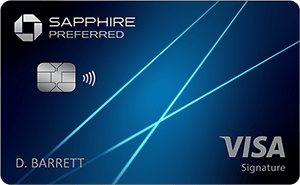
Chase Ultimate Rewards has long held a formidable position in the travel rewards ecosystem, building its reputation on a robust portfolio of credit cards, generous welcome bonuses, and a well-established network of familiar transfer partners. Launched to complement its diverse banking services, the program quickly became a benchmark for premium travel rewards. Cards like the Chase Sapphire Preferred® Card and Chase Sapphire Reserve® anchor the Ultimate Rewards program, offering accelerated earning rates on common spending categories such as dining, travel, and, in some cases, groceries and streaming services.
The program’s strength lies in its comprehensive card lineup, which allows for a synergistic "trifecta" strategy. Cardholders often pair a premium Sapphire card, which enables point transfers, with no-annual-fee options like the Chase Freedom Flex® (offering rotating 5% bonus categories) and the Chase Freedom Unlimited® (providing a strong base earning rate of 1.5% on all other purchases). Points earned across these cards can be seamlessly pooled into a single Sapphire account, maximizing accumulation before transferring to partners.
Chase boasts 14 transfer partners, comprising 10 airlines and four hotel chains. This network includes household names such as Southwest Airlines, United Airlines, British Airways, and Flying Blue (Air France-KLM), alongside hotel giants Hyatt and Marriott Bonvoy. Most transfers occur at a straightforward 1:1 ratio, providing predictable value. Beyond transfers, Chase offers redemptions through its own travel portal, where points are typically worth 1 cent each. However, premium cards like the Chase Sapphire Preferred® Card and Chase Sapphire Reserve® feature a "Points Boost," increasing redemption value for travel booked via Chase to 1.25 cents and 1.5 cents per point, respectively. This provides an alternative for those who prefer direct booking over complex partner transfers. Chase also offers the highly valued option of redeeming points for cash back or statement credits at a fixed 1 cent per point, a level of flexibility not universally available across all loyalty programs.
Bilt Rewards: The Disruptor in the Rental Market
Bilt Rewards entered the competitive loyalty market with a unique value proposition: enabling consumers to earn points on rent and mortgage payments without incurring transaction fees, a significant innovation given that housing is often an individual’s largest monthly expense. The program, which relaunched its credit card lineup in January 2026 under the Cardless issuer, has quickly garnered attention for its ability to transform a previously unrewarded expenditure into a pathway for travel.

Bilt’s credit card portfolio now includes three tiers, ranging from a $0-annual-fee entry point to a premium offering with a $495 annual fee. The Bilt Blue Card serves as an accessible option, while the Bilt Palladium Card, with its higher annual fee, provides enhanced benefits such as a minimum of 2 points per dollar on everyday spending, $400 in annual Bilt Travel hotel credits, and Priority Pass lounge access. All Bilt credit cards allow cardholders to earn up to 1.25 points per dollar on housing payments. This unique earning mechanism positions Bilt as a compelling choice for the millions of renters and homeowners seeking to optimize their largest recurring expense for travel rewards.
A key strength of Bilt Rewards is its expansive transfer network, which currently outpaces Chase with 18 airline programs and seven hotel programs. Nearly all of these partners transfer at a 1:1 ratio. This includes major international carriers and a diverse array of alliances, providing broad global coverage. Notably, Bilt is a partner with Atmos Rewards, the shared loyalty program for Alaska Airlines and Hawaiian Airlines, a partnership not currently available through other major transferable points programs.
While Bilt excels in earning points on housing and its extensive transfer network, its card lineup is still relatively new and evolving. The program presents a slight learning curve for maximizing rewards, particularly with different earning structures across its cards. Unlike Chase, Bilt does not offer cash redemptions. However, it provides several alternative redemption avenues: booking travel through the Bilt Rewards portal at a rate of 1.25 cents per point (surpassing Chase’s baseline), using points for an upcoming rent or mortgage payment, paying down student loans with select servicers, purchasing gift cards, or even contributing towards a home down payment at an enhanced rate of 1.5 cents per point. While these options offer utility, some, like Amazon or Lyft redemptions, typically yield lower value.
A Direct Comparison: Key Differentiators and Overlaps
When evaluating Bilt Rewards against Chase Ultimate Rewards, several critical factors emerge, highlighting their distinct philosophies and target audiences.
Transfer Partner Networks:
Bilt holds a clear advantage in the sheer number of transfer partners. With 18 airline and 7 hotel partners, its network is broader than Chase’s 10 airline and 4 hotel partners. This wider selection, often including niche international carriers, can be particularly appealing to globetrotters seeking specific airline alliances or less common redemption opportunities. However, Chase’s partners, while fewer, are often considered "household names" in the U.S. market, such as United, Southwest, and Hyatt, which are highly popular and offer significant value for many American travelers. The only two Chase partners not found in Bilt’s network are JetBlue TrueBlue and Singapore Airlines KrisFlyer, while Bilt uniquely offers Atmos Rewards.
Earning Structures and Categories:
Bilt’s standout feature is its ability to earn points on rent and mortgage payments without transaction fees, a game-changer for individuals whose housing expenses constitute a substantial portion of their monthly budget. This alone can generate a significant volume of points that would otherwise be inaccessible through other programs. Beyond housing, Bilt cards offer bonus points on dining and travel portal bookings, though the overall earning structure for general spending might require more strategic planning across its new card tiers.
Chase, on the other hand, boasts a more traditional, yet highly effective, earning structure across its diverse card portfolio. The Sapphire cards offer strong multipliers on dining, general travel, and often include limited-time bonuses on categories like online groceries or streaming. The complementary Freedom cards further diversify earning, with rotating 5% categories (Freedom Flex) and a solid 1.5% on all other spending (Freedom Unlimited), making it easy to accumulate points across almost every spending category.
Redemption Flexibility and Value:
Both programs shine brightest when points are transferred to airline or hotel partners, where value often exceeds fixed-rate redemptions. Bilt offers a 1.25 cents per point value when booking travel through its portal, which is a commendable baseline. Its unique 1.5 cents per point redemption for a home down payment or student loan payments also provides a compelling alternative to travel for certain life stages. However, Bilt’s lack of a cash-back option at a reasonable rate is a notable limitation for those who prefer maximum liquidity.
Chase offers robust flexibility, with a baseline 1 cent per point for cash back, statement credits, or travel portal bookings. The "Points Boost" on Sapphire cards, elevating travel portal redemptions to 1.25 cents (Sapphire Preferred) or 1.5 cents (Sapphire Reserve), provides a strong internal redemption option. This flexibility, combined with the cash-back alternative, makes Chase a more versatile program for those who value diverse redemption paths beyond just high-value travel transfers.
Card Ecosystem and Complexity:
Chase has a mature and well-integrated card ecosystem. The ability to combine points from multiple Chase cards into a single Ultimate Rewards account, and then transfer them, simplifies the process for maximizing rewards. The choice between Sapphire Preferred and Sapphire Reserve primarily depends on the individual’s travel frequency and willingness to pay a higher annual fee for premium perks like lounge access and elevated travel credits.
Bilt’s recent card relaunch in January 2026 has introduced a new, tiered structure. While offering more choice, it also brings a degree of complexity in understanding which card best suits individual spending and how to optimize housing rewards across different earning structures. For consumers who prefer a straightforward, "set-it-and-forget-it" approach, this initial complexity might be a deterrent.
Annual Fees and Benefits:
Chase’s Sapphire cards come with annual fees ($95 for Preferred, $550 for Reserve, with an authorized user fee of $195 for Reserve), which are often offset by welcome bonuses, travel credits, and other premium benefits. The Chase Sapphire Reserve®, in particular, offers significant value through its $300 annual travel credit, Priority Pass Select membership, and comprehensive travel protections.
Bilt’s new card lineup spans from a $0-annual-fee option (Bilt Blue) to a $495-annual-fee premium card (Bilt Palladium). The Bilt Palladium Card’s benefits, including $400 in annual Bilt Travel hotel credits and Priority Pass lounge access, are designed to compete with high-tier premium travel cards. The $0-annual-fee Bilt Blue Card remains a highly attractive entry point, especially for renters, offering a low-cost way to tap into the program’s unique housing rewards.
Broader Market Implications and Consumer Strategy
The emergence of Bilt Rewards and its focus on housing payments represents a significant disruption in the credit card loyalty space. It highlights an untapped market segment and forces established players to consider new avenues for point accumulation. For consumers, this competition is highly beneficial, leading to more innovative offerings and potentially better value.
The decision between Bilt and Chase is not necessarily an either/or proposition. Many savvy travelers and points enthusiasts opt to integrate cards from both programs into their financial strategy. For instance, a renter or homeowner could leverage a Bilt card to earn substantial points on their monthly housing payments, a category where Chase does not offer a comparable advantage. Simultaneously, they might use a Chase Sapphire card for dining, general travel, and other bonus categories, taking advantage of its robust travel protections, strong welcome bonuses, and flexible cash-back option. This combined approach allows individuals to maximize points across a wider spectrum of expenses and tailor redemptions to their specific needs, whether it’s luxury travel or contributing to a down payment.
As the travel rewards market continues to evolve, both Bilt and Chase are likely to adapt their offerings to remain competitive. Bilt’s success will depend on its ability to refine its card products and simplify its reward maximization process, while Chase will likely continue to leverage its extensive banking infrastructure and brand recognition to innovate within its established framework. For the consumer, the key remains diligent tracking of spending habits, understanding card benefits, and strategically choosing programs that align with their financial goals and travel aspirations. The richness of today’s loyalty landscape ensures that with careful planning, unlocking significant travel value from everyday spending is more accessible than ever before.