Roborock Qrevo Curv 2 Flow Robot Vacuum and Mop Sees Significant Price Reduction, Expert Review Highlights Unrivaled Performance

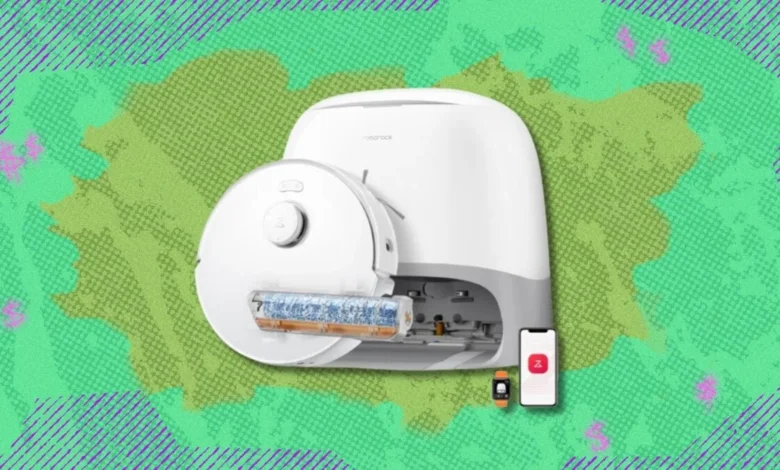
The Roborock Qrevo Curv 2 Flow robot vacuum and mop is currently available on Amazon for a discounted price of $899.99, marking a substantial $100 reduction from its original list price of $999.99. This 10% markdown presents a compelling opportunity for consumers to acquire a high-end, dual-function smart home appliance that has garnered significant praise for its advanced cleaning capabilities, particularly its innovative mopping system. The sale, effective as of April 20, positions this device as a noteworthy contender in the increasingly competitive market for automated home cleaning solutions.
Key Deal Details and Product Overview
The current offer provides the Roborock Qrevo Curv 2 Flow at $899.99, down from its standard retail price of $999.99. This promotion translates to a direct saving of $100, making a premium robot vacuum and mop more accessible to a broader consumer base. Roborock, a prominent manufacturer in the smart home cleaning sector, is known for integrating cutting-edge technology into its devices, and the Qrevo Curv 2 Flow exemplifies this commitment. This particular model stands out due to its powerful suction, sophisticated navigation, and a revolutionary mopping design aimed at addressing long-standing challenges in robot cleaning performance.
Expert Validation: Performance Beyond Expectations
Mashable’s resident vacuum expert, Lead Stodart, has extensively tested over 25 models of robot vacuums that incorporate mopping functions. Her rigorous evaluations have often revealed limitations in devices attempting to combine both vacuuming and mopping effectively, particularly concerning the performance of roller mops. However, the Roborock Qrevo Curv 2 Flow notably distinguished itself during her assessments, earning a rare commendation for its impressive capabilities. Stodart’s findings underscore a significant advancement in integrated robot cleaning technology, suggesting that the Qrevo Curv 2 Flow has successfully overcome many of the performance hurdles previously observed in this category.
One of the core metrics of a robot vacuum’s effectiveness is its suction power. The Roborock Qrevo Curv 2 Flow boasts a formidable 20,000Pa of suction, a figure that places it firmly in the high-performance tier. During her testing, Stodart put this power to the test on various surfaces and debris types. She observed that the Qrevo Curv 2 Flow efficiently picked up fine particles, such as sprinkles, from deep carpets with an efficacy comparable to devices featuring significantly higher suction ratings, such as the 35,000Pa Dreame X60 Max Ultra Complete. This real-world performance validation is crucial, as raw suction numbers do not always translate directly to superior cleaning outcomes. Stodart noted, "Though the Dreame vacuum is significantly stronger with 35,000 Pa of suction power, I honestly think that the Curv 2 Flow did just as good a job – the pickup rate of both was almost perfect. When I got down on eye level to see if the Curv 2 Flow cleaned up crushed chips on my tufted living room rug, it was spotless aside from a single long hair." This observation highlights that the Qrevo Curv 2 Flow’s efficient design, perhaps combining optimal brush configurations and airflow dynamics, allows it to maximize its 20,000Pa suction for exceptional debris removal across diverse floor types.
Revolutionizing Mopping: The Curv 2 Flow Innovation
Beyond its powerful vacuuming, the Qrevo Curv 2 Flow’s most groundbreaking feature, and the one that particularly impressed Stodart, is its innovative roller mop system. Traditional robot mops, especially those with fixed pads or circular rollers, often struggle to clean effectively along edges and into corners, leaving uncleaned strips or areas where dirt accumulates. Roborock has engineered a solution to this pervasive problem with the "Curv 2 Flow" mechanism.
Stodart detailed how this technology works: "The roller sits in a sliding case that visibly extends an inch or two past the vacuum’s circumference when an edge is sensed." This dynamic extension allows the mop to reach areas that would otherwise be inaccessible, providing an "extremely close scrub against walls." She further elaborated on its practical impact, citing its performance along the wall of her bathtub, a common trouble spot where "tiny pieces of hair and kitty litter dust stuck in dried soap droplets" often accumulate. The ability of the Curv 2 Flow to meticulously clean these challenging perimeter areas represents a significant leap forward for robot mopping technology, addressing a key pain point for users seeking comprehensive floor cleaning automation. This intelligent design not only enhances cleaning efficacy but also contributes to a more uniform and thorough clean across the entire floor surface.
Technological Sophistication Beyond the Core Functions
While the suction power and advanced mopping system are headline features, the Roborock Qrevo Curv 2 Flow integrates a suite of other sophisticated technologies characteristic of premium robot cleaners. These features collectively contribute to an autonomous, efficient, and user-friendly cleaning experience:
- Advanced Navigation and Mapping: High-end robot vacuums like the Qrevo Curv 2 Flow typically employ LiDAR (Light Detection and Ranging) navigation systems. This technology allows the robot to create highly accurate, real-time maps of the home environment, enabling systematic cleaning paths, obstacle avoidance, and efficient coverage. Users can usually view these maps via a companion mobile application, set virtual boundaries, no-go zones, and designate specific areas for cleaning.
- Intelligent Obstacle Avoidance: Coupled with LiDAR, advanced sensors (e.g., optical, ultrasonic) provide robust obstacle detection and avoidance capabilities. This prevents the robot from colliding with furniture, tangling in cables, or getting stuck, thereby reducing the need for human intervention during cleaning cycles.
- Self-Cleaning and Maintenance Dock: Many premium robot vacuums come with sophisticated docking stations that automate maintenance tasks. While not explicitly detailed for the Qrevo Curv 2 Flow in the original article, it is common for such models to feature auto-emptying dustbins, automatic water refilling for mopping, and self-cleaning/drying mechanisms for the mop pads or rollers. These features significantly enhance convenience by reducing the frequency of manual emptying and cleaning, transforming the robot from a mere cleaning tool into a largely self-sufficient appliance.
- App Integration and Smart Home Connectivity: The Roborock app provides comprehensive control over the Qrevo Curv 2 Flow. Users can schedule cleaning times, select specific rooms, adjust suction power and water flow, monitor cleaning progress, and manage maps. Furthermore, compatibility with voice assistants like Amazon Alexa or Google Assistant allows for hands-free control, seamlessly integrating the robot into a broader smart home ecosystem.
The Evolving Landscape of Robot Cleaning Technology
The emergence of devices like the Roborock Qrevo Curv 2 Flow reflects a broader trend in the smart home appliance market: the increasing demand for integrated, autonomous, and highly effective solutions for household chores. The journey of robot vacuums began with rudimentary models in the early 2000s, primarily offering basic, random-pattern vacuuming. Over two decades, the technology has advanced dramatically, moving through stages of improved navigation (from bumper sensors to camera-based, then LiDAR), increased suction power, and eventually, the integration of mopping functions.
Early attempts at combined vacuum-mop robots often presented compromises. Either the vacuuming was weak, or the mopping was superficial, primarily due to limitations in design and the inherent challenges of managing both wet and dry debris simultaneously. The core challenge was achieving deep cleaning for both functions while maintaining autonomy and ease of use. The Roborock Qrevo Curv 2 Flow, with its advanced suction and particularly its "Curv 2 Flow" mop, signifies a maturity in this technology, where these compromises are significantly minimized, if not entirely overcome.
Roborock has established itself as a key innovator in this space, often competing with other industry giants like iRobot (Roomba), Dreame, Ecovacs, and Eufy. The brand typically positions itself in the premium segment, emphasizing high performance, advanced features, and durable construction. This strategy resonates with a growing segment of consumers willing to invest in appliances that genuinely deliver on the promise of automation and convenience.
Competitive Dynamics and Market Positioning
In a market crowded with numerous robot vacuum brands, Roborock maintains its competitive edge through consistent innovation and a focus on solving practical user problems. While competitors like Dreame offer models with even higher suction power (e.g., 35,000Pa), Stodart’s comparison indicates that raw numbers do not always equate to superior real-world cleaning. The Qrevo Curv 2 Flow demonstrates that optimized design and intelligent algorithms can leverage a strong, but not necessarily the highest, suction power to achieve excellent results.
The pricing strategy for premium robot cleaners often involves an initial high price point, followed by strategic discounts. The current $100 reduction for the Roborock Qrevo Curv 2 Flow is a classic example of this. Such promotions serve multiple purposes: they make high-ticket items more accessible, stimulate sales volume, and maintain market momentum. For consumers, these sales represent an opportunity to acquire advanced technology at a more favorable price, potentially justifying the investment for a device that saves significant time and effort over its lifespan. The value proposition of these premium models lies not just in their immediate cleaning performance but also in the long-term benefits of automated, consistent home maintenance, freeing up valuable personal time.
Implications for Modern Households
The widespread adoption of advanced robot cleaners like the Roborock Qrevo Curv 2 Flow has profound implications for modern households. The primary benefit is the significant reduction in time and effort spent on routine floor cleaning. For busy professionals, families, or individuals with mobility challenges, these devices offer an unparalleled level of convenience, ensuring consistently clean floors without manual intervention. This shift allows individuals to reclaim time for other activities, hobbies, or simply relaxation.
Furthermore, the meticulous cleaning capabilities, especially the enhanced corner and edge cleaning of the Qrevo Curv 2 Flow, contribute to a higher standard of home hygiene. This is particularly beneficial for households with pets or individuals prone to allergies, where regular and thorough removal of dust, dander, and allergens is crucial. The investment in a premium robot vacuum and mop can be viewed not just as a purchase of an appliance, but as an investment in a cleaner, more comfortable living environment and a more streamlined daily routine.
Conclusion and Outlook
The Roborock Qrevo Curv 2 Flow robot vacuum and mop, now available at a reduced price of $899.99, represents a significant advancement in autonomous home cleaning. Endorsed by expert evaluations for its robust vacuuming and particularly its innovative, corner-cleaning roller mop, this device sets a new benchmark for integrated robot cleaners. The sale on Amazon provides an opportune moment for consumers to upgrade their home cleaning systems with a device that promises not only efficiency and power but also unprecedented thoroughness in areas traditionally challenging for robots. As smart home technology continues to evolve, devices like the Qrevo Curv 2 Flow underscore the industry’s commitment to delivering sophisticated, reliable, and truly automated solutions that enhance quality of life and redefine household maintenance.
Related posts: