Empowering Youth Voices: How Unity Concord International School Built a Sustainable Ecosystem for Student Advocacy and Public Speaking

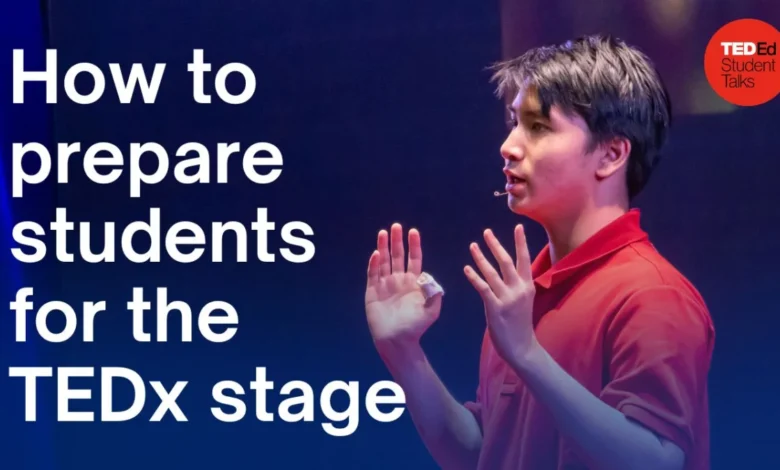
At Unity Concord International School (UCIS) in Chiang Mai, Thailand, the traditional boundaries of the classroom are being redrawn through a sophisticated, multi-tiered approach to public speaking and student leadership. While many educational institutions struggle to move students beyond the rote memorization of speeches, UCIS has successfully developed a self-sustaining pipeline of confident youth voices. By strategically integrating the year-round TED-Ed Student Talks program with their high-profile annual TEDxUCIS Youth event, the school has created a pedagogical ecosystem that fosters not only eloquence but also genuine community transformation. This model serves as a compelling blueprint for international schools worldwide seeking to empower the next generation of global change-makers through structured advocacy and peer-led inspiration.
The Strategic Framework: A Dual-Program Approach to Student Agency
The success at UCIS is predicated on the synergy between two distinct yet complementary programs. The first, TED-Ed Student Talks, serves as the developmental foundation. Targeted primarily at younger students, including those in the 5th and 6th grades, this program offers a low-stakes environment where students can experiment with ideas without the immediate pressure of a massive audience. The second component, TEDxUCIS Youth, acts as the professional-grade culmination of this journey. It is a licensed, independently organized event that adheres to the rigorous standards of the global TED brand, providing a prestigious platform for students to share their "ideas worth spreading" with a wider community.
Fernando Oringo, the International Co-curricular Coordinator of the Ambassador Education Group, recently facilitated an in-depth analysis of this framework alongside Abby Schrantz, the school’s TED-Ed Student Talks Coordinator, and Madison Conger, the TEDxUCIS Youth license holder. Their collective insights reveal that the secret to the program’s longevity is not merely the final performance, but the intentional "scaffolding" of skills over several years. This prevents the "one-off" project fatigue often seen in extracurricular activities and instead builds a culture where public speaking is viewed as a fundamental part of the student identity.
Chronology of Growth: From Classroom to the Main Stage
The journey for a UCIS student typically begins in the middle school years. The recruitment process, led by Schrantz, eschews traditional mass communication in favor of a "personal touch" strategy. Schrantz personally visits homerooms to explain the nuances of the TED-Ed Student Talks program, demystifying the process for younger learners who might otherwise be intimidated by the prospect of a microphone. This grassroots approach has led to the program reaching full capacity, driven largely by peer-to-peer endorsements. When 5th and 6th graders observe their friends participating and succeeding, the barrier to entry lowers significantly, creating a natural recruitment cycle.
Once enrolled in the TED-Ed Student Talks group, students engage in a curriculum that prioritizes innovation and peer-led feedback. Rather than following a rigid facilitator guidebook, Schrantz encourages students to analyze past performances. They watch recordings of previous talks—often from students they know personally—and engage in constructive critique sessions. This method shifts the focus from teacher-led instruction to collaborative learning. Students learn to identify emotional resonance, the effectiveness of visual aids, and the power of vulnerability by observing their peers.
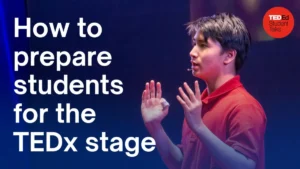
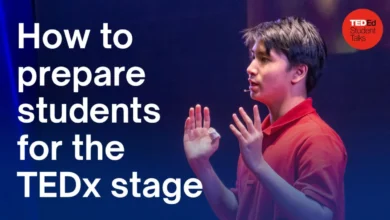
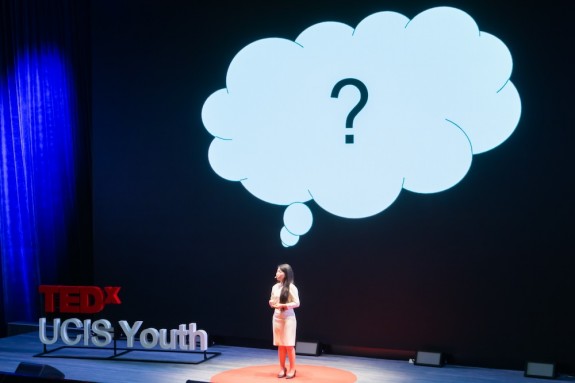
The transition from the developmental group to the TEDx stage is bridged by the "observation phase." During the annual TEDxUCIS Youth event, students from the TED-Ed Student Talks program are invited to attend as audience members. This exposure is a critical psychological catalyst. Seeing older students command a professional stage with professional lighting, sound, and a live audience transforms the abstract concepts of the classroom into a tangible goal. According to Schrantz, this experience often leads to an immediate surge in motivation, with students returning to their workshops eager to fine-tune their own scripts and delivery styles.
Supporting Data and Pedagogical Impact
The impact of this pipeline is reflected in the increased competency of students as they progress into high school. Madison Conger notes that the "training ground" provided by TED-Ed Student Talks pays massive dividends for the organizers of the TEDx event. In previous years, organizers often had to start from "square one" with every speaker, teaching the basics of narrative structure and stage presence. Now, because students have often spent two or three years in the developmental pipeline, they arrive at the TEDx auditions with a sophisticated understanding of the TED format.
This preparation mitigates one of the primary challenges in youth event organizing: the "busy student" syndrome. International school students often balance rigorous academic schedules with multiple extracurricular commitments. Because the UCIS students have already internalized the milestones of talk development—from idea generation and fact-checking to rehearsal and visual design—the process becomes more efficient. The "roadmap" provided by the school ensures that by the time a student reaches the TEDx stage, they are not just speakers, but seasoned communicators who are confident in their message.
Beyond the Podium: Facilitating Institutional Change
The true metric of success for the UCIS program lies in its ability to spark real-world change within the school community. The topics chosen by students often reflect deep-seated societal pressures and personal vulnerabilities, ranging from the psychological impact of "overthinking" to the complexities of cultural identity. By providing a platform for these discussions, the school fosters an environment of empathy and shared experience.
A notable example of this institutional impact occurred following a talk by a student regarding the challenges faced by "cross-cultural kids" (CCKs). The student’s exploration of the difficulties of navigating multiple cultural identities in an international setting resonated so deeply with the audience that it led to the formation of a dedicated CCK community at UCIS. This group now provides a support network for both parents and students, demonstrating that a well-delivered talk can move beyond the auditorium and influence the very structure of the school’s social fabric. This aligns with the broader mission of TED: that ideas, when shared effectively, have the power to change attitudes, lives, and, ultimately, the world.
Official Responses and Future Outlook
The success of the UCIS model has not gone unnoticed within the broader Ambassador Education Group. Fernando Oringo, who oversees the program across a network of schools in Thailand, Vietnam, and Cambodia, emphasizes that the goal is to amplify student voices as a core component of 21st-century pedagogy. "It’s about more than just public speaking," Oringo states. "It’s about mentoring the next generation of global change-makers."
For other educators looking to replicate the UCIS success, the school offers three primary pillars of advice:
- Build a Pipeline: Do not treat a major event like TEDx as a standalone project. Establish a year-round developmental group (like TED-Ed Student Talks) to act as a feeder system.
- Foster Peer Inspiration: Use the work of current and former students as the primary teaching tool. Nothing motivates a student more than seeing someone they recognize succeed.
- Create a Multi-Sensory Celebration: Ensure the final event is more than just a series of speeches. Incorporate art, technology, and interactive spaces to turn the day into a "celebration of ideas" that engages the entire school community.
Fact-Based Analysis: The Broader Implications for Global Education
The UCIS case study highlights a growing trend in international education: the shift toward "soft skills" that emphasize communication, empathy, and advocacy. In an era where information is ubiquitous, the ability to synthesize an idea and present it persuasively is becoming a critical differentiator for students entering higher education and the global workforce.
Furthermore, the use of a globally recognized brand like TED provides students with a sense of "real-world" stakes. It bridges the gap between academic exercises and professional standards. As Madison Conger reflects, the TED brand has become part of the school’s identity, offering a platform for students to share perspectives that might otherwise remain unheard. By investing in this ecosystem, Unity Concord International School is not just teaching students how to speak; it is teaching them that their voices have the power to shape their community and their future.
As the program continues to expand, the focus remains on sustainability. The "self-sustaining" nature of the pipeline ensures that as older students graduate, a new cohort of prepared, inspired, and confident younger students is ready to take their place. This ensures that the culture of advocacy at UCIS is not dependent on a single charismatic teacher or a particularly gifted group of students, but is instead woven into the very fabric of the institution’s educational mission. In the heart of Northern Thailand, UCIS has indeed cracked the code, proving that with the right ecosystem, every teenager has the potential to step up to the microphone and change the world.